
Label:erased tapes
Cat-No:erat081lp
Release-Date:28.01.2016
Genre:Electronic, Electronica
Configuration:LP
Label:erased tapes
Cat-No:erat081lp
Release-Date:28.01.2016
Genre:Electronic, Electronica
Configuration:LP
Collaborative Works and will now be available on vinyl for the first time! The LP is accompanied by an 8-page booklet featuring photographs from the recording session.
Sicherheits- und Herstellerinformationen / safety and manufacturer info (GPSR)
WAS - Word and Sound Medien GmbH
Liebigstrasse 2-20
DE - 22113 Hamburg
Germany
Contact: [email protected]More
Sicherheits- und Herstellerinformationen / safety and manufacturer info (GPSR)
WAS - Word and Sound Medien GmbH
Liebigstrasse 2-20
DE - 22113 Hamburg
Germany
Contact: [email protected]More
More records from nils frahm & olafur arnalds
Label:erased tapes
Cat-No:erat074cd
Release-Date:28.01.2016
Genre:Electronic, Electronica
Configuration:2CD
Label:erased tapes
Cat-No:erat074cd
Release-Date:28.01.2016
Genre:Electronic, Electronica
Configuration:2CD
Collaborative Works and will now be available on vinyl for the first time! The LP is accompanied by an 8-page booklet featuring photographs from the recording session.
Sicherheits- und Herstellerinformationen / safety and manufacturer info (GPSR)
WAS - Word and Sound Medien GmbH
Liebigstrasse 2-20
DE - 22113 Hamburg
Germany
Contact: [email protected]More
Sicherheits- und Herstellerinformationen / safety and manufacturer info (GPSR)
WAS - Word and Sound Medien GmbH
Liebigstrasse 2-20
DE - 22113 Hamburg
Germany
Contact: [email protected]More
More records from erased tapes
Splayed Werks markiert einen deutlichen Wendepunkt im Werk von Tyondai Braxton. Das fünfte Soloalbum des US-Komponisten und Produzenten ist zugleich sein erstes Full-Length-Release seit dem symphonischen Telekinesis (2022) und der Auftakt einer neuen Zusammenarbeit mit dem renommierten britischen Label Erased Tapes. Auf über 70 Minuten entfaltet Braxton eine dichte, hochpräzise Welt aus Elektronik und Sounddesign - fragmentierter und unmittelbarer als seine bisherigen, oft großformatigen Arbeiten. Die 15 Tracks sind überwiegend kompakt gehalten und bewegen sich zwischen minimalistischer Komposition, experimenteller Clubmusik und installativer Klangkunst. Rhythmisch komplexe, rau strukturierte Stücke stehen neben beatlosen Passagen von fast ekstatischer Intensität. Splayed Werks ist gleichermaßen intellektuell anspruchsvoll und körperlich erfahrbar - handgemacht, intuitiv und klanglich kompromisslos. Braxton zählt seit über zwei Jahrzehnten zu den prägenden Figuren zwischen Neuer Musik, Elektronik und Avant-Pop: Mitbegründer von Battles, Kollaborateur von Philip Glass, Komponist für führende US-Ensembles und regelmäßiger Gast großer Festivals und Institutionen weltweit.
Tracklist
1.1Bell Smear
1.2Multiplay
1.3Dia
1.4Vali
1.5UnFS
1.6Salt Point
1.7Oslo
1.8Realistic Water
1.9Multiplay II
1.10Phonolydian
1.11Piiano
1.124 Zones
1.13Nimble FX
1.14Clouds Of
1.15K Space
Sicherheits- und Herstellerinformationen / safety and manufacturer info (GPSR)
WAS - Word and Sound Medien GmbH
Liebigstrasse 2-20
DE - 22113 Hamburg
Germany
Contact: [email protected]More
Tracklist
1.1Bell Smear
1.2Multiplay
1.3Dia
1.4Vali
1.5UnFS
1.6Salt Point
1.7Oslo
1.8Realistic Water
1.9Multiplay II
1.10Phonolydian
1.11Piiano
1.124 Zones
1.13Nimble FX
1.14Clouds Of
1.15K Space
Sicherheits- und Herstellerinformationen / safety and manufacturer info (GPSR)
WAS - Word and Sound Medien GmbH
Liebigstrasse 2-20
DE - 22113 Hamburg
Germany
Contact: [email protected]More
Label:Erased Tapes
Cat-No:ERATPLP182
Release-Date:03.07.2026
Genre:Electronic, Electronica
Configuration:2LP
Label:Erased Tapes
Cat-No:ERATPLP182
Release-Date:03.07.2026
Genre:Electronic, Electronica
Configuration:2LP
Mit II Reworked öffnen Kiasmos - Olafur Arnalds und Janus Rasmussen - ihr gefeiertes Comeback-Album II für neue Perspektiven. Fünf handverlesene Künstler:innen interpretieren das Werk in voller Sequenz neu und formen eine schimmernde, traumartige Reise, die den Moment nach dem Dancefloor einfängt. Elektronische Experimente von Rachika Nayar & Nina Keith (Disiniblud) legen verborgene Emotionen frei, während die Isländer Kjartan Holm und Sin Fang die fragile Schönheit der Kompositionen betonen. Alex Somers verlangsamt und verfremdet mit analogen Methoden - für eindringliche, neue Tiefen.
Tracklist:
1.1Grown (Alex Somers Rework)
1.2Burst (Rachika Nayar & Nina Keith Rework)
1.3Sailed (Rachika Nayar & Nina Keith Rework)
1.4Laced (Rachika Nayar & Nina Keith Rework)
1.5Bound (Alex Somers Rework)
1.6Sworn (Alex Somers Rework)
1.7Spun (Kjartan Holm & Sin Fang Rework)
1.8Flown (Rachika Nayar & Nina Keith Rework)
1.9Told (Kjartan Holm & Sin Fang Rework)
1.10Dazed (Rachika Nayar & Nina Keith Rework)
1.11Squared (Kjartan Holm & Sin Fang)
Sicherheits- und Herstellerinformationen / safety and manufacturer info (GPSR)
WAS - Word and Sound Medien GmbH
Liebigstrasse 2-20
DE - 22113 Hamburg
Germany
Contact: [email protected]More
Tracklist:
1.1Grown (Alex Somers Rework)
1.2Burst (Rachika Nayar & Nina Keith Rework)
1.3Sailed (Rachika Nayar & Nina Keith Rework)
1.4Laced (Rachika Nayar & Nina Keith Rework)
1.5Bound (Alex Somers Rework)
1.6Sworn (Alex Somers Rework)
1.7Spun (Kjartan Holm & Sin Fang Rework)
1.8Flown (Rachika Nayar & Nina Keith Rework)
1.9Told (Kjartan Holm & Sin Fang Rework)
1.10Dazed (Rachika Nayar & Nina Keith Rework)
1.11Squared (Kjartan Holm & Sin Fang)
Sicherheits- und Herstellerinformationen / safety and manufacturer info (GPSR)
WAS - Word and Sound Medien GmbH
Liebigstrasse 2-20
DE - 22113 Hamburg
Germany
Contact: [email protected]More
Label:Erased Tapes
Cat-No:ERATPLE182
Release-Date:03.07.2026
Genre:Electronic, Electronica
Configuration:2LP
Label:Erased Tapes
Cat-No:ERATPLE182
Release-Date:03.07.2026
Genre:Electronic, Electronica
Configuration:2LP
Clear Vinyl!
Mit II Reworked öffnen Kiasmos - Olafur Arnalds und Janus Rasmussen - ihr gefeiertes Comeback-Album II für neue Perspektiven. Fünf handverlesene Künstler:innen interpretieren das Werk in voller Sequenz neu und formen eine schimmernde, traumartige Reise, die den Moment nach dem Dancefloor einfängt. Elektronische Experimente von Rachika Nayar & Nina Keith (Disiniblud) legen verborgene Emotionen frei, während die Isländer Kjartan Holm und Sin Fang die fragile Schönheit der Kompositionen betonen. Alex Somers verlangsamt und verfremdet mit analogen Methoden - für eindringliche, neue Tiefen.
Tracklist:
1.1Grown (Alex Somers Rework)
1.2Burst (Rachika Nayar & Nina Keith Rework)
1.3Sailed (Rachika Nayar & Nina Keith Rework)
1.4Laced (Rachika Nayar & Nina Keith Rework)
1.5Bound (Alex Somers Rework)
1.6Sworn (Alex Somers Rework)
1.7Spun (Kjartan Holm & Sin Fang Rework)
1.8Flown (Rachika Nayar & Nina Keith Rework)
1.9Told (Kjartan Holm & Sin Fang Rework)
1.10Dazed (Rachika Nayar & Nina Keith Rework)
1.11Squared (Kjartan Holm & Sin Fang)
Sicherheits- und Herstellerinformationen / safety and manufacturer info (GPSR)
WAS - Word and Sound Medien GmbH
Liebigstrasse 2-20
DE - 22113 Hamburg
Germany
Contact: [email protected]More
Mit II Reworked öffnen Kiasmos - Olafur Arnalds und Janus Rasmussen - ihr gefeiertes Comeback-Album II für neue Perspektiven. Fünf handverlesene Künstler:innen interpretieren das Werk in voller Sequenz neu und formen eine schimmernde, traumartige Reise, die den Moment nach dem Dancefloor einfängt. Elektronische Experimente von Rachika Nayar & Nina Keith (Disiniblud) legen verborgene Emotionen frei, während die Isländer Kjartan Holm und Sin Fang die fragile Schönheit der Kompositionen betonen. Alex Somers verlangsamt und verfremdet mit analogen Methoden - für eindringliche, neue Tiefen.
Tracklist:
1.1Grown (Alex Somers Rework)
1.2Burst (Rachika Nayar & Nina Keith Rework)
1.3Sailed (Rachika Nayar & Nina Keith Rework)
1.4Laced (Rachika Nayar & Nina Keith Rework)
1.5Bound (Alex Somers Rework)
1.6Sworn (Alex Somers Rework)
1.7Spun (Kjartan Holm & Sin Fang Rework)
1.8Flown (Rachika Nayar & Nina Keith Rework)
1.9Told (Kjartan Holm & Sin Fang Rework)
1.10Dazed (Rachika Nayar & Nina Keith Rework)
1.11Squared (Kjartan Holm & Sin Fang)
Sicherheits- und Herstellerinformationen / safety and manufacturer info (GPSR)
WAS - Word and Sound Medien GmbH
Liebigstrasse 2-20
DE - 22113 Hamburg
Germany
Contact: [email protected]More
1
Penguin Cafe - Aurora
2
Penguin Cafe - Solaris
3
Penguin Cafe - Black Hibiscus
4
Penguin Cafe - Bluejay
5
Penguin Cafe - Radio Bemba
6
Penguin Cafe - Catania
7
Penguin Cafe - 1420
8
Penguin Cafe - And Yet...
9
Penguin Cafe - Moonbo
10
Penguin Cafe - Odeon
11
Penguin Cafe - (The Roaring Of A) Silent Sun
12
Penguin Cafe - Close Encounter (Bonus Track)
13
Penguin Cafe - The Track Of The Dull Sun (Bonus Track)
“Penguin Cafe continues to occupy a unique place in music: nothing else has ever sounded quite like it. Eccentric, charming, accommodating, surprising, seductive, warm, reliable, modest and unforgettable: it’s a true friend.” – Brian Eno
Erased Tapes are proud to re-issue The Red Book by Penguin Cafe, with an expanded vinyl track list which now includes the CD and digital-only “And Yet…” plus two tracks from the limited-edition Umbrella EP. This new edition will be available on limited double translucent vinyl and CD, both with updated art from Studio Torsten Posselt utilising the original drawing from renowned British sculptor and Simon Jeffes’ partner Emily Young. Both formats also include liner notes from Arthur Jeffes.
Penguin Cafe was founded by Arthur Jeffes in 2009, bringing together a talented and disparate group of musicians initially to perform his father Simon Jeffes’ legacy of world-renowned Penguin Cafe Orchestra music, ten years after his untimely death in 1997. Following the release of A Matter of Life shortly after founding, The Red Book was released in 2014 to critical and fan acclaim.
“The name The Red Book comes from the book by Karl Jung of the same name. The book is about, among other things, the way our subconscious interacts with and intrudes into our daily lives. I thought this fitted what we were trying to achieve with the second album quite neatly — namely, exploring musical worlds that are at once both familiar and strange. There is another meaning which is that the main mastered disc you end up with, the one from which all other copies will be made, is called the Red Book Master — so somewhere at some point there will be a disc on which will be written “The Red Book — Red Book Master.”
The tracks on the album all fall on some point along a scale going from gently Apollonian at the one end to perhaps a bit more Dionysian at the other. For our purposes this would be the ‘spacey’ end — with tunes like 1420 and Aurora, and the ‘imaginary folk’ end — with tracks like Odeon, Radio Bemba and Black Hibiscus. The tracks between these extremes are, perhaps with Silent Sun in particular, an attempt to blend these two parts.”
Arthur Jeffes — London, October 2013
Mitwirkende
wird veröffentlicht am 19. Juni 2026
Recording and mixing engineer – Jamie Orchard-Lisle
Except 12 and 13 engineered by Arthur Jeffes and Jamie Orchard-Lisle
Musical director – Vincent Greene
Mastering Engineer – Mandy Parnell at Black Saloon
Assistant Mastering Engineer – Chris Le Monde at Black Saloon
All tracks written by Arthur Jeffes except Radio Bemba (Murphy/Jeffes) and (the roaring of a) Silent Sun (Browne/Jeffes).
Penguin Cafe:
Arthur Jeffes: piano (1,2,3,4,5,7,8,9,10); cuatro (2,3,7,10); Gretsch semi¬-acoustic guitar (6); percussion (6,10); penny whistles (10); steel string guitar (4); harmonium (7)
Des Murphy: ukulele (2,3,4,5,7,10); melodica (1)
Neil Codling: guitar (6); ukulele (3,4,5,7,10); cuatro (7)
Tom CC: cuatro (2,3,4,5,7,10); harmonium (9)
Cass Browne: percussion (1,2,3,4,6,11); log drum (4,11)
Peter Radcliffe: percussion (1,2,3,4,6,7,10); vocals (3)
Rebecca Waterworth: cello (1,2,3,4,5,6,8,9)
Vincent Greene: viola (1,2,3,4,5,6,8,9); violin (4)
Andrew Waterworth: double bass (1,2,3,4,5,7,9,10,11); bass guitar (6)
Darren Berry: violin (1,2,4,5,10);
Oli Langford: violin (1,2,3,5,6,8,9,11)
Drawing by Emily Young
Artwork and design by Studio Torsten Posselt
Art Direction by Robert Raths
Aurora is dedicated to G+C with love.
Sicherheits- und Herstellerinformationen / safety and manufacturer info (GPSR)
WAS - Word and Sound Medien GmbH
Liebigstrasse 2-20
DE - 22113 Hamburg
Germany
Contact: [email protected]More
Erased Tapes are proud to re-issue The Red Book by Penguin Cafe, with an expanded vinyl track list which now includes the CD and digital-only “And Yet…” plus two tracks from the limited-edition Umbrella EP. This new edition will be available on limited double translucent vinyl and CD, both with updated art from Studio Torsten Posselt utilising the original drawing from renowned British sculptor and Simon Jeffes’ partner Emily Young. Both formats also include liner notes from Arthur Jeffes.
Penguin Cafe was founded by Arthur Jeffes in 2009, bringing together a talented and disparate group of musicians initially to perform his father Simon Jeffes’ legacy of world-renowned Penguin Cafe Orchestra music, ten years after his untimely death in 1997. Following the release of A Matter of Life shortly after founding, The Red Book was released in 2014 to critical and fan acclaim.
“The name The Red Book comes from the book by Karl Jung of the same name. The book is about, among other things, the way our subconscious interacts with and intrudes into our daily lives. I thought this fitted what we were trying to achieve with the second album quite neatly — namely, exploring musical worlds that are at once both familiar and strange. There is another meaning which is that the main mastered disc you end up with, the one from which all other copies will be made, is called the Red Book Master — so somewhere at some point there will be a disc on which will be written “The Red Book — Red Book Master.”
The tracks on the album all fall on some point along a scale going from gently Apollonian at the one end to perhaps a bit more Dionysian at the other. For our purposes this would be the ‘spacey’ end — with tunes like 1420 and Aurora, and the ‘imaginary folk’ end — with tracks like Odeon, Radio Bemba and Black Hibiscus. The tracks between these extremes are, perhaps with Silent Sun in particular, an attempt to blend these two parts.”
Arthur Jeffes — London, October 2013
Mitwirkende
wird veröffentlicht am 19. Juni 2026
Recording and mixing engineer – Jamie Orchard-Lisle
Except 12 and 13 engineered by Arthur Jeffes and Jamie Orchard-Lisle
Musical director – Vincent Greene
Mastering Engineer – Mandy Parnell at Black Saloon
Assistant Mastering Engineer – Chris Le Monde at Black Saloon
All tracks written by Arthur Jeffes except Radio Bemba (Murphy/Jeffes) and (the roaring of a) Silent Sun (Browne/Jeffes).
Penguin Cafe:
Arthur Jeffes: piano (1,2,3,4,5,7,8,9,10); cuatro (2,3,7,10); Gretsch semi¬-acoustic guitar (6); percussion (6,10); penny whistles (10); steel string guitar (4); harmonium (7)
Des Murphy: ukulele (2,3,4,5,7,10); melodica (1)
Neil Codling: guitar (6); ukulele (3,4,5,7,10); cuatro (7)
Tom CC: cuatro (2,3,4,5,7,10); harmonium (9)
Cass Browne: percussion (1,2,3,4,6,11); log drum (4,11)
Peter Radcliffe: percussion (1,2,3,4,6,7,10); vocals (3)
Rebecca Waterworth: cello (1,2,3,4,5,6,8,9)
Vincent Greene: viola (1,2,3,4,5,6,8,9); violin (4)
Andrew Waterworth: double bass (1,2,3,4,5,7,9,10,11); bass guitar (6)
Darren Berry: violin (1,2,4,5,10);
Oli Langford: violin (1,2,3,5,6,8,9,11)
Drawing by Emily Young
Artwork and design by Studio Torsten Posselt
Art Direction by Robert Raths
Aurora is dedicated to G+C with love.
Sicherheits- und Herstellerinformationen / safety and manufacturer info (GPSR)
WAS - Word and Sound Medien GmbH
Liebigstrasse 2-20
DE - 22113 Hamburg
Germany
Contact: [email protected]More
Found Songs gehört zu den ungewöhnlichsten und zugleich berührendsten Projekten in Olafur Arnalds" Werk. Innerhalb einer einzigen Woche komponierte, nahm und veröffentlichte der isländische Komponist jeden Tag einen neuen Song - unmittelbar und ohne Umwege. Das Ergebnis ist ein faszinierendes musikalisches Tagebuch: fragile Piano-Motive, zarte Streicher und dezente elektronische Texturen verbinden sich zu einer intimen Klangwelt zwischen Neoklassik und moderner Pop-Ästhetik. Die Einbindung der Fans - die das Artwork gestalteten - macht dieses Projekt zudem zu einem frühen Beispiel digitaler Kollaboration. Found Songs zeigt Arnalds auf dem Weg zu seiner unverwechselbaren Handschrift: reduziert, emotional und von stiller Intensität.
Tracklist:
1.1Erla's Waltz
1.2Raein
1.3Romance
1.4Allt vard hljott
1.5Lost Song
1.6Faun
1.7Ljosid
Sicherheits- und Herstellerinformationen / safety and manufacturer info (GPSR)
WAS - Word and Sound Medien GmbH
Liebigstrasse 2-20
DE - 22113 Hamburg
Germany
Contact: [email protected]More
Tracklist:
1.1Erla's Waltz
1.2Raein
1.3Romance
1.4Allt vard hljott
1.5Lost Song
1.6Faun
1.7Ljosid
Sicherheits- und Herstellerinformationen / safety and manufacturer info (GPSR)
WAS - Word and Sound Medien GmbH
Liebigstrasse 2-20
DE - 22113 Hamburg
Germany
Contact: [email protected]More
Tracklist:
1.1 Home Safe (feat. Yamê, Tora)
1.2 Procrastination (feat. Zefire)
1.3 Strange People (feat. Rhye)
1.4 Kill Your Idols (feat. Lossapardo)
1.5 Feelings Don't Rest (feat. Anaiis)
1.6 &Fly
1.7 Diamond Miner (feat. FKJ, Eliza)
1.8 Midnight Blues (feat. Zefire)
1.9 Cristaux Liquides (feat. Swing)
1.10 Arthur et Le Cristal (feat. Arthur Teboul)
1.11 Exposed (feat. Lossapardo)
As a precursor to his forthcoming debut album, Crayon released the reflective single and video for the title track ‘Home Safe’ at the close of 2024, featuring French-Cameroonian artist Yamê and JPL of Australian band Tora. Now, he unleashes his new track ‘Diamond Miner’, featuring French multi-instrumentalist FKJ and English soul-pop singer ELIZA, continuing to explore the rich sonic world of Home Safe.
A central figure in the Parisian music scene and a trusted producer for French rappers like Josman, Dinos, and Prince Waly, Crayon now steps into the spotlight with a deeply personal, genre-defying, communal solo project. Home Safe traverses soul, folk, jazz, hip-hop, and electronic landscapes, drawing inspiration from his roots, community, and the complex idea of home.
The album’s genesis took place in a shared Paris apartment, where Crayon and jazz pianist Bastien Brison hosted intimate Sunday jam sessions. These gatherings blended live music, dance, and visual art, creating an atmosphere of spontaneous creativity and raw emotion. Musicians, singers and rappers, Leo Walk and members from his dance company La Marche Bleue, together with visual artists Enfant Précoce and Julien Bernard, all came together in this unique collaborative space, shaping the spirit and energy that permeate Home Safe—a record that marries the grandeur of jazz orchestration with the intimacy of bedroom production.
Following this vibrant period, Crayon faced a challenging personal chapter, retreating to his childhood home on the outskirts of Paris. There, over three years, he refined the album’s lush, warm sound—a seamless fusion of orchestral richness and quiet introspection.
“Home Safe is about reconnecting with all the music I found comfort in in our little suburban home where I grew up on the outskirts of Paris,” Crayon says. “Remembering the smell of the fire in the chimney, with my stepdad’s folk records playing in the background.” The album’s cozy, intimate sound reflects this nostalgia, wrapping listeners in a warm embrace. “I had this need for quiet music,” he adds.
At the heart of Home Safe is a question Crayon posed to his collaborators: “What does home mean to you?” The answer is heard across a stellar lineup of voices, including anaiis, Rhye, ELIZA, Yamê, Arthur Teboul (Feu! Chatterton), JPL (Tora), and painter-turned-singer Lossapardo, each contributing their unique perspective to this evocative sonic world.
“How I started making art, it was always about drawing what I was hearing,” he explains, hence the name Crayon. “And then when I started writing music, it was about being able to paint with sounds and create palettes. It's about harmonising textures together, like fabrics and shapes.” It’s an approach to production that’s guided him ever since. “You can hear the shapes, you can taste those shapes, I find it all very connected.”
The visual element to Crayon’s music is central to the world he is building. He’s brought this surreal edge to his visuals with the help of artist and Home Safe Creative Director and choreographer Sulian Rios, whose vertiginous papier-mache masks bring to mind the 1970s New York avant-garde. “It’s the meeting point between reality and something that will never be real,” says Crayon. “This is exactly where I try to exist.”
Rios created the movements and visual textures that would express the boldness and the beautiful simplicity of the songs he had been writing. Crayon didn’t want the album to be faceless but it didn’t feel it was right to put himself at the centre of it either. The characters created by Rios have allowed Crayon to feel safe and step in front of the camera for the first time, albeit not alone.
Home Safe invites listeners into a richly layered world where sound, image, and emotion intertwine. This debut marks the emergence of an artist with a clear vision, profound sensitivity, and a unique ability to translate the intimate concept of home into a bold, genre-blurring musical statement.
Sicherheits- und Herstellerinformationen / safety and manufacturer info (GPSR)
WAS - Word and Sound Medien GmbH
Liebigstrasse 2-20
DE - 22113 Hamburg
Germany
Contact: [email protected]More
1.1 Home Safe (feat. Yamê, Tora)
1.2 Procrastination (feat. Zefire)
1.3 Strange People (feat. Rhye)
1.4 Kill Your Idols (feat. Lossapardo)
1.5 Feelings Don't Rest (feat. Anaiis)
1.6 &Fly
1.7 Diamond Miner (feat. FKJ, Eliza)
1.8 Midnight Blues (feat. Zefire)
1.9 Cristaux Liquides (feat. Swing)
1.10 Arthur et Le Cristal (feat. Arthur Teboul)
1.11 Exposed (feat. Lossapardo)
As a precursor to his forthcoming debut album, Crayon released the reflective single and video for the title track ‘Home Safe’ at the close of 2024, featuring French-Cameroonian artist Yamê and JPL of Australian band Tora. Now, he unleashes his new track ‘Diamond Miner’, featuring French multi-instrumentalist FKJ and English soul-pop singer ELIZA, continuing to explore the rich sonic world of Home Safe.
A central figure in the Parisian music scene and a trusted producer for French rappers like Josman, Dinos, and Prince Waly, Crayon now steps into the spotlight with a deeply personal, genre-defying, communal solo project. Home Safe traverses soul, folk, jazz, hip-hop, and electronic landscapes, drawing inspiration from his roots, community, and the complex idea of home.
The album’s genesis took place in a shared Paris apartment, where Crayon and jazz pianist Bastien Brison hosted intimate Sunday jam sessions. These gatherings blended live music, dance, and visual art, creating an atmosphere of spontaneous creativity and raw emotion. Musicians, singers and rappers, Leo Walk and members from his dance company La Marche Bleue, together with visual artists Enfant Précoce and Julien Bernard, all came together in this unique collaborative space, shaping the spirit and energy that permeate Home Safe—a record that marries the grandeur of jazz orchestration with the intimacy of bedroom production.
Following this vibrant period, Crayon faced a challenging personal chapter, retreating to his childhood home on the outskirts of Paris. There, over three years, he refined the album’s lush, warm sound—a seamless fusion of orchestral richness and quiet introspection.
“Home Safe is about reconnecting with all the music I found comfort in in our little suburban home where I grew up on the outskirts of Paris,” Crayon says. “Remembering the smell of the fire in the chimney, with my stepdad’s folk records playing in the background.” The album’s cozy, intimate sound reflects this nostalgia, wrapping listeners in a warm embrace. “I had this need for quiet music,” he adds.
At the heart of Home Safe is a question Crayon posed to his collaborators: “What does home mean to you?” The answer is heard across a stellar lineup of voices, including anaiis, Rhye, ELIZA, Yamê, Arthur Teboul (Feu! Chatterton), JPL (Tora), and painter-turned-singer Lossapardo, each contributing their unique perspective to this evocative sonic world.
“How I started making art, it was always about drawing what I was hearing,” he explains, hence the name Crayon. “And then when I started writing music, it was about being able to paint with sounds and create palettes. It's about harmonising textures together, like fabrics and shapes.” It’s an approach to production that’s guided him ever since. “You can hear the shapes, you can taste those shapes, I find it all very connected.”
The visual element to Crayon’s music is central to the world he is building. He’s brought this surreal edge to his visuals with the help of artist and Home Safe Creative Director and choreographer Sulian Rios, whose vertiginous papier-mache masks bring to mind the 1970s New York avant-garde. “It’s the meeting point between reality and something that will never be real,” says Crayon. “This is exactly where I try to exist.”
Rios created the movements and visual textures that would express the boldness and the beautiful simplicity of the songs he had been writing. Crayon didn’t want the album to be faceless but it didn’t feel it was right to put himself at the centre of it either. The characters created by Rios have allowed Crayon to feel safe and step in front of the camera for the first time, albeit not alone.
Home Safe invites listeners into a richly layered world where sound, image, and emotion intertwine. This debut marks the emergence of an artist with a clear vision, profound sensitivity, and a unique ability to translate the intimate concept of home into a bold, genre-blurring musical statement.
Sicherheits- und Herstellerinformationen / safety and manufacturer info (GPSR)
WAS - Word and Sound Medien GmbH
Liebigstrasse 2-20
DE - 22113 Hamburg
Germany
Contact: [email protected]More
Label:Erased Tapes
Cat-No:ERATPLP174
Release-Date:04.07.2025
Genre:Electronic, Electronica
Configuration:2LP
Label:Erased Tapes
Cat-No:ERATPLP174
Release-Date:04.07.2025
Genre:Electronic, Electronica
Configuration:2LP
1
Rival Consoles - In Reverse
2
Rival Consoles - Catherine
3
Rival Consoles - Drum Song
4
Rival Consoles - Soft Gradient Beckons
5
Rival Consoles - Gaivotas
6
Rival Consoles - Coda
7
Rival Consoles - Known Shape
8
Rival Consoles - Nocturne
9
Rival Consoles - Jupiter
10
Rival Consoles - In A Trance
11
Rival Consoles - If Not Now
12
Rival Consoles - 2 Forms
13
Rival Consoles - Tape Loop
14
Rival Consoles - Landscape From Memory
Rival Consoles has been concurrently in the foreground and background of electronic music since the late 00s; conjuring tense melancholia for Black Mirror soundtracks, playing in front of 10,000 dance fans at Drumsheds, selling out London’s Barbican Hall, and logging an expansive, wandering collection of synth-sculpted albums that explore a myriad different styles and aesthetics—but always with human emotion as their lodestar. Landscape from Memory, the ninth studio LP from the UK producer and musician born Ryan Lee West, finally blossomed following a frustrating fallow year away from the production desk. For West, having spent the past decade producing and writing in a habitual way, falling out of love with creativity meant a slowing of the clock that makes him tick, a sense of being swallowed whole by some elementary force. However, the time out also made room for his most invigorating record yet.
Partly stitched together from a scrapbook of discarded audio snippets, Landscape from Memory demanded a degree of openness and vulnerability in its assembly. “There is a kind of strange beauty to it because it involves the past, present and future in a very strong way,” offers the Erased Tapes mainstay. He set to work massaging melodic kernels into full tracks, like the skippy, haunted club shuffle of memory-jogging lead single ‘Catherine’, which is dedicated to his partner. “It’s extremely open, just a naked melody on drums, so exposed as an idea… I think because she was so excited by it, I was like, ‘Oh, yeah, I'm excited too, actually, I just didn't realise,” he reflects.
Appropriately, the title track became the first piece of music that made West “feel an emotional reaction after a long time of having zero reaction”—closing the record transcendently in a fever dream of euphoric synthwave—although ‘Catherine’ can be understood as the spark that lit the fuse, bristling with energetic joy. Similarly, ‘Known Shape’ makes a play for an otherworldly dancefloor, melding a loping drum pattern to a twitchy soundscape. Granted, some of the standout moments of the LP can be found lurking in its weirder, wilder corners, from the broken-sounding synth that runs like a rough river through ‘2 Forms’, to the head-nodding, disembodied bounce of uncanny valley bop ‘In a Trance’. “I remember making that in a New York hotel room, starting it, when Robert (Raths, Erased Tapes founder) was doing something on his phone and I was just being annoying in the background,” recalls West of one of several pieces made on the road. Yet Raths expressed his excitement about the track as he was hooked instantly.
“I like music that has a sense of momentum, really pushing forward,” he adds of the ‘Landscape from Memory’ ice-breaker. “And it just instantly has that from the first breath. So I kind of like moments like that when they appear.”
These climatic productions are characterised by their propulsive quality, and driven by West’s own push to step outside his comfort zone, having found inspiration flowing from new and unfamiliar sources. After his self-built Hackney studio suddenly felt too controlled of an environment, West altered course, mapping out tracks away from his desk. To that end, Landscape from Memory is a travelogue of creativity on the move, a collection of postcards from everywhere, and an album defined by its restlessness.
Just like the record itself sprang from conflicting emotions, bliss and dread tussle audibly for dominance throughout. You can hear this tug-of-war in the radiant swell of ‘Nocturne’, an eerie, reverb-drenched meander through classical tones, or the warm piano figures that collide with percussive crunch on ‘If Not Now’. Away from the music, this essence resides in a grainy film photo that in West’s eyes holds the record’s emotional DNA: a serene vista of tall green trees that hide the roaring A12 road beneath this studio. “I just think it’s quite evocative because even though it was an alarming place, it also looks really comforting at the same time,” he muses.
This dichotomy flourishes in that sweet spot between knotty ambient and widescreen electronica, where environmental tones and electro-acoustic textures converge to create a living document of sound. On Landscape from Memory, sonic touches hint at something intimate and familiar: cracking ice, the buzzing of a fridge, the distant hum of the motorway. Investing more time with the acoustic guitar in the initial stages helped West convey this homespun quality. For instance, on ‘In Reverse’, gossamer melodies are layered to create “a tapestry of guitar parts” while ‘Gaivotas’, which was born out of a residency at Lisbon’s synth hotspot Patch Point last February, contrasts “extremely digital synths” with a cheap acoustic guitar that snakes through dense, rhythmic terrain.
“A lot of things that go on in the music are like a guitarist's perspective of treating sounds,” he offers, explaining that much of the record involved “crudely recording” ideas into a laptop microphone. “I just like the honesty of it,” he says of the guitar, also pointing to the record’s additional array of “unusual recording techniques.” Among these, drums were placed on the sofa to create the muffled, deadened sensation on ‘Coda’, where a woozy shoegaze fog and angel sighs build into a jumpy, organic groove. Or ‘Tape Loop’, which “importantly, was recorded with a microphone. So not only does it slow down the music, but also the dimensions of the room the microphone picks up changes,” he explains.
Growing up, West would often mess around with the materials on his parents’ land in the small town of Syston outside of Leicester, hammering nails into wood and “sawing stuff,” which ignited a strong curiosity for making and materials from childhood. He soon found his way into music, starting on the guitar before teaching himself digital production and going on to study music technology at Leicester’s De Montfort University. He later became the first signee to the nascent London label Erased Tapes in 2007, establishing the label's shorthand for exploratory post-minimalism. IO, his debut album as Rival Consoles, came out in 2009, while his output has since evolved across nearly two decades of activity, from the critically acclaimed 2018 offering Persona to Landscape from Memory’s 2022 predecessor, Now Is.
As a multidisciplinary artist he has always been passionate about imagery and how it relates to and inspires music. His 2020 record Articulation was informed by drawings he made in his sketchbook. He has also been experimenting in various motion media, from programming particle animations in Max MSP to filming and editing daily video clips, and manipulating imagery in Touchdesigner or Blender, which would shape the visual counterpart in his live A/V shows since 2015.
As Rival Consoles, West’s calling card is his ability to channel hope, pain, sadness, and euphoria in one fell swoop, twisting the key in the lock of his internal world and telling stories without words. Crucially, Landscape from Memory is as much about zooming in on the details as it is about seeing past the horizon. Like a saturated photograph or an abstract painting daubed with bright splotches, Landscape from Memory is a riot of colour, an album blazing with a sound-shaper’s renewed love for his craft.
Sicherheits- und Herstellerinformationen / safety and manufacturer info (GPSR)
WAS - Word and Sound Medien GmbH
Liebigstrasse 2-20
DE - 22113 Hamburg
Germany
Contact: [email protected]More
Partly stitched together from a scrapbook of discarded audio snippets, Landscape from Memory demanded a degree of openness and vulnerability in its assembly. “There is a kind of strange beauty to it because it involves the past, present and future in a very strong way,” offers the Erased Tapes mainstay. He set to work massaging melodic kernels into full tracks, like the skippy, haunted club shuffle of memory-jogging lead single ‘Catherine’, which is dedicated to his partner. “It’s extremely open, just a naked melody on drums, so exposed as an idea… I think because she was so excited by it, I was like, ‘Oh, yeah, I'm excited too, actually, I just didn't realise,” he reflects.
Appropriately, the title track became the first piece of music that made West “feel an emotional reaction after a long time of having zero reaction”—closing the record transcendently in a fever dream of euphoric synthwave—although ‘Catherine’ can be understood as the spark that lit the fuse, bristling with energetic joy. Similarly, ‘Known Shape’ makes a play for an otherworldly dancefloor, melding a loping drum pattern to a twitchy soundscape. Granted, some of the standout moments of the LP can be found lurking in its weirder, wilder corners, from the broken-sounding synth that runs like a rough river through ‘2 Forms’, to the head-nodding, disembodied bounce of uncanny valley bop ‘In a Trance’. “I remember making that in a New York hotel room, starting it, when Robert (Raths, Erased Tapes founder) was doing something on his phone and I was just being annoying in the background,” recalls West of one of several pieces made on the road. Yet Raths expressed his excitement about the track as he was hooked instantly.
“I like music that has a sense of momentum, really pushing forward,” he adds of the ‘Landscape from Memory’ ice-breaker. “And it just instantly has that from the first breath. So I kind of like moments like that when they appear.”
These climatic productions are characterised by their propulsive quality, and driven by West’s own push to step outside his comfort zone, having found inspiration flowing from new and unfamiliar sources. After his self-built Hackney studio suddenly felt too controlled of an environment, West altered course, mapping out tracks away from his desk. To that end, Landscape from Memory is a travelogue of creativity on the move, a collection of postcards from everywhere, and an album defined by its restlessness.
Just like the record itself sprang from conflicting emotions, bliss and dread tussle audibly for dominance throughout. You can hear this tug-of-war in the radiant swell of ‘Nocturne’, an eerie, reverb-drenched meander through classical tones, or the warm piano figures that collide with percussive crunch on ‘If Not Now’. Away from the music, this essence resides in a grainy film photo that in West’s eyes holds the record’s emotional DNA: a serene vista of tall green trees that hide the roaring A12 road beneath this studio. “I just think it’s quite evocative because even though it was an alarming place, it also looks really comforting at the same time,” he muses.
This dichotomy flourishes in that sweet spot between knotty ambient and widescreen electronica, where environmental tones and electro-acoustic textures converge to create a living document of sound. On Landscape from Memory, sonic touches hint at something intimate and familiar: cracking ice, the buzzing of a fridge, the distant hum of the motorway. Investing more time with the acoustic guitar in the initial stages helped West convey this homespun quality. For instance, on ‘In Reverse’, gossamer melodies are layered to create “a tapestry of guitar parts” while ‘Gaivotas’, which was born out of a residency at Lisbon’s synth hotspot Patch Point last February, contrasts “extremely digital synths” with a cheap acoustic guitar that snakes through dense, rhythmic terrain.
“A lot of things that go on in the music are like a guitarist's perspective of treating sounds,” he offers, explaining that much of the record involved “crudely recording” ideas into a laptop microphone. “I just like the honesty of it,” he says of the guitar, also pointing to the record’s additional array of “unusual recording techniques.” Among these, drums were placed on the sofa to create the muffled, deadened sensation on ‘Coda’, where a woozy shoegaze fog and angel sighs build into a jumpy, organic groove. Or ‘Tape Loop’, which “importantly, was recorded with a microphone. So not only does it slow down the music, but also the dimensions of the room the microphone picks up changes,” he explains.
Growing up, West would often mess around with the materials on his parents’ land in the small town of Syston outside of Leicester, hammering nails into wood and “sawing stuff,” which ignited a strong curiosity for making and materials from childhood. He soon found his way into music, starting on the guitar before teaching himself digital production and going on to study music technology at Leicester’s De Montfort University. He later became the first signee to the nascent London label Erased Tapes in 2007, establishing the label's shorthand for exploratory post-minimalism. IO, his debut album as Rival Consoles, came out in 2009, while his output has since evolved across nearly two decades of activity, from the critically acclaimed 2018 offering Persona to Landscape from Memory’s 2022 predecessor, Now Is.
As a multidisciplinary artist he has always been passionate about imagery and how it relates to and inspires music. His 2020 record Articulation was informed by drawings he made in his sketchbook. He has also been experimenting in various motion media, from programming particle animations in Max MSP to filming and editing daily video clips, and manipulating imagery in Touchdesigner or Blender, which would shape the visual counterpart in his live A/V shows since 2015.
As Rival Consoles, West’s calling card is his ability to channel hope, pain, sadness, and euphoria in one fell swoop, twisting the key in the lock of his internal world and telling stories without words. Crucially, Landscape from Memory is as much about zooming in on the details as it is about seeing past the horizon. Like a saturated photograph or an abstract painting daubed with bright splotches, Landscape from Memory is a riot of colour, an album blazing with a sound-shaper’s renewed love for his craft.
Sicherheits- und Herstellerinformationen / safety and manufacturer info (GPSR)
WAS - Word and Sound Medien GmbH
Liebigstrasse 2-20
DE - 22113 Hamburg
Germany
Contact: [email protected]More
Label:Erased Tapes
Cat-No:ERATPLE176
Release-Date:30.05.2025
Genre:Electronic, Electronica
Configuration:LP
Label:Erased Tapes
Cat-No:ERATPLE176
Release-Date:30.05.2025
Genre:Electronic, Electronica
Configuration:LP
1
Qasim Naqvi - Fires
2
Qasim Naqvi - Beautification Technologies
3
Qasim Naqvi - The Glow
4
Qasim Naqvi - Power Down The Heart
5
Qasim Naqvi - Plastic Glacier
6
Qasim Naqvi - Endling
7
Qasim Naqvi - In The Distance
8
Qasim Naqvi - The Great Reward
An endling is the final member of a species.
When an endling dies, the species is extinct.
Pakistani-American composer Qasim Naqvi returns with Endling, set for release 30th May 2025. Written as a modular synth prequel to his 2023 BBC Concert Orchestral work, God Docks at Death Harbor, Endling takes the listener on a 43-minute odyssey through an intense and beautiful landscape, set hundreds of years into the future.
In Naqvi’s own words, the album tells the story of the last human being on the planet – the endling – across its eight compositions.
One morning my wife woke up from a dream with a phrase in her mind — “God Docks at Death Harbor.” I was just starting to write a new work for the BBC Concert Orchestra, and when she told me about this dream of words, it very quickly seeped into the fabric of the music. Her words were a poem to me, evoking very specific imagery. I imagined our planet hundreds of years into the future, where the human race no longer exists. I imagined a world peacefully restoring itself in the absence of us, because we’re no longer around to destroy it and ourselves. This became the tenet of the work. It was like a scenic mural that I could look at for inspiration, as I was writing this tone poem. After God Docks at Death Harbor premiered in the spring of 2023 in London, the feeling stayed with me, and when it came time to think about a new record I felt compelled to continue this narrative. I imagined a prequel, about the last human on the planet — an endling, traversing a world centuries into the future. A world decayed and mutated into a strange amalgam of the natural and artificial. I envisioned the music as chapters, following this human through the crumbling landscape of the future, that was now being overtaken and absorbed by the natural world. In keeping with the tone poem tradition of God Docks, I created the track titles first, and their meanings became more defined as the music began to take shape. These titles were also imbued with the feeling of the present. Endling was mostly made during 2024, which was a time of great anguish and pain for a lot of people. Time then felt and continues to feel dystopic in its own right, like a course that may catch up with the fiction of this record.
On the album’s centerpiece “Power Down the Heart,” featuring Moor Mother, our character stumbles upon an A.I. being that is in the final moments of its life. As a kind of last rites, this ancient artificial consciousness describes the beauty, sadness and horror it has observed for hundreds of years. I wanted the music to feel like the inside of this being’s mind. I shared the music and this narrative with Camae and asked if she would be the voice of this A.I., and she came back with the perfect contribution.
To bring the sound of Camae’s voice into the world of this record, I processed her vocals through an old machine design known as the Buchla 296t Spectral Processor. With this idiosyncratic analog equalizer, I was able to create subtle vocoding effects and in more extreme ways, highlight and dampen certain resonances in her voice. The end result was a kind of synthetic voice, shedding its programmed humanness as it powers down forever.
All of the music on Endling was made with an ARP Odyssey, Minimoog and modular synthesizer. For me, one of the many challenging and satisfying aspects of modular synthesizers involves the development of complex timbrel ideas from the ground up, which can rarely ever be repeated perfectly. The device can be organically unstable and fallible. It can feel like an organism and as the performer, you’re in control of the flow of its energy, or voltage. Growing up, my creative life has grappled with two extremes. I love improvised music and the power of creating things in a purely spontaneous way. This type of musical communication can lead to ideas of such complexity and intuition that can never be recreated again. And on the other end, there is my love of composing for orchestras and chamber groups, which at times is a maximal scripting and concretization of ideas in written form. It’s like a detailed blueprint of my thinking slowed down. I’ve found that the modular synthesizer bridges these two worlds beautifully. I can treat this voltage controlled machine like an ensemble, comprised of very unusual “instruments” or modules, that I compose for. I can present music to this machine organism and through the attenuation of voltage, orchestrate the material live, like an improviser. And like an ensemble, the modular synthesizer’s interpretation is always different, generating very rich sonorities and patterns that exceed how I envision the material. This machine approach to Endling was the perfect compliment to its orchestral predecessor, it felt like a different kind of orchestra from this album’s future – with the organic consuming and transmuting the artificial.
Composed and produced by Qasim Naqvi
Published by Erased Tapes Music
Voice and lyrics on Power Down the Heart by Moor Mother
Mastered by Zino Mikorey
Vinyl by Andreas Kauffelt at Schnittstelle, Berlin
Photography by Vincent Moon
Design by Robert Raths
Executive producer: Robert Raths
Sicherheits- und Herstellerinformationen / safety and manufacturer info (GPSR)
WAS - Word and Sound Medien GmbH
Liebigstrasse 2-20
DE - 22113 Hamburg
Germany
Contact: [email protected]More
When an endling dies, the species is extinct.
Pakistani-American composer Qasim Naqvi returns with Endling, set for release 30th May 2025. Written as a modular synth prequel to his 2023 BBC Concert Orchestral work, God Docks at Death Harbor, Endling takes the listener on a 43-minute odyssey through an intense and beautiful landscape, set hundreds of years into the future.
In Naqvi’s own words, the album tells the story of the last human being on the planet – the endling – across its eight compositions.
One morning my wife woke up from a dream with a phrase in her mind — “God Docks at Death Harbor.” I was just starting to write a new work for the BBC Concert Orchestra, and when she told me about this dream of words, it very quickly seeped into the fabric of the music. Her words were a poem to me, evoking very specific imagery. I imagined our planet hundreds of years into the future, where the human race no longer exists. I imagined a world peacefully restoring itself in the absence of us, because we’re no longer around to destroy it and ourselves. This became the tenet of the work. It was like a scenic mural that I could look at for inspiration, as I was writing this tone poem. After God Docks at Death Harbor premiered in the spring of 2023 in London, the feeling stayed with me, and when it came time to think about a new record I felt compelled to continue this narrative. I imagined a prequel, about the last human on the planet — an endling, traversing a world centuries into the future. A world decayed and mutated into a strange amalgam of the natural and artificial. I envisioned the music as chapters, following this human through the crumbling landscape of the future, that was now being overtaken and absorbed by the natural world. In keeping with the tone poem tradition of God Docks, I created the track titles first, and their meanings became more defined as the music began to take shape. These titles were also imbued with the feeling of the present. Endling was mostly made during 2024, which was a time of great anguish and pain for a lot of people. Time then felt and continues to feel dystopic in its own right, like a course that may catch up with the fiction of this record.
On the album’s centerpiece “Power Down the Heart,” featuring Moor Mother, our character stumbles upon an A.I. being that is in the final moments of its life. As a kind of last rites, this ancient artificial consciousness describes the beauty, sadness and horror it has observed for hundreds of years. I wanted the music to feel like the inside of this being’s mind. I shared the music and this narrative with Camae and asked if she would be the voice of this A.I., and she came back with the perfect contribution.
To bring the sound of Camae’s voice into the world of this record, I processed her vocals through an old machine design known as the Buchla 296t Spectral Processor. With this idiosyncratic analog equalizer, I was able to create subtle vocoding effects and in more extreme ways, highlight and dampen certain resonances in her voice. The end result was a kind of synthetic voice, shedding its programmed humanness as it powers down forever.
All of the music on Endling was made with an ARP Odyssey, Minimoog and modular synthesizer. For me, one of the many challenging and satisfying aspects of modular synthesizers involves the development of complex timbrel ideas from the ground up, which can rarely ever be repeated perfectly. The device can be organically unstable and fallible. It can feel like an organism and as the performer, you’re in control of the flow of its energy, or voltage. Growing up, my creative life has grappled with two extremes. I love improvised music and the power of creating things in a purely spontaneous way. This type of musical communication can lead to ideas of such complexity and intuition that can never be recreated again. And on the other end, there is my love of composing for orchestras and chamber groups, which at times is a maximal scripting and concretization of ideas in written form. It’s like a detailed blueprint of my thinking slowed down. I’ve found that the modular synthesizer bridges these two worlds beautifully. I can treat this voltage controlled machine like an ensemble, comprised of very unusual “instruments” or modules, that I compose for. I can present music to this machine organism and through the attenuation of voltage, orchestrate the material live, like an improviser. And like an ensemble, the modular synthesizer’s interpretation is always different, generating very rich sonorities and patterns that exceed how I envision the material. This machine approach to Endling was the perfect compliment to its orchestral predecessor, it felt like a different kind of orchestra from this album’s future – with the organic consuming and transmuting the artificial.
Composed and produced by Qasim Naqvi
Published by Erased Tapes Music
Voice and lyrics on Power Down the Heart by Moor Mother
Mastered by Zino Mikorey
Vinyl by Andreas Kauffelt at Schnittstelle, Berlin
Photography by Vincent Moon
Design by Robert Raths
Executive producer: Robert Raths
Sicherheits- und Herstellerinformationen / safety and manufacturer info (GPSR)
WAS - Word and Sound Medien GmbH
Liebigstrasse 2-20
DE - 22113 Hamburg
Germany
Contact: [email protected]More
Label:Erased Tapes
Cat-No:ERATPLE173
Release-Date:21.03.2025
Genre:Electronic, Electronica
Configuration:LP
Label:Erased Tapes
Cat-No:ERATPLE173
Release-Date:21.03.2025
Genre:Electronic, Electronica
Configuration:LP
1
Daniel Brandt - Paradise O.D. (Feat. Hatis Noit)
2
Daniel Brandt - Lucid
3
Daniel Brandt - Addicted
4
Daniel Brandt - Steady
5
Daniel Brandt - Soft Rains
6
Daniel Brandt - Resistance
7
Daniel Brandt - PNK
8
Daniel Brandt - Persistence
9
Daniel Brandt - Nothing To Undo
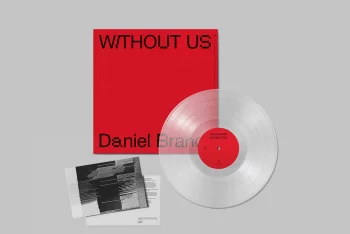
The Doomsday Clock currently sits at 90 seconds to midnight, the closest the big hand and the little hand have come to signalling our total destruction since the conceptual chronograph was incepted back in 1947. If we’re dancing on the brink then we might as well make sure that the music is great. Step forward Daniel Brandt, of lauded German electroacoustic outfit Brandt Brauer Frick, who leads the apocalyptic rave with his third solo album Without Us.
On top of the music, Without Us is a multimedia event that clashes head on with the spiralling chaos of our times, trying to make sense of the world as it unravels. These are big themes for a full-blooded and forceful record full of rhythmic propulsion, though sometimes it’s the tiny details that help us to see the bigger picture. Indeed, the spark for Without Us ignited in a supermarket when Brandt was innocuously going about the weekly shop in 2020.
“The idea for this project began with a small but unsettling experience in South London,” he remembers. “I was looking to buy a single avocado, but every store I went into only seemed to offer them in plastic wrapping, packed in pairs with a little cardboard base. I remember thinking: ‘but the avocado already comes in its own perfect packaging? And I only want one.’ It struck me as absurd that, despite our awareness of the damage plastic causes, unnecessary packaging like this still persists.”
The scenario turned into a farrago - Brandt went from store to store discovering the same nightmare in every shop where every avocado was wrapped in superfluous packaging: “As a touring musician, maybe I have to admit my own carbon footprint is questionable,” he admits, “but it’s countries and corporations that need to quit with the half measures that avail the planet nothing, usually under pressure from powerful, short-termist lobbying groups.”
He continues: “Without Us is about the helplessness of the individual in the climate crisis and the apparent need to take radical global action to change the trajectory of the current threat of a climate disaster. It’s about the despair and inability to be able to properly contribute to change as an individual, even though the general idea is that everybody can play their part. But this part that each individual is supposed to take responsibility for is so small compared to the scale of what is needed. The responsibility must not be with the individual when we’re suffering from decisions by global corporations aiming to get rich quick.”
If South London provided the impetus then it was the Joshua Tree in California where the record began to take shape against a mise-en-scene of staggering vistas and eerie quiet. Brandt spent the week recording mostly percussion with barely anyone around, and that feeling of deserted landscapes and unspoiled natural beauty translated itself throughout the rest of the process back at home in Hackney Wick, London and the studio in Neukölln, Berlin, where he completed the album.
“I really enjoy going to places that are remote when I start making stuff,” he says, “and so I hired this shack in the middle of nowhere with this beautiful view of crazy scenery. You could call it cinematic, and it definitely influenced the way I made the music, but there’s also a sense of sadness in a place like Joshua Tree that the joshua trees themselves won’t be able to survive when the earth heats up.”
That feeling is evoked in the album opener ‘Paradise O.D.’, featuring Japanese voice artist Hatis Noit, which begins with the sound of ominous synths liquefying in the heat, followed by urgent, metronomic percussion, counting down as though Father Time himself is looking impatiently at his watch. The kinetic energy that infuses the album, burning like fossil fuel, barely lets up: from the melted mellotron-like weirdness of ‘Lucid’ to the shuffling, skittering mayhem of ‘PNK’; the four-to-the-floor tension of ‘Resistance’ to the hand-drum hypnotic experience of ‘Steady’, and the final reckoning of ‘Nothing To Undo’, the sonic equivalent of the ultimate season finale (whether the show gets cancelled or not is still in the balance).
To help us visualise, Brandt has even made a 20 minute film of the same name with Anthony Dickenson, shot in the searing heat of Athens in 2023, a microcosmic reflection of climate chaos, offering extreme solutions and a large helping of hyperbole.
Brandt, as you might have gathered, isn’t on this mission alone: Anne Müller brings staccato cello bass to ‘Addicted’ and more thorough strokes throughout; French multi-instrumentalist Akusmi aka Pascal Bideau interjects arpeggios that teeter on the edge, and Florian Juncker’s manipulated trombones bring sinister shadows to sprawling soundscapes.
Without Us feels like Brandt’s most focused and expedient offering to date: Bideau and Junker both played on the brighter, Steve Reich-inspired Channels from 2018, while Brandt’s celebrated 2017 debut Eternal Something had started out as “a cymbals album” that developed into something else when he discovered Ryoji Ikeda was making 100 Cymbals at the same time. If he didn’t get to join the niche drum album club alongside artists like Babatunde Olatunji, Tito Puentes, Dave Lombardo and Jim White, then rhythm itself is always front and centre of what he does.
Without Us the full project—album, film, and live performance—will premiere as an immersive experience at Barbican Hall in London on April 24th, 2025. The event will combine live music, the film and an “apocalyptic rave” where we’ll be able to explore our collective anxieties in a multi-dimensional way. It’s time to mobilise, and hope against hope that the Doomsday Clock knows how to move in an anti-clockwise direction.
Sicherheits- und Herstellerinformationen / safety and manufacturer info (GPSR)
WAS - Word and Sound Medien GmbH
Liebigstrasse 2-20
DE - 22113 Hamburg
Germany
Contact: [email protected]More
On top of the music, Without Us is a multimedia event that clashes head on with the spiralling chaos of our times, trying to make sense of the world as it unravels. These are big themes for a full-blooded and forceful record full of rhythmic propulsion, though sometimes it’s the tiny details that help us to see the bigger picture. Indeed, the spark for Without Us ignited in a supermarket when Brandt was innocuously going about the weekly shop in 2020.
“The idea for this project began with a small but unsettling experience in South London,” he remembers. “I was looking to buy a single avocado, but every store I went into only seemed to offer them in plastic wrapping, packed in pairs with a little cardboard base. I remember thinking: ‘but the avocado already comes in its own perfect packaging? And I only want one.’ It struck me as absurd that, despite our awareness of the damage plastic causes, unnecessary packaging like this still persists.”
The scenario turned into a farrago - Brandt went from store to store discovering the same nightmare in every shop where every avocado was wrapped in superfluous packaging: “As a touring musician, maybe I have to admit my own carbon footprint is questionable,” he admits, “but it’s countries and corporations that need to quit with the half measures that avail the planet nothing, usually under pressure from powerful, short-termist lobbying groups.”
He continues: “Without Us is about the helplessness of the individual in the climate crisis and the apparent need to take radical global action to change the trajectory of the current threat of a climate disaster. It’s about the despair and inability to be able to properly contribute to change as an individual, even though the general idea is that everybody can play their part. But this part that each individual is supposed to take responsibility for is so small compared to the scale of what is needed. The responsibility must not be with the individual when we’re suffering from decisions by global corporations aiming to get rich quick.”
If South London provided the impetus then it was the Joshua Tree in California where the record began to take shape against a mise-en-scene of staggering vistas and eerie quiet. Brandt spent the week recording mostly percussion with barely anyone around, and that feeling of deserted landscapes and unspoiled natural beauty translated itself throughout the rest of the process back at home in Hackney Wick, London and the studio in Neukölln, Berlin, where he completed the album.
“I really enjoy going to places that are remote when I start making stuff,” he says, “and so I hired this shack in the middle of nowhere with this beautiful view of crazy scenery. You could call it cinematic, and it definitely influenced the way I made the music, but there’s also a sense of sadness in a place like Joshua Tree that the joshua trees themselves won’t be able to survive when the earth heats up.”
That feeling is evoked in the album opener ‘Paradise O.D.’, featuring Japanese voice artist Hatis Noit, which begins with the sound of ominous synths liquefying in the heat, followed by urgent, metronomic percussion, counting down as though Father Time himself is looking impatiently at his watch. The kinetic energy that infuses the album, burning like fossil fuel, barely lets up: from the melted mellotron-like weirdness of ‘Lucid’ to the shuffling, skittering mayhem of ‘PNK’; the four-to-the-floor tension of ‘Resistance’ to the hand-drum hypnotic experience of ‘Steady’, and the final reckoning of ‘Nothing To Undo’, the sonic equivalent of the ultimate season finale (whether the show gets cancelled or not is still in the balance).
To help us visualise, Brandt has even made a 20 minute film of the same name with Anthony Dickenson, shot in the searing heat of Athens in 2023, a microcosmic reflection of climate chaos, offering extreme solutions and a large helping of hyperbole.
Brandt, as you might have gathered, isn’t on this mission alone: Anne Müller brings staccato cello bass to ‘Addicted’ and more thorough strokes throughout; French multi-instrumentalist Akusmi aka Pascal Bideau interjects arpeggios that teeter on the edge, and Florian Juncker’s manipulated trombones bring sinister shadows to sprawling soundscapes.
Without Us feels like Brandt’s most focused and expedient offering to date: Bideau and Junker both played on the brighter, Steve Reich-inspired Channels from 2018, while Brandt’s celebrated 2017 debut Eternal Something had started out as “a cymbals album” that developed into something else when he discovered Ryoji Ikeda was making 100 Cymbals at the same time. If he didn’t get to join the niche drum album club alongside artists like Babatunde Olatunji, Tito Puentes, Dave Lombardo and Jim White, then rhythm itself is always front and centre of what he does.
Without Us the full project—album, film, and live performance—will premiere as an immersive experience at Barbican Hall in London on April 24th, 2025. The event will combine live music, the film and an “apocalyptic rave” where we’ll be able to explore our collective anxieties in a multi-dimensional way. It’s time to mobilise, and hope against hope that the Doomsday Clock knows how to move in an anti-clockwise direction.
Sicherheits- und Herstellerinformationen / safety and manufacturer info (GPSR)
WAS - Word and Sound Medien GmbH
Liebigstrasse 2-20
DE - 22113 Hamburg
Germany
Contact: [email protected]More
1
David Allred - Pupper
2
David Allred - The Beautiful World
3
David Allred - Stray
4
David Allred - Piano Tree
5
David Allred - Introverts As Leaders
6
David Allred - Our Secret
7
David Allred - Good Afternoon
8
David Allred - Oh Lauren
9
David Allred - The Door
10
David Allred - Look
11
David Allred - Elevation 145
Preview: https://www.youtube.com/watch?v=0zMjX4Sn2PU
David Allred is a prolific composer and producer based in Portland, Oregon. His new album The Beautiful World captures an enriched, realised understanding of why he composes in the first place. Dedicated to the expression of existential themes such as death, grief, longing and loss, the album’s core theme centres around the suicide of a young girl Lauren, who was a family friend to Allred.
For as long as he could remember, Allred always created music out of a kind of dissociative state which he finds alluringly easy to lapse into. A repetition of a motif is usually where he begins composing. But unlike his previous works, The Beautiful World firmly has one foot in reality and is deeply intertwined with Allred’s relationships, past and present.
For some musicians, a change in instrumentation, theme or learning a new artistic vocabulary helps them to move in a different direction. For Allred, a long period of introspection was more relevant to the development of his practice:
“I find beautiful irony when I consciously disconnect myself from working on music because it gives me more fuel and inspiration to engage in it more meaningfully when I resume. In the past, I used to work and create recklessly without boundaries which led to growth and success but at the cost of occasional disassociation. I would be checked out at times even while working [...] but now that I make music less often, I feel like I'm growing with what I do, and truly living life more. And since I'm getting more out of life, I have more to say. These boundaries have given me greater access to the things that inspire me, along with a peace of mind and the ability to rest when I maintain this balance.”
Through his correspondence with Erased Tapes label head and the album’s producer, Robert Raths, over the past year, he came to realise that everyone has a Lauren in a way – someone they’d lost. Through writing to Raths, Allred was able to draw out this thread from the work and position it more clearly as the central concept to this work. The music doesn’t reflect the chaos of trauma, instead it has a therapeutic quality. It was through this dialogue that Allred was able to create what may be his most cohesive body of work to date.
About this collaboration, Allred says:
"I am infinitely grateful for Robert's patience, persistence and profound attention to detail in the making of this record. He helped me feel effortlessly seen and understood in areas that are conventionally overlooked, collaboratively finding a mindful balance between the heart and the mind through creativity and work.”
The 11 track album unfolds around Oh Lauren, providing the core of the album’s sentiment – how grief returns to us throughout life over and over. Embedded more than halfway through the album, Allred allows listeners to cohabit a meditative space through ambient textures, drones and ballads echoing the vocal sincerity of Arthur Russell, Daniel Johnston and the hypnotic storytelling of Robert Ashley. Allred’s gorgeous melodic sense creates its own universe where the album’s songs live and breathe. He also has an intuitive understanding of the space between each note, and how to manipulate their decay to create otherworldly harmonics which envelop the sonic tapestry.
Compositions like Look and The Beautiful World provide tethers to Allred’s everyday existence. On Look he describes situations as simplistic as ordering a pizza with poignancy and bittersweetness. But lyrically, Allred “leans more abstract” than concrete. “I want to belong in the beautiful world” becomes mantra-like on the album’s title track, followed by Allred’s drifting observations set to a steady drone and percussion that sounds like the click of a Polaroid camera.
The instrumental pieces like Introverts as Leaders and Good Afternoon provide a delicate compliment to Allred’s lyric-focused pieces. The latter’s stuttering, granular-sounding synths pair with funereal organ, which beautifully captures the feelings of longing and loss that the songwriter is driven to communicate. These wordless spaces encompass Allred’s desire to make music that appeals primarily to the heart rather than the head. This new work invites listeners to come to terms with the way things are, what we can’t change – an acceptance of the everyday rather than embracing either pessimism or optimism.
To truly reckon with The Beautiful World’s emotional position, listeners must understand the importance of the figure of Lauren, and the significance she has had throughout Allred’s life. Lauren’s suicide as a child provided the catalyst for Allred’s lifelong grief. But it was death anxiety and grief itself which provided Allred a link to a universal relationship that people have with each other and the world they live in. Impermanence and loss are the driving force behind all of our connections.
The trance-like nature of The Beautiful World perhaps comes from David Allred’s time sense – particularly when it comes to memory and trauma. Time becomes non-linear rather than a straight line – where one can repeat or return to the same themes but older and in a different frame of mind. Grief continues to manifest itself in life and despite personal growth, there will always be moments where the same feeling will manifest itself again. The album encourages listeners to sit with the concept of grief, and Allred is hopeful they can find comfort and learn to process it in a healing way.
The Beautiful World is therefore heavily influenced by Allred’s work in therapy, particularly his relationship to writing music. In the past, Allred would be composing music as a means to dissociate from his life, but the album sees him engaging and connecting more authentically than ever with others and himself. Despite his prolific previous works being made in the company of others, Allred needed to step back from the scenes that he’s worked in to discover what he really wanted to create. Allred concludes: “In the power of love, curiosity, humour, and reconciliation, we give you The Beautiful World.
Sicherheits- und Herstellerinformationen / safety and manufacturer info (GPSR)
WAS - Word and Sound Medien GmbH
Liebigstrasse 2-20
DE - 22113 Hamburg
Germany
Contact: [email protected]More
David Allred is a prolific composer and producer based in Portland, Oregon. His new album The Beautiful World captures an enriched, realised understanding of why he composes in the first place. Dedicated to the expression of existential themes such as death, grief, longing and loss, the album’s core theme centres around the suicide of a young girl Lauren, who was a family friend to Allred.
For as long as he could remember, Allred always created music out of a kind of dissociative state which he finds alluringly easy to lapse into. A repetition of a motif is usually where he begins composing. But unlike his previous works, The Beautiful World firmly has one foot in reality and is deeply intertwined with Allred’s relationships, past and present.
For some musicians, a change in instrumentation, theme or learning a new artistic vocabulary helps them to move in a different direction. For Allred, a long period of introspection was more relevant to the development of his practice:
“I find beautiful irony when I consciously disconnect myself from working on music because it gives me more fuel and inspiration to engage in it more meaningfully when I resume. In the past, I used to work and create recklessly without boundaries which led to growth and success but at the cost of occasional disassociation. I would be checked out at times even while working [...] but now that I make music less often, I feel like I'm growing with what I do, and truly living life more. And since I'm getting more out of life, I have more to say. These boundaries have given me greater access to the things that inspire me, along with a peace of mind and the ability to rest when I maintain this balance.”
Through his correspondence with Erased Tapes label head and the album’s producer, Robert Raths, over the past year, he came to realise that everyone has a Lauren in a way – someone they’d lost. Through writing to Raths, Allred was able to draw out this thread from the work and position it more clearly as the central concept to this work. The music doesn’t reflect the chaos of trauma, instead it has a therapeutic quality. It was through this dialogue that Allred was able to create what may be his most cohesive body of work to date.
About this collaboration, Allred says:
"I am infinitely grateful for Robert's patience, persistence and profound attention to detail in the making of this record. He helped me feel effortlessly seen and understood in areas that are conventionally overlooked, collaboratively finding a mindful balance between the heart and the mind through creativity and work.”
The 11 track album unfolds around Oh Lauren, providing the core of the album’s sentiment – how grief returns to us throughout life over and over. Embedded more than halfway through the album, Allred allows listeners to cohabit a meditative space through ambient textures, drones and ballads echoing the vocal sincerity of Arthur Russell, Daniel Johnston and the hypnotic storytelling of Robert Ashley. Allred’s gorgeous melodic sense creates its own universe where the album’s songs live and breathe. He also has an intuitive understanding of the space between each note, and how to manipulate their decay to create otherworldly harmonics which envelop the sonic tapestry.
Compositions like Look and The Beautiful World provide tethers to Allred’s everyday existence. On Look he describes situations as simplistic as ordering a pizza with poignancy and bittersweetness. But lyrically, Allred “leans more abstract” than concrete. “I want to belong in the beautiful world” becomes mantra-like on the album’s title track, followed by Allred’s drifting observations set to a steady drone and percussion that sounds like the click of a Polaroid camera.
The instrumental pieces like Introverts as Leaders and Good Afternoon provide a delicate compliment to Allred’s lyric-focused pieces. The latter’s stuttering, granular-sounding synths pair with funereal organ, which beautifully captures the feelings of longing and loss that the songwriter is driven to communicate. These wordless spaces encompass Allred’s desire to make music that appeals primarily to the heart rather than the head. This new work invites listeners to come to terms with the way things are, what we can’t change – an acceptance of the everyday rather than embracing either pessimism or optimism.
To truly reckon with The Beautiful World’s emotional position, listeners must understand the importance of the figure of Lauren, and the significance she has had throughout Allred’s life. Lauren’s suicide as a child provided the catalyst for Allred’s lifelong grief. But it was death anxiety and grief itself which provided Allred a link to a universal relationship that people have with each other and the world they live in. Impermanence and loss are the driving force behind all of our connections.
The trance-like nature of The Beautiful World perhaps comes from David Allred’s time sense – particularly when it comes to memory and trauma. Time becomes non-linear rather than a straight line – where one can repeat or return to the same themes but older and in a different frame of mind. Grief continues to manifest itself in life and despite personal growth, there will always be moments where the same feeling will manifest itself again. The album encourages listeners to sit with the concept of grief, and Allred is hopeful they can find comfort and learn to process it in a healing way.
The Beautiful World is therefore heavily influenced by Allred’s work in therapy, particularly his relationship to writing music. In the past, Allred would be composing music as a means to dissociate from his life, but the album sees him engaging and connecting more authentically than ever with others and himself. Despite his prolific previous works being made in the company of others, Allred needed to step back from the scenes that he’s worked in to discover what he really wanted to create. Allred concludes: “In the power of love, curiosity, humour, and reconciliation, we give you The Beautiful World.
Sicherheits- und Herstellerinformationen / safety and manufacturer info (GPSR)
WAS - Word and Sound Medien GmbH
Liebigstrasse 2-20
DE - 22113 Hamburg
Germany
Contact: [email protected]More
Label:Erased Tapes
Cat-No:ERATPLP169
Release-Date:29.11.2024
Genre:Electronic, Electronica
Configuration:LP
Label:Erased Tapes
Cat-No:ERATPLP169
Release-Date:29.11.2024
Genre:Electronic, Electronica
Configuration:LP
1
Ben Lukas Boysen - Ours
2
Ben Lukas Boysen - Mass
3
Ben Lukas Boysen - Quasar
4
Ben Lukas Boysen - Alta Ripa
5
Ben Lukas Boysen - Nox
6
Ben Lukas Boysen - Vineta (Feat. Tom Adams)
7
Ben Lukas Boysen - Fama
8
Ben Lukas Boysen - Mere
Alta Ripa signifies a seismic shift in Ben Lukas Boysen's artistic journey. It revisits the foundational impulses of his youth, shaped amidst the serene beauty of rural Germany—a bucolic backdrop where his creative palette flourished. However, it was his move to Berlin in the early 2000s that electrified his sound, infusing it with the city’s pulsating energy and diverse cultural influences. Alta Ripa captures this transformative experience, blending the introspective melodies of his rural beginnings with the bold, experimental tones born from Berlin’s vibrant electronic music scene. This album is a testament to Boysen’s evolution, showcasing how geographical shifts can profoundly shape artistic expression.
Boysen’s fourth studio album under his own name, Alta Ripa is a nod to his beginnings as much as a hint to his future, and as a work, it’s almost contradictory in its boldness and humility. He invites the listener on a journey of self-discovery; both for himself and for them, describing the music as “something the 15-year-old in me would have liked to hear but only the grown-up version of myself can write.”
Boysen doesn’t consider himself to be part of any one musical tradition, due to the eclecticism of his own tastes, and because he’s never really been part of any specific scene. It’s not so much a lack of consistency as it is an appreciation for a wide range of different approaches – he’s constantly challenging himself to evolve musically.
Take for example his early origins in noise music under the moniker Hecq, where he explores inspirations from a variety of genres like left-field electronica, break-core and techno. Later, he began to work in parallel under his own name, focussing on writing more structured and textured electronic music, incorporating acoustic instrumentation. Boysen has also worked extensively as a composer for film, TV, video games, multimedia installations and fashion designers including Alexander McQueen.
His last two albums involved working closely with other musicians, including cellist Anne Müller, flugelhorn player Steffen Zimmer, and drummer Achim Färber. However, inspired in part by a recent return to live performance, Alta Ripa sees Boysen circling back to his passion for pure computer music. As he explains:
“After nearly 20 years in Berlin, I’ve had countless exchanges and encounters with wonderful artists that have reflected on my work and albums. But this little town Altrip – that I in some ways have never really left – with its distant memories, kept moving back to the front of my mind and encouraged me to take everything that I’ve learned and that I am today "back home” so to speak. I wanted to artistically return to the place that formed and inspired me before life got too complicated, and tap back into that world with today's experiences. Somehow going back and starting from scratch at the same time, to write an album that is simultaneously my oldest and newest record.”
For Boysen, the return to his youthful musical language marks a major turning point in his career. It represents a departure from his roots in classical music – his mother was an opera singer and his father an actor with an appreciation for Wagner, Arvo Pärt, Keith Jarrett, and Stockhausen. Although these are still important influences, Alta Ripa encapsulates a new, exploratory interplay between Boysen’s careful craft and his ability to let go of some of the process.
The album’s title comes from the original Roman name of the town that Boysen grew up in, Altrip, where he lived until his early twenties. This formative period is central to the ideas behind this album, from Boysen’s parental ‘schooling’ in classical music through to his sonic journeys through drum and bass, Aphex Twin, and Autechre — all of which changed his idea of what music could be. The extreme energy of tracks like ‘Acperience 1’ by Hardfloor, ‘Tracks & Fragment’ by Cari Lekebusch, ‘Focus2 Implan’ by Jiri.Ceiver, and ‘Low On Ice’ by Alec Empire are also pivotal influences.
For Boysen, this time of his musical development also involved knocking down the pillars that he previously thought had carried his world. A key moment for Boysen was being given a precious (pre-internet) club cassette at school that featured artists like Source Direct, Photek and Goldie. Excited by this new discovery, he introduced his father to the song ‘Dred Bass’ by Dead Dred. After the song finished, Boysen Sr. turned off the tape and proclaimed it was “the end of all music”. This heated exchange sparked a new, and more mature dialogue between the two that involved them sharing and discussing music on a regular basis.
Boysen’s classical and jazz music upbringing might not be easily noticeable from the electronic palette that he uses. But it can be found in its bones; the structure of the tracks and their dynamic shifts. On Alta Ripa, he intentionally embraces a spirit of controlled chaos, churning out sonic ideas to see what sticks. While this isn’t a straight-up Jackson Pollock approach, his use of modular analogue synths means he is forced to let go of some of his responsibility for the end result because each pattern created is distinctive and unique every time. With the help of this modular setup, he’s learned how to create the foundations for new ideas to blossom, somehow both nostalgic and new at once.
One of Brian Eno’s Oblique Strategy cards contains the phrase “gardening, not architecture”, and the trajectory of Boysen’s creative path reflects this metaphor. In much of his previous work he followed a sort of Brutalist architect’s approach; here, he was fully responsible for the tracks’ austere structures and planned them with deliberate care. But by sacrificing some of that control on Alta Ripa, he sets the right conditions for a dark and unpredictable, organic growth. It’s a push forward into a new world.
Sicherheits- und Herstellerinformationen / safety and manufacturer info (GPSR)
WAS - Word and Sound Medien GmbH
Liebigstrasse 2-20
DE - 22113 Hamburg
Germany
Contact: [email protected]More
Boysen’s fourth studio album under his own name, Alta Ripa is a nod to his beginnings as much as a hint to his future, and as a work, it’s almost contradictory in its boldness and humility. He invites the listener on a journey of self-discovery; both for himself and for them, describing the music as “something the 15-year-old in me would have liked to hear but only the grown-up version of myself can write.”
Boysen doesn’t consider himself to be part of any one musical tradition, due to the eclecticism of his own tastes, and because he’s never really been part of any specific scene. It’s not so much a lack of consistency as it is an appreciation for a wide range of different approaches – he’s constantly challenging himself to evolve musically.
Take for example his early origins in noise music under the moniker Hecq, where he explores inspirations from a variety of genres like left-field electronica, break-core and techno. Later, he began to work in parallel under his own name, focussing on writing more structured and textured electronic music, incorporating acoustic instrumentation. Boysen has also worked extensively as a composer for film, TV, video games, multimedia installations and fashion designers including Alexander McQueen.
His last two albums involved working closely with other musicians, including cellist Anne Müller, flugelhorn player Steffen Zimmer, and drummer Achim Färber. However, inspired in part by a recent return to live performance, Alta Ripa sees Boysen circling back to his passion for pure computer music. As he explains:
“After nearly 20 years in Berlin, I’ve had countless exchanges and encounters with wonderful artists that have reflected on my work and albums. But this little town Altrip – that I in some ways have never really left – with its distant memories, kept moving back to the front of my mind and encouraged me to take everything that I’ve learned and that I am today "back home” so to speak. I wanted to artistically return to the place that formed and inspired me before life got too complicated, and tap back into that world with today's experiences. Somehow going back and starting from scratch at the same time, to write an album that is simultaneously my oldest and newest record.”
For Boysen, the return to his youthful musical language marks a major turning point in his career. It represents a departure from his roots in classical music – his mother was an opera singer and his father an actor with an appreciation for Wagner, Arvo Pärt, Keith Jarrett, and Stockhausen. Although these are still important influences, Alta Ripa encapsulates a new, exploratory interplay between Boysen’s careful craft and his ability to let go of some of the process.
The album’s title comes from the original Roman name of the town that Boysen grew up in, Altrip, where he lived until his early twenties. This formative period is central to the ideas behind this album, from Boysen’s parental ‘schooling’ in classical music through to his sonic journeys through drum and bass, Aphex Twin, and Autechre — all of which changed his idea of what music could be. The extreme energy of tracks like ‘Acperience 1’ by Hardfloor, ‘Tracks & Fragment’ by Cari Lekebusch, ‘Focus2 Implan’ by Jiri.Ceiver, and ‘Low On Ice’ by Alec Empire are also pivotal influences.
For Boysen, this time of his musical development also involved knocking down the pillars that he previously thought had carried his world. A key moment for Boysen was being given a precious (pre-internet) club cassette at school that featured artists like Source Direct, Photek and Goldie. Excited by this new discovery, he introduced his father to the song ‘Dred Bass’ by Dead Dred. After the song finished, Boysen Sr. turned off the tape and proclaimed it was “the end of all music”. This heated exchange sparked a new, and more mature dialogue between the two that involved them sharing and discussing music on a regular basis.
Boysen’s classical and jazz music upbringing might not be easily noticeable from the electronic palette that he uses. But it can be found in its bones; the structure of the tracks and their dynamic shifts. On Alta Ripa, he intentionally embraces a spirit of controlled chaos, churning out sonic ideas to see what sticks. While this isn’t a straight-up Jackson Pollock approach, his use of modular analogue synths means he is forced to let go of some of his responsibility for the end result because each pattern created is distinctive and unique every time. With the help of this modular setup, he’s learned how to create the foundations for new ideas to blossom, somehow both nostalgic and new at once.
One of Brian Eno’s Oblique Strategy cards contains the phrase “gardening, not architecture”, and the trajectory of Boysen’s creative path reflects this metaphor. In much of his previous work he followed a sort of Brutalist architect’s approach; here, he was fully responsible for the tracks’ austere structures and planned them with deliberate care. But by sacrificing some of that control on Alta Ripa, he sets the right conditions for a dark and unpredictable, organic growth. It’s a push forward into a new world.
Sicherheits- und Herstellerinformationen / safety and manufacturer info (GPSR)
WAS - Word and Sound Medien GmbH
Liebigstrasse 2-20
DE - 22113 Hamburg
Germany
Contact: [email protected]More
1
Lukas Boysen - Ours
2
Lukas Boysen - Mass
3
Lukas Boysen - Quasar
4
Lukas Boysen - Alta Ripa
5
Lukas Boysen - Nox
6
Lukas Boysen - Vineta (feat. Tom Adams)
7
Lukas Boysen - Fama
8
Lukas Boysen - Mere
Alta Ripa signifies a seismic shift in Ben Lukas Boysen's artistic journey. It revisits the foundational impulses of his youth, shaped amidst the serene beauty of rural Germany—a bucolic backdrop where his creative palette flourished. However, it was his move to Berlin in the early 2000s that electrified his sound, infusing it with the city’s pulsating energy and diverse cultural influences. Alta Ripa captures this transformative experience, blending the introspective melodies of his rural beginnings with the bold, experimental tones born from Berlin’s vibrant electronic music scene. This album is a testament to Boysen’s evolution, showcasing how geographical shifts can profoundly shape artistic expression.
Boysen’s fourth studio album under his own name, Alta Ripa is a nod to his beginnings as much as a hint to his future, and as a work, it’s almost contradictory in its boldness and humility. He invites the listener on a journey of self-discovery; both for himself and for them, describing the music as “something the 15-year-old in me would have liked to hear but only the grown-up version of myself can write.”
Boysen doesn’t consider himself to be part of any one musical tradition, due to the eclecticism of his own tastes, and because he’s never really been part of any specific scene. It’s not so much a lack of consistency as it is an appreciation for a wide range of different approaches – he’s constantly challenging himself to evolve musically.
Take for example his early origins in noise music under the moniker Hecq, where he explores inspirations from a variety of genres like left-field electronica, break-core and techno. Later, he began to work in parallel under his own name, focussing on writing more structured and textured electronic music, incorporating acoustic instrumentation. Boysen has also worked extensively as a composer for film, TV, video games, multimedia installations and fashion designers including Alexander McQueen.
His last two albums involved working closely with other musicians, including cellist Anne Müller, flugelhorn player Steffen Zimmer, and drummer Achim Färber. However, inspired in part by a recent return to live performance, Alta Ripa sees Boysen circling back to his passion for pure computer music. As he explains:
“After nearly 20 years in Berlin, I’ve had countless exchanges and encounters with wonderful artists that have reflected on my work and albums. But this little town Altrip – that I in some ways have never really left – with its distant memories, kept moving back to the front of my mind and encouraged me to take everything that I’ve learned and that I am today "back home” so to speak. I wanted to artistically return to the place that formed and inspired me before life got too complicated, and tap back into that world with today's experiences. Somehow going back and starting from scratch at the same time, to write an album that is simultaneously my oldest and newest record.”
For Boysen, the return to his youthful musical language marks a major turning point in his career. It represents a departure from his roots in classical music – his mother was an opera singer and his father an actor with an appreciation for Wagner, Arvo Pärt, Keith Jarrett, and Stockhausen. Although these are still important influences, Alta Ripa encapsulates a new, exploratory interplay between Boysen’s careful craft and his ability to let go of some of the process.
The album’s title comes from the original Roman name of the town that Boysen grew up in, Altrip, where he lived until his early twenties. This formative period is central to the ideas behind this album, from Boysen’s parental ‘schooling’ in classical music through to his sonic journeys through drum and bass, Aphex Twin, and Autechre — all of which changed his idea of what music could be. The extreme energy of tracks like ‘Acperience 1’ by Hardfloor, ‘Tracks & Fragment’ by Cari Lekebusch, ‘Focus2 Implan’ by Jiri.Ceiver, and ‘Low On Ice’ by Alec Empire are also pivotal influences.
For Boysen, this time of his musical development also involved knocking down the pillars that he previously thought had carried his world. A key moment for Boysen was being given a precious (pre-internet) club cassette at school that featured artists like Source Direct, Photek and Goldie. Excited by this new discovery, he introduced his father to the song ‘Dred Bass’ by Dead Dred. After the song finished, Boysen Sr. turned off the tape and proclaimed it was “the end of all music”. This heated exchange sparked a new, and more mature dialogue between the two that involved them sharing and discussing music on a regular basis.
Boysen’s classical and jazz music upbringing might not be easily noticeable from the electronic palette that he uses. But it can be found in its bones; the structure of the tracks and their dynamic shifts. On Alta Ripa, he intentionally embraces a spirit of controlled chaos, churning out sonic ideas to see what sticks. While this isn’t a straight-up Jackson Pollock approach, his use of modular analogue synths means he is forced to let go of some of his responsibility for the end result because each pattern created is distinctive and unique every time. With the help of this modular setup, he’s learned how to create the foundations for new ideas to blossom, somehow both nostalgic and new at once.
One of Brian Eno’s Oblique Strategy cards contains the phrase “gardening, not architecture”, and the trajectory of Boysen’s creative path reflects this metaphor. In much of his previous work he followed a sort of Brutalist architect’s approach; here, he was fully responsible for the tracks’ austere structures and planned them with deliberate care. But by sacrificing some of that control on Alta Ripa, he sets the right conditions for a dark and unpredictable, organic growth. It’s a push forward into a new world.
Sicherheits- und Herstellerinformationen / safety and manufacturer info (GPSR)
WAS - Word and Sound Medien GmbH
Liebigstrasse 2-20
DE - 22113 Hamburg
Germany
Contact: [email protected]More
Boysen’s fourth studio album under his own name, Alta Ripa is a nod to his beginnings as much as a hint to his future, and as a work, it’s almost contradictory in its boldness and humility. He invites the listener on a journey of self-discovery; both for himself and for them, describing the music as “something the 15-year-old in me would have liked to hear but only the grown-up version of myself can write.”
Boysen doesn’t consider himself to be part of any one musical tradition, due to the eclecticism of his own tastes, and because he’s never really been part of any specific scene. It’s not so much a lack of consistency as it is an appreciation for a wide range of different approaches – he’s constantly challenging himself to evolve musically.
Take for example his early origins in noise music under the moniker Hecq, where he explores inspirations from a variety of genres like left-field electronica, break-core and techno. Later, he began to work in parallel under his own name, focussing on writing more structured and textured electronic music, incorporating acoustic instrumentation. Boysen has also worked extensively as a composer for film, TV, video games, multimedia installations and fashion designers including Alexander McQueen.
His last two albums involved working closely with other musicians, including cellist Anne Müller, flugelhorn player Steffen Zimmer, and drummer Achim Färber. However, inspired in part by a recent return to live performance, Alta Ripa sees Boysen circling back to his passion for pure computer music. As he explains:
“After nearly 20 years in Berlin, I’ve had countless exchanges and encounters with wonderful artists that have reflected on my work and albums. But this little town Altrip – that I in some ways have never really left – with its distant memories, kept moving back to the front of my mind and encouraged me to take everything that I’ve learned and that I am today "back home” so to speak. I wanted to artistically return to the place that formed and inspired me before life got too complicated, and tap back into that world with today's experiences. Somehow going back and starting from scratch at the same time, to write an album that is simultaneously my oldest and newest record.”
For Boysen, the return to his youthful musical language marks a major turning point in his career. It represents a departure from his roots in classical music – his mother was an opera singer and his father an actor with an appreciation for Wagner, Arvo Pärt, Keith Jarrett, and Stockhausen. Although these are still important influences, Alta Ripa encapsulates a new, exploratory interplay between Boysen’s careful craft and his ability to let go of some of the process.
The album’s title comes from the original Roman name of the town that Boysen grew up in, Altrip, where he lived until his early twenties. This formative period is central to the ideas behind this album, from Boysen’s parental ‘schooling’ in classical music through to his sonic journeys through drum and bass, Aphex Twin, and Autechre — all of which changed his idea of what music could be. The extreme energy of tracks like ‘Acperience 1’ by Hardfloor, ‘Tracks & Fragment’ by Cari Lekebusch, ‘Focus2 Implan’ by Jiri.Ceiver, and ‘Low On Ice’ by Alec Empire are also pivotal influences.
For Boysen, this time of his musical development also involved knocking down the pillars that he previously thought had carried his world. A key moment for Boysen was being given a precious (pre-internet) club cassette at school that featured artists like Source Direct, Photek and Goldie. Excited by this new discovery, he introduced his father to the song ‘Dred Bass’ by Dead Dred. After the song finished, Boysen Sr. turned off the tape and proclaimed it was “the end of all music”. This heated exchange sparked a new, and more mature dialogue between the two that involved them sharing and discussing music on a regular basis.
Boysen’s classical and jazz music upbringing might not be easily noticeable from the electronic palette that he uses. But it can be found in its bones; the structure of the tracks and their dynamic shifts. On Alta Ripa, he intentionally embraces a spirit of controlled chaos, churning out sonic ideas to see what sticks. While this isn’t a straight-up Jackson Pollock approach, his use of modular analogue synths means he is forced to let go of some of his responsibility for the end result because each pattern created is distinctive and unique every time. With the help of this modular setup, he’s learned how to create the foundations for new ideas to blossom, somehow both nostalgic and new at once.
One of Brian Eno’s Oblique Strategy cards contains the phrase “gardening, not architecture”, and the trajectory of Boysen’s creative path reflects this metaphor. In much of his previous work he followed a sort of Brutalist architect’s approach; here, he was fully responsible for the tracks’ austere structures and planned them with deliberate care. But by sacrificing some of that control on Alta Ripa, he sets the right conditions for a dark and unpredictable, organic growth. It’s a push forward into a new world.
Sicherheits- und Herstellerinformationen / safety and manufacturer info (GPSR)
WAS - Word and Sound Medien GmbH
Liebigstrasse 2-20
DE - 22113 Hamburg
Germany
Contact: [email protected]More
Label:Erased Tapes
Cat-No:ERATPLX62
Release-Date:01.11.2024
Genre:Electronic, Electronica
Configuration:2LP
Label:Erased Tapes
Cat-No:ERATPLX62
Release-Date:01.11.2024
Genre:Electronic, Electronica
Configuration:2LP
1
Kiasmos - Lit
2
Kiasmos - Held
3
Kiasmos - Looped
4
Kiasmos - Swayed
5
Kiasmos - Thrown
6
Kiasmos - Dragged
7
Kiasmos - Bent
8
Kiasmos - Burnt
Zehn Jahre nach der Veröffentlichung ihres bahnbrechenden selbstbetitelten Albums feiern Kiasmos mit einer limitierten Auflage auf blauem Vinyl. Die Pressung ist weltweit auf 2000 Stück limitiert. Das Album, das allein auf Spotify über 100 Millionen Mal gestreamt wurde, ist zu einem unverzichtbaren Album der elektronischen Musik geworden und hat seitdem Künstler auf der ganzen Welt inspiriert. Nach der erfolgreichen Kampagne zum Nachfolgealbum ("II") Anfang des Jahres scheint es nun an der Zeit zu sein, sich darauf zu besinnen, wo alles begann: mit zwei Freunden, die im Studio experimentierten und Spaß hatten.
Sicherheits- und Herstellerinformationen / safety and manufacturer info (GPSR)
WAS - Word and Sound Medien GmbH
Liebigstrasse 2-20
DE - 22113 Hamburg
Germany
Contact: [email protected]More
Sicherheits- und Herstellerinformationen / safety and manufacturer info (GPSR)
WAS - Word and Sound Medien GmbH
Liebigstrasse 2-20
DE - 22113 Hamburg
Germany
Contact: [email protected]More
1
Masayoshi Fujita - Tower Of Cloud
2
Masayoshi Fujita - Pale Purple
3
Masayoshi Fujita - Blue Rock Thrush
4
Masayoshi Fujita - Our Mother's Lights (Feat. Moor Mother)
5
Masayoshi Fujita - Desonata
6
Masayoshi Fujita - Ocean Flow
7
Masayoshi Fujita - Distant Planet
8
Masayoshi Fujita - In A Sunny Meadow
9
Masayoshi Fujita - Higurashi (Feat. Hatis Noit)
10
Masayoshi Fujita - Valley
11
Masayoshi Fujita - Yodaka
Japanese vibraphonist and marimba player Masayoshi Fujita returns with Migratory, his masterful new solo album, where his sonic explorations into the unknown continue.
In 2020, after 13 years of living in Berlin, Fujita returned to his native Japan with his wife and their three children, fulfilling his life-long dream of living and composing music in the midst of nature. The family found their new home in the mountain hills along the coast of Kami-cho, Hyogo, three hours west of Kyoto.
Once settled in, Fujita spent his time turning an old kindergarten into his own music studio, Kebi Bird Studio, which became the birthplace of Migratory. On his new album, the composer and producer masterfully reimagines and mesmerises with his trademark sounds of vibraphone, and resumes his experimentation with the marimba and synthesisers that he first incorporated on his 2021 album, Bird Ambience, which followed the release of his acclaimed vibraphone triptych: Stories (2012), Apologues (2015) and Book of Life (2018).
On Fujita’s ever-evolving list of collaborators, Migratory introduces vocals from Moor Mother on ‘Our Mother’s Lights’ and Hatis Noit on ‘Higurashi’, as well as sho and saxophone to its soundscapes.
Whilst at a music residency in Stockholm in 2021, Fujita met Swedish sho player Mattias Hållsten. Although it was a brief encounter, the two musicians stayed in touch. During a visit to Japan, Hållsten stopped by the studio and played on three of the tracks, including the alluring album closer ‘Yodaka’, exceeding Fujita’s own expectations.
Another collaborator, American poet Moor Mother asked Fujita to contribute vibraphone to her upcoming album, and in return lent her powerful voice to the Migratory’s centrepiece, Our Mother’s Lights — “it carries a kind of African and Asian vibe, a perfect match for the energy of the piece,” he adds.
As with Bird Ambience, Fujita continues to be inspired by our feathered friends. The album’s title, Migratory, originates from an image that came to him of migratory birds, travelling somewhere between Africa, Southeast Asia and Japan, imagining them hearing the music from the land underneath, and how their point of view of the world from above blurs the boundaries of music and land.
Expanding on this, Fujita says: “these ideas and images were inspired by my experiences of living abroad and returning to my homeland, as well as by the artists featured on this album who also somehow travelled or lived in other countries across the boundaries, and being influenced by the music of other lands but at the same time somehow led to their roots."
Masayoshi’s parents too made a life abroad in Thailand for over 15 years. After returning to Japan, Fujita’s mother passed away in the beginning of 2023. So he invited his father to come for a visit, to spend time with him and his grandchildren. A lifelong musician in his own right, the two of them soon found themselves holed up in Kebi Bird Studio. Fujita senior had brought his saxophone, which he played on top of the then unfinished recordings, resulting in three breathtaking pieces. The slow jazz-tinged ‘Blue Rock Thrush’ stands out, with the saxophone and marimba blending harmoniously reaching new artistic heights.
Nature has always been a source of inspiration for Fujita, and on Migratory it takes centre stage. You can hear it on the album’s peaceful and considered field recordings, but most importantly, Masayoshi highlights – “nature is there as the image to be evoked by the listener from the music.” On the record’s sleeve notes, written by renowned novelist and travel writer Pico Iyer, we learn about the Japan that he hears as he sits down and listens to the music. It educates and encapsulates us, in the same way Fujita’s imaginary birds vividly depict the essence of musical migration.
Sicherheits- und Herstellerinformationen / safety and manufacturer info (GPSR)
WAS - Word and Sound Medien GmbH
Liebigstrasse 2-20
DE - 22113 Hamburg
Germany
Contact: [email protected]More
In 2020, after 13 years of living in Berlin, Fujita returned to his native Japan with his wife and their three children, fulfilling his life-long dream of living and composing music in the midst of nature. The family found their new home in the mountain hills along the coast of Kami-cho, Hyogo, three hours west of Kyoto.
Once settled in, Fujita spent his time turning an old kindergarten into his own music studio, Kebi Bird Studio, which became the birthplace of Migratory. On his new album, the composer and producer masterfully reimagines and mesmerises with his trademark sounds of vibraphone, and resumes his experimentation with the marimba and synthesisers that he first incorporated on his 2021 album, Bird Ambience, which followed the release of his acclaimed vibraphone triptych: Stories (2012), Apologues (2015) and Book of Life (2018).
On Fujita’s ever-evolving list of collaborators, Migratory introduces vocals from Moor Mother on ‘Our Mother’s Lights’ and Hatis Noit on ‘Higurashi’, as well as sho and saxophone to its soundscapes.
Whilst at a music residency in Stockholm in 2021, Fujita met Swedish sho player Mattias Hållsten. Although it was a brief encounter, the two musicians stayed in touch. During a visit to Japan, Hållsten stopped by the studio and played on three of the tracks, including the alluring album closer ‘Yodaka’, exceeding Fujita’s own expectations.
Another collaborator, American poet Moor Mother asked Fujita to contribute vibraphone to her upcoming album, and in return lent her powerful voice to the Migratory’s centrepiece, Our Mother’s Lights — “it carries a kind of African and Asian vibe, a perfect match for the energy of the piece,” he adds.
As with Bird Ambience, Fujita continues to be inspired by our feathered friends. The album’s title, Migratory, originates from an image that came to him of migratory birds, travelling somewhere between Africa, Southeast Asia and Japan, imagining them hearing the music from the land underneath, and how their point of view of the world from above blurs the boundaries of music and land.
Expanding on this, Fujita says: “these ideas and images were inspired by my experiences of living abroad and returning to my homeland, as well as by the artists featured on this album who also somehow travelled or lived in other countries across the boundaries, and being influenced by the music of other lands but at the same time somehow led to their roots."
Masayoshi’s parents too made a life abroad in Thailand for over 15 years. After returning to Japan, Fujita’s mother passed away in the beginning of 2023. So he invited his father to come for a visit, to spend time with him and his grandchildren. A lifelong musician in his own right, the two of them soon found themselves holed up in Kebi Bird Studio. Fujita senior had brought his saxophone, which he played on top of the then unfinished recordings, resulting in three breathtaking pieces. The slow jazz-tinged ‘Blue Rock Thrush’ stands out, with the saxophone and marimba blending harmoniously reaching new artistic heights.
Nature has always been a source of inspiration for Fujita, and on Migratory it takes centre stage. You can hear it on the album’s peaceful and considered field recordings, but most importantly, Masayoshi highlights – “nature is there as the image to be evoked by the listener from the music.” On the record’s sleeve notes, written by renowned novelist and travel writer Pico Iyer, we learn about the Japan that he hears as he sits down and listens to the music. It educates and encapsulates us, in the same way Fujita’s imaginary birds vividly depict the essence of musical migration.
Sicherheits- und Herstellerinformationen / safety and manufacturer info (GPSR)
WAS - Word and Sound Medien GmbH
Liebigstrasse 2-20
DE - 22113 Hamburg
Germany
Contact: [email protected]More
1
Masayoshi Fujita - Tower Of Cloud
2
Masayoshi Fujita - Pale Purple
3
Masayoshi Fujita - Blue Rock Thrush
4
Masayoshi Fujita - Our Mother's Lights (Feat. Moor Mother)
5
Masayoshi Fujita - Desonata
6
Masayoshi Fujita - Ocean Flow
7
Masayoshi Fujita - Distant Planet
8
Masayoshi Fujita - In A Sunny Meadow
9
Masayoshi Fujita - Higurashi (Feat. Hatis Noit)
10
Masayoshi Fujita - Valley
11
Masayoshi Fujita - Yodaka
Japanese vibraphonist and marimba player Masayoshi Fujita returns with Migratory, his masterful new solo album, where his sonic explorations into the unknown continue.
In 2020, after 13 years of living in Berlin, Fujita returned to his native Japan with his wife and their three children, fulfilling his life-long dream of living and composing music in the midst of nature. The family found their new home in the mountain hills along the coast of Kami-cho, Hyogo, three hours west of Kyoto.
Once settled in, Fujita spent his time turning an old kindergarten into his own music studio, Kebi Bird Studio, which became the birthplace of Migratory. On his new album, the composer and producer masterfully reimagines and mesmerises with his trademark sounds of vibraphone, and resumes his experimentation with the marimba and synthesisers that he first incorporated on his 2021 album, Bird Ambience, which followed the release of his acclaimed vibraphone triptych: Stories (2012), Apologues (2015) and Book of Life (2018).
On Fujita’s ever-evolving list of collaborators, Migratory introduces vocals from Moor Mother on ‘Our Mother’s Lights’ and Hatis Noit on ‘Higurashi’, as well as sho and saxophone to its soundscapes.
Whilst at a music residency in Stockholm in 2021, Fujita met Swedish sho player Mattias Hållsten. Although it was a brief encounter, the two musicians stayed in touch. During a visit to Japan, Hållsten stopped by the studio and played on three of the tracks, including the alluring album closer ‘Yodaka’, exceeding Fujita’s own expectations.
Another collaborator, American poet Moor Mother asked Fujita to contribute vibraphone to her upcoming album, and in return lent her powerful voice to the Migratory’s centrepiece, Our Mother’s Lights — “it carries a kind of African and Asian vibe, a perfect match for the energy of the piece,” he adds.
As with Bird Ambience, Fujita continues to be inspired by our feathered friends. The album’s title, Migratory, originates from an image that came to him of migratory birds, travelling somewhere between Africa, Southeast Asia and Japan, imagining them hearing the music from the land underneath, and how their point of view of the world from above blurs the boundaries of music and land.
Expanding on this, Fujita says: “these ideas and images were inspired by my experiences of living abroad and returning to my homeland, as well as by the artists featured on this album who also somehow travelled or lived in other countries across the boundaries, and being influenced by the music of other lands but at the same time somehow led to their roots."
Masayoshi’s parents too made a life abroad in Thailand for over 15 years. After returning to Japan, Fujita’s mother passed away in the beginning of 2023. So he invited his father to come for a visit, to spend time with him and his grandchildren. A lifelong musician in his own right, the two of them soon found themselves holed up in Kebi Bird Studio. Fujita senior had brought his saxophone, which he played on top of the then unfinished recordings, resulting in three breathtaking pieces. The slow jazz-tinged ‘Blue Rock Thrush’ stands out, with the saxophone and marimba blending harmoniously reaching new artistic heights.
Nature has always been a source of inspiration for Fujita, and on Migratory it takes centre stage. You can hear it on the album’s peaceful and considered field recordings, but most importantly, Masayoshi highlights – “nature is there as the image to be evoked by the listener from the music.” On the record’s sleeve notes, written by renowned novelist and travel writer Pico Iyer, we learn about the Japan that he hears as he sits down and listens to the music. It educates and encapsulates us, in the same way Fujita’s imaginary birds vividly depict the essence of musical migration.
Sicherheits- und Herstellerinformationen / safety and manufacturer info (GPSR)
WAS - Word and Sound Medien GmbH
Liebigstrasse 2-20
DE - 22113 Hamburg
Germany
Contact: [email protected]More
In 2020, after 13 years of living in Berlin, Fujita returned to his native Japan with his wife and their three children, fulfilling his life-long dream of living and composing music in the midst of nature. The family found their new home in the mountain hills along the coast of Kami-cho, Hyogo, three hours west of Kyoto.
Once settled in, Fujita spent his time turning an old kindergarten into his own music studio, Kebi Bird Studio, which became the birthplace of Migratory. On his new album, the composer and producer masterfully reimagines and mesmerises with his trademark sounds of vibraphone, and resumes his experimentation with the marimba and synthesisers that he first incorporated on his 2021 album, Bird Ambience, which followed the release of his acclaimed vibraphone triptych: Stories (2012), Apologues (2015) and Book of Life (2018).
On Fujita’s ever-evolving list of collaborators, Migratory introduces vocals from Moor Mother on ‘Our Mother’s Lights’ and Hatis Noit on ‘Higurashi’, as well as sho and saxophone to its soundscapes.
Whilst at a music residency in Stockholm in 2021, Fujita met Swedish sho player Mattias Hållsten. Although it was a brief encounter, the two musicians stayed in touch. During a visit to Japan, Hållsten stopped by the studio and played on three of the tracks, including the alluring album closer ‘Yodaka’, exceeding Fujita’s own expectations.
Another collaborator, American poet Moor Mother asked Fujita to contribute vibraphone to her upcoming album, and in return lent her powerful voice to the Migratory’s centrepiece, Our Mother’s Lights — “it carries a kind of African and Asian vibe, a perfect match for the energy of the piece,” he adds.
As with Bird Ambience, Fujita continues to be inspired by our feathered friends. The album’s title, Migratory, originates from an image that came to him of migratory birds, travelling somewhere between Africa, Southeast Asia and Japan, imagining them hearing the music from the land underneath, and how their point of view of the world from above blurs the boundaries of music and land.
Expanding on this, Fujita says: “these ideas and images were inspired by my experiences of living abroad and returning to my homeland, as well as by the artists featured on this album who also somehow travelled or lived in other countries across the boundaries, and being influenced by the music of other lands but at the same time somehow led to their roots."
Masayoshi’s parents too made a life abroad in Thailand for over 15 years. After returning to Japan, Fujita’s mother passed away in the beginning of 2023. So he invited his father to come for a visit, to spend time with him and his grandchildren. A lifelong musician in his own right, the two of them soon found themselves holed up in Kebi Bird Studio. Fujita senior had brought his saxophone, which he played on top of the then unfinished recordings, resulting in three breathtaking pieces. The slow jazz-tinged ‘Blue Rock Thrush’ stands out, with the saxophone and marimba blending harmoniously reaching new artistic heights.
Nature has always been a source of inspiration for Fujita, and on Migratory it takes centre stage. You can hear it on the album’s peaceful and considered field recordings, but most importantly, Masayoshi highlights – “nature is there as the image to be evoked by the listener from the music.” On the record’s sleeve notes, written by renowned novelist and travel writer Pico Iyer, we learn about the Japan that he hears as he sits down and listens to the music. It educates and encapsulates us, in the same way Fujita’s imaginary birds vividly depict the essence of musical migration.
Sicherheits- und Herstellerinformationen / safety and manufacturer info (GPSR)
WAS - Word and Sound Medien GmbH
Liebigstrasse 2-20
DE - 22113 Hamburg
Germany
Contact: [email protected]More
1
Douglas Dare - Three Roads
2
Douglas Dare - Mouth To Mouth
3
Douglas Dare - Absentia
4
Douglas Dare - Sailor
5
Douglas Dare - Omni
6
Douglas Dare - Teach Me
7
Douglas Dare - No Island Is A Man
8
Douglas Dare - Painter
9
Douglas Dare - 8W9ZEROS
10
Douglas Dare - The Stream
British artist Douglas Dare announces the release of his fourth album Omni. Seen by Douglas himself as a bold rebirth and embrace of the electronic, Omni is all at once a throbbing, avant-garde, queer, dark and cinematic record imbued with a love of rave culture and sense of fearless storytelling that’s deeply evocative. Omni will be released on May 10 via Erased Tapes.
Douglas has shared the first taster of the record with ‘Mouth to Mouth’, a pulsing, synth-laden track that begs to be played loud. ‘Mouth to Mouth’ sees a collaboration with label mate Daniel Brandt who appears on production duties, with beats supplied by Rival Consoles. Speaking on the track, Douglas says, “life, death, fate and orgies; this is the heartfelt club track I always wanted to write.”
Since 2013, Douglas has blurred classical, chamber-pop, folk and avant-garde to dazzling effect, with a startling voice that can stop you in your tracks. It’s why he’s played with luminaries like Nils Frahm, Perfume Genius and Ólafur Arnalds, and was selected by David Lynch and The Cure’s Robert Smith for their respective cultural festivals in Manchester (MIF) and London (Meltdown).
But Douglas’s fourth album, Omni, is a fresh awakening. Encouraged by Erased Tapes founder Robert Raths, he decided to step away from acoustic instruments, especially the piano he grew up playing, and swapped them for synths and drum machines.
His new music has much in common with Arca and the late SOPHIE, two artists for whom self-expression meant liberation. “I got to hang out in the studio with her,” says Douglas of the latter musician, “the way she made music made a big impression on me.” And yet Omni is steeped in the kind of deft storytelling, sweeping strings, elegant contrasts and fairytale atmosphere that marks Douglas out as a crucial and singular voice. It’s not often you hear a strutting electro banger that could have been straight out of 90s Soho, with vocal loops inspired by US experimentalist Meredith Monk.
For Douglas, Omni is about reconciling all those different sides of himself – the songwriter, the raver, the lover, the observer. It’s a hugely queer record: seductive, sexy, lusty, untethered from the genre binary. “It’s even got sailors on it!” laughs Douglas. “You don’t get more queer than that.”
Sicherheits- und Herstellerinformationen / safety and manufacturer info (GPSR)
WAS - Word and Sound Medien GmbH
Liebigstrasse 2-20
DE - 22113 Hamburg
Germany
Contact: [email protected]More
Douglas has shared the first taster of the record with ‘Mouth to Mouth’, a pulsing, synth-laden track that begs to be played loud. ‘Mouth to Mouth’ sees a collaboration with label mate Daniel Brandt who appears on production duties, with beats supplied by Rival Consoles. Speaking on the track, Douglas says, “life, death, fate and orgies; this is the heartfelt club track I always wanted to write.”
Since 2013, Douglas has blurred classical, chamber-pop, folk and avant-garde to dazzling effect, with a startling voice that can stop you in your tracks. It’s why he’s played with luminaries like Nils Frahm, Perfume Genius and Ólafur Arnalds, and was selected by David Lynch and The Cure’s Robert Smith for their respective cultural festivals in Manchester (MIF) and London (Meltdown).
But Douglas’s fourth album, Omni, is a fresh awakening. Encouraged by Erased Tapes founder Robert Raths, he decided to step away from acoustic instruments, especially the piano he grew up playing, and swapped them for synths and drum machines.
His new music has much in common with Arca and the late SOPHIE, two artists for whom self-expression meant liberation. “I got to hang out in the studio with her,” says Douglas of the latter musician, “the way she made music made a big impression on me.” And yet Omni is steeped in the kind of deft storytelling, sweeping strings, elegant contrasts and fairytale atmosphere that marks Douglas out as a crucial and singular voice. It’s not often you hear a strutting electro banger that could have been straight out of 90s Soho, with vocal loops inspired by US experimentalist Meredith Monk.
For Douglas, Omni is about reconciling all those different sides of himself – the songwriter, the raver, the lover, the observer. It’s a hugely queer record: seductive, sexy, lusty, untethered from the genre binary. “It’s even got sailors on it!” laughs Douglas. “You don’t get more queer than that.”
Sicherheits- und Herstellerinformationen / safety and manufacturer info (GPSR)
WAS - Word and Sound Medien GmbH
Liebigstrasse 2-20
DE - 22113 Hamburg
Germany
Contact: [email protected]More
1
Sheherazaad - Mashoor
2
Sheherazaad - Dhund Lo Mujhe
3
Sheherazaad - Koshish
4
Sheherazaad - Khatam
5
Sheherazaad - Lehja
Today, migration seems to be encoded into everyday habits. As so many of our minds and bodies aggressively globalise in unprecedented ways, previously fixed “genres” and identities of any kind are constantly being dismantled, made redundant, and born anew.
It’s from this space of flux that American composer and vocalist Sheherazaad derives song. Her forthcoming mini-album, Qasr, was engendered during a time of family estrangement, grief over a lost elder, and the racial polarisation of her country as she knew it.
Translating to “castle” or “fortress” in Urdu, Qasr is indeed a monument — like encapsulation of the real strains of displacement, the push and pull of diaspora, and the depravity of erasure and forgotten roots. These experiences and their inherent violence, hysteria, and romance imbue her sonic deep-dive into the world of the so-called in-between.
“It was maddening” Sheherazaad says, “that the music of my origins didn’t yet exist. So I knew I would have to make it.” Born to what she describes as a “fanatically art-centered, Asian-American household”, Sheher began her ear training at home, with both her parents being band musicians and her grandmother a trailblazing Indian classical concert producer. At home, she absorbed the life portfolios of Lata Mangeshkar and RD Burman, while beginning formal voice education in jazz and American Songbook from the age of six.
After years of singing competitions and performances of Western repertoire, Sheherazaad “stopped singing completely,” citing her “disenchantment with English as an emotive language” after encountering British colonial history. But she also felt a visceral disorientation resulting from long stays in India, where her mixed North and South Indian heritage further complicated and left a deep imprint on her hyphenated young psyche, and speaking accent.
Instead, she turned to experimental theatre spaces and Bollywood dance as a means to express her evolving positionality. Moving to New York for university, she quickly discovered a more radical South Asian arts community. Sheher began following the likes of the Swet Shop Boys, studying the UK’s historic Asian electronic counterculture, and eventually crossing paths with experimental Pakistani artist Arooj Aftab. “I felt determined to resurrect and recalibrate my singing voice”, she says, “to participate in this new wave I saw of diasporic music innovation and its links with political liberation.”
Relocating to California then, for vocal rehabilitation, Sheherazaad found her Northern Star in the Hindustani classical guru Madhuvanti Bhide, who helped Sheher reshape her old voice, using “gharana” methodology. In a further attempt to re-access lost heritage, Sheher also studied Arabic, Hindi, and Urdu, where she quickly advanced and wrote test lyrics. These would result in her self-released 2020 underground project Khwaabistan, and garner the attention of Aftab, who offered to produce Sheher’s next record.
Working long-distance from separate coasts during the pandemic, the pair got to work on Qasr. The collaboration would culminate in the heart of Brooklyn at the Glass Wall studio, during late-night, feverish recording sessions and utilising a groundbreaking cast of international musicianship, including Basma Edrees (Egypt), Gilbert Mansour (Lebanon), and Firas Zreik (Palestine).
It’s a record that plays with your perceptions. Sheher’s melismatic vocals emerge like a wisp of smoke on ‘Mashoor’ (“Famous), billowing through the earthy acoustic guitar of Ria Modak, lending the song an almost religious quality. But ‘Mashoor’ is in fact a rumination on the pitfalls of a society obsessed with fame and narcissism. Pizzicato fiddles cut through on ‘Dhund Lo Mujhe’ (“Search For Me”), almost unnervingly jaunty alongside her tumultuous delivery. “For me, it brings up this circus of the insane, carnival of the unhappy,” she explains. “It suggests a very specific insanity, that of the immigrant experience. There is implied bloodshed, glamour, hallucination, and schizophrenia.”
The tendency, she explains, in the US context, is for Asian people to fit the “model minority myth”, and hide the more ominous dimensions of themselves. “I want listeners to unleash all of that unabashedly,” she says. “This is about delighting in our wickedness, especially as gender expansive people, where we’ve previously had little control over our sonic narrative in Hindi and Urdu music.”
‘Koshish’ (“Try” in English), is a track about ageing that brims with infatuation and nostalgia for people or places. “It’s a way of paying homage to my Californian upbringing, revamping the surfer genre with brown beach bodies and hidden Oud as the axis of the song.” In the slow-burning, velvety ‘Khatam’ (“Finished”), live piano melts around harmonised voice layers, as she sings of time, clashes of civilizations, and apocalypse. Here, she weaves a warped fable about a feminine traveller journeying through epochs, stumbling upon alien lyrical terrain that has rarely been sung through a brown femme gaze.
Luminous, eccentric orchestration ebbs and flows through the record like a bioluminescent ocean, alongside quiet textural elements: a trickle of water, a ticking clock, ghostly whispers, twinkling manjira. Singing in a delicate, chiffon vocal which defies genre and expectation — satirically hymnlike, then an erratic vibrato — Sheher’s poetic lyrics about marginalised genders and imagined homelands pour out over lush, enlivened instrumentation. There is no one way to behold the magnetic Qasr. “This may sound like some kind of third-culture reclamation,” she muses, before pausing, “Or it could just be like, you know, new-age, contemporary American folk.”
That freedom to interpret is in keeping with a bigger sense that haunts her work – indulgence to be our messiest selves, the selves that openly defy rigid codes and protocols of race, creed, or gender. As an additional ode to freedom: ‘Sheherazaad’ translated in Hindi and Urdu means a “free city”. Whilst her artist name is a tribute to Scheherazade, the revolutionary figure from the epic collection of folktales, The One Thousand and One Nights, whose storytelling prowess brings an end to the mindless genocide of women.
It’s fitting then, that the final track on the album, the arresting seven minutes long ‘Lehja’ (related to language and speaking-style), is a foray into Sheher’s literal storytelling ability. The song brings to life a mythical city she refers to as “Sheher” (a meta-reference to her artist persona). Lehja examines the turmoil that may surround mother tongue, pronunciation, and the fight to preserve disappearing ancestral languages. The song culminates in a refrain of “azaadi”, a chant that serves as an unequivocal call for freedom across much of South and Southwest Asia, closing the album as mysteriously as it begins.
And so, on Qasr, Sheherazaad gives us a beguiling new soundscape, not yet of this world. But she also stokes the flame of fantasies inherent to the nomadic experience, which may finally be brought to the fore. Overall, the bewitching album finds an artist building her own fortress, while enticing us to forge our own castles, musical queendoms, and impossible dreamlands.
Words by Tara Joshi
Sicherheits- und Herstellerinformationen / safety and manufacturer info (GPSR)
WAS - Word and Sound Medien GmbH
Liebigstrasse 2-20
DE - 22113 Hamburg
Germany
Contact: [email protected]More
It’s from this space of flux that American composer and vocalist Sheherazaad derives song. Her forthcoming mini-album, Qasr, was engendered during a time of family estrangement, grief over a lost elder, and the racial polarisation of her country as she knew it.
Translating to “castle” or “fortress” in Urdu, Qasr is indeed a monument — like encapsulation of the real strains of displacement, the push and pull of diaspora, and the depravity of erasure and forgotten roots. These experiences and their inherent violence, hysteria, and romance imbue her sonic deep-dive into the world of the so-called in-between.
“It was maddening” Sheherazaad says, “that the music of my origins didn’t yet exist. So I knew I would have to make it.” Born to what she describes as a “fanatically art-centered, Asian-American household”, Sheher began her ear training at home, with both her parents being band musicians and her grandmother a trailblazing Indian classical concert producer. At home, she absorbed the life portfolios of Lata Mangeshkar and RD Burman, while beginning formal voice education in jazz and American Songbook from the age of six.
After years of singing competitions and performances of Western repertoire, Sheherazaad “stopped singing completely,” citing her “disenchantment with English as an emotive language” after encountering British colonial history. But she also felt a visceral disorientation resulting from long stays in India, where her mixed North and South Indian heritage further complicated and left a deep imprint on her hyphenated young psyche, and speaking accent.
Instead, she turned to experimental theatre spaces and Bollywood dance as a means to express her evolving positionality. Moving to New York for university, she quickly discovered a more radical South Asian arts community. Sheher began following the likes of the Swet Shop Boys, studying the UK’s historic Asian electronic counterculture, and eventually crossing paths with experimental Pakistani artist Arooj Aftab. “I felt determined to resurrect and recalibrate my singing voice”, she says, “to participate in this new wave I saw of diasporic music innovation and its links with political liberation.”
Relocating to California then, for vocal rehabilitation, Sheherazaad found her Northern Star in the Hindustani classical guru Madhuvanti Bhide, who helped Sheher reshape her old voice, using “gharana” methodology. In a further attempt to re-access lost heritage, Sheher also studied Arabic, Hindi, and Urdu, where she quickly advanced and wrote test lyrics. These would result in her self-released 2020 underground project Khwaabistan, and garner the attention of Aftab, who offered to produce Sheher’s next record.
Working long-distance from separate coasts during the pandemic, the pair got to work on Qasr. The collaboration would culminate in the heart of Brooklyn at the Glass Wall studio, during late-night, feverish recording sessions and utilising a groundbreaking cast of international musicianship, including Basma Edrees (Egypt), Gilbert Mansour (Lebanon), and Firas Zreik (Palestine).
It’s a record that plays with your perceptions. Sheher’s melismatic vocals emerge like a wisp of smoke on ‘Mashoor’ (“Famous), billowing through the earthy acoustic guitar of Ria Modak, lending the song an almost religious quality. But ‘Mashoor’ is in fact a rumination on the pitfalls of a society obsessed with fame and narcissism. Pizzicato fiddles cut through on ‘Dhund Lo Mujhe’ (“Search For Me”), almost unnervingly jaunty alongside her tumultuous delivery. “For me, it brings up this circus of the insane, carnival of the unhappy,” she explains. “It suggests a very specific insanity, that of the immigrant experience. There is implied bloodshed, glamour, hallucination, and schizophrenia.”
The tendency, she explains, in the US context, is for Asian people to fit the “model minority myth”, and hide the more ominous dimensions of themselves. “I want listeners to unleash all of that unabashedly,” she says. “This is about delighting in our wickedness, especially as gender expansive people, where we’ve previously had little control over our sonic narrative in Hindi and Urdu music.”
‘Koshish’ (“Try” in English), is a track about ageing that brims with infatuation and nostalgia for people or places. “It’s a way of paying homage to my Californian upbringing, revamping the surfer genre with brown beach bodies and hidden Oud as the axis of the song.” In the slow-burning, velvety ‘Khatam’ (“Finished”), live piano melts around harmonised voice layers, as she sings of time, clashes of civilizations, and apocalypse. Here, she weaves a warped fable about a feminine traveller journeying through epochs, stumbling upon alien lyrical terrain that has rarely been sung through a brown femme gaze.
Luminous, eccentric orchestration ebbs and flows through the record like a bioluminescent ocean, alongside quiet textural elements: a trickle of water, a ticking clock, ghostly whispers, twinkling manjira. Singing in a delicate, chiffon vocal which defies genre and expectation — satirically hymnlike, then an erratic vibrato — Sheher’s poetic lyrics about marginalised genders and imagined homelands pour out over lush, enlivened instrumentation. There is no one way to behold the magnetic Qasr. “This may sound like some kind of third-culture reclamation,” she muses, before pausing, “Or it could just be like, you know, new-age, contemporary American folk.”
That freedom to interpret is in keeping with a bigger sense that haunts her work – indulgence to be our messiest selves, the selves that openly defy rigid codes and protocols of race, creed, or gender. As an additional ode to freedom: ‘Sheherazaad’ translated in Hindi and Urdu means a “free city”. Whilst her artist name is a tribute to Scheherazade, the revolutionary figure from the epic collection of folktales, The One Thousand and One Nights, whose storytelling prowess brings an end to the mindless genocide of women.
It’s fitting then, that the final track on the album, the arresting seven minutes long ‘Lehja’ (related to language and speaking-style), is a foray into Sheher’s literal storytelling ability. The song brings to life a mythical city she refers to as “Sheher” (a meta-reference to her artist persona). Lehja examines the turmoil that may surround mother tongue, pronunciation, and the fight to preserve disappearing ancestral languages. The song culminates in a refrain of “azaadi”, a chant that serves as an unequivocal call for freedom across much of South and Southwest Asia, closing the album as mysteriously as it begins.
And so, on Qasr, Sheherazaad gives us a beguiling new soundscape, not yet of this world. But she also stokes the flame of fantasies inherent to the nomadic experience, which may finally be brought to the fore. Overall, the bewitching album finds an artist building her own fortress, while enticing us to forge our own castles, musical queendoms, and impossible dreamlands.
Words by Tara Joshi
Sicherheits- und Herstellerinformationen / safety and manufacturer info (GPSR)
WAS - Word and Sound Medien GmbH
Liebigstrasse 2-20
DE - 22113 Hamburg
Germany
Contact: [email protected]More
Tracklist:
1.Tower of Meaning I
2.Tower of Meaning II
3.Tower of Meaning III
4.Tower of Meaning IV
5.Corky I / White Jet Set Smoke Trail I
6.Consideration
7.Tower of Meaning V
8.Tower of Meaning VI
9.Tower of Meaning VII
10.Tower of Meaning VIII
11.Tower of Meaning IX / Corky II
12.Tower of Meaning X
13.Give It to the Sky
14.Tower of Meaning XI
15.Tower of Meaning XII
16.Corky III
17.White Jet Smoke Trail II
This autumn, Erased Tapes are set to release ‘Give It to the Sky: Arthur Russell’s Tower of Meaning Expanded’ by composer and producer Peter Broderick and French 12-piece group Ensemble 0; a complete re-recording of Russell’s epic minimalist orchestral composition originally released in 1983. ‘Give It to the Sky’ also includes unreleased tracks by Russell which have been restored and re-recorded, resulting in an 80-minute reanimation that threads several lost songs into a meticulous and gorgeous rendering. The album was recorded live as a group in a small theatre in the Southwest of France with minimal overdubs.
For all its wonder and beauty, the musical output of the American cellist, composer, singer, and musical visionary also embodies irony, tragedy, and paradox. Russell famously recorded more than 1,000 hours of tape and left an otherwise-tremendous archive, now part of the New York Public Library. But before his death in 1992, Russell released just three albums under his own name. One of those was ‘Tower of Meaning’ (1983), a score commissioned for and then abandoned by a Robert Wilson production of Euripides' Medea. Composer and pianist Philip Glass helped preserve the music, at least, subsequently releasing a somewhat-thin recording on his own label of just 320 LPs.
A few years into his obsession with Russell’s work, Broderick paid $500 for one of those scant copies (it was remastered and reissued in 2006, followed by several subsequent editions). Still, he didn’t connect with that collector’s item the way he did with so much of Russell’s oeuvre. It felt a tad cold and distant, Russell’s usual tangle of intimacy and mystery perhaps lost in his frustrations with the process or maybe in the recording itself. Ensemble 0 founder Stéphane Garin realized he needed to pursue this project immediately after performing just a bit of the piece. In 2019, the group played a 25-minute chunk as a preamble to ‘Femenine’, the pulsing minimalist masterwork of Julius Eastman (a longtime Russell collaborator, Eastman conducted the initial recording of ‘Tower of Meaning’). He was struck by its splendor and subtle difficulty, the way that Russell shirked dissonance in favor of metric complexity. There was little else like it.
Garin was aware of Broderick’s stints interpreting Russell’s songs on stages and albums for the better part of a decade but also his work collaborating with Russell’s estate to restore previously unreleased tracks for the critically acclaimed album ‘Iowa Dream’ (2019). Broderick naturally did not hesitate when Ensemble 0 asked him to enlist, but he did offer a surprise: Rather than lace ‘Tower of Meaning’ with expected Russell standards, why not incorporate some of his cherished songs that had never found a home?
Early in the process, Ensemble 0 made the decision that they would not seek out Russell’s original esoteric scores, which had already been used to stage ‘Tower of Meaning’ elsewhere. They liked the fact that the recording felt unfinished, allowing them to consider what was missing and how the ever-restless Russell might have modified it over time. Ensemble 0 saxophonist Julien Pontvianne toiled over this task, scrutinizing recordings that Russell had slowed with a tape machine in order to find the melodies and undergirding arrangements.
‘Give It to the Sky’ is supple and dioramic. Pontvianne’s transcriptions add both muscle and nuance to the original recording, with a new low-end depth to balance the trebly tremble. Ensemble 0’s layers are as intricate as they are expertly rendered, the obfuscation of that rare Glass release replaced by a clarity that lets you peer inside this mesmeric music. New ideas appear, suggesting ‘Tower of Meaning’ as the scaffolding to something greater.
Ensemble 0 weave in and out of Broderick’s additions. ‘Corky’, a poignant cowboy ballad that Russell never finished, appears, disappears, and reappears three times, the droning exhalations of ‘Tower of Meaning’ making it feel sweeter and sadder. Arriving just after the triumphant halfway mark, the title track is a sublime meditation on mere existence, about staring at some simple rural scene and marcelling at the miracle of being anywhere at all. It is an apt encapsulation of how this entire project feels – a glorious way to hear something that might have seemed familiar as if for the very first time.
Russell was never much for definitive versions, of course. He was constantly rethinking the possibilities of a piece, of wondering what else it could do. ‘Give It to the Sky’ is a powerful affirmation of those principles, using Tower of Meaning’s framework to build outward and upward, to shape something that functions within Russell’s wondrous, paradoxical world. And ‘Give It to the Sky’ is also not intended to be some definitive last word. Broderick and Ensemble 0 speak already of the ways it may shift on stage, of where else it might lead.
Peter Broderick: voice, violin, acoustic guitar, drum kit
Pandora Burrus: french horn
Sylvain Chauveau: harmonium, ebow guitar, radio static
Vianney Desplantes: euphonium
Jozef Dumoulin: piano, synthesizer
Júlia Gállego Ronda: flute
Stéphane Garin: vibraphone, glockenspiel, percussion
Amélie Grould: vibraphone
Barbara Hünninger: viola da gamba
Tomoko Katsura: violin
Fanny Meteier: tuba
Lucas Pizzini: tape processing
Julien Pontvianne: tenor saxophone
Transcriptions and arrangements by Julien Pontvianne
Recorded and mixed by Lucas Pizzini
Mastered by Zino Mikorey
Lacquer cut by Jana Falcon at Schnittstelle
Design by Bernd Kuchenbeiser
Special thanks to Steve Knutson and Tom Lee
All music and lyrics written by Charles Arthur Russell Jr.
Published by Echo & Feedback Newsletter Music (ASCAP) / Domino Publishing Co. Ltd. (PRS)
Lyrics included by kind permission of the estate of Arthur Russell.
Executive Producer: Robert Raths
Sicherheits- und Herstellerinformationen / safety and manufacturer info (GPSR)
WAS - Word and Sound Medien GmbH
Liebigstrasse 2-20
DE - 22113 Hamburg
Germany
Contact: [email protected]More
1.Tower of Meaning I
2.Tower of Meaning II
3.Tower of Meaning III
4.Tower of Meaning IV
5.Corky I / White Jet Set Smoke Trail I
6.Consideration
7.Tower of Meaning V
8.Tower of Meaning VI
9.Tower of Meaning VII
10.Tower of Meaning VIII
11.Tower of Meaning IX / Corky II
12.Tower of Meaning X
13.Give It to the Sky
14.Tower of Meaning XI
15.Tower of Meaning XII
16.Corky III
17.White Jet Smoke Trail II
This autumn, Erased Tapes are set to release ‘Give It to the Sky: Arthur Russell’s Tower of Meaning Expanded’ by composer and producer Peter Broderick and French 12-piece group Ensemble 0; a complete re-recording of Russell’s epic minimalist orchestral composition originally released in 1983. ‘Give It to the Sky’ also includes unreleased tracks by Russell which have been restored and re-recorded, resulting in an 80-minute reanimation that threads several lost songs into a meticulous and gorgeous rendering. The album was recorded live as a group in a small theatre in the Southwest of France with minimal overdubs.
For all its wonder and beauty, the musical output of the American cellist, composer, singer, and musical visionary also embodies irony, tragedy, and paradox. Russell famously recorded more than 1,000 hours of tape and left an otherwise-tremendous archive, now part of the New York Public Library. But before his death in 1992, Russell released just three albums under his own name. One of those was ‘Tower of Meaning’ (1983), a score commissioned for and then abandoned by a Robert Wilson production of Euripides' Medea. Composer and pianist Philip Glass helped preserve the music, at least, subsequently releasing a somewhat-thin recording on his own label of just 320 LPs.
A few years into his obsession with Russell’s work, Broderick paid $500 for one of those scant copies (it was remastered and reissued in 2006, followed by several subsequent editions). Still, he didn’t connect with that collector’s item the way he did with so much of Russell’s oeuvre. It felt a tad cold and distant, Russell’s usual tangle of intimacy and mystery perhaps lost in his frustrations with the process or maybe in the recording itself. Ensemble 0 founder Stéphane Garin realized he needed to pursue this project immediately after performing just a bit of the piece. In 2019, the group played a 25-minute chunk as a preamble to ‘Femenine’, the pulsing minimalist masterwork of Julius Eastman (a longtime Russell collaborator, Eastman conducted the initial recording of ‘Tower of Meaning’). He was struck by its splendor and subtle difficulty, the way that Russell shirked dissonance in favor of metric complexity. There was little else like it.
Garin was aware of Broderick’s stints interpreting Russell’s songs on stages and albums for the better part of a decade but also his work collaborating with Russell’s estate to restore previously unreleased tracks for the critically acclaimed album ‘Iowa Dream’ (2019). Broderick naturally did not hesitate when Ensemble 0 asked him to enlist, but he did offer a surprise: Rather than lace ‘Tower of Meaning’ with expected Russell standards, why not incorporate some of his cherished songs that had never found a home?
Early in the process, Ensemble 0 made the decision that they would not seek out Russell’s original esoteric scores, which had already been used to stage ‘Tower of Meaning’ elsewhere. They liked the fact that the recording felt unfinished, allowing them to consider what was missing and how the ever-restless Russell might have modified it over time. Ensemble 0 saxophonist Julien Pontvianne toiled over this task, scrutinizing recordings that Russell had slowed with a tape machine in order to find the melodies and undergirding arrangements.
‘Give It to the Sky’ is supple and dioramic. Pontvianne’s transcriptions add both muscle and nuance to the original recording, with a new low-end depth to balance the trebly tremble. Ensemble 0’s layers are as intricate as they are expertly rendered, the obfuscation of that rare Glass release replaced by a clarity that lets you peer inside this mesmeric music. New ideas appear, suggesting ‘Tower of Meaning’ as the scaffolding to something greater.
Ensemble 0 weave in and out of Broderick’s additions. ‘Corky’, a poignant cowboy ballad that Russell never finished, appears, disappears, and reappears three times, the droning exhalations of ‘Tower of Meaning’ making it feel sweeter and sadder. Arriving just after the triumphant halfway mark, the title track is a sublime meditation on mere existence, about staring at some simple rural scene and marcelling at the miracle of being anywhere at all. It is an apt encapsulation of how this entire project feels – a glorious way to hear something that might have seemed familiar as if for the very first time.
Russell was never much for definitive versions, of course. He was constantly rethinking the possibilities of a piece, of wondering what else it could do. ‘Give It to the Sky’ is a powerful affirmation of those principles, using Tower of Meaning’s framework to build outward and upward, to shape something that functions within Russell’s wondrous, paradoxical world. And ‘Give It to the Sky’ is also not intended to be some definitive last word. Broderick and Ensemble 0 speak already of the ways it may shift on stage, of where else it might lead.
Peter Broderick: voice, violin, acoustic guitar, drum kit
Pandora Burrus: french horn
Sylvain Chauveau: harmonium, ebow guitar, radio static
Vianney Desplantes: euphonium
Jozef Dumoulin: piano, synthesizer
Júlia Gállego Ronda: flute
Stéphane Garin: vibraphone, glockenspiel, percussion
Amélie Grould: vibraphone
Barbara Hünninger: viola da gamba
Tomoko Katsura: violin
Fanny Meteier: tuba
Lucas Pizzini: tape processing
Julien Pontvianne: tenor saxophone
Transcriptions and arrangements by Julien Pontvianne
Recorded and mixed by Lucas Pizzini
Mastered by Zino Mikorey
Lacquer cut by Jana Falcon at Schnittstelle
Design by Bernd Kuchenbeiser
Special thanks to Steve Knutson and Tom Lee
All music and lyrics written by Charles Arthur Russell Jr.
Published by Echo & Feedback Newsletter Music (ASCAP) / Domino Publishing Co. Ltd. (PRS)
Lyrics included by kind permission of the estate of Arthur Russell.
Executive Producer: Robert Raths
Sicherheits- und Herstellerinformationen / safety and manufacturer info (GPSR)
WAS - Word and Sound Medien GmbH
Liebigstrasse 2-20
DE - 22113 Hamburg
Germany
Contact: [email protected]More
Customers who bought this also bought this
1
Otto A. Totland - Open
2
Otto A. Totland - Steps
3
Otto A. Totland - Oana
4
Otto A. Totland - Solêr
5
Otto A. Totland - Aquet
6
Otto A. Totland - Weltz
7
Otto A. Totland - Pinô
8
Otto A. Totland - Seveen
9
Otto A. Totland - Ro To
10
Otto A. Totland - North Way
11
Otto A. Totland - Julie
12
Otto A. Totland - Frost
13
Otto A. Totland - Bluss
14
Otto A. Totland - Flomé
15
Otto A. Totland - Âust
16
Otto A. Totland - Run
17
Otto A. Totland - Jonas
18
Otto A. Totland - Closer
2026 repress, incl. full-tone printed outer & inner sleeve, incl. download
Deaf Center member Otto A Totland’s 2014 debut LP, an intricate work for solo piano.
Otto A Totland's modern compositional elements are most widely recognized as half of the Norwegian duo Deaf Center, where his melancholic, intricate piano work provides haunting relief to the beds of noise and deep strings from Erik K Skodvin. Pinô is the first full-length release by Totland, though his solo work has been released once, as the 5-minute A-side of Sonic Pieces 7inch Harmony From the Past. Otto's previously brief vignettes are now expanded into a fully personal realization of his own style.
Initial track Open fills itself with heavy, knowing pauses that quickly become overwhelmed with the desire to understand what's to come. Each silence leads into quick flutters of keys, preparing the listener for a vast terrain of giddy beauty, bleak depths, and true contentedness. Pinô quickly recalls deep winter; in front of a fireplace for days on end, you lose how far along you've ventured into the 18 tracks without any idea how far is left to go. The experience feels inevitable, with no other option but to curl up somewhere cozy and appreciate the sense of timelessness that Totland has created. His album is a haunting modern compositional treasure, expressed through instrumentals completely unique to Totland and captured masterfully by Nils Frahm at Durton Studios.
With Pinô, Otto A Totland appears out of the Norwegian landscape, sharing an achievement that will provide a relief during the brooding winter darkness. Though a highly personal endeavor, the recognizable continuation of Totland’s compositions will attract fans of Deaf Center, and the cinematic and classical components of his solo work will hold sway for those familiar with Harold Budd or Dustin O’Halloran.
Sicherheits- und Herstellerinformationen / safety and manufacturer info (GPSR)
WAS - Word and Sound Medien GmbH
Liebigstrasse 2-20
DE - 22113 Hamburg
Germany
Contact: [email protected]More
Deaf Center member Otto A Totland’s 2014 debut LP, an intricate work for solo piano.
Otto A Totland's modern compositional elements are most widely recognized as half of the Norwegian duo Deaf Center, where his melancholic, intricate piano work provides haunting relief to the beds of noise and deep strings from Erik K Skodvin. Pinô is the first full-length release by Totland, though his solo work has been released once, as the 5-minute A-side of Sonic Pieces 7inch Harmony From the Past. Otto's previously brief vignettes are now expanded into a fully personal realization of his own style.
Initial track Open fills itself with heavy, knowing pauses that quickly become overwhelmed with the desire to understand what's to come. Each silence leads into quick flutters of keys, preparing the listener for a vast terrain of giddy beauty, bleak depths, and true contentedness. Pinô quickly recalls deep winter; in front of a fireplace for days on end, you lose how far along you've ventured into the 18 tracks without any idea how far is left to go. The experience feels inevitable, with no other option but to curl up somewhere cozy and appreciate the sense of timelessness that Totland has created. His album is a haunting modern compositional treasure, expressed through instrumentals completely unique to Totland and captured masterfully by Nils Frahm at Durton Studios.
With Pinô, Otto A Totland appears out of the Norwegian landscape, sharing an achievement that will provide a relief during the brooding winter darkness. Though a highly personal endeavor, the recognizable continuation of Totland’s compositions will attract fans of Deaf Center, and the cinematic and classical components of his solo work will hold sway for those familiar with Harold Budd or Dustin O’Halloran.
Sicherheits- und Herstellerinformationen / safety and manufacturer info (GPSR)
WAS - Word and Sound Medien GmbH
Liebigstrasse 2-20
DE - 22113 Hamburg
Germany
Contact: [email protected]More
1
Yamasuki - Yamasuki
2
Yamasuki - Aisere I Love You
3
Yamasuki - Kono Samourai
4
Yamasuki - Yamamoto Kakapote
5
Yamasuki - Okawa
6
Yamasuki - Aieaoa
7
Yamasuki - Abana Bakana
8
Yamasuki - Seyu Sayonara
9
Yamasuki - Yama Yama
10
Yamasuki - Fudji Yama
11
Yamasuki - Yokomo
12
Yamasuki - Kashi Kofima
A delirious cult concept album disguised as pop, first released in 1971, where psychedelic grooves, funk and global rhythms meet phonetic pseudo-Japanese chants, judo-master ritual cries and a children's choir. Sampled by Erykah Badu, Madlib and DopeLemon, and the unlikely spark behind Bananarama's debut. This can only be the fabulous world of Yamasuki.
In the spring of 1971, somewhere between Brussels, Paris and a collective pop fever dream, Le Monde Fabuleux Des Yamasuki landed on vinyl. It sounded like nothing else then and it still does not today. More than half a century later, Sdban Records proudly presents a reissue of this singular cult album, available from April 3, 2026 on vinyl.
The album was produced by Jean Kluger and written both by Jean and Daniel Vangarde (aka Bangalter, later the father of Thomas Bangalter of Daft Punk), who were already well ahead of their time, long before electronic music rewrote the rules of pop culture.
This new reissue of Le Monde Fabuleux Des Yamasuki proves the renewed interest and respect for this cult album, faithful to the original spirit while finally giving it back the physical presence it deserves. In an era obsessed with genres and algorithmic neatness, Yamasuki still laughs, dances and karate-kicks its way past definitions. It reminds us that pop music can be playful without being disposable, strange without being cynical and joyful without explanation. The world of Yamasuki was always fabulous, we are just lucky it found its way back to us!
Tracklist
A1. Yamasuki - Yamasuki
A2. Yamasuki - Aisere I Love You
A3. Yamasuki - Kono Samourai
A4. Yamasuki - Yamamoto Kakapote
A5. Yamasuki - Okawa
A6. Yamasuki - Aieaoa
B1. Yamasuki - Abana Bakana
B2. Yamasuki - Seyu Sayonara
B3. Yamasuki - Yama Yama
B4. Yamasuki - Fudji Yama
B5. Yamasuki - Yokomo
B6. Yamasuki - Kashi Kofima
Sicherheits- und Herstellerinformationen / safety and manufacturer info (GPSR)
WAS - Word and Sound Medien GmbH
Liebigstrasse 2-20
DE - 22113 Hamburg
Germany
Contact: [email protected]More
In the spring of 1971, somewhere between Brussels, Paris and a collective pop fever dream, Le Monde Fabuleux Des Yamasuki landed on vinyl. It sounded like nothing else then and it still does not today. More than half a century later, Sdban Records proudly presents a reissue of this singular cult album, available from April 3, 2026 on vinyl.
The album was produced by Jean Kluger and written both by Jean and Daniel Vangarde (aka Bangalter, later the father of Thomas Bangalter of Daft Punk), who were already well ahead of their time, long before electronic music rewrote the rules of pop culture.
This new reissue of Le Monde Fabuleux Des Yamasuki proves the renewed interest and respect for this cult album, faithful to the original spirit while finally giving it back the physical presence it deserves. In an era obsessed with genres and algorithmic neatness, Yamasuki still laughs, dances and karate-kicks its way past definitions. It reminds us that pop music can be playful without being disposable, strange without being cynical and joyful without explanation. The world of Yamasuki was always fabulous, we are just lucky it found its way back to us!
Tracklist
A1. Yamasuki - Yamasuki
A2. Yamasuki - Aisere I Love You
A3. Yamasuki - Kono Samourai
A4. Yamasuki - Yamamoto Kakapote
A5. Yamasuki - Okawa
A6. Yamasuki - Aieaoa
B1. Yamasuki - Abana Bakana
B2. Yamasuki - Seyu Sayonara
B3. Yamasuki - Yama Yama
B4. Yamasuki - Fudji Yama
B5. Yamasuki - Yokomo
B6. Yamasuki - Kashi Kofima
Sicherheits- und Herstellerinformationen / safety and manufacturer info (GPSR)
WAS - Word and Sound Medien GmbH
Liebigstrasse 2-20
DE - 22113 Hamburg
Germany
Contact: [email protected]More

1
Lone - Life Spark
2
Lone - (mid apple intro)
3
Lone - Affinityy (Cloud Four Four Mix)
4
Lone - Opening A Portal
5
Lone - Miracle Mile (feat. Bikôkô)
6
Lone - Triton
7
Lone - Photographs That Don't Exist
8
Lone - Throw The Ember Feat. Juga-Naut
9
Lone - We Move Feat. Ell Murphy
10
Lone - Big World Feat. Lou Hayter
11
Lone - Waterfall Reverse
12
Lone - Slickly, Sweetly, Summer Movie
13
Lone - Scattergun
14
Lone - Home Feat. Merry Lamb Lamb
15
Lone - Fruit Rots, Water Floats Downstream
16
Lone - Ascension.png
An artist who has been soundtracking dancefloors since the early 2000s, Lonemade his production debut in 2008 with “Lemurian”, a hip-hop inspired release before moving into the vibrant future-facing soundscapes we have come to know. His back catalogue ranges through house, rave, ambient and electronica, and on ‘Hyperphantasia’, Cutler sets himself the challenge to bring all of those influences together for one body of work that he describes ‘like an album in my mind’. Referring back to the album title, the definition of hyperphantasia is a condition characterized by exceptionally vivid and detailed mental imagery and for this album he tested himself to see how close he could get the music to sound exactly like what he was hearing in his imagination.
On Hyperphantasia, Lone deepens his relationship with vocals. Having previously relied on vocal samples or more abstract live vocal treatments, this latest album marks a shift toward richer, more pop-leaning sensibilities. Cutler makes a clear lyrical statement, enlisting a diverse and carefully chosen cast of collaborators: London-based artists and fellow Greco-Roman affiliates Ell Murphy and Lou Hayter, Barcelona’s breakthrough singer Bikôkô, cult Nottingham rapper Juga-Naut, and Hong Kong-born, London-based musician Merry Lamb Lamb. Together, they contribute to what stands as a career-defining project.
The end result is a cinematic experience exploding full of colour. You are introduced to the album with an old school rave anthem ‘Life Spark’ and an interlude welcoming you into this musical world. Like chapters in a novel, the album ebbs and flows beautifully between stripped-back melodies ‘Opening A Portal’, ‘Photographs That Don’t Exist’, ‘Sickly, Sweetly, Summer Movie’ and ‘Fruit Rots, Water Floats Downstream’, bubbling feel-good house ‘Affinity (Cloud Four Four Mix)’, ‘Triton’ and ‘ Wemove’, the rap-influenced ‘Throw The Ember’ and epic future-pop tracks ‘Miracle Mile’, ‘Big World’, ‘Scattergun’ and ‘Home’. The album ends with a full circle moment, back to the early hardcore and jungle rave scene, on ‘Ascenscion.png’.
Sicherheits- und Herstellerinformationen / safety and manufacturer info (GPSR)
WAS - Word and Sound Medien GmbH
Liebigstrasse 2-20
DE - 22113 Hamburg
Germany
Contact: [email protected]More
On Hyperphantasia, Lone deepens his relationship with vocals. Having previously relied on vocal samples or more abstract live vocal treatments, this latest album marks a shift toward richer, more pop-leaning sensibilities. Cutler makes a clear lyrical statement, enlisting a diverse and carefully chosen cast of collaborators: London-based artists and fellow Greco-Roman affiliates Ell Murphy and Lou Hayter, Barcelona’s breakthrough singer Bikôkô, cult Nottingham rapper Juga-Naut, and Hong Kong-born, London-based musician Merry Lamb Lamb. Together, they contribute to what stands as a career-defining project.
The end result is a cinematic experience exploding full of colour. You are introduced to the album with an old school rave anthem ‘Life Spark’ and an interlude welcoming you into this musical world. Like chapters in a novel, the album ebbs and flows beautifully between stripped-back melodies ‘Opening A Portal’, ‘Photographs That Don’t Exist’, ‘Sickly, Sweetly, Summer Movie’ and ‘Fruit Rots, Water Floats Downstream’, bubbling feel-good house ‘Affinity (Cloud Four Four Mix)’, ‘Triton’ and ‘ Wemove’, the rap-influenced ‘Throw The Ember’ and epic future-pop tracks ‘Miracle Mile’, ‘Big World’, ‘Scattergun’ and ‘Home’. The album ends with a full circle moment, back to the early hardcore and jungle rave scene, on ‘Ascenscion.png’.
Sicherheits- und Herstellerinformationen / safety and manufacturer info (GPSR)
WAS - Word and Sound Medien GmbH
Liebigstrasse 2-20
DE - 22113 Hamburg
Germany
Contact: [email protected]More
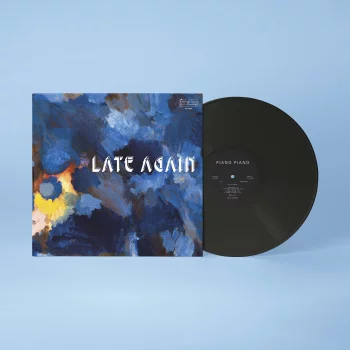
1
Sven Wunder - Sundown
2
Sven Wunder - Pop-Jazz Structures
3
Sven Wunder - Take A Break
4
Sven Wunder - Stars Align
5
Sven Wunder - Lunar Distance
6
Sven Wunder - Jazz At Night
7
Sven Wunder - Snowdrops
8
Sven Wunder - Stellar Plates
9
Sven Wunder - Asterism Waltz
10
Sven Wunder - Late Again
When the sun hovers near the horizon, the rays of white sunlight are scattered out of the beam by small particles and molecules in the atmosphere that sprinkle the sky with brilliant hues indicating that the day starts to fade. As night begins to fall, tree-tops redden and begin to glow. Darkness closes in and falls like a blanket covering the sky. It is late again and all is in shadow below. It is when stars align and dreams come true.
Sven Wunder thrives at nightfall and welcomes the horizon of beginnings on Late Again, a collection of nocturnal jazz pieces that depict shooting stars and scattered beams from the setting sun, with an emphasis on gentle compositions for piano and orchestral pop-jazz arrangements for flute, brass, and strings.
A1 - Sundown
A2 - Pop-Jazz Structures
A3 - Take A Break
A4 - Stars Align
A5 - Lunar Distance
B1 - Jazz At Night
B2 - Snowdrops
B3 - Stellar Plates
B4 - Asterism Waltz
B5 - Late Again
Sicherheits- und Herstellerinformationen / safety and manufacturer info (GPSR)
WAS - Word and Sound Medien GmbH
Liebigstrasse 2-20
DE - 22113 Hamburg
Germany
Contact: [email protected]More
Sven Wunder thrives at nightfall and welcomes the horizon of beginnings on Late Again, a collection of nocturnal jazz pieces that depict shooting stars and scattered beams from the setting sun, with an emphasis on gentle compositions for piano and orchestral pop-jazz arrangements for flute, brass, and strings.
A1 - Sundown
A2 - Pop-Jazz Structures
A3 - Take A Break
A4 - Stars Align
A5 - Lunar Distance
B1 - Jazz At Night
B2 - Snowdrops
B3 - Stellar Plates
B4 - Asterism Waltz
B5 - Late Again
Sicherheits- und Herstellerinformationen / safety and manufacturer info (GPSR)
WAS - Word and Sound Medien GmbH
Liebigstrasse 2-20
DE - 22113 Hamburg
Germany
Contact: [email protected]More
REPRESS!!!
Gatefold Double Vinyl
LP Tracklisting;
A1 School, A2 Baby, A3 Harpsichord, A4 Teenage Birdsong, A5 Romantics
B1 Love Salad, B2 Insect Near Piha Beach, B3 Hi Hello, B4 ISTM, B5 Something In The Sadness
C1 1993 Band Practice, C2 Green, C3 Bubbles At Overlook 25th March 2019, C4 4T Recordings,
C5 This Is For You, C6 Mama Teaches Sanskrit
Sicherheits- und Herstellerinformationen / safety and manufacturer info (GPSR)
WAS - Word and Sound Medien GmbH
Liebigstrasse 2-20
DE - 22113 Hamburg
Germany
Contact: [email protected]More
Gatefold Double Vinyl
LP Tracklisting;
A1 School, A2 Baby, A3 Harpsichord, A4 Teenage Birdsong, A5 Romantics
B1 Love Salad, B2 Insect Near Piha Beach, B3 Hi Hello, B4 ISTM, B5 Something In The Sadness
C1 1993 Band Practice, C2 Green, C3 Bubbles At Overlook 25th March 2019, C4 4T Recordings,
C5 This Is For You, C6 Mama Teaches Sanskrit
Sicherheits- und Herstellerinformationen / safety and manufacturer info (GPSR)
WAS - Word and Sound Medien GmbH
Liebigstrasse 2-20
DE - 22113 Hamburg
Germany
Contact: [email protected]More
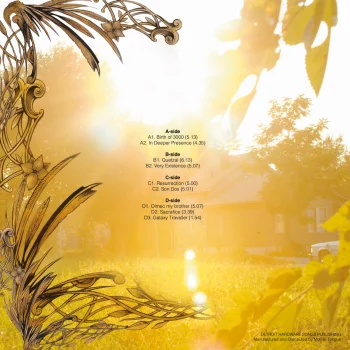
1
Los Hermanos - Birth Of 3000
2
Los Hermanos - In Deeper Presence
3
Los Hermanos - Quetzal
4
Los Hermanos - Very Existence
5
Los Hermanos - Resurrection
6
Los Hermanos - Son Dos
7
Los Hermanos - Olmec My Brother
8
Los Hermanos - Sacrafice
9
Los Hermanos - Galaxy Traveller
Repress coming 1st of November!
A true Detroit Techno masterpiece gets a well overdue re-master and re-press!
Los Hermanos ‘On Another Level’, originally released on Submerge in 2005, is an unmissable collection of the most soulful spiritual techno ever made.
Here with a new tracklisting including anthems like ‘Birth of 3000’, ‘Quetzal’ and ‘Resurrection’!
Sicherheits- und Herstellerinformationen / safety and manufacturer info (GPSR)
WAS - Word and Sound Medien GmbH
Liebigstrasse 2-20
DE - 22113 Hamburg
Germany
Contact: [email protected]More
A true Detroit Techno masterpiece gets a well overdue re-master and re-press!
Los Hermanos ‘On Another Level’, originally released on Submerge in 2005, is an unmissable collection of the most soulful spiritual techno ever made.
Here with a new tracklisting including anthems like ‘Birth of 3000’, ‘Quetzal’ and ‘Resurrection’!
Sicherheits- und Herstellerinformationen / safety and manufacturer info (GPSR)
WAS - Word and Sound Medien GmbH
Liebigstrasse 2-20
DE - 22113 Hamburg
Germany
Contact: [email protected]More
Cool – calm – collected: chapter 15 of this superlative series, compiled by Compost’s head honcho Michael Reinboth. 21 tracks, 8 exclusive, previously unreleased tracks. The exciting package comes as 2-CD / 4-LP vinyl. Enjoy!
The exclusives by Area (guess you all know his brilliant Innervisions release), Arnau Obiols & KAYYAK (recently featured by Gilles Peterson in his “watch out for 2021” top five list), Ron Deacon (officially belongs to the Workshop-Crew together with other artists like Move D, Even Tuell and Kassem Mosse), Class Compliance (which are Manuel Tur with his Clavis partner Adrian Hoffmann, also known as Paskal & Urban Absolutes or Amberoom), Mille & Hirsch (operators of the fine Polish Records), All Is Well (Fred Everything), Ben Sturm (watch out talent of Leipzig’s viral underground scene) and Oliver Kieser (best known as Kieser & Velten with their releases on G-Stone). This wonderful Esa Williams remix of Bantu Clan Vs Sarabi is also previously unreleased.
Several magazines voted the Future Sounds Of Jazz as one of the best compilation series of all time. With this series, starting in 1995, the term Future Jazz became a genre landmark.
Tracklisting | 4-LP
Side A
A1. Class Compliance – Cuadro (06:31) *previously unreleased
A2. Cotonete – Super Vilain Wants Love (Dj Deep & Romain Poncet Remix) (06:01)
A3. James Holden & The Animal Spirits – The Neverending (04:29)
Side B
B1. Bantu Clan Vs. Sarabi – Africa Ni Leo (Esa & Nonku Phiri Kaap Mix) (05:46)
B2. Shina Williams & His African Percussionists – Agboju Logun (11:42)
Side C
C1. Lucas Croon – Türkischer Tee (07:31)
C2. Mille & Hirsch – Pentagon Flow (09:32) *previously unreleased
Side D
D1. Typesun – Last Home (Dj Nature Remix) (08:20)
D2. Brandi Ifgray – Bones (Maurice Fulton Vibe Mix) (07:19)
D3. Ben Sturm – Francebeat (04:33) *previously unreleased
Side E
E1. Toshio Matsuura Group – At Les (07:13)
E2. Marni – Floor Of Soul (04:57)
E3. Oliver Kieser – Oscura Serenata (04:44) *previously unreleased
Side F
F1. Aera – Line Of Conception (05:34) *previously unreleased
F2. Martin Buttrich – Meeting Dave Dish (06:54)
F3. All Is Well – Day Two (06:31) *previously unreleased
Side G
G1. Arnau Obiols & KAYYAK – Tunacheza (05:25) *previously unreleased
G2. Kevin Yost – Another World (Original Mix) (07:59)
G3. Ron Deacon Feat. Johanna Jaeremo – Untitled B2
Brando Jazz (06:24) *previously unreleased
Side H
H1. Don Carlos – Mediterraneo (05:26)
H2. Rudoulpho – Sunday Afternoon (10:23)
Sicherheits- und Herstellerinformationen / safety and manufacturer info (GPSR)
WAS - Word and Sound Medien GmbH
Liebigstrasse 2-20
DE - 22113 Hamburg
Germany
Contact: [email protected]More
The exclusives by Area (guess you all know his brilliant Innervisions release), Arnau Obiols & KAYYAK (recently featured by Gilles Peterson in his “watch out for 2021” top five list), Ron Deacon (officially belongs to the Workshop-Crew together with other artists like Move D, Even Tuell and Kassem Mosse), Class Compliance (which are Manuel Tur with his Clavis partner Adrian Hoffmann, also known as Paskal & Urban Absolutes or Amberoom), Mille & Hirsch (operators of the fine Polish Records), All Is Well (Fred Everything), Ben Sturm (watch out talent of Leipzig’s viral underground scene) and Oliver Kieser (best known as Kieser & Velten with their releases on G-Stone). This wonderful Esa Williams remix of Bantu Clan Vs Sarabi is also previously unreleased.
Several magazines voted the Future Sounds Of Jazz as one of the best compilation series of all time. With this series, starting in 1995, the term Future Jazz became a genre landmark.
Tracklisting | 4-LP
Side A
A1. Class Compliance – Cuadro (06:31) *previously unreleased
A2. Cotonete – Super Vilain Wants Love (Dj Deep & Romain Poncet Remix) (06:01)
A3. James Holden & The Animal Spirits – The Neverending (04:29)
Side B
B1. Bantu Clan Vs. Sarabi – Africa Ni Leo (Esa & Nonku Phiri Kaap Mix) (05:46)
B2. Shina Williams & His African Percussionists – Agboju Logun (11:42)
Side C
C1. Lucas Croon – Türkischer Tee (07:31)
C2. Mille & Hirsch – Pentagon Flow (09:32) *previously unreleased
Side D
D1. Typesun – Last Home (Dj Nature Remix) (08:20)
D2. Brandi Ifgray – Bones (Maurice Fulton Vibe Mix) (07:19)
D3. Ben Sturm – Francebeat (04:33) *previously unreleased
Side E
E1. Toshio Matsuura Group – At Les (07:13)
E2. Marni – Floor Of Soul (04:57)
E3. Oliver Kieser – Oscura Serenata (04:44) *previously unreleased
Side F
F1. Aera – Line Of Conception (05:34) *previously unreleased
F2. Martin Buttrich – Meeting Dave Dish (06:54)
F3. All Is Well – Day Two (06:31) *previously unreleased
Side G
G1. Arnau Obiols & KAYYAK – Tunacheza (05:25) *previously unreleased
G2. Kevin Yost – Another World (Original Mix) (07:59)
G3. Ron Deacon Feat. Johanna Jaeremo – Untitled B2
Brando Jazz (06:24) *previously unreleased
Side H
H1. Don Carlos – Mediterraneo (05:26)
H2. Rudoulpho – Sunday Afternoon (10:23)
Sicherheits- und Herstellerinformationen / safety and manufacturer info (GPSR)
WAS - Word and Sound Medien GmbH
Liebigstrasse 2-20
DE - 22113 Hamburg
Germany
Contact: [email protected]More
Tracklist:
1.1ZERO
1.2NOTHING TO LOSE
1.3CHASING LIGHT
1.4INER CIRCLES
1.5KRAUT
1.6HONEST
Mit Chasing Light legt das Moses Yoofee Trio nach ihrem international gefeierten und für den Deutschen Jazzpreis nominierten Debüt MYT (2025) eine neue, energiegeladene EP vor. Entstanden in ihrem Neuköllner Proberaum, destillieren die sechs Tracks die unmittelbare Live-Dynamik des Trios - roh, spielerisch und voller kreativer Risikobereitschaft. Pianist Moses Yoofee, Bassist Roman Klobe und Drummer Noah Fürbringer spielten eine Woche lang fast ununterbrochen, jammten Ideen, experimentierten mit Sounds und nahmen ein völlig organisches, DIY-geprägtes Werk auf, das ihre musikalische Weiterentwicklung eindrucksvoll dokumentiert. Nach einer intensiven Welttour durch Asien, die USA und Europa 2025 bündelt Chasing Light die gesammelte Energie der Band in einem Sound, der Jazz- und Hip-Hop-Improvisation mit Afrobeat-Grooves, komplexen Breakbeats und atmosphärischen Synth-Schichten verbindet. Ob das packende "Nothing to Lose", das rhythmisch dichte "Inner Circles" oder die satte, streicherreiche Harmonik des Titeltracks - die EP zeigt ein Trio, das mutiger, offener und experimentierfreudiger denn je klingt.
Sicherheits- und Herstellerinformationen / safety and manufacturer info (GPSR)
WAS - Word and Sound Medien GmbH
Liebigstrasse 2-20
DE - 22113 Hamburg
Germany
Contact: [email protected]More
1.1ZERO
1.2NOTHING TO LOSE
1.3CHASING LIGHT
1.4INER CIRCLES
1.5KRAUT
1.6HONEST
Mit Chasing Light legt das Moses Yoofee Trio nach ihrem international gefeierten und für den Deutschen Jazzpreis nominierten Debüt MYT (2025) eine neue, energiegeladene EP vor. Entstanden in ihrem Neuköllner Proberaum, destillieren die sechs Tracks die unmittelbare Live-Dynamik des Trios - roh, spielerisch und voller kreativer Risikobereitschaft. Pianist Moses Yoofee, Bassist Roman Klobe und Drummer Noah Fürbringer spielten eine Woche lang fast ununterbrochen, jammten Ideen, experimentierten mit Sounds und nahmen ein völlig organisches, DIY-geprägtes Werk auf, das ihre musikalische Weiterentwicklung eindrucksvoll dokumentiert. Nach einer intensiven Welttour durch Asien, die USA und Europa 2025 bündelt Chasing Light die gesammelte Energie der Band in einem Sound, der Jazz- und Hip-Hop-Improvisation mit Afrobeat-Grooves, komplexen Breakbeats und atmosphärischen Synth-Schichten verbindet. Ob das packende "Nothing to Lose", das rhythmisch dichte "Inner Circles" oder die satte, streicherreiche Harmonik des Titeltracks - die EP zeigt ein Trio, das mutiger, offener und experimentierfreudiger denn je klingt.
Sicherheits- und Herstellerinformationen / safety and manufacturer info (GPSR)
WAS - Word and Sound Medien GmbH
Liebigstrasse 2-20
DE - 22113 Hamburg
Germany
Contact: [email protected]More
1
Humble B Flat - Egyptian Queen
2
Humble B Flat - Overcome
3
Humble B Flat - Turquoise Dreams
4
Humble B Flat - Daoud
5
Humble B Flat - Velvet Green
6
Humble B Flat - Navy Darkness
7
Humble B Flat - Centro Walk And Skank
8
Humble B Flat - Sweet Sweetness
Following some exciting releases from Humble B Flat in 2025, ‘Indigo Blues’ is the premier release on his new imprint Zinnia Records launching this May. Indigo Blues - an 8 track double disk journey through various depths of deep, cosy, warm and blue. Launching the release at the BBE store on the 19th May. Alongside a forthcoming launch of a bespoke sound system - Love Ensemble Soundsystem, birthing this summer. Love to all riding out the journey together.
Sicherheits- und Herstellerinformationen / safety and manufacturer info (GPSR)
WAS - Word and Sound Medien GmbH
Liebigstrasse 2-20
DE - 22113 Hamburg
Germany
Contact: [email protected]More
Sicherheits- und Herstellerinformationen / safety and manufacturer info (GPSR)
WAS - Word and Sound Medien GmbH
Liebigstrasse 2-20
DE - 22113 Hamburg
Germany
Contact: [email protected]More
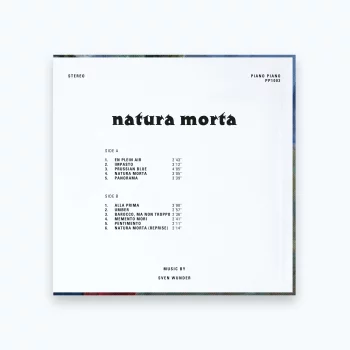
1
Sven Wunder - En Plein Air
2
Sven Wunder - Impasto
3
Sven Wunder - Prussian Blue
4
Sven Wunder - Natura Morta
5
Sven Wunder - Panorama
6
Sven Wunder - Alla Prima
7
Sven Wunder - Umber
8
Sven Wunder - Barocco, Ma Non Troppo
9
Sven Wunder - Memento Mori
10
Sven Wunder - Pentimento
11
Sven Wunder - Natura Morta (reprise)
Throughout human history, we have depicted the world we live in through art. By reworking what we see in the world, the
simplest things have helped us understand the beauty of nature and to evaluate the material world that we have created
around us, as a window to a constantly changing reality, through our own perception. It is that absolute reality that appears
in the seam of human and nature and that can be revealed through art.
Still life painting, also referred to as natura morta (”dead nature”) in Italian, stretches back to ancient times. Some of the
earliest works, found in Pompeii, depict commonplace objects such as fresh autumn fruits alongside man-made objects
such as a small amphora and a small terracotta heap with dried fruits. These two thousand year old paintings give a
snapshot of Roman life, and also creates a link to time and space. A slice of life has been created by binding the earth’s
pigments with extracts of oil, made from nuts and seeds, painted with brushes, made from a variety of fibers, such as trees
and hair from animals. While life wanes with each brush stroke, by shifting reality into past, art exists to make us come alive,
being a living image of a dead thing, a surface and a symbol with symbolic powers of its own. Still life works celebrate
material and ephemeral pleasures by returning to nature as the ultimate source for our standards in art as well as in life
itself.
Natura Morta collects pieces from a continuous variety of melodies — supported by a decisive rhythm section — creating
a musical kaleidoscope of ever-changing colors. Sven Wunder brings life into this rich assortment of musical implications
by fusing and combining melodic instruments with each other in a setting that spans from a classical to a modern idiom.
The author evokes this panoramic portrait by articulating an instrumental dialog between a chamber orchestra and a jazz
ensemble. The result is a musical celebration of material pleasures that also serves as a reminder of the brevity of human
life.
A1. En Plein Air
A2. Impasto
A3. Prussian Blue
A4. Natura Morta
A5. Panorama
B1. Alla Prima
B2. Umber
B3. Barocco, Ma Non Troppo
B4. Memento Mori
B5. Pentimento
B6. Natura Morta (reprise)
Sicherheits- und Herstellerinformationen / safety and manufacturer info (GPSR)
WAS - Word and Sound Medien GmbH
Liebigstrasse 2-20
DE - 22113 Hamburg
Germany
Contact: [email protected]More
simplest things have helped us understand the beauty of nature and to evaluate the material world that we have created
around us, as a window to a constantly changing reality, through our own perception. It is that absolute reality that appears
in the seam of human and nature and that can be revealed through art.
Still life painting, also referred to as natura morta (”dead nature”) in Italian, stretches back to ancient times. Some of the
earliest works, found in Pompeii, depict commonplace objects such as fresh autumn fruits alongside man-made objects
such as a small amphora and a small terracotta heap with dried fruits. These two thousand year old paintings give a
snapshot of Roman life, and also creates a link to time and space. A slice of life has been created by binding the earth’s
pigments with extracts of oil, made from nuts and seeds, painted with brushes, made from a variety of fibers, such as trees
and hair from animals. While life wanes with each brush stroke, by shifting reality into past, art exists to make us come alive,
being a living image of a dead thing, a surface and a symbol with symbolic powers of its own. Still life works celebrate
material and ephemeral pleasures by returning to nature as the ultimate source for our standards in art as well as in life
itself.
Natura Morta collects pieces from a continuous variety of melodies — supported by a decisive rhythm section — creating
a musical kaleidoscope of ever-changing colors. Sven Wunder brings life into this rich assortment of musical implications
by fusing and combining melodic instruments with each other in a setting that spans from a classical to a modern idiom.
The author evokes this panoramic portrait by articulating an instrumental dialog between a chamber orchestra and a jazz
ensemble. The result is a musical celebration of material pleasures that also serves as a reminder of the brevity of human
life.
A1. En Plein Air
A2. Impasto
A3. Prussian Blue
A4. Natura Morta
A5. Panorama
B1. Alla Prima
B2. Umber
B3. Barocco, Ma Non Troppo
B4. Memento Mori
B5. Pentimento
B6. Natura Morta (reprise)
Sicherheits- und Herstellerinformationen / safety and manufacturer info (GPSR)
WAS - Word and Sound Medien GmbH
Liebigstrasse 2-20
DE - 22113 Hamburg
Germany
Contact: [email protected]More
1
nu guinea - No Title
2
nu guinea - No Title
3
nu guinea - No Title
4
nu guinea - No Title
5
nu guinea - No Title
6
nu guinea - No Title
7
nu guinea - No Title
Sicherheits- und Herstellerinformationen / safety and manufacturer info (GPSR)
WAS - Word and Sound Medien GmbH
Liebigstrasse 2-20
DE - 22113 Hamburg
Germany
Contact: [email protected]More
Sicherheits- und Herstellerinformationen / safety and manufacturer info (GPSR)
WAS - Word and Sound Medien GmbH
Liebigstrasse 2-20
DE - 22113 Hamburg
Germany
Contact: [email protected]More