
1
The True Underground Sound Of Rome - Secret Doctrine
2
The True Underground Sound Of Rome - Experience
3
The True Underground Sound Of Rome - Goa-Goa
4
The True Underground Sound Of Rome - Gladiators
5
The True Underground Sound Of Rome - Clouds
6
The True Underground Sound Of Rome - Clouds (Dub Version)
7
The True Underground Sound Of Rome - Interface
Double 12" release
The Story — From the Streets of Rome to the Male Productions Label
In the early 1990s, Rome lived in a kind of suspended moment. The city was still tied to its historic clubs, yet in the outskirts—inside abandoned warehouses, quarries along the coastline, and the wooded parks north of the capital—something new was beginning to stir. A nocturnal, constantly shifting movement fuelled by a hunger for freedom and a sonic curiosity that reached far beyond the mainstream.
Moving through this ferment was Francesco “Chicco” Furlotti. First an organizer of unconventional parties and underground nights, he soon became one of the driving forces behind Rome’s itinerant rave scene. Furlotti sensed that a wave of change was about to sweep across the city. It wasn’t just about parties: it was the rise of a culture, a new way of thinking about music, community, and belonging.
It was within those nights—later held with official permits, properly built sound systems, and an ever-growing crowd—that Furlotti recognized the existence of a distinctly Roman sound, and the need to capture it, preserve it, and give it tangible form.
So, in 1991, he decided to take a bolder step: to found an independent record label—small, determined, and far removed from the commercial logic that dominated at the time.
That was the birth of Male Productions.
Male was not a label like any other: it was a workshop, a gathering point, a creative hub where DJs, producers, friends, and wanderers converged. Within that environment, an artistic core took shape—Stefano Di Carlo, Leo Young, and Mauro Tannino, along with other collaborators orbiting around Furlotti. From their synergy emerged a project whose very name declared its mission:
The True Underground Sound of Rome.
The collective did not simply aim to release music; it sought to tell a story of Rome through sounds that defied categorization: house, techno, ambient, electronic mysticism, psychedelic visions… a unique blend, instantly recognizable, emotional, and experimental. The sessions unfolded using essential yet razor-sharp gear: Roland drum machines, analogue synthesizers, Akai samplers, stripped-down mixers. Few tools, endless imagination.
The first result of this work was the 12” Secret Doctrine, released in 1991 in an extremely limited run—around 500 promotional copies, according to accounts. The record captured something that until then had floated only in the air of Roman raves: enveloping atmospheres, deep rhythms, melodies built to make the mind travel far beyond the dancefloor. A sound that did not imitate what was happening in Detroit, London, or Berlin, but absorbed those influences and re-sculpted them with a distinctly Roman sensibility.
Yet, precisely because it was independent and detached from commercial circuits, Male’s output remained sparse: few EPs, few copies, irregular distribution. Over time, those records became rare artifacts—almost mythical objects within the Italian electronic scene. The legacy of Male Productions seemed destined to survive only in the memories of those early years, in the stories told after raves, and in the private archives of a handful of collectors.
Many years later, thanks to the almost accidental rediscovery of a few original copies of the first two releases issued by Male Productions, it became possible to undertake a meticulous process of recovery and restoration of the audio etched into those grooves, with the aim of preserving as fully as possible the quality and character of that unrepeatable sound.
We are therefore able today to present — at last in a complete and faithful form — the first two mixes created for Male Productions, now released on a double vinyl that brings back into the present the exact moment when it all began: the nomadic nights of the raves, Furlotti’s vision, the creativity of Di Carlo, Young and Tannino, and the sonic identity of a Rome in the midst of transformation.
This is not merely a reissue.
It is a historical document.
A fragment of a culture that changed the city.
The authentic sound of the Roman underground, finally returned to the world.
Sicherheits- und Herstellerinformationen / safety and manufacturer info (GPSR)
WAS - Word and Sound Medien GmbH
Liebigstrasse 2-20
DE - 22113 Hamburg
Germany
Contact: [email protected]More
The Story — From the Streets of Rome to the Male Productions Label
In the early 1990s, Rome lived in a kind of suspended moment. The city was still tied to its historic clubs, yet in the outskirts—inside abandoned warehouses, quarries along the coastline, and the wooded parks north of the capital—something new was beginning to stir. A nocturnal, constantly shifting movement fuelled by a hunger for freedom and a sonic curiosity that reached far beyond the mainstream.
Moving through this ferment was Francesco “Chicco” Furlotti. First an organizer of unconventional parties and underground nights, he soon became one of the driving forces behind Rome’s itinerant rave scene. Furlotti sensed that a wave of change was about to sweep across the city. It wasn’t just about parties: it was the rise of a culture, a new way of thinking about music, community, and belonging.
It was within those nights—later held with official permits, properly built sound systems, and an ever-growing crowd—that Furlotti recognized the existence of a distinctly Roman sound, and the need to capture it, preserve it, and give it tangible form.
So, in 1991, he decided to take a bolder step: to found an independent record label—small, determined, and far removed from the commercial logic that dominated at the time.
That was the birth of Male Productions.
Male was not a label like any other: it was a workshop, a gathering point, a creative hub where DJs, producers, friends, and wanderers converged. Within that environment, an artistic core took shape—Stefano Di Carlo, Leo Young, and Mauro Tannino, along with other collaborators orbiting around Furlotti. From their synergy emerged a project whose very name declared its mission:
The True Underground Sound of Rome.
The collective did not simply aim to release music; it sought to tell a story of Rome through sounds that defied categorization: house, techno, ambient, electronic mysticism, psychedelic visions… a unique blend, instantly recognizable, emotional, and experimental. The sessions unfolded using essential yet razor-sharp gear: Roland drum machines, analogue synthesizers, Akai samplers, stripped-down mixers. Few tools, endless imagination.
The first result of this work was the 12” Secret Doctrine, released in 1991 in an extremely limited run—around 500 promotional copies, according to accounts. The record captured something that until then had floated only in the air of Roman raves: enveloping atmospheres, deep rhythms, melodies built to make the mind travel far beyond the dancefloor. A sound that did not imitate what was happening in Detroit, London, or Berlin, but absorbed those influences and re-sculpted them with a distinctly Roman sensibility.
Yet, precisely because it was independent and detached from commercial circuits, Male’s output remained sparse: few EPs, few copies, irregular distribution. Over time, those records became rare artifacts—almost mythical objects within the Italian electronic scene. The legacy of Male Productions seemed destined to survive only in the memories of those early years, in the stories told after raves, and in the private archives of a handful of collectors.
Many years later, thanks to the almost accidental rediscovery of a few original copies of the first two releases issued by Male Productions, it became possible to undertake a meticulous process of recovery and restoration of the audio etched into those grooves, with the aim of preserving as fully as possible the quality and character of that unrepeatable sound.
We are therefore able today to present — at last in a complete and faithful form — the first two mixes created for Male Productions, now released on a double vinyl that brings back into the present the exact moment when it all began: the nomadic nights of the raves, Furlotti’s vision, the creativity of Di Carlo, Young and Tannino, and the sonic identity of a Rome in the midst of transformation.
This is not merely a reissue.
It is a historical document.
A fragment of a culture that changed the city.
The authentic sound of the Roman underground, finally returned to the world.
Sicherheits- und Herstellerinformationen / safety and manufacturer info (GPSR)
WAS - Word and Sound Medien GmbH
Liebigstrasse 2-20
DE - 22113 Hamburg
Germany
Contact: [email protected]More
More records from The True Underground Sound Of Rome
Male Productions comes back after the first release "Secret Doctrine", with the second LP : "Clouds" ! This release comes as collector's Album edition of 475 copies only and it contains the songs "Clouds" and "Interface" released in 1991 plus four unreleased songs recorded in the same year but performed only live during house parties back in the days. This LP still features Stefano Di Carlo, Leo Young and Mauro Tannino.
Sicherheits- und Herstellerinformationen / safety and manufacturer info (GPSR)
WAS - Word and Sound Medien GmbH
Liebigstrasse 2-20
DE - 22113 Hamburg
Germany
Contact: [email protected]More
Sicherheits- und Herstellerinformationen / safety and manufacturer info (GPSR)
WAS - Word and Sound Medien GmbH
Liebigstrasse 2-20
DE - 22113 Hamburg
Germany
Contact: [email protected]More
Despite only a few releases, the Electronic deep house sound of Vibraphone Records and the production team behind it had a major impact on the international 1990's dance scene. The original 90's vinyls are now considered precious collectors items. Revitalized by an increasingly new young audience interest this label has reached a cult status and it is now been re-launched via Juno Records. MINIMAL VISION II (1993-2016) , first released in 1993, is the second project that The True Underground Sound of Rome developed exploring the concept of minimalist musical structures applied to Electronic/House Music. The 2016 re-issue of this record is an Album containing the analog re-mastered version of the original 6 tracks plus one 2016 exclusive new bonus track and two previously unreleased pieces form 1995 and 1996
Sicherheits- und Herstellerinformationen / safety and manufacturer info (GPSR)
WAS - Word and Sound Medien GmbH
Liebigstrasse 2-20
DE - 22113 Hamburg
Germany
Contact: [email protected]More
Sicherheits- und Herstellerinformationen / safety and manufacturer info (GPSR)
WAS - Word and Sound Medien GmbH
Liebigstrasse 2-20
DE - 22113 Hamburg
Germany
Contact: [email protected]More
1
the true underground sound of rome - "Sonic Crystals"
2
the true underground sound of rome - "Spherical Rooms"
3
the true underground sound of rome - "Whispering Galleries"
Despite only a few releases, the electronic deep house sound of Vibraphone Records and the production team behind it, had a major impact on the international 1990's dance scene. The original 90's vinyl are now considered precious collectors items. Revitalized by an increasingly new young audience interest, this label has reached a cult status and it has now been re-launched via Juno Records. For the first time in twenty years TTUSR has produced three new exclusive tracks which will be included on this 12" EP entitled Liquid Time.
Sicherheits- und Herstellerinformationen / safety and manufacturer info (GPSR)
WAS - Word and Sound Medien GmbH
Liebigstrasse 2-20
DE - 22113 Hamburg
Germany
Contact: [email protected]More
Sicherheits- und Herstellerinformationen / safety and manufacturer info (GPSR)
WAS - Word and Sound Medien GmbH
Liebigstrasse 2-20
DE - 22113 Hamburg
Germany
Contact: [email protected]More
1
the true underground sound of rome - "Secret Doctrine"
2
the true underground sound of rome - "Experience"
3
the true underground sound of rome - "Mystic Ritual"
4
the true underground sound of rome - "Goa-Goa"
5
the true underground sound of rome - "Gladiators"
6
the true underground sound of rome - "Esoteric Cult"
This is the relaunch "Limited edition Album" (475 copies only, remastered from the original master tapes) of the Male Productions label. It contains theAoriginal songs of "The True Underground Sound Of Rome" from the rare and sought after EP released in 1991 on "Male Records" plus two unreleased tracks recorded in 1991. In Italy during early 90's after the "disco era" was time for the new born "Underground Music" movement. Male Productions represents the first italian electronic-house independent label, based in Rome and managed by Chicco Furlotti, former club-DJ and organizer of the early italian rave parties. This Album features Stefano Di Carlo and other big names from the italian electronic and house music scene like Leo Young and Mauro Tannino... We can't call this music as deep-house, ambient or techno because it's The True Undergound Sound Of Rome !
Sicherheits- und Herstellerinformationen / safety and manufacturer info (GPSR)
WAS - Word and Sound Medien GmbH
Liebigstrasse 2-20
DE - 22113 Hamburg
Germany
Contact: [email protected]More
Sicherheits- und Herstellerinformationen / safety and manufacturer info (GPSR)
WAS - Word and Sound Medien GmbH
Liebigstrasse 2-20
DE - 22113 Hamburg
Germany
Contact: [email protected]More
More records from Jungle Fantasy
1
Open Spaces - The Beginning of An Idea
2
Open Spaces - Mistery In Tuscania Land
3
Open Spaces - Digital Twilight
4
Time Zones - Friendly Invaders
5
Time Zones - Animal Rights
6
Riccardino & Jay - A Day In The Mind
7
Farfability - The Narrator Device
8
Pacific Deliveries - Door To Door Service
9
Open Spaces - Spinners Of Faith
10
Daily Air Cargo - Envelope To Elephants
11
Youth Wave - Say What You Mean
12
Sister Maso - Erotic Holydays Packets
Repress!
ALERT: BIG 90s ITALIAN RAVE COMP - a lot of very in demand tunes on here.
Navigators
Franco Falsini and the Interactive Test Universe
There are musicians who follow their time.
And then there are those who seem to move along a different trajectory—like navigators crossing sonic eras without ever truly belonging to any one of them. The story of Franco Falsini belongs to the latter. It is a story that begins long before raves, before techno, before the word “electronic” had even become a recognizable musical genre. A story that moves across continents, technologies, and sonic visions, eventually arriving at a small creative laboratory born in Italy in the early 1990s: Interactive Test. This compilation is a fragment of that universe. But as often happens with the hidden histories of music, understanding it requires going back. Far back.
The Beginning: Machines, Tape and Space
In the late 1960s Franco Falsini leaves Italy and moves to the United States. It is not merely a geographical journey—it is also a journey into a new idea of music. At the time, synthesizers are only just emerging from research laboratories. Multitrack tape recorders allow musicians to build entire sonic worlds on their own. Technology is still far from standardized: every studio is almost an experimental workshop. In Virginia, Falsini builds one of his own. Among cables, oscillators, electric guitars and reels of magnetic tape, a kind of music begins to take shape that resembles nothing else being made at the time. It is not simply rock, and it is not yet truly electronic. It moves somewhere in the space between the two. Out of these explorations emerges Sensations' Fix, the project through which Falsini releases a series of albums during the 1970s. Records that seem to come from a parallel dimension: cosmic landscapes, electronically treated guitars, synthesizers drifting like satellites. Many years later those albums would be rediscovered as visionary works. But at the time they were simply the result of relentless curiosity. A curiosity that would never fade.
The City That Never Sleeps
In the 1980s Falsini’s trajectory leads him to New York. The city is a sonic organism in constant transformation. In its clubs and recording studios something entirely new is beginning to take shape: music built from drum machines, sequencers, and samplers, created for the body before the living room. It is the dawn of modern dance culture. Falsini works as a sound engineer, producer and experimenter. From close range he observes electronic music transforming into a global language. Machines become more accessible, computers begin entering studios, and rhythm takes on an increasingly central role. Yet even in this phase Falsini does not simply follow what is happening. He absorbs. Observes. Reimagines. When he eventually returns to Italy, he brings back not only technical experience but also a clear vision: the conviction that electronic music is an open space, a territory still waiting to be explored.
Tuscany, Early 1990s
At the beginning of the 1990s something is happening in Italy as well. In clubs, abandoned industrial warehouses and clandestine parties, a new scene is beginning to form. It is rave culture: a spontaneous movement bringing together DJs, producers and listeners in a collective experience driven by rhythm, technology, and creative freedom. It is within this context that Franco Falsini, together with his brother Riccardo, creates Interactive Test.
The name almost sounds like a scientific experiment. In many ways, it is. Interactive Test does not emerge as a traditional record label. It begins as a laboratory—a place where ideas, sounds and musical identities can be tested and explored. Around the Falsini studio in Tuscany a small constellation of artists and DJs begins to gather, helping to shape the sound of Italy’s emerging electronic scene. Among them are Andrea Giuditta, Francesco Farfa, Gabry Fasano, Roby Mastelloni, Roby J and many others. Each brings a different musical sensibility. But they all share the same intuition: electronic music is not a genre. It is a language.
The Laboratory of Identities
One of the most fascinating aspects of the Interactive Test universe is its constant play with identity. Franco Falsini releases music under several different names: Open Space, Youth Wave, Agent Fylfoyt, Man Myth Magic. These are not simply pseudonyms.
They are different sonic perspectives, as if each project were a window opening onto a parallel musical universe. Open Space, for example, explores more atmospheric and visionary territories. Youth Wave moves between electronic groove and club-oriented rhythms. Other projects experiment with digital psychedelia or hypnotic techno textures. Interactive Test becomes something more than a label. it becomes an ecosystem.
Domestic Machines, Infinite Worlds
Looking back today at the technology used in those productions, one might almost smile. Many tracks were created on Amiga computers, MIDI sequencers and analog synthesizers wired together in home studios—tools that appear modest when compared to today’s digital possibilities.
Yet precisely these limitations became a creative force. Every sound had to be built, shaped and reinvented. Sequences developed slowly, almost like living organisms. The tracks did not always follow traditional dance music structures; often they felt like genuine sonic journeys. Music built from space.
A Hidden Constellation
Many of the records released by Interactive Test in the 1990s remained for years almost invisible objects, circulating quietly among DJs, collectors, and devoted listeners. Yet it is precisely this underground existence that helped preserve them. Listening again today, one perceives something rare: the feeling of music that does not fully belong to its own time. Music suspended between different eras. Perhaps because it comes from a vision that both precedes and transcends trends.
Continuing the Journey
Looking at Franco Falsini’s entire path—from the electronic psychedelia of Sensations’ Fix to the rave culture of the 1990s—a surprisingly coherent line emerges.
A line defined by exploration.
Each project, each pseudonym, each record appears as a new route within the same great sonic voyage.
Interactive Test was one of its stations.
A laboratory.
A community.
A creative platform.
This compilation gathers some of its traces.
Not as a simple archive of the past, but as a map of a musical territory that continues to expand even today.
Like all true sonic explorations.
Sicherheits- und Herstellerinformationen / safety and manufacturer info (GPSR)
WAS - Word and Sound Medien GmbH
Liebigstrasse 2-20
DE - 22113 Hamburg
Germany
Contact: [email protected]More
ALERT: BIG 90s ITALIAN RAVE COMP - a lot of very in demand tunes on here.
Navigators
Franco Falsini and the Interactive Test Universe
There are musicians who follow their time.
And then there are those who seem to move along a different trajectory—like navigators crossing sonic eras without ever truly belonging to any one of them. The story of Franco Falsini belongs to the latter. It is a story that begins long before raves, before techno, before the word “electronic” had even become a recognizable musical genre. A story that moves across continents, technologies, and sonic visions, eventually arriving at a small creative laboratory born in Italy in the early 1990s: Interactive Test. This compilation is a fragment of that universe. But as often happens with the hidden histories of music, understanding it requires going back. Far back.
The Beginning: Machines, Tape and Space
In the late 1960s Franco Falsini leaves Italy and moves to the United States. It is not merely a geographical journey—it is also a journey into a new idea of music. At the time, synthesizers are only just emerging from research laboratories. Multitrack tape recorders allow musicians to build entire sonic worlds on their own. Technology is still far from standardized: every studio is almost an experimental workshop. In Virginia, Falsini builds one of his own. Among cables, oscillators, electric guitars and reels of magnetic tape, a kind of music begins to take shape that resembles nothing else being made at the time. It is not simply rock, and it is not yet truly electronic. It moves somewhere in the space between the two. Out of these explorations emerges Sensations' Fix, the project through which Falsini releases a series of albums during the 1970s. Records that seem to come from a parallel dimension: cosmic landscapes, electronically treated guitars, synthesizers drifting like satellites. Many years later those albums would be rediscovered as visionary works. But at the time they were simply the result of relentless curiosity. A curiosity that would never fade.
The City That Never Sleeps
In the 1980s Falsini’s trajectory leads him to New York. The city is a sonic organism in constant transformation. In its clubs and recording studios something entirely new is beginning to take shape: music built from drum machines, sequencers, and samplers, created for the body before the living room. It is the dawn of modern dance culture. Falsini works as a sound engineer, producer and experimenter. From close range he observes electronic music transforming into a global language. Machines become more accessible, computers begin entering studios, and rhythm takes on an increasingly central role. Yet even in this phase Falsini does not simply follow what is happening. He absorbs. Observes. Reimagines. When he eventually returns to Italy, he brings back not only technical experience but also a clear vision: the conviction that electronic music is an open space, a territory still waiting to be explored.
Tuscany, Early 1990s
At the beginning of the 1990s something is happening in Italy as well. In clubs, abandoned industrial warehouses and clandestine parties, a new scene is beginning to form. It is rave culture: a spontaneous movement bringing together DJs, producers and listeners in a collective experience driven by rhythm, technology, and creative freedom. It is within this context that Franco Falsini, together with his brother Riccardo, creates Interactive Test.
The name almost sounds like a scientific experiment. In many ways, it is. Interactive Test does not emerge as a traditional record label. It begins as a laboratory—a place where ideas, sounds and musical identities can be tested and explored. Around the Falsini studio in Tuscany a small constellation of artists and DJs begins to gather, helping to shape the sound of Italy’s emerging electronic scene. Among them are Andrea Giuditta, Francesco Farfa, Gabry Fasano, Roby Mastelloni, Roby J and many others. Each brings a different musical sensibility. But they all share the same intuition: electronic music is not a genre. It is a language.
The Laboratory of Identities
One of the most fascinating aspects of the Interactive Test universe is its constant play with identity. Franco Falsini releases music under several different names: Open Space, Youth Wave, Agent Fylfoyt, Man Myth Magic. These are not simply pseudonyms.
They are different sonic perspectives, as if each project were a window opening onto a parallel musical universe. Open Space, for example, explores more atmospheric and visionary territories. Youth Wave moves between electronic groove and club-oriented rhythms. Other projects experiment with digital psychedelia or hypnotic techno textures. Interactive Test becomes something more than a label. it becomes an ecosystem.
Domestic Machines, Infinite Worlds
Looking back today at the technology used in those productions, one might almost smile. Many tracks were created on Amiga computers, MIDI sequencers and analog synthesizers wired together in home studios—tools that appear modest when compared to today’s digital possibilities.
Yet precisely these limitations became a creative force. Every sound had to be built, shaped and reinvented. Sequences developed slowly, almost like living organisms. The tracks did not always follow traditional dance music structures; often they felt like genuine sonic journeys. Music built from space.
A Hidden Constellation
Many of the records released by Interactive Test in the 1990s remained for years almost invisible objects, circulating quietly among DJs, collectors, and devoted listeners. Yet it is precisely this underground existence that helped preserve them. Listening again today, one perceives something rare: the feeling of music that does not fully belong to its own time. Music suspended between different eras. Perhaps because it comes from a vision that both precedes and transcends trends.
Continuing the Journey
Looking at Franco Falsini’s entire path—from the electronic psychedelia of Sensations’ Fix to the rave culture of the 1990s—a surprisingly coherent line emerges.
A line defined by exploration.
Each project, each pseudonym, each record appears as a new route within the same great sonic voyage.
Interactive Test was one of its stations.
A laboratory.
A community.
A creative platform.
This compilation gathers some of its traces.
Not as a simple archive of the past, but as a map of a musical territory that continues to expand even today.
Like all true sonic explorations.
Sicherheits- und Herstellerinformationen / safety and manufacturer info (GPSR)
WAS - Word and Sound Medien GmbH
Liebigstrasse 2-20
DE - 22113 Hamburg
Germany
Contact: [email protected]More
1
M’Bamina - Kyrie Paien
2
M’Bamina - Wendo
3
M’Bamina - Malonga
4
M’Bamina - Bakoko
5
M’Bamina - Messe Noire
6
M’Bamina - Benguela
7
M’Bamina - Ayewa
8
M’Bamina - Watchiwara
9
M’Bamina - Nzoumba
10
M’Bamina - Roll Drums
Gatefold Sleeve
M’Bamina – African Roll (1975)
The story of an album born between Africa, Italy, and the nightclub culture of the 1970s
In the heart of 1970s Italy — a country undergoing profound social change and a music scene just beginning to open itself to distant sounds and cultures — an extraordinary, almost improbable story took shape. It is the story of a group of young African musicians who found their way to Europe, of a Turin nightclub that became a crossroads for communities and experimenters, and of an album which, released in small numbers and largely unnoticed at the time, is now considered a rare jewel of Afro-fusion.
The band called themselves M’Bamina — an ensemble of musicians from Congo, Cameroon, and Benin, who arrived in Italy in the early Seventies. Settling between northern Italy and the Pavia area, they began performing in small clubs and community events, bringing with them a vibrant rhythmic heritage: African polyrhythms, call-and-response vocals, funk-infused bass lines, and Caribbean or Afro-Latin colours absorbed along their musical journeys. Their raw, contagious energy on stage quickly drew attention.
Meanwhile, in Turin, another story was unfolding. There was a venue becoming almost legendary: Voom Voom, one of the city’s liveliest nightclubs, run by Ivo Lunardi. The club attracted an eclectic crowd — students, artists, foreigners, night owls — and Lunardi quickly understood that the dancefloor wasn’t just a place for music, but a melting pot for a new kind of cultural energy. Out of this vibrant atmosphere came his idea: to turn the club’s name into a small independent record label, Voom Voom Music, capable of capturing the spirit of those years and giving voice to unconventional projects.
When Lunardi heard M’Bamina, he immediately sensed that this was the sound he had been searching for: fresh, different from anything circulating in Italy at the time, and capable of blending African tradition with funk and European sensibility. He brought them into the studio.
Production was handled by Lunardi along with Christian Carbaza Michel, while the engineering was entrusted to Danilo Pennone, a young sound technician with a sharp, intuitive ear.
The recording sessions — held in Turin in 1975 — produced a remarkably warm and direct sound. The music feels almost live: grooves rooted in African tradition, but open to funk-rock structures and modern arrangements. It is a natural fusion, never forced. Tracks move between tribal rhythms, funk basslines, light electric guitars, congas and Afro-Latin percussion, with call-and-response vocals and melodies that echo both Congolese tradition and the lineage of Latin jazz. Not by chance, one of the album’s most striking tracks, Watchiwara, reinterprets a Latin standard through M’Bamina’s own rhythmic language.
The album was titled African Roll — a name that was already a statement of intention. It is African music that “rolls,” that moves, adapts, transforms within a new geographic and cultural setting. It is not strictly Afrobeat, nor Congolese rumba, nor Western funk: it is a spontaneous, hybrid blend, shaped more by lived experience than by any calculated aesthetic program.
When African Roll was released, the world around it barely noticed. Distribution was limited, and 1970s Italy had yet to develop a cultural framework for receiving such music. The national music press rarely paid attention to African or “world” productions. The album slipped into silence — though the band’s own story did not.
M’Bamina continued performing across Europe and Africa, even sharing a stage in Cameroon with none other than Manu Dibango. By the late Seventies, they moved to Paris, signed with Fiesta/Decca, and recorded a second LP, Experimental (1978). Meanwhile, the peculiar record they had made in Turin began to resurface quietly among vinyl collectors, Afro-funk enthusiasts, and DJs hunting for forgotten grooves.
That is when the album’s fate began to shift.
Over the decades, African Roll emerged as an almost unique document: a snapshot of an intercultural Italy before the word “intercultural” even existed, a fragment of migrant history, a spontaneous experiment in musical fusion born far from major industry circuits but rich in authenticity. Original copies began commanding high prices on the collector’s market, and the album became recognized as one of the hidden classics of European Afro-fusion from the 1970s.
Today, more than fifty years later, this reissue finally restores visibility and dignity to a project that deserves to be heard, studied, and celebrated. It is not simply an album: it is the testimony of a rare cultural encounter, born in an Italy unaware of how fertile such exchanges would one day become.
It is the story of a visionary producer, an extraordinary band, and a fleeting moment in which music, migration, and nightlife came together to create something genuinely new.
African Roll is — now more than ever — the sound of a bridge: between continents, between eras, between cultures. A record that, after rolling far and wide, has finally come home.
Sicherheits- und Herstellerinformationen / safety and manufacturer info (GPSR)
WAS - Word and Sound Medien GmbH
Liebigstrasse 2-20
DE - 22113 Hamburg
Germany
Contact: [email protected]More
M’Bamina – African Roll (1975)
The story of an album born between Africa, Italy, and the nightclub culture of the 1970s
In the heart of 1970s Italy — a country undergoing profound social change and a music scene just beginning to open itself to distant sounds and cultures — an extraordinary, almost improbable story took shape. It is the story of a group of young African musicians who found their way to Europe, of a Turin nightclub that became a crossroads for communities and experimenters, and of an album which, released in small numbers and largely unnoticed at the time, is now considered a rare jewel of Afro-fusion.
The band called themselves M’Bamina — an ensemble of musicians from Congo, Cameroon, and Benin, who arrived in Italy in the early Seventies. Settling between northern Italy and the Pavia area, they began performing in small clubs and community events, bringing with them a vibrant rhythmic heritage: African polyrhythms, call-and-response vocals, funk-infused bass lines, and Caribbean or Afro-Latin colours absorbed along their musical journeys. Their raw, contagious energy on stage quickly drew attention.
Meanwhile, in Turin, another story was unfolding. There was a venue becoming almost legendary: Voom Voom, one of the city’s liveliest nightclubs, run by Ivo Lunardi. The club attracted an eclectic crowd — students, artists, foreigners, night owls — and Lunardi quickly understood that the dancefloor wasn’t just a place for music, but a melting pot for a new kind of cultural energy. Out of this vibrant atmosphere came his idea: to turn the club’s name into a small independent record label, Voom Voom Music, capable of capturing the spirit of those years and giving voice to unconventional projects.
When Lunardi heard M’Bamina, he immediately sensed that this was the sound he had been searching for: fresh, different from anything circulating in Italy at the time, and capable of blending African tradition with funk and European sensibility. He brought them into the studio.
Production was handled by Lunardi along with Christian Carbaza Michel, while the engineering was entrusted to Danilo Pennone, a young sound technician with a sharp, intuitive ear.
The recording sessions — held in Turin in 1975 — produced a remarkably warm and direct sound. The music feels almost live: grooves rooted in African tradition, but open to funk-rock structures and modern arrangements. It is a natural fusion, never forced. Tracks move between tribal rhythms, funk basslines, light electric guitars, congas and Afro-Latin percussion, with call-and-response vocals and melodies that echo both Congolese tradition and the lineage of Latin jazz. Not by chance, one of the album’s most striking tracks, Watchiwara, reinterprets a Latin standard through M’Bamina’s own rhythmic language.
The album was titled African Roll — a name that was already a statement of intention. It is African music that “rolls,” that moves, adapts, transforms within a new geographic and cultural setting. It is not strictly Afrobeat, nor Congolese rumba, nor Western funk: it is a spontaneous, hybrid blend, shaped more by lived experience than by any calculated aesthetic program.
When African Roll was released, the world around it barely noticed. Distribution was limited, and 1970s Italy had yet to develop a cultural framework for receiving such music. The national music press rarely paid attention to African or “world” productions. The album slipped into silence — though the band’s own story did not.
M’Bamina continued performing across Europe and Africa, even sharing a stage in Cameroon with none other than Manu Dibango. By the late Seventies, they moved to Paris, signed with Fiesta/Decca, and recorded a second LP, Experimental (1978). Meanwhile, the peculiar record they had made in Turin began to resurface quietly among vinyl collectors, Afro-funk enthusiasts, and DJs hunting for forgotten grooves.
That is when the album’s fate began to shift.
Over the decades, African Roll emerged as an almost unique document: a snapshot of an intercultural Italy before the word “intercultural” even existed, a fragment of migrant history, a spontaneous experiment in musical fusion born far from major industry circuits but rich in authenticity. Original copies began commanding high prices on the collector’s market, and the album became recognized as one of the hidden classics of European Afro-fusion from the 1970s.
Today, more than fifty years later, this reissue finally restores visibility and dignity to a project that deserves to be heard, studied, and celebrated. It is not simply an album: it is the testimony of a rare cultural encounter, born in an Italy unaware of how fertile such exchanges would one day become.
It is the story of a visionary producer, an extraordinary band, and a fleeting moment in which music, migration, and nightlife came together to create something genuinely new.
African Roll is — now more than ever — the sound of a bridge: between continents, between eras, between cultures. A record that, after rolling far and wide, has finally come home.
Sicherheits- und Herstellerinformationen / safety and manufacturer info (GPSR)
WAS - Word and Sound Medien GmbH
Liebigstrasse 2-20
DE - 22113 Hamburg
Germany
Contact: [email protected]More
1
Black Line - Myele
2
Mbamina - Nzoumba (I-Robots 1975 Unreleased Edit)
3
Mbamina - Watchiwara
4
Oxid - Bright Heron
5
Oxid - Oxid Trail
6
Stratosferic Band - Nowhere (Reverberated Unreleased Version)
7
The Boston Garden - Lady Pick-Up
8
Mbamina - Nzoumba (Unreleased)
9
Oxid - Oxid Trail (Unreleased Extended Version)
Daniele Baldelli
"A pleasant surprise to find in this release various atmospheres and sounds that have always been part of my DJing. It even made me rediscover M’Bamina, whom I used to play back in 1974 at the Tabù Club in Cattolica.
There are afro vibes as well, with Black Line – Myele, which is featured on one of my Cosmic tapes, and Nowhere by the Stratosferic Band recalls a track I used to play at the Baia degli Angeli…
Excellent work!"
Voom Voom Music was an independent Italian record label based in Turin, founded and managed by record producer Ivo Lunardi (Turin, December 6, 1940 – December 9, 2010). A pivotal figure in the Piedmont music scene, Lunardi was active both as a DJ and as the owner of several disco clubs.
The label operated for several years in the latter half of the 1970s, releasing mainly productions connected to the Italian dance and pop scene.
Since 2016, the original master tapes from the Voom Voom Music catalog have been owned by Gianluca Pandullo (I-Robots), a close friend of Ivo and Luca Lunardi. Through his labels Opilec Music and Turin Dancefloor Express, Pandullo oversees their preservation and historical enhancement.
The artistic direction of Voom Voom Music was marked by a distinct sonic identity — eclectic yet visionary. The Turin-based label founded by Ivo Lunardi embraced a sound that blended disco, pop, and rock influences, interwoven with African American grooves in a pioneering, international perspective.
Voom Voom Music was among the first Italian labels to introduce this kind of musical language in the country. A prime example is the Italian edition of the debut album by B.T. Express, Do It ('Til You're Satisfied), released in LP, 8-Track Cartridge, cassette, and 7" single formats.
The label’s productions clearly reflected the influence of black and funk music, as evidenced by the references and inspirations running through its catalogue. The track “Lady Pick-Up”, for instance, includes direct nods to “Do It Good” by KC & The Sunshine Band and Manu Dibango’s iconic “Soul Makossa”, revealing a musically refined and contemporary sensibility.
Among the label’s most representative works is Splash (1977) by the Stratosferic Band, a project conceived by Luigi Venegoni — producer, songwriter, and guitarist of Arti e Mestieri. Venegoni’s artistic journey spanned from progressive rock to space and Italo disco. The album artwork was designed by Piero D’Amore (1944 - 2022), a charismatic and multifaceted figure of Turin’s art scene (one of his works was even acquired by the MoMA in New York).
The record includes a disco reinterpretation of Van Morrison’s classic “Gloria”, and “Splashdown”, a track fusing the disco-rock energy of Rockets and Space. In contrast, “Nowhere” revisits the 1975 single by Hokis Pokis, a soul/disco band from Nassau County (New York), transforming it into a vibrant disco-funk number.
Another significant expression of the label’s catalogue is the afro-rock sound of M’Bamina, an Italo-Congolese group whose rhythmic energy and dialogue between African percussion and Western funk evoke the style of international formations such as Osibisa — themselves linked to a rich artistic history in Italy.
Sicherheits- und Herstellerinformationen / safety and manufacturer info (GPSR)
WAS - Word and Sound Medien GmbH
Liebigstrasse 2-20
DE - 22113 Hamburg
Germany
Contact: [email protected]More
"A pleasant surprise to find in this release various atmospheres and sounds that have always been part of my DJing. It even made me rediscover M’Bamina, whom I used to play back in 1974 at the Tabù Club in Cattolica.
There are afro vibes as well, with Black Line – Myele, which is featured on one of my Cosmic tapes, and Nowhere by the Stratosferic Band recalls a track I used to play at the Baia degli Angeli…
Excellent work!"
Voom Voom Music was an independent Italian record label based in Turin, founded and managed by record producer Ivo Lunardi (Turin, December 6, 1940 – December 9, 2010). A pivotal figure in the Piedmont music scene, Lunardi was active both as a DJ and as the owner of several disco clubs.
The label operated for several years in the latter half of the 1970s, releasing mainly productions connected to the Italian dance and pop scene.
Since 2016, the original master tapes from the Voom Voom Music catalog have been owned by Gianluca Pandullo (I-Robots), a close friend of Ivo and Luca Lunardi. Through his labels Opilec Music and Turin Dancefloor Express, Pandullo oversees their preservation and historical enhancement.
The artistic direction of Voom Voom Music was marked by a distinct sonic identity — eclectic yet visionary. The Turin-based label founded by Ivo Lunardi embraced a sound that blended disco, pop, and rock influences, interwoven with African American grooves in a pioneering, international perspective.
Voom Voom Music was among the first Italian labels to introduce this kind of musical language in the country. A prime example is the Italian edition of the debut album by B.T. Express, Do It ('Til You're Satisfied), released in LP, 8-Track Cartridge, cassette, and 7" single formats.
The label’s productions clearly reflected the influence of black and funk music, as evidenced by the references and inspirations running through its catalogue. The track “Lady Pick-Up”, for instance, includes direct nods to “Do It Good” by KC & The Sunshine Band and Manu Dibango’s iconic “Soul Makossa”, revealing a musically refined and contemporary sensibility.
Among the label’s most representative works is Splash (1977) by the Stratosferic Band, a project conceived by Luigi Venegoni — producer, songwriter, and guitarist of Arti e Mestieri. Venegoni’s artistic journey spanned from progressive rock to space and Italo disco. The album artwork was designed by Piero D’Amore (1944 - 2022), a charismatic and multifaceted figure of Turin’s art scene (one of his works was even acquired by the MoMA in New York).
The record includes a disco reinterpretation of Van Morrison’s classic “Gloria”, and “Splashdown”, a track fusing the disco-rock energy of Rockets and Space. In contrast, “Nowhere” revisits the 1975 single by Hokis Pokis, a soul/disco band from Nassau County (New York), transforming it into a vibrant disco-funk number.
Another significant expression of the label’s catalogue is the afro-rock sound of M’Bamina, an Italo-Congolese group whose rhythmic energy and dialogue between African percussion and Western funk evoke the style of international formations such as Osibisa — themselves linked to a rich artistic history in Italy.
Sicherheits- und Herstellerinformationen / safety and manufacturer info (GPSR)
WAS - Word and Sound Medien GmbH
Liebigstrasse 2-20
DE - 22113 Hamburg
Germany
Contact: [email protected]More
1
Tommy Soul - Crazy Funky (Disco Version)
2
Tommy Soul - Crazy Funky (Club Version)
“Crazy Funky” marks the official debut of Tommy Soul as a producer — a track born from the desire to blend the groove of 80s funk and disco with a contemporary sonic approach. A warm, dominant funky bassline drives the track alongside a vintage-flavoured, punchy drum groove, supported by modern electronic synths and sound details that firmly place it in the present.The lyrics and vocal melody sung by Tommy Soul, reveal an unexpected falsetto, especially in the harmonic tension of the hook “make me crazy!” The goal was to reinterpret the spirit of original disco productions and bring it into a modern, more electronic and club-oriented dimension, while preserving the analogue soul and authentic warmth of the sound. The result is a track with a strong character: a relentless bassline, gritty vocals, an infectious groove, and an energy built for the dancefloor.
Sicherheits- und Herstellerinformationen / safety and manufacturer info (GPSR)
WAS - Word and Sound Medien GmbH
Liebigstrasse 2-20
DE - 22113 Hamburg
Germany
Contact: [email protected]More
Sicherheits- und Herstellerinformationen / safety and manufacturer info (GPSR)
WAS - Word and Sound Medien GmbH
Liebigstrasse 2-20
DE - 22113 Hamburg
Germany
Contact: [email protected]More

1
Montego Bay - Everything (Paradise Mix)
2
Atelier - Got To Live Together (Club Mix)
3
Golem - Music Sensation
4
The True Underground Sound Of Rome - Gladiators
5
Eagle Paradise - I Believe
6
D.J. Le Roy feat. Bocachica - Yo Te Quiero
7
Carol Bailey - Understand Me Free Your Mind (Dream Piano Remix)
8
M.C.J. feat. Sima - Sexitivity (Deep Mix)
9
Kwanzaa Posse feat. Funk Master Sweat - Wicked Funk (Afro Ambient Mix)
10
Progetto Tribale - The Bird Of Paradise
11
MBG - The Quiet
Repress!
Volume 2 of this expertly curated project of 90s Italian House - put together by Don Carlos.
If Paradise was half as nice… by Fabio De Luca.
Googling “paradise house”, the first results to pop up are an endless list of European b&b’s with whitewashed lime façades, all of them promising “…an unmatched travel experience a few steps from the sea”. Next, a little further down, are the institutional websites of a few select semi-luxury retirement homes (no photos shown, but lots of stock images of smiling nurses with reassuring looks). To find the “paradise house” we’re after, we have to scroll even further down. Much further down.
It feels like yesterday, and at the same time it seems like a million years ago. The Eighties had just ended, and it was still unclear what to expect from the Nineties. Mobile phones that were not the size of a briefcase and did not cost as much as a car? A frightening economic crisis? The guitar-rock revival?! Certainly, the best place to observe that moment of transition was the dancefloor. Truly epochal transformations were happening there. From America, within a short distance one from the other, two revolutionary new musical styles had arrived: the first one sounded a bit like an “on a budget” version of the best Seventies disco-music – Philly sound made with a set of piano-bar keyboards! – the other was even more sparse, futuristic and extraterrestrial. It was a music with a quite distinct “physical” component, which at the same time, to be fully grasped, seemed to call for the knotty theories of certain French post-modern philosophers: Gilles Deleuze, Félix Guattari, Paul Virilio... Both those genres – we would learn shortly after – were born in the black communities of Chicago and Detroit, although listening to those vinyl 12” (often wrapped in generic white covers, and with little indication in the label) you could not easily guess whether behind them there was a black boy from somewhere in the Usa, or a girl from Berlin, or a pale kid from a Cornish coastal town.
Quickly, similar sounds began to show up from all corners of Europe. A thousand variations of the same intuition: leaner, less lean, happier, slightly less intoxicated, more broken, slower, faster, much faster... Boom! From the dancefloors – the London ones at least, whose chronicles we eagerly read every month in the pages of The Face and i-D – came tales of a new generation of clubbers who had completely stopped “dressing up” to go dancing; of hot tempered hooligans bursting into tears and hugging everyone under the strobe lights as the notes of Strings of Life rose up through the fumes of dry ice (certain “smiling” pills were also involved, sure). At this point, however, we must move on to Switzerland.
In Switzerland, in the quiet and diligent town of Lugano, between the 1980s and 1990s there was a club called “Morandi”. Its hot night was on Wednesdays, when the audience also came from Milan, Como, Varese and Zurich. Legend goes that, one night, none less than Prince and Sheila E were spotted hiding among the sofas, on a day-off of the Italian dates of the Nude Tour… The Wednesday resident and superstar was an Italian dj with an exotic name: Don Carlos. The soundtrack he devised was a mixture of Chicago, Detroit, the most progressive R&B and certain forgotten classics of old disco music: practically, what the Paradise Garage in New York might have sounded like had it not closed in 1987. In between, Don Carlos also managed to squeeze in some tracks he had worked on in his studio on Lago Maggiore. One in particular: a track that was rather slow compared to the BPM in fashion at the time, but which was a perfect bridge between house and R&B. The title was Alone: Don Carlos would explain years later that it had to be intended both in the English meaning of “by itself” and like the Italian word meaning “halo”. That wasn’t the only double entendre about the song, anyway. Its own very deep nature was, indeed, double. On the one hand, Alone was built around an angelic keyboard pattern and a romantic piano riff that took you straight to heaven; on the other, it showcased enough electronic squelches (plus a sax part that sounded like it had been dissolved by acid rain) to pigeonhole the tune into the “junk modernity” section, aka the hallmark of all the most innovative sounds of the time: music that sounded like it was hand-crafted from the scraps of glittering overground pop.
No one knows who was the first to call it “paradise house”, nor when it happened. Alternative definitions on the same topic one happened to hear included “ambient house”, “dream house”, “Mediterranean progressive”… but of course none were as good (and alluring) as “paradise house”. What is certain is that such inclination for sounds that were in equal measure angelic and neurotic, romantic and unaffective, quickly became the trademark of the second generation of Italian house. Music that seemed shyly equidistant from all the rhythmic and electronic revolutions that had happened up to that moment (“Music perfectly adept at going nowhere slowly” as noted by English journalist Craig McLean in a legendary field report for Blah Blah Blah magazine). Music that to a inattentive ear might have sounded as anonymous as a snapshot of a random group of passers-by at 10AM in the centre of any major city, but perfectly described the (slow) awakening in the real world after the universal love binge of the so-called Second Summer of Love.
For a brief but unforgettable season, in Italy “paradise house” was the official soundtrack of interminable weekends spent inside the car, darting from one club to another, cutting the peninsula from North to centre, from East to West coast in pursuit of the latest after-hours disco, trading kilometres per hour with beats per minute: practically, a new New Year’s Eve every Friday and Saturday night. This too was no small transformation, as well as a shock for an adult Italy that was encountering for the first time – thanks to its sons and daughters – the wild side of industrial modernity. The clubbers of the so-called “fuoriorario” scene were the balls gone mad in the pinball machine most feared by newspapers, magazines and TV pundits. What they did each and every weekend, apart from going crazy to the sound of the current white labels, was linking distant geographical points and non-places (thank you Marc Augé!) – old dance halls, farmhouses and business centres – transformed for one night into house music heaven. As Marco D’Eramo wrote in his 1995 essay on Chicago, Il maiale e il grattacielo: “Four-wheeled capitalism distorts our age-old image of the city, it allows the suburbs to be connected to each other, whereas before they were connected only by the centre (…) It makes possible a metropolitan area without a metropolis, without a city centre, without downtown. The periphery is no longer a periphery of any centre, but is self-centred”.
“Paradise house” perfectly understood all of this and turned it into a sort of cyber-blues that didn’t even need words, and unexpectedly brought back a drop of melancholic (post?)-humanity within a world that by then – as we would wholly realise in the decades to come – was fully inhuman and heartless. A world where we were all alone, and surrounded by a sinister yellowish halo, like a neon at the end of its life cycle. But, for one night at least, happy.
Tracklisting Vol.2:
A1 Montego Bay – Everything (Paradise Mix)
A2 Atelier – Got To Live Together (Club Mix)
A3 Golem – Music Sensation
B1 The True Underground Sound Of Rome – Gladiators
B2 Eagle Paradise – I Believe
C1 D.J. Le Roy feat. Bocachica – Yo Te Quiero
C2 Carol Bailey - Understand Me Free Your Mind (Dream Piano Remix)
C3 M.C.J. feat. Sima – Sexitivity (Deep Mix)
D1 Kwanza Posse feat. Funk Master Sweat – Wicked Funk (Afro Ambient Mix)
D2 Progetto Tribale – The Bird Of Paradise / MBG – The Quiet
Sicherheits- und Herstellerinformationen / safety and manufacturer info (GPSR)
WAS - Word and Sound Medien GmbH
Liebigstrasse 2-20
DE - 22113 Hamburg
Germany
Contact: [email protected]More
Volume 2 of this expertly curated project of 90s Italian House - put together by Don Carlos.
If Paradise was half as nice… by Fabio De Luca.
Googling “paradise house”, the first results to pop up are an endless list of European b&b’s with whitewashed lime façades, all of them promising “…an unmatched travel experience a few steps from the sea”. Next, a little further down, are the institutional websites of a few select semi-luxury retirement homes (no photos shown, but lots of stock images of smiling nurses with reassuring looks). To find the “paradise house” we’re after, we have to scroll even further down. Much further down.
It feels like yesterday, and at the same time it seems like a million years ago. The Eighties had just ended, and it was still unclear what to expect from the Nineties. Mobile phones that were not the size of a briefcase and did not cost as much as a car? A frightening economic crisis? The guitar-rock revival?! Certainly, the best place to observe that moment of transition was the dancefloor. Truly epochal transformations were happening there. From America, within a short distance one from the other, two revolutionary new musical styles had arrived: the first one sounded a bit like an “on a budget” version of the best Seventies disco-music – Philly sound made with a set of piano-bar keyboards! – the other was even more sparse, futuristic and extraterrestrial. It was a music with a quite distinct “physical” component, which at the same time, to be fully grasped, seemed to call for the knotty theories of certain French post-modern philosophers: Gilles Deleuze, Félix Guattari, Paul Virilio... Both those genres – we would learn shortly after – were born in the black communities of Chicago and Detroit, although listening to those vinyl 12” (often wrapped in generic white covers, and with little indication in the label) you could not easily guess whether behind them there was a black boy from somewhere in the Usa, or a girl from Berlin, or a pale kid from a Cornish coastal town.
Quickly, similar sounds began to show up from all corners of Europe. A thousand variations of the same intuition: leaner, less lean, happier, slightly less intoxicated, more broken, slower, faster, much faster... Boom! From the dancefloors – the London ones at least, whose chronicles we eagerly read every month in the pages of The Face and i-D – came tales of a new generation of clubbers who had completely stopped “dressing up” to go dancing; of hot tempered hooligans bursting into tears and hugging everyone under the strobe lights as the notes of Strings of Life rose up through the fumes of dry ice (certain “smiling” pills were also involved, sure). At this point, however, we must move on to Switzerland.
In Switzerland, in the quiet and diligent town of Lugano, between the 1980s and 1990s there was a club called “Morandi”. Its hot night was on Wednesdays, when the audience also came from Milan, Como, Varese and Zurich. Legend goes that, one night, none less than Prince and Sheila E were spotted hiding among the sofas, on a day-off of the Italian dates of the Nude Tour… The Wednesday resident and superstar was an Italian dj with an exotic name: Don Carlos. The soundtrack he devised was a mixture of Chicago, Detroit, the most progressive R&B and certain forgotten classics of old disco music: practically, what the Paradise Garage in New York might have sounded like had it not closed in 1987. In between, Don Carlos also managed to squeeze in some tracks he had worked on in his studio on Lago Maggiore. One in particular: a track that was rather slow compared to the BPM in fashion at the time, but which was a perfect bridge between house and R&B. The title was Alone: Don Carlos would explain years later that it had to be intended both in the English meaning of “by itself” and like the Italian word meaning “halo”. That wasn’t the only double entendre about the song, anyway. Its own very deep nature was, indeed, double. On the one hand, Alone was built around an angelic keyboard pattern and a romantic piano riff that took you straight to heaven; on the other, it showcased enough electronic squelches (plus a sax part that sounded like it had been dissolved by acid rain) to pigeonhole the tune into the “junk modernity” section, aka the hallmark of all the most innovative sounds of the time: music that sounded like it was hand-crafted from the scraps of glittering overground pop.
No one knows who was the first to call it “paradise house”, nor when it happened. Alternative definitions on the same topic one happened to hear included “ambient house”, “dream house”, “Mediterranean progressive”… but of course none were as good (and alluring) as “paradise house”. What is certain is that such inclination for sounds that were in equal measure angelic and neurotic, romantic and unaffective, quickly became the trademark of the second generation of Italian house. Music that seemed shyly equidistant from all the rhythmic and electronic revolutions that had happened up to that moment (“Music perfectly adept at going nowhere slowly” as noted by English journalist Craig McLean in a legendary field report for Blah Blah Blah magazine). Music that to a inattentive ear might have sounded as anonymous as a snapshot of a random group of passers-by at 10AM in the centre of any major city, but perfectly described the (slow) awakening in the real world after the universal love binge of the so-called Second Summer of Love.
For a brief but unforgettable season, in Italy “paradise house” was the official soundtrack of interminable weekends spent inside the car, darting from one club to another, cutting the peninsula from North to centre, from East to West coast in pursuit of the latest after-hours disco, trading kilometres per hour with beats per minute: practically, a new New Year’s Eve every Friday and Saturday night. This too was no small transformation, as well as a shock for an adult Italy that was encountering for the first time – thanks to its sons and daughters – the wild side of industrial modernity. The clubbers of the so-called “fuoriorario” scene were the balls gone mad in the pinball machine most feared by newspapers, magazines and TV pundits. What they did each and every weekend, apart from going crazy to the sound of the current white labels, was linking distant geographical points and non-places (thank you Marc Augé!) – old dance halls, farmhouses and business centres – transformed for one night into house music heaven. As Marco D’Eramo wrote in his 1995 essay on Chicago, Il maiale e il grattacielo: “Four-wheeled capitalism distorts our age-old image of the city, it allows the suburbs to be connected to each other, whereas before they were connected only by the centre (…) It makes possible a metropolitan area without a metropolis, without a city centre, without downtown. The periphery is no longer a periphery of any centre, but is self-centred”.
“Paradise house” perfectly understood all of this and turned it into a sort of cyber-blues that didn’t even need words, and unexpectedly brought back a drop of melancholic (post?)-humanity within a world that by then – as we would wholly realise in the decades to come – was fully inhuman and heartless. A world where we were all alone, and surrounded by a sinister yellowish halo, like a neon at the end of its life cycle. But, for one night at least, happy.
Tracklisting Vol.2:
A1 Montego Bay – Everything (Paradise Mix)
A2 Atelier – Got To Live Together (Club Mix)
A3 Golem – Music Sensation
B1 The True Underground Sound Of Rome – Gladiators
B2 Eagle Paradise – I Believe
C1 D.J. Le Roy feat. Bocachica – Yo Te Quiero
C2 Carol Bailey - Understand Me Free Your Mind (Dream Piano Remix)
C3 M.C.J. feat. Sima – Sexitivity (Deep Mix)
D1 Kwanza Posse feat. Funk Master Sweat – Wicked Funk (Afro Ambient Mix)
D2 Progetto Tribale – The Bird Of Paradise / MBG – The Quiet
Sicherheits- und Herstellerinformationen / safety and manufacturer info (GPSR)
WAS - Word and Sound Medien GmbH
Liebigstrasse 2-20
DE - 22113 Hamburg
Germany
Contact: [email protected]More
1
Progetto Tribale - The Sweep
2
Onirico - Echo
3
Open Spaces - Artist In Wonderland
4
Alex Neri - The Wizard (Hot Funky Version)
5
M.C.J. - (To Yourself) Be Free (Instrumental Mix) [feat. Sima]
6
Mato Grosso - Titanic
7
Dreamatic - I Can Feel It (Part One)
8
Carol Bailey - Understand Me (Free You Mind) [Dreams Piano Remix]
9
The True Underground Sound Of Rome - Secret Doctrine (feat. Stefano Di Carlo)
10
Don Carlos - Boy
11
Lady Bird - Jazzy Doll (Odyssey Dub)
Repress!
Volume 1 of this expertly curated project of 90s Italian House - put together by Don Carlos.
If Paradise was half as nice… by Fabio De Luca.
Googling “paradise house”, the first results to pop up are an endless list of European b&b’s with whitewashed lime façades, all of them promising “…an unmatched travel experience a few steps from the sea”. Next, a little further down, are the institutional websites of a few select semi-luxury retirement homes (no photos shown, but lots of stock images of smiling nurses with reassuring looks). To find the “paradise house” we’re after, we have to scroll even further down. Much further down.
It feels like yesterday, and at the same time it seems like a million years ago. The Eighties had just ended, and it was still unclear what to expect from the Nineties. Mobile phones that were not the size of a briefcase and did not cost as much as a car? A frightening economic crisis? The guitar-rock revival?! Certainly, the best place to observe that moment of transition was the dancefloor. Truly epochal transformations were happening there. From America, within a short distance one from the other, two revolutionary new musical styles had arrived: the first one sounded a bit like an “on a budget” version of the best Seventies disco-music – Philly sound made with a set of piano-bar keyboards! – the other was even more sparse, futuristic and extraterrestrial. It was a music with a quite distinct “physical” component, which at the same time, to be fully grasped, seemed to call for the knotty theories of certain French post-modern philosophers: Gilles Deleuze, Félix Guattari, Paul Virilio... Both those genres – we would learn shortly after – were born in the black communities of Chicago and Detroit, although listening to those vinyl 12” (often wrapped in generic white covers, and with little indication in the label) you could not easily guess whether behind them there was a black boy from somewhere in the Usa, or a girl from Berlin, or a pale kid from a Cornish coastal town.
Quickly, similar sounds began to show up from all corners of Europe. A thousand variations of the same intuition: leaner, less lean, happier, slightly less intoxicated, more broken, slower, faster, much faster... Boom! From the dancefloors – the London ones at least, whose chronicles we eagerly read every month in the pages of The Face and i-D – came tales of a new generation of clubbers who had completely stopped “dressing up” to go dancing; of hot tempered hooligans bursting into tears and hugging everyone under the strobe lights as the notes of Strings of Life rose up through the fumes of dry ice (certain “smiling” pills were also involved, sure). At this point, however, we must move on to Switzerland.
In Switzerland, in the quiet and diligent town of Lugano, between the 1980s and 1990s there was a club called “Morandi”. Its hot night was on Wednesdays, when the audience also came from Milan, Como, Varese and Zurich. Legend goes that, one night, none less than Prince and Sheila E were spotted hiding among the sofas, on a day-off of the Italian dates of the Nude Tour… The Wednesday resident and superstar was an Italian dj with an exotic name: Don Carlos. The soundtrack he devised was a mixture of Chicago, Detroit, the most progressive R&B and certain forgotten classics of old disco music: practically, what the Paradise Garage in New York might have sounded like had it not closed in 1987. In between, Don Carlos also managed to squeeze in some tracks he had worked on in his studio on Lago Maggiore. One in particular: a track that was rather slow compared to the BPM in fashion at the time, but which was a perfect bridge between house and R&B. The title was Alone: Don Carlos would explain years later that it had to be intended both in the English meaning of “by itself” and like the Italian word meaning “halo”. That wasn’t the only double entendre about the song, anyway. Its own very deep nature was, indeed, double. On the one hand, Alone was built around an angelic keyboard pattern and a romantic piano riff that took you straight to heaven; on the other, it showcased enough electronic squelches (plus a sax part that sounded like it had been dissolved by acid rain) to pigeonhole the tune into the “junk modernity” section, aka the hallmark of all the most innovative sounds of the time: music that sounded like it was hand-crafted from the scraps of glittering overground pop.
No one knows who was the first to call it “paradise house”, nor when it happened. Alternative definitions on the same topic one happened to hear included “ambient house”, “dream house”, “Mediterranean progressive”… but of course none were as good (and alluring) as “paradise house”. What is certain is that such inclination for sounds that were in equal measure angelic and neurotic, romantic and unaffective, quickly became the trademark of the second generation of Italian house. Music that seemed shyly equidistant from all the rhythmic and electronic revolutions that had happened up to that moment (“Music perfectly adept at going nowhere slowly” as noted by English journalist Craig McLean in a legendary field report for Blah Blah Blah magazine). Music that to a inattentive ear might have sounded as anonymous as a snapshot of a random group of passers-by at 10AM in the centre of any major city, but perfectly described the (slow) awakening in the real world after the universal love binge of the so-called Second Summer of Love.
For a brief but unforgettable season, in Italy “paradise house” was the official soundtrack of interminable weekends spent inside the car, darting from one club to another, cutting the peninsula from North to centre, from East to West coast in pursuit of the latest after-hours disco, trading kilometres per hour with beats per minute: practically, a new New Year’s Eve every Friday and Saturday night. This too was no small transformation, as well as a shock for an adult Italy that was encountering for the first time – thanks to its sons and daughters – the wild side of industrial modernity. The clubbers of the so-called “fuoriorario” scene were the balls gone mad in the pinball machine most feared by newspapers, magazines and TV pundits. What they did each and every weekend, apart from going crazy to the sound of the current white labels, was linking distant geographical points and non-places (thank you Marc Augé!) – old dance halls, farmhouses and business centres – transformed for one night into house music heaven. As Marco D’Eramo wrote in his 1995 essay on Chicago, Il maiale e il grattacielo: “Four-wheeled capitalism distorts our age-old image of the city, it allows the suburbs to be connected to each other, whereas before they were connected only by the centre (…) It makes possible a metropolitan area without a metropolis, without a city centre, without downtown. The periphery is no longer a periphery of any centre, but is self-centred”.
“Paradise house” perfectly understood all of this and turned it into a sort of cyber-blues that didn’t even need words, and unexpectedly brought back a drop of melancholic (post?)-humanity within a world that by then – as we would wholly realise in the decades to come – was fully inhuman and heartless. A world where we were all alone, and surrounded by a sinister yellowish halo, like a neon at the end of its life cycle. But, for one night at least, happy.
Sicherheits- und Herstellerinformationen / safety and manufacturer info (GPSR)
WAS - Word and Sound Medien GmbH
Liebigstrasse 2-20
DE - 22113 Hamburg
Germany
Contact: [email protected]More
Volume 1 of this expertly curated project of 90s Italian House - put together by Don Carlos.
If Paradise was half as nice… by Fabio De Luca.
Googling “paradise house”, the first results to pop up are an endless list of European b&b’s with whitewashed lime façades, all of them promising “…an unmatched travel experience a few steps from the sea”. Next, a little further down, are the institutional websites of a few select semi-luxury retirement homes (no photos shown, but lots of stock images of smiling nurses with reassuring looks). To find the “paradise house” we’re after, we have to scroll even further down. Much further down.
It feels like yesterday, and at the same time it seems like a million years ago. The Eighties had just ended, and it was still unclear what to expect from the Nineties. Mobile phones that were not the size of a briefcase and did not cost as much as a car? A frightening economic crisis? The guitar-rock revival?! Certainly, the best place to observe that moment of transition was the dancefloor. Truly epochal transformations were happening there. From America, within a short distance one from the other, two revolutionary new musical styles had arrived: the first one sounded a bit like an “on a budget” version of the best Seventies disco-music – Philly sound made with a set of piano-bar keyboards! – the other was even more sparse, futuristic and extraterrestrial. It was a music with a quite distinct “physical” component, which at the same time, to be fully grasped, seemed to call for the knotty theories of certain French post-modern philosophers: Gilles Deleuze, Félix Guattari, Paul Virilio... Both those genres – we would learn shortly after – were born in the black communities of Chicago and Detroit, although listening to those vinyl 12” (often wrapped in generic white covers, and with little indication in the label) you could not easily guess whether behind them there was a black boy from somewhere in the Usa, or a girl from Berlin, or a pale kid from a Cornish coastal town.
Quickly, similar sounds began to show up from all corners of Europe. A thousand variations of the same intuition: leaner, less lean, happier, slightly less intoxicated, more broken, slower, faster, much faster... Boom! From the dancefloors – the London ones at least, whose chronicles we eagerly read every month in the pages of The Face and i-D – came tales of a new generation of clubbers who had completely stopped “dressing up” to go dancing; of hot tempered hooligans bursting into tears and hugging everyone under the strobe lights as the notes of Strings of Life rose up through the fumes of dry ice (certain “smiling” pills were also involved, sure). At this point, however, we must move on to Switzerland.
In Switzerland, in the quiet and diligent town of Lugano, between the 1980s and 1990s there was a club called “Morandi”. Its hot night was on Wednesdays, when the audience also came from Milan, Como, Varese and Zurich. Legend goes that, one night, none less than Prince and Sheila E were spotted hiding among the sofas, on a day-off of the Italian dates of the Nude Tour… The Wednesday resident and superstar was an Italian dj with an exotic name: Don Carlos. The soundtrack he devised was a mixture of Chicago, Detroit, the most progressive R&B and certain forgotten classics of old disco music: practically, what the Paradise Garage in New York might have sounded like had it not closed in 1987. In between, Don Carlos also managed to squeeze in some tracks he had worked on in his studio on Lago Maggiore. One in particular: a track that was rather slow compared to the BPM in fashion at the time, but which was a perfect bridge between house and R&B. The title was Alone: Don Carlos would explain years later that it had to be intended both in the English meaning of “by itself” and like the Italian word meaning “halo”. That wasn’t the only double entendre about the song, anyway. Its own very deep nature was, indeed, double. On the one hand, Alone was built around an angelic keyboard pattern and a romantic piano riff that took you straight to heaven; on the other, it showcased enough electronic squelches (plus a sax part that sounded like it had been dissolved by acid rain) to pigeonhole the tune into the “junk modernity” section, aka the hallmark of all the most innovative sounds of the time: music that sounded like it was hand-crafted from the scraps of glittering overground pop.
No one knows who was the first to call it “paradise house”, nor when it happened. Alternative definitions on the same topic one happened to hear included “ambient house”, “dream house”, “Mediterranean progressive”… but of course none were as good (and alluring) as “paradise house”. What is certain is that such inclination for sounds that were in equal measure angelic and neurotic, romantic and unaffective, quickly became the trademark of the second generation of Italian house. Music that seemed shyly equidistant from all the rhythmic and electronic revolutions that had happened up to that moment (“Music perfectly adept at going nowhere slowly” as noted by English journalist Craig McLean in a legendary field report for Blah Blah Blah magazine). Music that to a inattentive ear might have sounded as anonymous as a snapshot of a random group of passers-by at 10AM in the centre of any major city, but perfectly described the (slow) awakening in the real world after the universal love binge of the so-called Second Summer of Love.
For a brief but unforgettable season, in Italy “paradise house” was the official soundtrack of interminable weekends spent inside the car, darting from one club to another, cutting the peninsula from North to centre, from East to West coast in pursuit of the latest after-hours disco, trading kilometres per hour with beats per minute: practically, a new New Year’s Eve every Friday and Saturday night. This too was no small transformation, as well as a shock for an adult Italy that was encountering for the first time – thanks to its sons and daughters – the wild side of industrial modernity. The clubbers of the so-called “fuoriorario” scene were the balls gone mad in the pinball machine most feared by newspapers, magazines and TV pundits. What they did each and every weekend, apart from going crazy to the sound of the current white labels, was linking distant geographical points and non-places (thank you Marc Augé!) – old dance halls, farmhouses and business centres – transformed for one night into house music heaven. As Marco D’Eramo wrote in his 1995 essay on Chicago, Il maiale e il grattacielo: “Four-wheeled capitalism distorts our age-old image of the city, it allows the suburbs to be connected to each other, whereas before they were connected only by the centre (…) It makes possible a metropolitan area without a metropolis, without a city centre, without downtown. The periphery is no longer a periphery of any centre, but is self-centred”.
“Paradise house” perfectly understood all of this and turned it into a sort of cyber-blues that didn’t even need words, and unexpectedly brought back a drop of melancholic (post?)-humanity within a world that by then – as we would wholly realise in the decades to come – was fully inhuman and heartless. A world where we were all alone, and surrounded by a sinister yellowish halo, like a neon at the end of its life cycle. But, for one night at least, happy.
Sicherheits- und Herstellerinformationen / safety and manufacturer info (GPSR)
WAS - Word and Sound Medien GmbH
Liebigstrasse 2-20
DE - 22113 Hamburg
Germany
Contact: [email protected]More
Customers who bought this also bought this
1
Max F - Soul Control
2
Max F - Release
3
Max F - Zone 6
4
Max F - Dub Select
5
Max F - Dream Channel
6
Max F - Earth Effects
7
Max F - Dream Channel (Space Ghost Club Remix)
Peace World Records returns with Hidden Atmospheres, the debut release produced by Max F and mixed by Space Ghost. Drawing from classic deep house and esoteric club sounds of the '90s and early 2000s, this seven-track collection channels these influences into fresh territory while preserving the digital grit and dreamlike essence of the era.
The release strikes a delicate balance between the meditative and the kinetic. On the A Side, tracks “Soul Control” and “Zone 6” highlight subtle yet hard-hitting percussion grooves and deep basslines that anchor the mix beneath ethereal pads and sweeps. Each track builds through hypnotic, evolving arrangements that reward close listening. On the B side, “Dream Channel” and “Earth Effects" both feature airy, spectral synth progressions that interweave with ephemeral yet decisive melodies, demonstrating a refined insight of space and dynamics. To round things off, Space Ghost took a crack at an energetic club remix of “Dream Channel. ” Carried by a classic 909 house rhythm and a bubbly bassline, the remix offers a fun, uplifting take on the original, complete with organ stabs and MIDI sax!
As a whole, Hidden Atmospheres delivers something new for fans of 90s and 2000s era house music. Think Ronin, Hanna, Chris Brann, Wamdue Kids—artists whose work holds its own in the club while remaining equally suited for intimate late-night listening. Throughout the record, tracks drift seamlessly between shimmering dancefloor functionality and liminal, introspective ambience, inviting repeat listens that reveal new details and "hidden atmospheres" with eachpass.
Sicherheits- und Herstellerinformationen / safety and manufacturer info (GPSR)
WAS - Word and Sound Medien GmbH
Liebigstrasse 2-20
DE - 22113 Hamburg
Germany
Contact: [email protected]More
The release strikes a delicate balance between the meditative and the kinetic. On the A Side, tracks “Soul Control” and “Zone 6” highlight subtle yet hard-hitting percussion grooves and deep basslines that anchor the mix beneath ethereal pads and sweeps. Each track builds through hypnotic, evolving arrangements that reward close listening. On the B side, “Dream Channel” and “Earth Effects" both feature airy, spectral synth progressions that interweave with ephemeral yet decisive melodies, demonstrating a refined insight of space and dynamics. To round things off, Space Ghost took a crack at an energetic club remix of “Dream Channel. ” Carried by a classic 909 house rhythm and a bubbly bassline, the remix offers a fun, uplifting take on the original, complete with organ stabs and MIDI sax!
As a whole, Hidden Atmospheres delivers something new for fans of 90s and 2000s era house music. Think Ronin, Hanna, Chris Brann, Wamdue Kids—artists whose work holds its own in the club while remaining equally suited for intimate late-night listening. Throughout the record, tracks drift seamlessly between shimmering dancefloor functionality and liminal, introspective ambience, inviting repeat listens that reveal new details and "hidden atmospheres" with eachpass.
Sicherheits- und Herstellerinformationen / safety and manufacturer info (GPSR)
WAS - Word and Sound Medien GmbH
Liebigstrasse 2-20
DE - 22113 Hamburg
Germany
Contact: [email protected]More
As the world sinks deeper into screens and algorithms blur the line between creation and imitation, Nubiyan Twist return with "Chasing Shadows", a record that reclaims the pulse, warmth and spontaneity of human connection. The band"s fifth studio album is a rich and restless blend of jazz, afrobeat, hip hop and electronic textures, exploring the space between the organic and the digital. It"s music that moves, sweats, and breathes, made by real people in real rooms with heavyweight features bringing together varied voices from the music community which they inhabit. Following 2024"s acclaimed "Find Your Flame", "Chasing Shadows" pushes the band"s sound further into new soulful territory under Excell"s expert guidance, featuring bright new vocalist Eniola and a glowing cast of icons and innovators. On "Chasing Shadows", Nubiyan Twist continue to look outwards with their music but keep the focus firmly on humanity and positivity. It is an album which crosses continents and which shamelessly celebrates our collective strength.
Tracklist
1.1Azimuth
1.2Red Herring (Ft. Booty Brown)
1.3Chasing Shadows (Ft. Fatoumata Diawara)
1.4How Far (Ft. M.Anifest)
1.5Body Flows
1.6Mlonje: Voices Joined (Ft. The Zawose Queens)
1.7Echoes
1.8Message (Ft. Mr.Williamz)
1.9Sunlight
1.10Rhythm of You (Ft. Joe Armon-Jones)
Listen: https://listen.k7.com/8e73a364-4743-4287-b882-89f4618fdd3b
Sicherheits- und Herstellerinformationen / safety and manufacturer info (GPSR)
WAS - Word and Sound Medien GmbH
Liebigstrasse 2-20
DE - 22113 Hamburg
Germany
Contact: [email protected]More
Tracklist
1.1Azimuth
1.2Red Herring (Ft. Booty Brown)
1.3Chasing Shadows (Ft. Fatoumata Diawara)
1.4How Far (Ft. M.Anifest)
1.5Body Flows
1.6Mlonje: Voices Joined (Ft. The Zawose Queens)
1.7Echoes
1.8Message (Ft. Mr.Williamz)
1.9Sunlight
1.10Rhythm of You (Ft. Joe Armon-Jones)
Listen: https://listen.k7.com/8e73a364-4743-4287-b882-89f4618fdd3b
Sicherheits- und Herstellerinformationen / safety and manufacturer info (GPSR)
WAS - Word and Sound Medien GmbH
Liebigstrasse 2-20
DE - 22113 Hamburg
Germany
Contact: [email protected]More
Nubiyan Twist return with their brand new album ‘Freedom Fables’ on Strut on February 5th, the follow-up to the acclaimed ‘Jungle Run’ from Spring 2019.
‘Freedom Fables’ is the most accomplished yet by the Leeds / London collective, effortlessly fusing different soul, jazz and global styles with great musicianship and lyrics.
Guest artists include Cherise, Ego Ella May, Soweto Kinch, Pat Thomas and KOG
Sicherheits- und Herstellerinformationen / safety and manufacturer info (GPSR)
WAS - Word and Sound Medien GmbH
Liebigstrasse 2-20
DE - 22113 Hamburg
Germany
Contact: [email protected]More
‘Freedom Fables’ is the most accomplished yet by the Leeds / London collective, effortlessly fusing different soul, jazz and global styles with great musicianship and lyrics.
Guest artists include Cherise, Ego Ella May, Soweto Kinch, Pat Thomas and KOG
Sicherheits- und Herstellerinformationen / safety and manufacturer info (GPSR)
WAS - Word and Sound Medien GmbH
Liebigstrasse 2-20
DE - 22113 Hamburg
Germany
Contact: [email protected]More
Label:Watergate Records
Cat-No:wgvinyl10
Release-Date:20.06.2025
Genre:House / Techno
Configuration:12" Excl
Label:Watergate Records
Cat-No:wgvinyl10
Release-Date:20.06.2025
Genre:House / Techno
Configuration:12" Excl
1
henrik schwarz - Take Words In Return (Return Version)
2
henrik schwarz - Take Words In Return (C2 Vocal Rmx)
2025 repress / UPC 827170488762
Format: 12" comes in full cover sleeve and black innersleeves.
A) Take Words In Return (Return Version)
AA) Take Words In Return (C2 Vocal Rmx)
The gifts of our 10th anniversary last summer are still spinning on our decks and now we also celebrate catalognumber 10 with our vinyl label. As a reminder: we released a double-CD-box with exclusive tracks of our favourite artists. One of these releases is a special gem: Henrik Schwarz' first house-track since ages. Our label insists on re-releasing this knightly accolade with a remix. "Take Words In Return" will be released as a "Return Version" end of february and will also contain a vocal remix from grandmaster Carl Craig! Schwarz' original is a vocal-based house-anthem, which emerges from his musical finesse to gasp for air in form of a folk-inspired hookline. After a percussive break the record's to-the-floor efficiency is unleashed. This is where Carl Craig's remix begins. From dreamy to sawing synth-lines, he utilizes the original's massive potential - to 12 minutes.
Sicherheits- und Herstellerinformationen / safety and manufacturer info (GPSR)
WAS - Word and Sound Medien GmbH
Liebigstrasse 2-20
DE - 22113 Hamburg
Germany
Contact: [email protected]More
Format: 12" comes in full cover sleeve and black innersleeves.
A) Take Words In Return (Return Version)
AA) Take Words In Return (C2 Vocal Rmx)
The gifts of our 10th anniversary last summer are still spinning on our decks and now we also celebrate catalognumber 10 with our vinyl label. As a reminder: we released a double-CD-box with exclusive tracks of our favourite artists. One of these releases is a special gem: Henrik Schwarz' first house-track since ages. Our label insists on re-releasing this knightly accolade with a remix. "Take Words In Return" will be released as a "Return Version" end of february and will also contain a vocal remix from grandmaster Carl Craig! Schwarz' original is a vocal-based house-anthem, which emerges from his musical finesse to gasp for air in form of a folk-inspired hookline. After a percussive break the record's to-the-floor efficiency is unleashed. This is where Carl Craig's remix begins. From dreamy to sawing synth-lines, he utilizes the original's massive potential - to 12 minutes.
Sicherheits- und Herstellerinformationen / safety and manufacturer info (GPSR)
WAS - Word and Sound Medien GmbH
Liebigstrasse 2-20
DE - 22113 Hamburg
Germany
Contact: [email protected]More
Label:Watergate Records
Cat-No:wgvinyl91
Release-Date:26.08.2022
Genre:House / Techno
Configuration:12" Excl
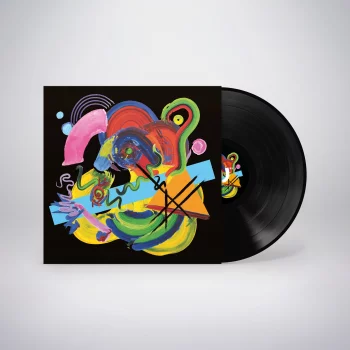
Label:Watergate Records
Cat-No:wgvinyl91
Release-Date:26.08.2022
Genre:House / Techno
Configuration:12" Excl
1
Joplyn - Can’t Get Enough
2
Joplyn - Fact & Fiction
3
Joplyn - Can’t Get Enough (Adana Twins Remix)
4
Joplyn - Fact & Fiction (JAMIIE Remix)
12“ + DOWNLOAD
Tracklist:
A1) JOPLYN - Can’t Get Enough
A2) JOPLYN - Fact & Fiction
B1) JOPLYN - Can’t Get Enough (Adana Twins Remix)
B2) JOPLYN - Fact & Fiction (JAMIIE Remix)
Release Info:
First time available on vinyl!
A pair of Watergate favourites add their touch to JOPLYN standout label debut from last year, as
'Fact & Fiction' and 'Can't Get Enough' get impressive remixes from Adana Twins and JAMIIE.
A prodigiously talented producer, DJ and live act on the rise, JOPLYN’s Watergate Records debut last
December was an exhilarating eleventh hour highlight of 2022.
Championed by Pete Tong on BBC Radio 1, the release now gets a second life in time for summer. Adana
Twins re-fashion 'Can't Get Enough' into a beast of a tune that cleverly retains the emotion of the original,
while propelling it into peak-time festival territory, with a blissful build up and a bass-face inducing bottom
end. A straight up fire tune.
‘Fact & Fiction’ get JAMIIE’s vibe-heavy touch, taking the dreamy tones of the original and re-working them
into an impact-heavy end-of-night opus.
Sicherheits- und Herstellerinformationen / safety and manufacturer info (GPSR)
WAS - Word and Sound Medien GmbH
Liebigstrasse 2-20
DE - 22113 Hamburg
Germany
Contact: [email protected]More
Tracklist:
A1) JOPLYN - Can’t Get Enough
A2) JOPLYN - Fact & Fiction
B1) JOPLYN - Can’t Get Enough (Adana Twins Remix)
B2) JOPLYN - Fact & Fiction (JAMIIE Remix)
Release Info:
First time available on vinyl!
A pair of Watergate favourites add their touch to JOPLYN standout label debut from last year, as
'Fact & Fiction' and 'Can't Get Enough' get impressive remixes from Adana Twins and JAMIIE.
A prodigiously talented producer, DJ and live act on the rise, JOPLYN’s Watergate Records debut last
December was an exhilarating eleventh hour highlight of 2022.
Championed by Pete Tong on BBC Radio 1, the release now gets a second life in time for summer. Adana
Twins re-fashion 'Can't Get Enough' into a beast of a tune that cleverly retains the emotion of the original,
while propelling it into peak-time festival territory, with a blissful build up and a bass-face inducing bottom
end. A straight up fire tune.
‘Fact & Fiction’ get JAMIIE’s vibe-heavy touch, taking the dreamy tones of the original and re-working them
into an impact-heavy end-of-night opus.
Sicherheits- und Herstellerinformationen / safety and manufacturer info (GPSR)
WAS - Word and Sound Medien GmbH
Liebigstrasse 2-20
DE - 22113 Hamburg
Germany
Contact: [email protected]More
1
Paul Renard - Lucid Haze
2
Paul Renard & ACIDSKOOL - Phantom Resonance
3
ACIDSKOOL - Acid Bond Servant
4
ACIDSKOOL - Kaos
Tracklisting
A1 Paul Renard - Lucid Haze
A2 Paul Renard - Phantom Resonance
B1 ACIDSKOOL - Acid Bond Servant
B2 ACIDSKOOL - Kaos
Sales Note
Acid Acid Session Vol. 4 continues the steady development of the series toward a clearer Acid House direction.
Paul Renard from the Netherlands, behind Deep Acid Records, adds his 303-driven Acid House approach to the Acid Session series.
The flip side features Acidskool, delivering their UK Acid House sound, raw in groove and hardware-driven.
Late 80s & 90s energy, reworked for today's club floor.
Sicherheits- und Herstellerinformationen / safety and manufacturer info (GPSR)
WAS - Word and Sound Medien GmbH
Liebigstrasse 2-20
DE - 22113 Hamburg
Germany
Contact: [email protected]More
A1 Paul Renard - Lucid Haze
A2 Paul Renard - Phantom Resonance
B1 ACIDSKOOL - Acid Bond Servant
B2 ACIDSKOOL - Kaos
Sales Note
Acid Acid Session Vol. 4 continues the steady development of the series toward a clearer Acid House direction.
Paul Renard from the Netherlands, behind Deep Acid Records, adds his 303-driven Acid House approach to the Acid Session series.
The flip side features Acidskool, delivering their UK Acid House sound, raw in groove and hardware-driven.
Late 80s & 90s energy, reworked for today's club floor.
Sicherheits- und Herstellerinformationen / safety and manufacturer info (GPSR)
WAS - Word and Sound Medien GmbH
Liebigstrasse 2-20
DE - 22113 Hamburg
Germany
Contact: [email protected]More

1
Silent G - Nocturnal Agitation
2
Silent G - Rapid Eye Movement
3
Silent G - Witching Hour
4
Silent G - Nightmares on Melatonin
Genre: Techno
Tracklist 12":
A1 Silent G - Nocturnal Agitation
A2 Silent G - Rapid Eye Movement
B1 Silent G - Witching Hour
B2 Silent G - Nightmares on Melatonin
Short Info:
Classy dub techno EP with oldschool attitude, groovy energy and powerful modern elements.
Mastering & lacquer cut by Kassian Troyer at Dubplates & Mastering Berlin
Sicherheits- und Herstellerinformationen / safety and manufacturer info (GPSR)
WAS - Word and Sound Medien GmbH
Liebigstrasse 2-20
DE - 22113 Hamburg
Germany
Contact: [email protected]More
Tracklist 12":
A1 Silent G - Nocturnal Agitation
A2 Silent G - Rapid Eye Movement
B1 Silent G - Witching Hour
B2 Silent G - Nightmares on Melatonin
Short Info:
Classy dub techno EP with oldschool attitude, groovy energy and powerful modern elements.
Mastering & lacquer cut by Kassian Troyer at Dubplates & Mastering Berlin
Sicherheits- und Herstellerinformationen / safety and manufacturer info (GPSR)
WAS - Word and Sound Medien GmbH
Liebigstrasse 2-20
DE - 22113 Hamburg
Germany
Contact: [email protected]More


1
Harris & Orr - Spread Love
2
Terry And Deep South - Trying To Get By
3
Toshiyuki Honda - Burnin' Waves
4
Igna Igwebuike - Disco Bomp
5
Janette Renee - What's On Your Mind (Super Club Remix)
6
Grupo Serenata - Sodade, Tem Pena D’Mim
7
Vital Disorders - Zombie
8
Alphonsus Idigo - Flight 505
9
DJ Food - Peace (Harvey's 30 Something Mix)
10
Man Jumping - In The Jungle
11
Stars - Dancin’ People
12
Gaucho - Dance Forever (Club Version)
13
49th Floor - Night Passage (Bongo Mix)
14
Orion Agassi - Desacato
15
Fatdog - Remember (Ft. CJ Raine)
With two deeply cherished compilations already in the bag, Luke Una steps up for the third volume in his É Soul Cultura series on Mr Bongo. A love letter to the dancefloor and its power to unite people from all corners of society amid growing division and extremist politics. Genre-spanning in nature, the 15 tracks travel between cosmic soul, boogie, proto-house, slo-mo technoid grooves, drum machine afro, astral bass-bugging futurism, jazz funk, dance, and disco. Each having the ability to move the body as much as the heart.
From his formative years in Sheffield to co-founding Manchester’s much-fabled Electric Chair with Justin Crawford, through to helming the iconic LGBTQ institutions of Homoelectric / Homobloc, Luke has spent 40 years immersed in dance music. His latest outlet, É Soul Cultura, has grown from a label to a globe-spanning events series with Luke holding residencies and embarking on tours across the world from Japan and Australia to America and Europe.
“For me, the dancefloor was never about a one-dimensional, thudding, 130 BPM beat only. It's a much more dynamic, broader vision than that. I cut my teeth in an era where a 100 BPM record had as much impact, excitement, and energy as a 134 BPM dancefloor jazz funk or techno record”, Luke mentions. É Soul Cultura Volume 3 is the perfect embodiment of that notion: “It’s about four decades in the trenches playing dance music, the late-night afters, the shebeens, the basements, warehouse parties, the eight-hour journeys in East London, through to festival sets at Houghton and We Out Here. It’s music unconstrained by genre or tempo and more about making your body move”.
But this isn’t simply a collection of disparate dance tracks; they carry meaning and soul. “It’s less about escapism, more about reconnection. My experience of post-covid has been the coming together of all the clans in various clubs and gatherings. A reaction to a very toxic world out there, where the aggro rhythms of division have sought to divide us, and people don't meet as often. The coming back together face-to-face in clubs has encouraged a real love in the air, there's a real togetherness and collective spirit”.
Opening up the compilation is a track that channels that very message, the transcendental, soul-rousing Harris & Orr ‘Spread Love’. Joining the dots from there, to the low-slung deep house closer of Fatdog ‘Remember’, you’ll find electronic drum machine Nigerian funk, sitting side by side with dancefloor Cape Verdean brilliance, a post-punk cover of Fela Kuti, rubbing shoulders with cosmic electro, and an Una-championed, 8-minute, kickless DJ Harvey remix. There’s jazz funk in various guises moving from boogie synth to astral travelling, slo-mo acidic raw techno, and a ‘79 soul stepper, alongside swirling percussive Italo disco and tribal-charged house. All infused with an innate ability to bring people together.
As society becomes increasingly fractured, É Soul Cultura Volume 3’s message is more than movement. It’s about dance music’s power to unify people from all walks of life and break down the barriers that divide us.
Sicherheits- und Herstellerinformationen / safety and manufacturer info (GPSR)
WAS - Word and Sound Medien GmbH
Liebigstrasse 2-20
DE - 22113 Hamburg
Germany
Contact: [email protected]More
From his formative years in Sheffield to co-founding Manchester’s much-fabled Electric Chair with Justin Crawford, through to helming the iconic LGBTQ institutions of Homoelectric / Homobloc, Luke has spent 40 years immersed in dance music. His latest outlet, É Soul Cultura, has grown from a label to a globe-spanning events series with Luke holding residencies and embarking on tours across the world from Japan and Australia to America and Europe.
“For me, the dancefloor was never about a one-dimensional, thudding, 130 BPM beat only. It's a much more dynamic, broader vision than that. I cut my teeth in an era where a 100 BPM record had as much impact, excitement, and energy as a 134 BPM dancefloor jazz funk or techno record”, Luke mentions. É Soul Cultura Volume 3 is the perfect embodiment of that notion: “It’s about four decades in the trenches playing dance music, the late-night afters, the shebeens, the basements, warehouse parties, the eight-hour journeys in East London, through to festival sets at Houghton and We Out Here. It’s music unconstrained by genre or tempo and more about making your body move”.
But this isn’t simply a collection of disparate dance tracks; they carry meaning and soul. “It’s less about escapism, more about reconnection. My experience of post-covid has been the coming together of all the clans in various clubs and gatherings. A reaction to a very toxic world out there, where the aggro rhythms of division have sought to divide us, and people don't meet as often. The coming back together face-to-face in clubs has encouraged a real love in the air, there's a real togetherness and collective spirit”.
Opening up the compilation is a track that channels that very message, the transcendental, soul-rousing Harris & Orr ‘Spread Love’. Joining the dots from there, to the low-slung deep house closer of Fatdog ‘Remember’, you’ll find electronic drum machine Nigerian funk, sitting side by side with dancefloor Cape Verdean brilliance, a post-punk cover of Fela Kuti, rubbing shoulders with cosmic electro, and an Una-championed, 8-minute, kickless DJ Harvey remix. There’s jazz funk in various guises moving from boogie synth to astral travelling, slo-mo acidic raw techno, and a ‘79 soul stepper, alongside swirling percussive Italo disco and tribal-charged house. All infused with an innate ability to bring people together.
As society becomes increasingly fractured, É Soul Cultura Volume 3’s message is more than movement. It’s about dance music’s power to unify people from all walks of life and break down the barriers that divide us.
Sicherheits- und Herstellerinformationen / safety and manufacturer info (GPSR)
WAS - Word and Sound Medien GmbH
Liebigstrasse 2-20
DE - 22113 Hamburg
Germany
Contact: [email protected]More
Label:Legendary Music, LLC
Cat-No:ERE1232
Release-Date:18.04.2026
Genre:HipHop / Beats
Configuration:LP Excl
Label:Legendary Music, LLC
Cat-No:ERE1232
Release-Date:18.04.2026
Genre:HipHop / Beats
Configuration:LP Excl
Coke Bottle Green Vinyl
RSD26
Non-returnable
About:
In the vibrant, post-millennial landscape of independent hip-hop, few collective names commanded as much respect as the Living Legends. A monumental alliance of some of the West Coast's most respected solo artists-including Murs, The Grouch, Eligh, Aesop, Bicasso, Luckyiam, Sunspot Jonz, and Arata-the crew's 2008 album, The Gathering, served as a powerful declaration of their unity and enduring relevance.
The Gathering was a snapshot of a legendary crew working at the peak of their collaborative power. The project masterfully weaves together the diverse styles of its eight members, moving effortlessly from the conscious storytelling of Murs to the soulful, introspective flow of The Grouch and Eligh, and the abstract lyrical dexterity of Aesop. The production, handled largely within the collective, provides a lush, sample-heavy, and distinctly West Coast soundscape that perfectly complements the lyrical fireworks. Tracks like the anthemic title track "The Gathering" and the legendary posse cut "After Hours" showcase the organic chemistry that made the Living Legends a seminal force in underground music.
For the first time ever, this pivotal album is being officially pressed on vinyl. This highly anticipated Record Store Day 2026 release finally delivers The Gathering to the format its rich, soulful production has always deserved. This limited edition pressing is presented on striking Coke Bottle Clear Vinyl, a perfect visual complement to the album's crisp, refreshing sound.
A crucial artifact of independent hip-hop history, The Gathering on vinyl is an essential addition for fans who have supported the Living Legends for decades and a must-have for vinyl collectors looking to own a tangible piece of the era's best crew collaborations. Don't miss the chance to own this definitive, first-ever vinyl pressing of a true underground classic.
Key Marketing/Selling:
- First time pressed on vinyl
- Legendary Underground Hip-Hop group
- Originally made waves in the music industry for amassing a huge following and building themselves entirely independently - from hundreds of thousands of CD sales to self-funded regional tours
- Members consist of The Grouch, Sunspot Jonz, Scarub, Luckyiam, Eligh, Bicasso, and Aesop (Murs & Arata are former members)
- Living Legends are known for the classic tracks "Never Fallin'," "Moving At The Speed of Life (feat. Aesop & Slug)," "Purple Kush (feat. Sunspot Jonz)," "Nothing Less (feat. Slug)," "Night Prowler (feat. Slug),"
- The Gathering includes one of the best hip-hop posse cuts of all-time, "After Hours (Extended Euro Mix)"
- The Gathering Peaked at number 16 on the Billboard Heatseekers Album chart, as well as number 46 on the Independent Albums chart
- 1xLP, Coke Bottle Green Vinyl, limited to 1500 units worldwide
Tracklist:
A1. The Gathering
A2. She Wants Me
A3. Pants on Fire
A4. War & Peace
B1. Luva Changer
B2. Samba
B3. After Hours (Extended Euro Mix)
Socials:
Living Legends
Twitter: 19.2k followers
IG: 29.6k followers
FB: 107k followers
YT: 27.6k subs / 18M views
Band Members IG:
@sunspotjonz
@luck_the_legend
@thegrouch
@murs316
@therealeligh
@therealscarub
@blackaesop
Sicherheits- und Herstellerinformationen / safety and manufacturer info (GPSR)
WAS - Word and Sound Medien GmbH
Liebigstrasse 2-20
DE - 22113 Hamburg
Germany
Contact: [email protected]More
RSD26
Non-returnable
About:
In the vibrant, post-millennial landscape of independent hip-hop, few collective names commanded as much respect as the Living Legends. A monumental alliance of some of the West Coast's most respected solo artists-including Murs, The Grouch, Eligh, Aesop, Bicasso, Luckyiam, Sunspot Jonz, and Arata-the crew's 2008 album, The Gathering, served as a powerful declaration of their unity and enduring relevance.
The Gathering was a snapshot of a legendary crew working at the peak of their collaborative power. The project masterfully weaves together the diverse styles of its eight members, moving effortlessly from the conscious storytelling of Murs to the soulful, introspective flow of The Grouch and Eligh, and the abstract lyrical dexterity of Aesop. The production, handled largely within the collective, provides a lush, sample-heavy, and distinctly West Coast soundscape that perfectly complements the lyrical fireworks. Tracks like the anthemic title track "The Gathering" and the legendary posse cut "After Hours" showcase the organic chemistry that made the Living Legends a seminal force in underground music.
For the first time ever, this pivotal album is being officially pressed on vinyl. This highly anticipated Record Store Day 2026 release finally delivers The Gathering to the format its rich, soulful production has always deserved. This limited edition pressing is presented on striking Coke Bottle Clear Vinyl, a perfect visual complement to the album's crisp, refreshing sound.
A crucial artifact of independent hip-hop history, The Gathering on vinyl is an essential addition for fans who have supported the Living Legends for decades and a must-have for vinyl collectors looking to own a tangible piece of the era's best crew collaborations. Don't miss the chance to own this definitive, first-ever vinyl pressing of a true underground classic.
Key Marketing/Selling:
- First time pressed on vinyl
- Legendary Underground Hip-Hop group
- Originally made waves in the music industry for amassing a huge following and building themselves entirely independently - from hundreds of thousands of CD sales to self-funded regional tours
- Members consist of The Grouch, Sunspot Jonz, Scarub, Luckyiam, Eligh, Bicasso, and Aesop (Murs & Arata are former members)
- Living Legends are known for the classic tracks "Never Fallin'," "Moving At The Speed of Life (feat. Aesop & Slug)," "Purple Kush (feat. Sunspot Jonz)," "Nothing Less (feat. Slug)," "Night Prowler (feat. Slug),"
- The Gathering includes one of the best hip-hop posse cuts of all-time, "After Hours (Extended Euro Mix)"
- The Gathering Peaked at number 16 on the Billboard Heatseekers Album chart, as well as number 46 on the Independent Albums chart
- 1xLP, Coke Bottle Green Vinyl, limited to 1500 units worldwide
Tracklist:
A1. The Gathering
A2. She Wants Me
A3. Pants on Fire
A4. War & Peace
B1. Luva Changer
B2. Samba
B3. After Hours (Extended Euro Mix)
Socials:
Living Legends
Twitter: 19.2k followers
IG: 29.6k followers
FB: 107k followers
YT: 27.6k subs / 18M views
Band Members IG:
@sunspotjonz
@luck_the_legend
@thegrouch
@murs316
@therealeligh
@therealscarub
@blackaesop
Sicherheits- und Herstellerinformationen / safety and manufacturer info (GPSR)
WAS - Word and Sound Medien GmbH
Liebigstrasse 2-20
DE - 22113 Hamburg
Germany
Contact: [email protected]More
Label:Watergate Records
Cat-No:wgvinyl94
Release-Date:30.09.2022
Genre:House / Techno
Configuration:12" Excl
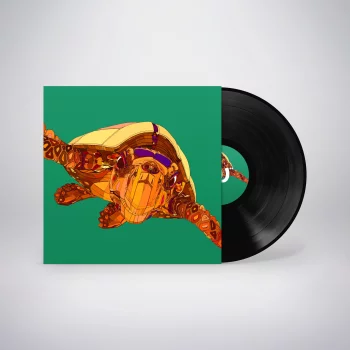
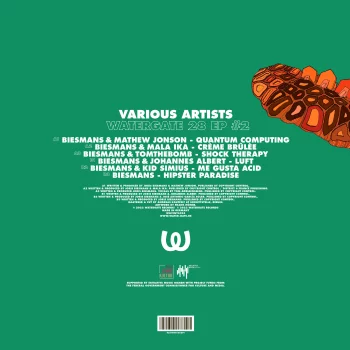
Label:Watergate Records
Cat-No:wgvinyl94
Release-Date:30.09.2022
Genre:House / Techno
Configuration:12" Excl
1
Biesmans & Mathew Jonson - Quantum Computing
2
Biesmans & Mala Ika - Crème Brûlée
3
Biesmans & TomTheBomb - Shock Therapy
4
Biesmans & Johannes Albert - Luft
5
Biesmans & Kid Simius - Me Gusta Acid
6
Biesmans - Hipster Paradise
12“ + DOWNLOAD
Tracklist:
A1) Biesmans & Mathew Jonson - Quantum Computing
A2) Biesmans & Mala Ika - Crème Brûlée
A3) Biesmans & TomTheBomb - Shock Therapy
B1) Biesmans & Johannes Albert - Luft
B2) Biesmans & Kid Simius - Me Gusta Acid
B3) Biesmans - Hipster Paradise
Release Info:
The final sixer from ‘Watergate 28’ LP mixed by Biesmans inside 3 months, a testament to his talent and
intense focus. Featuring collabs with Mathew Jonson, Mala Ika, TomTheBomb, Johannes Albert, Kid Simius
and another solo cut from the Belgian producer’s 17 original tracks for W28, arguably the label’s most
ambitious to date. And this EP’s a banger.
Sicherheits- und Herstellerinformationen / safety and manufacturer info (GPSR)
WAS - Word and Sound Medien GmbH
Liebigstrasse 2-20
DE - 22113 Hamburg
Germany
Contact: [email protected]More
Tracklist:
A1) Biesmans & Mathew Jonson - Quantum Computing
A2) Biesmans & Mala Ika - Crème Brûlée
A3) Biesmans & TomTheBomb - Shock Therapy
B1) Biesmans & Johannes Albert - Luft
B2) Biesmans & Kid Simius - Me Gusta Acid
B3) Biesmans - Hipster Paradise
Release Info:
The final sixer from ‘Watergate 28’ LP mixed by Biesmans inside 3 months, a testament to his talent and
intense focus. Featuring collabs with Mathew Jonson, Mala Ika, TomTheBomb, Johannes Albert, Kid Simius
and another solo cut from the Belgian producer’s 17 original tracks for W28, arguably the label’s most
ambitious to date. And this EP’s a banger.
Sicherheits- und Herstellerinformationen / safety and manufacturer info (GPSR)
WAS - Word and Sound Medien GmbH
Liebigstrasse 2-20
DE - 22113 Hamburg
Germany
Contact: [email protected]More
Label:Watergate Records
Cat-No:WGA003LP
Release-Date:04.06.2021
Genre:House / Techno
Configuration:2LP Excl
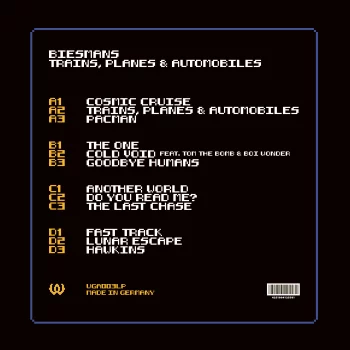
Label:Watergate Records
Cat-No:WGA003LP
Release-Date:04.06.2021
Genre:House / Techno
Configuration:2LP Excl
1
Biesmans - 1. Cosmic Cruise
2
Biesmans - 2. Trains, Planes & Automobiles
3
Biesmans - 3. Pacman
4
Biesmans - 4. The One
5
Biesmans - 5. Cold Void feat. Tom The Bomb & Boi Wonder
6
Biesmans - 6. Goodbye Humans
7
Biesmans - 7. Another World
8
Biesmans - 8. Do You Read Me?
9
Biesmans - 9. The Last Chase
10
Biesmans - 10. Fast Track
11
Biesmans - 11. Lunar Escape
12
Biesmans - 12. Hawkins
2LP (black & yellow vinyl, gatefold + poster)
Tracklist:
1. Cosmic Cruise
2. Trains, Planes & Automobiles
3. Pacman
4. The One
5. Cold Void feat. Tom The Bomb & Boi Wonder
6. Goodbye Humans
7. Another World
8. Do You Read Me?
9. The Last Chase
10. Fast Track
11. Lunar Escape
12. Hawkins
Release Info:
What began as a challenge to fight creative stagnation, soon grew into a fully-fledged audio-visual project for Belgian DJ, producer and live artist, Biesmans. Setting himself the goal of making three
tracks per week for a month, he re-scored ‘80s pop culture moments – including films, TV shows and games, resulting in a brilliant 12-track work encompassing new wave, indie, dark wave, electro and
disco.
Moving his modular-heavy studio to Berlin in 2014, the ensuring years saw Joris Biesmans drop heat on Correspondent, Disco Halal, AEON, 17 Steps and Future Disco. He’s been a core member of Watergate
family since his arrival in the capital, working as the club’s sound technician. He made his debut on Watergate Records in 2020 with the well-received ‘Electric Love’ EP.
The ‘Planes, Trains & Automobiles’ album took shape in April last year as the lockdown was starting to take grip and Biesmans needed a positive distraction. Ensconced in the music of his childhood and ‘80s
pop cultural fodder, he locked himself in his studio and set about creating, later digging through archival footage to match the music. Biesmans, who previously undertook work scoring films, was so absorbed
by the process, he’d sometimes do it in reverse; allowing the vintage media be the guide. Throughout the period, the clips were shared each Monday, Wednesday and Friday on his Instagram, building up a firm
following from fans, friends and colleagues. And thus, the project found its wings, developing into an album.
Throughout the dozen tracks, highlights are plentiful; from the neon ambience of the Kraftwerk-inspired ‘
‘Cosmic Cruise’, which later accompanied a smoky scene between Tom Cruise and Rebecca de Mornay in ‘Risky Business’; the sun-soaked, retro-pop title track, which became the album’s first single, and was
paired with a jubilant dance scene from the Breakfast Club; ‘Cold Void’, the album’s second single, which saw Biesmans link up with fellow Belgians Boi Wonder and Tom the Bomb for a dark wave creation built
around a heavy guitar solo and set against a backdrop of Blade Runner clips; and the silky electro funk of ‘Another World’ that soundtracks scenes from Miami Vice.
Biesmans explains about ‘Planes, Trains and Automobiles’: “I started this as a lockdown challenge, in which I would make three tracks per week for a month, alongside providing videos where I re-scored
footage of 80s pop culture moments. Inspired by the movie of the same name, I picked the title because it ties to the theme of ‘mobility’. Our society is based upon being mobile and when Corona hit us, we
could taste a bit of being immobile. As an artist that meant, I could focus on making music 100%. No distractions, no weekend gigs, no parties just making music. This new lifestyle resulted in my first album.
A journey into the past but looking forward to the future, experimenting with other genres and techniques to make a real album that goes beyond club music.”
Sicherheits- und Herstellerinformationen / safety and manufacturer info (GPSR)
WAS - Word and Sound Medien GmbH
Liebigstrasse 2-20
DE - 22113 Hamburg
Germany
Contact: [email protected]More
Tracklist:
1. Cosmic Cruise
2. Trains, Planes & Automobiles
3. Pacman
4. The One
5. Cold Void feat. Tom The Bomb & Boi Wonder
6. Goodbye Humans
7. Another World
8. Do You Read Me?
9. The Last Chase
10. Fast Track
11. Lunar Escape
12. Hawkins
Release Info:
What began as a challenge to fight creative stagnation, soon grew into a fully-fledged audio-visual project for Belgian DJ, producer and live artist, Biesmans. Setting himself the goal of making three
tracks per week for a month, he re-scored ‘80s pop culture moments – including films, TV shows and games, resulting in a brilliant 12-track work encompassing new wave, indie, dark wave, electro and
disco.
Moving his modular-heavy studio to Berlin in 2014, the ensuring years saw Joris Biesmans drop heat on Correspondent, Disco Halal, AEON, 17 Steps and Future Disco. He’s been a core member of Watergate
family since his arrival in the capital, working as the club’s sound technician. He made his debut on Watergate Records in 2020 with the well-received ‘Electric Love’ EP.
The ‘Planes, Trains & Automobiles’ album took shape in April last year as the lockdown was starting to take grip and Biesmans needed a positive distraction. Ensconced in the music of his childhood and ‘80s
pop cultural fodder, he locked himself in his studio and set about creating, later digging through archival footage to match the music. Biesmans, who previously undertook work scoring films, was so absorbed
by the process, he’d sometimes do it in reverse; allowing the vintage media be the guide. Throughout the period, the clips were shared each Monday, Wednesday and Friday on his Instagram, building up a firm
following from fans, friends and colleagues. And thus, the project found its wings, developing into an album.
Throughout the dozen tracks, highlights are plentiful; from the neon ambience of the Kraftwerk-inspired ‘
‘Cosmic Cruise’, which later accompanied a smoky scene between Tom Cruise and Rebecca de Mornay in ‘Risky Business’; the sun-soaked, retro-pop title track, which became the album’s first single, and was
paired with a jubilant dance scene from the Breakfast Club; ‘Cold Void’, the album’s second single, which saw Biesmans link up with fellow Belgians Boi Wonder and Tom the Bomb for a dark wave creation built
around a heavy guitar solo and set against a backdrop of Blade Runner clips; and the silky electro funk of ‘Another World’ that soundtracks scenes from Miami Vice.
Biesmans explains about ‘Planes, Trains and Automobiles’: “I started this as a lockdown challenge, in which I would make three tracks per week for a month, alongside providing videos where I re-scored
footage of 80s pop culture moments. Inspired by the movie of the same name, I picked the title because it ties to the theme of ‘mobility’. Our society is based upon being mobile and when Corona hit us, we
could taste a bit of being immobile. As an artist that meant, I could focus on making music 100%. No distractions, no weekend gigs, no parties just making music. This new lifestyle resulted in my first album.
A journey into the past but looking forward to the future, experimenting with other genres and techniques to make a real album that goes beyond club music.”
Sicherheits- und Herstellerinformationen / safety and manufacturer info (GPSR)
WAS - Word and Sound Medien GmbH
Liebigstrasse 2-20
DE - 22113 Hamburg
Germany
Contact: [email protected]More

1
Fila Brazillia - A1. Old Codes
2
Fila Brazillia - A2. Mermaids
3
Fila Brazillia - A3. Whose Money
4
Fila Brazillia - B1. Brazilification
5
Fila Brazillia - B2. Serratia Marcescens
6
Fila Brazillia - C1. The Sheriff
7
Fila Brazillia - C2. Feinman
8
Fila Brazillia - D1. The Light of Jesus
9
Fila Brazillia - D2. Strange Thoughts
10
Fila Brazillia - E1. Fila Funk
11
Fila Brazillia - F1. Pots & Pans
12
Fila Brazillia - F2. New Chaos
Formats: 3LP Regular Edition
Tracklistings
3LP Regular Edition
A1. Old Codes
A2. Mermaids
A3. Whose Money
B1. Brazilification
B2. Serratia Marcescens
C1. The Sheriff
C2. Feinman
D1. The Light of Jesus
D2. Strange Thoughts
E1. Fila Funk
F1. Pots & Pans
F2. New Chaos
The Label:
Forever Records
Music springs eternal. Recognising the enduring power of timeless albums to guide us through life, Forever Records is a reissue series dedicated to rediscovering lost musical treasures from across the spectrum of head-feeding, heart-rending electronic music.
Established by Rush Hour co-founder Christiaan Macdonald and Delsin founder Marsel van der Wielen, Forever Records places heartfelt faith in a carefully curated sequence of seminal, largely forgotten records from disparate eras, scenes and spaces within electronic music history. Tipped towards the mellow and introspective, these are albums that stop time when the needle hits the groove, stirring only when it's time to flip over before you sink back into the experience. That's what albums were always meant to be about, back then, right now, always and forever.
The Release:
Striking the sweet spot between sampledelic downtempo and earth-rooted deep house, Fila Brazillia's Old Codes New Chaos is a maverick patchwork of grooves and soundscapes. Crafted in North East England in the vibrant period before chill-out was co-opted by advertising, Steve Cobby and David McSherry's sharp-eared funk formula remains a cult classic suite of exquisite productions spanning deep house, broken beat and ambient shot through with wry humour.
Last physically released in limited quantities in 2002, Forever Records are revisiting this 1994 gem with an extensive reissue led by a triple vinyl pressing, newly mastered from the original mixdowns. There will also be a limited edition, 4LP edition including bonus tracks 'Rankine' (Live at Bounce), 'Chemistry' and 'Rankine', plus an exclusive print of Catherine Brennand's watercolour painting that graces the front of the album. A limited edition, gold disc CD housed in a digi-pack will also be available. All editions also features liner notes by veteran music journalist John McCready.
Press response to Old Codes New Chaos:
"The album that made the world finally sit up and take notice of the avant funk grooves coming from Hull's immaculately stoned tech funk magicians." Frank Tope, Mixmag, UK 1994.
"This album… stands out a mile from most of its peers as a work of untouchable genius." Bill Brewster, DJ Mag UK 1994.
"Fila works because they fit into that no man’s land, the space in your record collection where ambient seems too much like wallpaper and house seems just too braindead for your bedroom " Frank Tope, Mixmag, UK 1994.
"Having already created the perfect desert island disc, "Mermaids" and explored the darker side of sub bass on the 17-minute extravaganza "Fila Funk", Fila Brazillia have just unleashed their moving debut LP, "Old Codes New Chaos", and to be quite honest, you'd be a fool to miss out this time around." Mandi James, Melody Maker, UK 1994.
“Where Cobby and Man rip up the rulebook on the four to the floor and probably make the greatest afterhours house album in the word”. Tony Marcus, Mixmag, 1996.
Sicherheits- und Herstellerinformationen / safety and manufacturer info (GPSR)
WAS - Word and Sound Medien GmbH
Liebigstrasse 2-20
DE - 22113 Hamburg
Germany
Contact: [email protected]More
Tracklistings
3LP Regular Edition
A1. Old Codes
A2. Mermaids
A3. Whose Money
B1. Brazilification
B2. Serratia Marcescens
C1. The Sheriff
C2. Feinman
D1. The Light of Jesus
D2. Strange Thoughts
E1. Fila Funk
F1. Pots & Pans
F2. New Chaos
The Label:
Forever Records
Music springs eternal. Recognising the enduring power of timeless albums to guide us through life, Forever Records is a reissue series dedicated to rediscovering lost musical treasures from across the spectrum of head-feeding, heart-rending electronic music.
Established by Rush Hour co-founder Christiaan Macdonald and Delsin founder Marsel van der Wielen, Forever Records places heartfelt faith in a carefully curated sequence of seminal, largely forgotten records from disparate eras, scenes and spaces within electronic music history. Tipped towards the mellow and introspective, these are albums that stop time when the needle hits the groove, stirring only when it's time to flip over before you sink back into the experience. That's what albums were always meant to be about, back then, right now, always and forever.
The Release:
Striking the sweet spot between sampledelic downtempo and earth-rooted deep house, Fila Brazillia's Old Codes New Chaos is a maverick patchwork of grooves and soundscapes. Crafted in North East England in the vibrant period before chill-out was co-opted by advertising, Steve Cobby and David McSherry's sharp-eared funk formula remains a cult classic suite of exquisite productions spanning deep house, broken beat and ambient shot through with wry humour.
Last physically released in limited quantities in 2002, Forever Records are revisiting this 1994 gem with an extensive reissue led by a triple vinyl pressing, newly mastered from the original mixdowns. There will also be a limited edition, 4LP edition including bonus tracks 'Rankine' (Live at Bounce), 'Chemistry' and 'Rankine', plus an exclusive print of Catherine Brennand's watercolour painting that graces the front of the album. A limited edition, gold disc CD housed in a digi-pack will also be available. All editions also features liner notes by veteran music journalist John McCready.
Press response to Old Codes New Chaos:
"The album that made the world finally sit up and take notice of the avant funk grooves coming from Hull's immaculately stoned tech funk magicians." Frank Tope, Mixmag, UK 1994.
"This album… stands out a mile from most of its peers as a work of untouchable genius." Bill Brewster, DJ Mag UK 1994.
"Fila works because they fit into that no man’s land, the space in your record collection where ambient seems too much like wallpaper and house seems just too braindead for your bedroom " Frank Tope, Mixmag, UK 1994.
"Having already created the perfect desert island disc, "Mermaids" and explored the darker side of sub bass on the 17-minute extravaganza "Fila Funk", Fila Brazillia have just unleashed their moving debut LP, "Old Codes New Chaos", and to be quite honest, you'd be a fool to miss out this time around." Mandi James, Melody Maker, UK 1994.
“Where Cobby and Man rip up the rulebook on the four to the floor and probably make the greatest afterhours house album in the word”. Tony Marcus, Mixmag, 1996.
Sicherheits- und Herstellerinformationen / safety and manufacturer info (GPSR)
WAS - Word and Sound Medien GmbH
Liebigstrasse 2-20
DE - 22113 Hamburg
Germany
Contact: [email protected]More