

1
Tilaye Gebre - Alibek’agnimi
2
Tilaye Gebre - Anichi keto gidi yeleshimi
3
Tilaye Gebre - Tizita
4
Tilaye Gebre - Ts’igereda
5
Tilaye Gebre - Alichalikumi
6
Tilaye Gebre - Eyut sitinafik’egni
7
Tilaye Gebre - Feqresh yemench weha
8
Tilaye Gebre - Ye’ayine tesifa
9
Tilaye Gebre - Tizi alegni yet’initu
Tilaye Gebre is one of Ethiopia’s most soulful saxophone giants, with a musical legacy that’s hard to surpass. A founding member of the Equators, later renamed the Dahlak Band, he was a key figure in Ethiopia’s vibrant hotel music scene and a sought-after musician and arranger for artists like Aster Aweke, Mahmoud Ahmed, Tilahun Gessesse, and Muluken Melesse.
Tilaye — still going strong — was at the epicenter of the Ethiopian music scene during one of the most turbulent periods in the country’s history. Tilaye’s musical trajectory, regardless of the forms it has taken over the decades, is simply ceaseless. The road to a musical career spanning six decades started out winding, and the first steps came almost as a fluke.
With the Dahlak Band, Tilaye had managed to secure a musical residency at the legendary Ghion Hotel, where they honed their skills and developed their musical expression to unparalleled levels. From the late sixties onwards, Dahlak Band lit up Addis Ababa with a mixture of James Brown and Wilson Pickett tunes, rhythm and blues, soul, funk, and the sound of the disco era — mixed with modern Ethiopian styles — serving up majestic concoctions with full-range instrumentation, featuring trumpet, keyboard, saxophone, bass, drums, and guitar. Through their hotel sessions, Tilaye developed further as an arranger, arranging fellow band member Muluken Melesse’s first solo album, Muluken Melesse with the Dahlak Band (Kaifa Records – LPKF 39), recorded during the turbulent years of 1975–1976, following the fall of Haile Selassie. Everything was in flux in this transitional period, but a constant was how Tilaye stood in the spotlight. On that record, there’s a loose vibe to the soundscape that lets Tilaye’s skills shine, while all the other musical contributions coalesce into a slowly cooking atmosphere where the groove at times fluctuates into psychedelic territory, making the music stand out from most contemporaries.
Most of their recorded output came from one-take live cassette recordings at the Ghion, or from music shops at that time — one microphone at the front, hit record: no EQ, no reverb, just some delay. Some of the Dahlak Band’s releases featured Tilaye as frontman, such as Tilaye’s Saxophone with the Dahlak Band from the late 1970s — typical of a rare groove on the Ethiopian scene — with excursions into reggae territory, including the band’s characteristic sound featuring Tilaye Gebre (tenor and alto saxophone), Dawit Yifru (organ), David Kassa (electric guitar), Shimelis Beyene (trumpet), Moges Habte (tenor saxophone), Abera Feyissa (bass guitar), Tesfaye Tessema (drums), and Muluken Melesse (cowbell). The Dahlak Band’s output was so prodigious that they simply couldn’t be pigeonholed.
No saxophonist in Ethiopia influenced the sound of popular music more than Tilaye in the 1970s, yet his recordings have been hard to come by for ages, which has meant that newcomers to the scene have gems to uncover in retrospect. Arguably, Tilaye shifted gears when he relocated to the U.S. to such an extent that his musicianship became even more renowned, accompanying the greatest of his contemporaries internationally. Tilaye is one of Ethiopia’s all-time greats, with a musical legacy — both as musician and arranger — that’s hard to surpass. It’s a wonder to be able to enjoy a recording like this half a century later.
TRACKLIST:
A1. Alibek’agnimi
A2. Anichi keto gidi yeleshimi
A3. Tizita
B1. Ts’igereda
B2. Alichalikumi
C1. Eyut sitinafik’egni
C2. Feqresh yemench weha
D1. Ye’ayine tesifa
D2. Tizi alegni yet’initu
Sicherheits- und Herstellerinformationen / safety and manufacturer info (GPSR)
WAS - Word and Sound Medien GmbH
Liebigstrasse 2-20
DE - 22113 Hamburg
Germany
Contact: [email protected]More
Tilaye — still going strong — was at the epicenter of the Ethiopian music scene during one of the most turbulent periods in the country’s history. Tilaye’s musical trajectory, regardless of the forms it has taken over the decades, is simply ceaseless. The road to a musical career spanning six decades started out winding, and the first steps came almost as a fluke.
With the Dahlak Band, Tilaye had managed to secure a musical residency at the legendary Ghion Hotel, where they honed their skills and developed their musical expression to unparalleled levels. From the late sixties onwards, Dahlak Band lit up Addis Ababa with a mixture of James Brown and Wilson Pickett tunes, rhythm and blues, soul, funk, and the sound of the disco era — mixed with modern Ethiopian styles — serving up majestic concoctions with full-range instrumentation, featuring trumpet, keyboard, saxophone, bass, drums, and guitar. Through their hotel sessions, Tilaye developed further as an arranger, arranging fellow band member Muluken Melesse’s first solo album, Muluken Melesse with the Dahlak Band (Kaifa Records – LPKF 39), recorded during the turbulent years of 1975–1976, following the fall of Haile Selassie. Everything was in flux in this transitional period, but a constant was how Tilaye stood in the spotlight. On that record, there’s a loose vibe to the soundscape that lets Tilaye’s skills shine, while all the other musical contributions coalesce into a slowly cooking atmosphere where the groove at times fluctuates into psychedelic territory, making the music stand out from most contemporaries.
Most of their recorded output came from one-take live cassette recordings at the Ghion, or from music shops at that time — one microphone at the front, hit record: no EQ, no reverb, just some delay. Some of the Dahlak Band’s releases featured Tilaye as frontman, such as Tilaye’s Saxophone with the Dahlak Band from the late 1970s — typical of a rare groove on the Ethiopian scene — with excursions into reggae territory, including the band’s characteristic sound featuring Tilaye Gebre (tenor and alto saxophone), Dawit Yifru (organ), David Kassa (electric guitar), Shimelis Beyene (trumpet), Moges Habte (tenor saxophone), Abera Feyissa (bass guitar), Tesfaye Tessema (drums), and Muluken Melesse (cowbell). The Dahlak Band’s output was so prodigious that they simply couldn’t be pigeonholed.
No saxophonist in Ethiopia influenced the sound of popular music more than Tilaye in the 1970s, yet his recordings have been hard to come by for ages, which has meant that newcomers to the scene have gems to uncover in retrospect. Arguably, Tilaye shifted gears when he relocated to the U.S. to such an extent that his musicianship became even more renowned, accompanying the greatest of his contemporaries internationally. Tilaye is one of Ethiopia’s all-time greats, with a musical legacy — both as musician and arranger — that’s hard to surpass. It’s a wonder to be able to enjoy a recording like this half a century later.
TRACKLIST:
A1. Alibek’agnimi
A2. Anichi keto gidi yeleshimi
A3. Tizita
B1. Ts’igereda
B2. Alichalikumi
C1. Eyut sitinafik’egni
C2. Feqresh yemench weha
D1. Ye’ayine tesifa
D2. Tizi alegni yet’initu
Sicherheits- und Herstellerinformationen / safety and manufacturer info (GPSR)
WAS - Word and Sound Medien GmbH
Liebigstrasse 2-20
DE - 22113 Hamburg
Germany
Contact: [email protected]More
More records from Muzikawi

1
Ibex Band - Kemd’layey
2
Ibex Band - Meleyayet Mot Naw
3
Ibex Band - Zerafewa
4
Ibex Band - Shemonmuanaye
5
Ibex Band - Yezemed Yebada
6
Ibex Band - Hakim Zemose
7
Ibex Band - Yene F’qr
8
Ibex Band - Skaysi Y’ke’al’yu
9
Ibex Band - Turumbule
10
Ibex Band - Ay w’bet
11
Ibex Band - Asa’belashalehu
12
Ibex Band - Yenuro Meten’sh’n
The Ibex Band, with Giovanni Rico and Selam Woldemariam at the creative helm, provided the musical backbone for legends like Aster Aweke, Girma Beyene, Tilahun Gessesse, Mulatu Astatke, and Mahmoud Ahmed, including the iconic album Ere Mela Mela, shaping modern Ethiopian music as we know it today. This 1976 album (Ge’ez Year 1968) played a pivotal role in that legacy and has now resurfaced to set the record straight.
There’s a tendency to talk about the seventies as a golden age of Ethiopian music. There are good reasons for that, and just as good reasons against it. However, the notion of a golden past privileges the role of Western explorers and suggests that the pinnacle of Ethiopia’s musical culture is something only a foreigner can appreciate and unearth. It downplays the complexities of Ethiopia’s culture and history, creating an artificial divide between then and now. And it underestimates the constantly evolving sound that has followed.
The legendary musical outfit The Ibex Band, later metamorphosed into The Roha Band, has played a central role in defining the sound of many of the greatest stars on the music scene of Ethiopia from the mid-seventies onwards–but their golden output has never really waned. The story of the origins of the band that provided the musical backbone for greats such as Aster Aweke, Girma Beyene, Tilahun Gessesse, backing the solo career of group member Mahmoud Ahmed as well as backing Mulatu Astatke and many others has yet to be properly told.
Two misconceptions plague the image of Ethiopian music, one is that the music is pure because it is, by some notion, unexploited, the other is that it is all traditional. To begin with, a combination of political changes between the late sixties and the mid-nineties created an environment where only the most dedicated and skilled musicians struggled on and pursued a musical career against fierce odds. The whole Ibex Band, with Giovanni Rico and Selam “Selamino” Seyoum Woldermarian at the creative helm, are arguably the origo of the vibrant scene in the mid-seventies, and the said pair are foremost responsible for not only navigating the band through troubled times, but also modernizing the 6/8 chickchicka rhythm to a contemporary form. Giovanni laid the rhythmic foundation with heavy looped basslines that reinvented traditional melodies as dance music, and with Selamino’s innovative guitar work they influenced scores of musicians from Abegaz Kibrework Shiota to Henock Temesgen. Even Giovanni’s Fender bass and Selamino’s Gibson guitar inspired younger musicians in their choice of instruments. Not only in choice of instruments but also in sound–even as the digital revolution hit Ethiopian music, a lot of popular music still took its cue from the masters from Ibex and Roha.
Ibex emerged out of the ashes of the sixties group the Soul Echos band, adding Giovanni and Selamino to their ranks and taking their cues from a slew of influences, such as Motown and The Beatles, fused with traditional music. A tighter-knit unit than most bands at the time – Ibex has remained six to seven members throughout their whole career, compared to many bands that were as large as fifteen or sixteen men strong when Ibex set out. Their playing has been viciously focused, economical yet heavy. Just a year before the recording sessions of the album in your hands, Giovanni and Selamino made a contribution to the popular musical lexicon of Ethiopia that was simply defining the popular sound: their arrangement and recording of bandmate Mahmoud Ahmed’s solo effort and real commercial breakthrough tune and eponymous album, Ere Mela Mela, from 1975.
Selamino has never limited himself to being an adroit lead guitarist, but has always been a scholar of history, and as such he has probably contributed as much to modern Ethiopian music with his guitar playing and compositions as with a deepened understanding of modern or contemporary – Zemenawi – Ethiopian music. Selamino’s contributions serve as a metaphor for those of the whole band, at one and the same time creating and defining a new, danceable and updated sound anchored in Giovanni’s bass, whilst also elevating the broader scene through their support for others on the scene and on top of that, increasing the understanding of the music.
There is an understandable desire to romanticize the musical heyday Ibex and Roha were at the forefront of, because so much of the output is sorrowfully hard to come by. Ibex creativity was nothing short of ridiculously fierce compared to many of their Western contemporaries. Based on their sheer recorded output alone they could have usurped the title “hardest working in show business” from James Brown, recording more than 250 albums or 2500 songs in the seventies and eighties. Some only surface as cassettes today, others were never given full LP release, and some are simply impossible to find today. In the light of that, it’s nothing short of a miracle that the recording Stereo Instrumental Music from 1976 (Ge’ez Year 1968) has resurfaced. Unearthed in perfect condition on a chrome cassette, this is musical history comes alive–to set the future straight. Stereo Instrumental Music was recorded in collaboration with Karl-Gustav Lundgren, a Swedish national working for the Radio Voice of the Gospel. It took two sessions at the Ras Hotel ballroom in Addis Ababa. The Ibex Band was the first band in Ethiopia to employ a four-track recorder for their recording (the first available in the country, lent by Karl-Gustav). Later the same week, Giovanni and Selamino realized that, lengthwise, the recorded material fell short of what they wished for, so they recorded four more tracks in one more session on a single-track recorder. The Ras Hotel and Ghion Hotel, where the Ibex Band held musical residencies were to Ethiopia in general and Addis Ababa in particular what Motown was to the USA and Detroit a few years earlier – a hotbed of musical creativity and showmanship.
The most astonishing thing about Ethiopian music of the last half century is how tradition and modernity are intertwined. Because of this feature, it’s kind of hard to tell when there ever was or when we are in a “golden age”. So much of music from the past has been criminally neglected, but because of the hardships in the past, it would be an oversimplification to say that said past was a golden age. Probably, the golden age is what we are approaching, because for the first time both the past and future are accessible, and the monumental contributions from before can lay a firm foundation for a thriving music scene today. The Ibex Band stands firmly in the past, present and the future. That, if anything, is golden.
The detailed history of Stereo Instrumental Music is in many ways unique. To begin with, it couldn’t have been recorded earlier (there were no four-track recorders available) and it really couldn’t have been recorded afterwards either, at least not in the years directly following, because of the toll the musical scene took from the unfavorable political climate that followed when the nascent Derg regime and rival groups tried to assert themselves, the musical equipment lent from The Voice of Gospel Radio simply disappeared from Ethiopia when the radio station folded in 1977. Karl-Gustav Lundgren,
the Swedish foreign national who assisted during the recording, worked with the Ethiopian Evangelical Church Mekane Yesus at the time, recalls how they only had about fifteen minutes to get the microphones in place for the recording as to not alert neither the management at Ras Hotel nor the authorities and most importantly, to complete the recording before the curfew came into effect at midnight. In leaping to the opportunity to use previously unavailable equipment to push their sound forward and improvising to meet the logistical challenges, the Ibex Band displayed the very avant-gardism and adaptability that explains their longevity as a band through the years. The recording of Stereo Instrumental Music is from a given time in history, but it sounds as beyond time.
Much of the energy that burst out of the scene that Stereo Instrumental Music came out of dissipated or got sidetracked during the societal changes Ethiopia went through in the 1970s and 80s. Whilst leaders might have professed to be revolutionary, the work ethic of the Ibex Band can truly be described as that. They never called it quits, but adapted, toured extensively abroad in Africa, Europe, and the Middle East, and found ways to work even in the face of the curfew that curtailed a lot of musical life. They even played major arenas in the nineteen eighties, despite said curfew and restrictions. The whole extent of their legacy has never been told, but their music speaks louder than words, so therefore… tune in to the Ibex Band’s Stereo Instrumental Music.
A1 - Kemd’layey
A2 - Meleyayet Mot Naw
B1 - Zerafewa
B2 - Shemonmuanaye
B3 - Yezemed Yebada
C1 - Hakim Zemose
C2 - Yene F’qr
C3 - Skaysi Y’ke’al’yu
C4 - Turumbule
D1 - Ay w’bet
D2 - Asa’belashalehu
D3 - Yenuro Meten’sh’n
Sicherheits- und Herstellerinformationen / safety and manufacturer info (GPSR)
WAS - Word and Sound Medien GmbH
Liebigstrasse 2-20
DE - 22113 Hamburg
Germany
Contact: [email protected]More
There’s a tendency to talk about the seventies as a golden age of Ethiopian music. There are good reasons for that, and just as good reasons against it. However, the notion of a golden past privileges the role of Western explorers and suggests that the pinnacle of Ethiopia’s musical culture is something only a foreigner can appreciate and unearth. It downplays the complexities of Ethiopia’s culture and history, creating an artificial divide between then and now. And it underestimates the constantly evolving sound that has followed.
The legendary musical outfit The Ibex Band, later metamorphosed into The Roha Band, has played a central role in defining the sound of many of the greatest stars on the music scene of Ethiopia from the mid-seventies onwards–but their golden output has never really waned. The story of the origins of the band that provided the musical backbone for greats such as Aster Aweke, Girma Beyene, Tilahun Gessesse, backing the solo career of group member Mahmoud Ahmed as well as backing Mulatu Astatke and many others has yet to be properly told.
Two misconceptions plague the image of Ethiopian music, one is that the music is pure because it is, by some notion, unexploited, the other is that it is all traditional. To begin with, a combination of political changes between the late sixties and the mid-nineties created an environment where only the most dedicated and skilled musicians struggled on and pursued a musical career against fierce odds. The whole Ibex Band, with Giovanni Rico and Selam “Selamino” Seyoum Woldermarian at the creative helm, are arguably the origo of the vibrant scene in the mid-seventies, and the said pair are foremost responsible for not only navigating the band through troubled times, but also modernizing the 6/8 chickchicka rhythm to a contemporary form. Giovanni laid the rhythmic foundation with heavy looped basslines that reinvented traditional melodies as dance music, and with Selamino’s innovative guitar work they influenced scores of musicians from Abegaz Kibrework Shiota to Henock Temesgen. Even Giovanni’s Fender bass and Selamino’s Gibson guitar inspired younger musicians in their choice of instruments. Not only in choice of instruments but also in sound–even as the digital revolution hit Ethiopian music, a lot of popular music still took its cue from the masters from Ibex and Roha.
Ibex emerged out of the ashes of the sixties group the Soul Echos band, adding Giovanni and Selamino to their ranks and taking their cues from a slew of influences, such as Motown and The Beatles, fused with traditional music. A tighter-knit unit than most bands at the time – Ibex has remained six to seven members throughout their whole career, compared to many bands that were as large as fifteen or sixteen men strong when Ibex set out. Their playing has been viciously focused, economical yet heavy. Just a year before the recording sessions of the album in your hands, Giovanni and Selamino made a contribution to the popular musical lexicon of Ethiopia that was simply defining the popular sound: their arrangement and recording of bandmate Mahmoud Ahmed’s solo effort and real commercial breakthrough tune and eponymous album, Ere Mela Mela, from 1975.
Selamino has never limited himself to being an adroit lead guitarist, but has always been a scholar of history, and as such he has probably contributed as much to modern Ethiopian music with his guitar playing and compositions as with a deepened understanding of modern or contemporary – Zemenawi – Ethiopian music. Selamino’s contributions serve as a metaphor for those of the whole band, at one and the same time creating and defining a new, danceable and updated sound anchored in Giovanni’s bass, whilst also elevating the broader scene through their support for others on the scene and on top of that, increasing the understanding of the music.
There is an understandable desire to romanticize the musical heyday Ibex and Roha were at the forefront of, because so much of the output is sorrowfully hard to come by. Ibex creativity was nothing short of ridiculously fierce compared to many of their Western contemporaries. Based on their sheer recorded output alone they could have usurped the title “hardest working in show business” from James Brown, recording more than 250 albums or 2500 songs in the seventies and eighties. Some only surface as cassettes today, others were never given full LP release, and some are simply impossible to find today. In the light of that, it’s nothing short of a miracle that the recording Stereo Instrumental Music from 1976 (Ge’ez Year 1968) has resurfaced. Unearthed in perfect condition on a chrome cassette, this is musical history comes alive–to set the future straight. Stereo Instrumental Music was recorded in collaboration with Karl-Gustav Lundgren, a Swedish national working for the Radio Voice of the Gospel. It took two sessions at the Ras Hotel ballroom in Addis Ababa. The Ibex Band was the first band in Ethiopia to employ a four-track recorder for their recording (the first available in the country, lent by Karl-Gustav). Later the same week, Giovanni and Selamino realized that, lengthwise, the recorded material fell short of what they wished for, so they recorded four more tracks in one more session on a single-track recorder. The Ras Hotel and Ghion Hotel, where the Ibex Band held musical residencies were to Ethiopia in general and Addis Ababa in particular what Motown was to the USA and Detroit a few years earlier – a hotbed of musical creativity and showmanship.
The most astonishing thing about Ethiopian music of the last half century is how tradition and modernity are intertwined. Because of this feature, it’s kind of hard to tell when there ever was or when we are in a “golden age”. So much of music from the past has been criminally neglected, but because of the hardships in the past, it would be an oversimplification to say that said past was a golden age. Probably, the golden age is what we are approaching, because for the first time both the past and future are accessible, and the monumental contributions from before can lay a firm foundation for a thriving music scene today. The Ibex Band stands firmly in the past, present and the future. That, if anything, is golden.
The detailed history of Stereo Instrumental Music is in many ways unique. To begin with, it couldn’t have been recorded earlier (there were no four-track recorders available) and it really couldn’t have been recorded afterwards either, at least not in the years directly following, because of the toll the musical scene took from the unfavorable political climate that followed when the nascent Derg regime and rival groups tried to assert themselves, the musical equipment lent from The Voice of Gospel Radio simply disappeared from Ethiopia when the radio station folded in 1977. Karl-Gustav Lundgren,
the Swedish foreign national who assisted during the recording, worked with the Ethiopian Evangelical Church Mekane Yesus at the time, recalls how they only had about fifteen minutes to get the microphones in place for the recording as to not alert neither the management at Ras Hotel nor the authorities and most importantly, to complete the recording before the curfew came into effect at midnight. In leaping to the opportunity to use previously unavailable equipment to push their sound forward and improvising to meet the logistical challenges, the Ibex Band displayed the very avant-gardism and adaptability that explains their longevity as a band through the years. The recording of Stereo Instrumental Music is from a given time in history, but it sounds as beyond time.
Much of the energy that burst out of the scene that Stereo Instrumental Music came out of dissipated or got sidetracked during the societal changes Ethiopia went through in the 1970s and 80s. Whilst leaders might have professed to be revolutionary, the work ethic of the Ibex Band can truly be described as that. They never called it quits, but adapted, toured extensively abroad in Africa, Europe, and the Middle East, and found ways to work even in the face of the curfew that curtailed a lot of musical life. They even played major arenas in the nineteen eighties, despite said curfew and restrictions. The whole extent of their legacy has never been told, but their music speaks louder than words, so therefore… tune in to the Ibex Band’s Stereo Instrumental Music.
A1 - Kemd’layey
A2 - Meleyayet Mot Naw
B1 - Zerafewa
B2 - Shemonmuanaye
B3 - Yezemed Yebada
C1 - Hakim Zemose
C2 - Yene F’qr
C3 - Skaysi Y’ke’al’yu
C4 - Turumbule
D1 - Ay w’bet
D2 - Asa’belashalehu
D3 - Yenuro Meten’sh’n
Sicherheits- und Herstellerinformationen / safety and manufacturer info (GPSR)
WAS - Word and Sound Medien GmbH
Liebigstrasse 2-20
DE - 22113 Hamburg
Germany
Contact: [email protected]More

1
Dawit Yifru - Lebe Leb Yelewem
2
Dawit Yifru - Etalem Seriw Betshen
3
Dawit Yifru - Yene Alem
4
Dawit Yifru - Jemeregn
5
Dawit Yifru - Lebo Neyi
6
Dawit Yifru - Meche Lagignesh
7
Dawit Yifru - Lela Menem Yelegn
8
Dawit Yifru - Wubit
Ethiopia’s music company Muzikawi reissue the self-titled solo instrumental album of Ethio-jazz composer Dawit Yifru, which offers an exceptional occasion to rediscover one of the most important eras in Ethiopia’s music history.
This 11-track album features a compilation of songs that were restored and remastered from cassettes released throughout the 1970s. With Ethiopian Chickchika music, Twist, Congolese Rumba, and Waltz music styles converging, the songs reflect the dynamic musical crossroads that were present at the time. However, it is the inclusion of the violin, which was uncommon at the time, that presents Dawit Yifru as a visionary composer amongst his contemporaries.
“These elements have come together to create Ethio-jazz music at its most bold, spiritual and syncretic,” Remarks Muzikawi founder Teshome Wondimu. “With this compilation, Dawit Yifru offers a bright window into the past of Ethiopia’s music scene which is so rich, deep and sophisticated, with a gentle, beautiful story to tell – and we see ourselves as the messengers who are bringing the world this story and sound.”
This compilation is the first release of the Muzikawi’s Archive & Research project, which seeks to re-record and re-issue some of Ethiopia’s most celebrated music that never made it outside the country, in the process bringing recognition to musicians whose music never made it to the international market.
“Every country has its stars, its loved singers, but there are of course titans of their era and Dawit Yifru is one of the few, ” Wondimu said. “The reason many will be experiencing his works for the first time is because in the 1970s, the Ethiopian music ‘industry’ thrived only at the capital Addis Ababa with little recording infrastructure in comparison to its neighbours like Kenya and Uganda, where cult record labels and producers captured the countries’ sound and made the recordings available internationally and for the masses.” “Therefore, our Archive & Research project is a guaranteed way to keep these great works of music alive and circulating. Overall, this compilation is an absolutely brilliant and must-own recording from one of the most original sounding Ethiopian composers you’ll ever hear. Hopefully this release will open the door for the world to discover more incredible music and culture from Ethiopia.”
Dawit Yifru remains a household name in Ethiopia due to his commitment to collaborating with a diverse range of musicians and sharing his musical skills not just with his peers, but with the new generation of musicians.
A1 - Lebe Leb Yelewem
A2 - Etalem Seriw Betshen
A3 - Yene Alem
A4 - Jemeregn
B1 - Lebo Neyi
B2 - Meche Lagignesh
B3 - Lela Menem Yelegn
B4 - Wubit
Sicherheits- und Herstellerinformationen / safety and manufacturer info (GPSR)
WAS - Word and Sound Medien GmbH
Liebigstrasse 2-20
DE - 22113 Hamburg
Germany
Contact: [email protected]More
This 11-track album features a compilation of songs that were restored and remastered from cassettes released throughout the 1970s. With Ethiopian Chickchika music, Twist, Congolese Rumba, and Waltz music styles converging, the songs reflect the dynamic musical crossroads that were present at the time. However, it is the inclusion of the violin, which was uncommon at the time, that presents Dawit Yifru as a visionary composer amongst his contemporaries.
“These elements have come together to create Ethio-jazz music at its most bold, spiritual and syncretic,” Remarks Muzikawi founder Teshome Wondimu. “With this compilation, Dawit Yifru offers a bright window into the past of Ethiopia’s music scene which is so rich, deep and sophisticated, with a gentle, beautiful story to tell – and we see ourselves as the messengers who are bringing the world this story and sound.”
This compilation is the first release of the Muzikawi’s Archive & Research project, which seeks to re-record and re-issue some of Ethiopia’s most celebrated music that never made it outside the country, in the process bringing recognition to musicians whose music never made it to the international market.
“Every country has its stars, its loved singers, but there are of course titans of their era and Dawit Yifru is one of the few, ” Wondimu said. “The reason many will be experiencing his works for the first time is because in the 1970s, the Ethiopian music ‘industry’ thrived only at the capital Addis Ababa with little recording infrastructure in comparison to its neighbours like Kenya and Uganda, where cult record labels and producers captured the countries’ sound and made the recordings available internationally and for the masses.” “Therefore, our Archive & Research project is a guaranteed way to keep these great works of music alive and circulating. Overall, this compilation is an absolutely brilliant and must-own recording from one of the most original sounding Ethiopian composers you’ll ever hear. Hopefully this release will open the door for the world to discover more incredible music and culture from Ethiopia.”
Dawit Yifru remains a household name in Ethiopia due to his commitment to collaborating with a diverse range of musicians and sharing his musical skills not just with his peers, but with the new generation of musicians.
A1 - Lebe Leb Yelewem
A2 - Etalem Seriw Betshen
A3 - Yene Alem
A4 - Jemeregn
B1 - Lebo Neyi
B2 - Meche Lagignesh
B3 - Lela Menem Yelegn
B4 - Wubit
Sicherheits- und Herstellerinformationen / safety and manufacturer info (GPSR)
WAS - Word and Sound Medien GmbH
Liebigstrasse 2-20
DE - 22113 Hamburg
Germany
Contact: [email protected]More
1
Jorga Mesfin - Thanksgiving
2
Jorga Mesfin - The Portal
3
Jorga Mesfin - Longing
4
Jorga Mesfin - Pilgrimage
5
Jorga Mesfin - The Kindest One
6
Jorga Mesfin - Tizita
7
Jorga Mesfin - Spring Water
8
Jorga Mesfin - Ye Abay Gizo
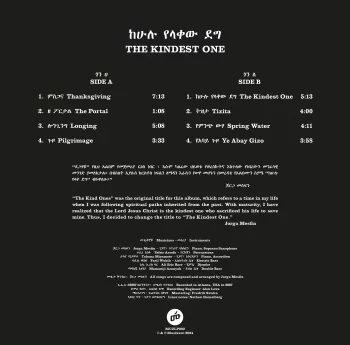
This is Mulatu Astatke’s protege and Ethiopian saxophonist and composer Jorga Mesfin’s debut album. It’s a long foray into Ethio-jazz that takes this courageous syncretism further by fusing spiritual experimentation with bits from all kinds of situations in Ethiopian music, jazz music, and specifically Ethiopian jazz music that precedes it.
Jorga Mesfin is widely regarded as one of the most talented contemporary musicians and composers in Ethiopia. He started his professional career at the young age of 17 and has since collaborated with numerous renowned artists, including Tsegaye Gebremedhin, Carolyn Beard Withlow, The Last Poets, Vijay Iyer, Wayna Wondossen, Kirk Whalum, Takana Miyamoto, Gizze Reggae band, Dionne Farris, Aster Aweke, Mahmoud Ahmed, and Mulatu Astatke. Additionally, Mesfin was a resident at Astatke's legendary African Jazz Village in Addis Ababa every Thursday.
Jorga Mesfin is the founder of the Ethio-jazz group called Wudasse. He composed the music for the epic Ethiopian film "Teza" directed by Haile Gerima. His work on the film earned him the Best Music Award at the 22nd Carthage Film Festival and Best Composition at the 5th Dubai International Film Festival.
Muzikawi is a record label, music publisher, studio, artist management, and event organizer based in Addis Ababa and Stockholm. With extensive experience in curating and representing artists from all regions, Muzikawi has a deep understanding and appreciation of Ethiopia's culture.
A1 - Thanksgiving
A2 - The Portal
A3 - Longing
A4 - Pilgrimage
B1 - The Kindest One
B2 - Tizita
B3 - Spring Water
B4 - Ye Abay Gizo
Sicherheits- und Herstellerinformationen / safety and manufacturer info (GPSR)
WAS - Word and Sound Medien GmbH
Liebigstrasse 2-20
DE - 22113 Hamburg
Germany
Contact: [email protected]More
Jorga Mesfin is widely regarded as one of the most talented contemporary musicians and composers in Ethiopia. He started his professional career at the young age of 17 and has since collaborated with numerous renowned artists, including Tsegaye Gebremedhin, Carolyn Beard Withlow, The Last Poets, Vijay Iyer, Wayna Wondossen, Kirk Whalum, Takana Miyamoto, Gizze Reggae band, Dionne Farris, Aster Aweke, Mahmoud Ahmed, and Mulatu Astatke. Additionally, Mesfin was a resident at Astatke's legendary African Jazz Village in Addis Ababa every Thursday.
Jorga Mesfin is the founder of the Ethio-jazz group called Wudasse. He composed the music for the epic Ethiopian film "Teza" directed by Haile Gerima. His work on the film earned him the Best Music Award at the 22nd Carthage Film Festival and Best Composition at the 5th Dubai International Film Festival.
Muzikawi is a record label, music publisher, studio, artist management, and event organizer based in Addis Ababa and Stockholm. With extensive experience in curating and representing artists from all regions, Muzikawi has a deep understanding and appreciation of Ethiopia's culture.
A1 - Thanksgiving
A2 - The Portal
A3 - Longing
A4 - Pilgrimage
B1 - The Kindest One
B2 - Tizita
B3 - Spring Water
B4 - Ye Abay Gizo
Sicherheits- und Herstellerinformationen / safety and manufacturer info (GPSR)
WAS - Word and Sound Medien GmbH
Liebigstrasse 2-20
DE - 22113 Hamburg
Germany
Contact: [email protected]More
Customers who bought this also bought this
CD Jewel Case With 8 pages Booklet, Pictures , Notes
In anticipation of the 35th anniversary next year one of electronic music´s most influential recordings, the legendary E2-E4, from 12.12.1981 does get an official rerelease by Manuel Göttsching on his own Label MG.ART.
Carefully overseen by the Master himself
Total Time: 59:34
Tracks:
Ruhige Nervosität 13:00, Gemäßigter Aufbruch 10:00, ... und Mittelspiel 07:00, Ansatz 06:00, Damen-Eleganza 05:00, Ehrenvoller Kampf 03:00, Hoheit weicht (nicht ohne Schwung...) 09:00, ... und Souveränität 03:00, Remis 03:00
Sicherheits- und Herstellerinformationen / safety and manufacturer info (GPSR)
WAS - Word and Sound Medien GmbH
Liebigstrasse 2-20
DE - 22113 Hamburg
Germany
Contact: [email protected]More
In anticipation of the 35th anniversary next year one of electronic music´s most influential recordings, the legendary E2-E4, from 12.12.1981 does get an official rerelease by Manuel Göttsching on his own Label MG.ART.
Carefully overseen by the Master himself
Total Time: 59:34
Tracks:
Ruhige Nervosität 13:00, Gemäßigter Aufbruch 10:00, ... und Mittelspiel 07:00, Ansatz 06:00, Damen-Eleganza 05:00, Ehrenvoller Kampf 03:00, Hoheit weicht (nicht ohne Schwung...) 09:00, ... und Souveränität 03:00, Remis 03:00
Sicherheits- und Herstellerinformationen / safety and manufacturer info (GPSR)
WAS - Word and Sound Medien GmbH
Liebigstrasse 2-20
DE - 22113 Hamburg
Germany
Contact: [email protected]More
LP 180g, beautiful embossed Chess Board Artwork Print, inner sleeve with artist picture and text by David Elliott, Sounds June 16, 1984
In anticipation of the 35th anniversary next year one of electronic music´s most influential recordings, the legendary E2-E4, from 12.12.1981 does get an official rerelease by Manuel Göttsching on his own Label MG.ART.
Carefully overseen by the Master himself
Total Time: 59:34
Tracks:
Ruhige Nervosität 13:00, Gemäßigter Aufbruch 10:00, ... und Mittelspiel 07:00, Ansatz 06:00, Damen-Eleganza 05:00, Ehrenvoller Kampf 03:00, Hoheit weicht (nicht ohne Schwung...) 09:00, ... und Souveränität 03:00, Remis 03:00
Sicherheits- und Herstellerinformationen / safety and manufacturer info (GPSR)
WAS - Word and Sound Medien GmbH
Liebigstrasse 2-20
DE - 22113 Hamburg
Germany
Contact: [email protected]More
In anticipation of the 35th anniversary next year one of electronic music´s most influential recordings, the legendary E2-E4, from 12.12.1981 does get an official rerelease by Manuel Göttsching on his own Label MG.ART.
Carefully overseen by the Master himself
Total Time: 59:34
Tracks:
Ruhige Nervosität 13:00, Gemäßigter Aufbruch 10:00, ... und Mittelspiel 07:00, Ansatz 06:00, Damen-Eleganza 05:00, Ehrenvoller Kampf 03:00, Hoheit weicht (nicht ohne Schwung...) 09:00, ... und Souveränität 03:00, Remis 03:00
Sicherheits- und Herstellerinformationen / safety and manufacturer info (GPSR)
WAS - Word and Sound Medien GmbH
Liebigstrasse 2-20
DE - 22113 Hamburg
Germany
Contact: [email protected]More
1
Boards Of Canada - Wildlife Analysis
2
Boards Of Canada - An Eagle In Your Mind
3
Boards Of Canada - The Color Of The Fire
4
Boards Of Canada - Telephasic Workshop
5
Boards Of Canada - Triangles & Rhombuses
6
Boards Of Canada - Sixtyten
7
Boards Of Canada - Turqoise Hexagon Sun
8
Boards Of Canada - Kaini Industries
9
Boards Of Canada - Bocuma
10
Boards Of Canada - Roygbiv
11
Boards Of Canada - Rue The Whirl
12
Boards Of Canada - Aquarius
13
Boards Of Canada - Olson
14
Boards Of Canada - Pete Standing Alone
15
Boards Of Canada - Smokers Quantity
16
Boards Of Canada - Open The Light
17
Boards Of Canada - One Very Important Thought
Responding to popular demand, Warp Records is repressing its seminal Boards of Canada catalogue on vinyl for the first time in over five years.
On 21st October the albums Music Has The Right To Children (originally released in 1998), Geogaddi (2002) and The Campfire Headphase (2006) will be reissued. These will be followed on 18th November by the mini-album Twoism (1995) and EPs In A Beautiful Place Out In The Country (2000) and Trans Canada Highway (2006). Also, look out for a vinyl reissue of Hi Scores EP (1996) through Skam later this year. Each Warp reissue comes with a download code and an original BOC sticker design from the era. More about the formatting of each item: http://boardsofcanada.com In June this year, Boards of Canada released their 4th studio album, Tomorrow?s Harvest to considerable and widespread acclaim.
Sicherheits- und Herstellerinformationen / safety and manufacturer info (GPSR)
WAS - Word and Sound Medien GmbH
Liebigstrasse 2-20
DE - 22113 Hamburg
Germany
Contact: [email protected]More
On 21st October the albums Music Has The Right To Children (originally released in 1998), Geogaddi (2002) and The Campfire Headphase (2006) will be reissued. These will be followed on 18th November by the mini-album Twoism (1995) and EPs In A Beautiful Place Out In The Country (2000) and Trans Canada Highway (2006). Also, look out for a vinyl reissue of Hi Scores EP (1996) through Skam later this year. Each Warp reissue comes with a download code and an original BOC sticker design from the era. More about the formatting of each item: http://boardsofcanada.com In June this year, Boards of Canada released their 4th studio album, Tomorrow?s Harvest to considerable and widespread acclaim.
Sicherheits- und Herstellerinformationen / safety and manufacturer info (GPSR)
WAS - Word and Sound Medien GmbH
Liebigstrasse 2-20
DE - 22113 Hamburg
Germany
Contact: [email protected]More
Sicherheits- und Herstellerinformationen / safety and manufacturer info (GPSR)
WAS - Word and Sound Medien GmbH
Liebigstrasse 2-20
DE - 22113 Hamburg
Germany
Contact: [email protected]More
Sicherheits- und Herstellerinformationen / safety and manufacturer info (GPSR)
WAS - Word and Sound Medien GmbH
Liebigstrasse 2-20
DE - 22113 Hamburg
Germany
Contact: [email protected]More
1
Peter Matson & JKriv - Underappreciated (feat. Ibibio Sound Machine)
2
Peter Matson & JKriv - Underappreciated (Yuksek Remix)
3
Peter Matson & JKriv - Facile (feat. Olivya)
4
Peter Matson & JKriv - Over Suffa (feat. Samy Love)
Both multi-instrumentalists and seasoned producers, J and Peter took an all-hands-on-deck approach to these original collaborative tracks. The sonic seeds of "Underappreciated" and "Facile" were planted by Peter, JKriv cooked up the demo of "Over Suffa", and all three were completed together in J’s Brooklyn production studio. With live-recorded guitar, bass, analog synths, and drums/percussion by and a cohort of Brooklyn accomplices, the Facile EP marries live elements with modern club-ready production.
The punchy horns and no-nonsense vocals on "Underappreciated" come via Peter’s long-standing stage and studio connection with Ibibio Sound Machine, Favorite Recordings staple singer Olivya delivers the soulful EP title track performance, and Samy Love’s insistent vocal on "Over Suffa" is a pleading message to end the war and suffering in his native Cameroon.
With a remix of "Underappreciated" by French producer extraordinaire Yuksek, songs in both English and French, and influences ranging from boogie funk, 80s R&B, and classic Zouk, the Facile EP is a varied and dazzling collection of music for both listeners and DJs alike.
A1 Underappreciated (feat. Ibibio Sound Machine)
A2 Underappreciated (Yuksek Remix)
B1 Facile (feat. Olivya)
B2 Over Suffa (feat. Samy Love)
Sicherheits- und Herstellerinformationen / safety and manufacturer info (GPSR)
WAS - Word and Sound Medien GmbH
Liebigstrasse 2-20
DE - 22113 Hamburg
Germany
Contact: [email protected]More
The punchy horns and no-nonsense vocals on "Underappreciated" come via Peter’s long-standing stage and studio connection with Ibibio Sound Machine, Favorite Recordings staple singer Olivya delivers the soulful EP title track performance, and Samy Love’s insistent vocal on "Over Suffa" is a pleading message to end the war and suffering in his native Cameroon.
With a remix of "Underappreciated" by French producer extraordinaire Yuksek, songs in both English and French, and influences ranging from boogie funk, 80s R&B, and classic Zouk, the Facile EP is a varied and dazzling collection of music for both listeners and DJs alike.
A1 Underappreciated (feat. Ibibio Sound Machine)
A2 Underappreciated (Yuksek Remix)
B1 Facile (feat. Olivya)
B2 Over Suffa (feat. Samy Love)
Sicherheits- und Herstellerinformationen / safety and manufacturer info (GPSR)
WAS - Word and Sound Medien GmbH
Liebigstrasse 2-20
DE - 22113 Hamburg
Germany
Contact: [email protected]More
1
P.J. City - Straight Forward (Non-Stop) (DJ Nature Re-Edit)
2
Grupo Los Yoyi - Del Copacabana A 34 (DJ Nature Re-Edit)
3
Antoniou - Sound On Sound (DJ Nature Re-Edit)
4
Marxist Love Disco Ensemble - Dust (DJ Nature Re-Edit)
Stepping up next in our Mr Bongo 12” Edits series, we’ve invited another legend of the game, DJ Nature, to craft a special EP of signature edits. Following editions by Dan Tyler and Nick The Record, Luke Una, and Danny Krivit, DJ Nature selects four prime cuts spanning modern soul, psychedelic funk, boogie, and leftfield disco, giving each his trademark tweak for today’s dancefloor.
In 1989, Bristol-born DJ Nature moved to New York, a city where he knew his raw and textured aesthetic would be more appreciated at the time. He immersed himself in the NY scene, frequently attending underground house and disco clubs to hear pioneers such as Larry Levan (The Choice), Louie Vega (Sound Factory Bar), and Tony Humphries (Zanzibar). That same year, being surrounded by a wealth of underground dance music, DJ Nature set up an export company to supply the Japanese market. “I have had a connection with Japan for over 40 years, beginning when I visited as part of Ray Petri’s Buffalo fashion house as a DJ. From there, I linked up with the Major Force crew and others,” he explains.
Having already been a record collector for 20 years, DJ Nature launched his own label, Ruff Disco Records, in 1992, releasing productions under his early moniker, Natureboy. Since then, Nature has gone on to become an underground DJ/producer legend himself, touring the world and releasing records on esteemed labels such as Golf Channel Recordings, Jazzy Sport, Hot Biscuit Recordings, and Futureboogie Recordings.
Reflecting his love of raw, independent disco, jazz fusion, and early house music, DJ Nature has chosen four tracks from the Mr Bongo archive that he felt had club-ready production ripe for an edit. First up, is an extended rework of the ultra-rare Chicago modern soul/disco joint ‘Straight Forward (Non-Stop)’ by P.J. City from 1986. Staying true and respectful to the original, DJ Nature tweaks and extends it so it feels like a longer take lifted from the original recording session. Next is a sublime version of Cuban band Grupo Los Yoyi’s 1977 track ‘Del Copacabana A 34’. Here, Nature extends and enhances the song, looping the more driving, hypnotic, spacey sections to let the energy brew and bubble to boiling point.
On the B-side, DJ Nature revamps a lesser-known gem from the Elite Records catalogue. Originally produced by Andy Sojka, Antoniou’s pulsating 1982 electronic disco groover ‘Sound On Sound’ is transformed into a peak-time cosmic boogie whirlwind. Rounding off the EP, he turns to the mysterious Marxist Love Disco Ensemble’s 2022 album ‘MLDE’, re-editing the quirky leftfield disco winner ‘Dust’ into a more DJ-friendly club track.
Sicherheits- und Herstellerinformationen / safety and manufacturer info (GPSR)
WAS - Word and Sound Medien GmbH
Liebigstrasse 2-20
DE - 22113 Hamburg
Germany
Contact: [email protected]More
In 1989, Bristol-born DJ Nature moved to New York, a city where he knew his raw and textured aesthetic would be more appreciated at the time. He immersed himself in the NY scene, frequently attending underground house and disco clubs to hear pioneers such as Larry Levan (The Choice), Louie Vega (Sound Factory Bar), and Tony Humphries (Zanzibar). That same year, being surrounded by a wealth of underground dance music, DJ Nature set up an export company to supply the Japanese market. “I have had a connection with Japan for over 40 years, beginning when I visited as part of Ray Petri’s Buffalo fashion house as a DJ. From there, I linked up with the Major Force crew and others,” he explains.
Having already been a record collector for 20 years, DJ Nature launched his own label, Ruff Disco Records, in 1992, releasing productions under his early moniker, Natureboy. Since then, Nature has gone on to become an underground DJ/producer legend himself, touring the world and releasing records on esteemed labels such as Golf Channel Recordings, Jazzy Sport, Hot Biscuit Recordings, and Futureboogie Recordings.
Reflecting his love of raw, independent disco, jazz fusion, and early house music, DJ Nature has chosen four tracks from the Mr Bongo archive that he felt had club-ready production ripe for an edit. First up, is an extended rework of the ultra-rare Chicago modern soul/disco joint ‘Straight Forward (Non-Stop)’ by P.J. City from 1986. Staying true and respectful to the original, DJ Nature tweaks and extends it so it feels like a longer take lifted from the original recording session. Next is a sublime version of Cuban band Grupo Los Yoyi’s 1977 track ‘Del Copacabana A 34’. Here, Nature extends and enhances the song, looping the more driving, hypnotic, spacey sections to let the energy brew and bubble to boiling point.
On the B-side, DJ Nature revamps a lesser-known gem from the Elite Records catalogue. Originally produced by Andy Sojka, Antoniou’s pulsating 1982 electronic disco groover ‘Sound On Sound’ is transformed into a peak-time cosmic boogie whirlwind. Rounding off the EP, he turns to the mysterious Marxist Love Disco Ensemble’s 2022 album ‘MLDE’, re-editing the quirky leftfield disco winner ‘Dust’ into a more DJ-friendly club track.
Sicherheits- und Herstellerinformationen / safety and manufacturer info (GPSR)
WAS - Word and Sound Medien GmbH
Liebigstrasse 2-20
DE - 22113 Hamburg
Germany
Contact: [email protected]More
Following Léve Léve Vol. 1, this second volume continues a long-term exploration of the popular music of São Tomé and Príncipe, with a clear focus on rhythm, movement and dancefloor energy. Curated by Tom B., Léve Léve Vol. 2 brings together emblematic recordings from the 1970s and 1980s, carefully restored and remastered, designed as much for close listening as for DJ use.
Trackliste
1.1Sangazuza - Mario bi cedo
1.2Conjunto Equador - Maia da mole
1.3Africa Negra - Apoiamos a luta dos nossos irmaos
1.4Sum Alvarinho - Cacau
1.5Sangazuza - Zon fada non
1.6Tiny das Neves e Conjunto Sol d'Africa - Africa e
1.7Pedro Lima e Conjunto Popular Os Leonenses - Sossegado
1.8Conjunto Equador - Pecado dy mundo
2.1Sangazuza - Sono sa kua de tema
2.2Africa Negra - Simoa
2.3Conjunto Mindelo - Queima roupa
2.4Sangazuza - Luiza ante kedja
2.5Bulawe N'Guli Fala, Quinta das Palmeiras - Tira a mao d
2.6Os Untues - Feca non chiga-za
2.7Pedro Lima - Mem de mina mue
Sicherheits- und Herstellerinformationen / safety and manufacturer info (GPSR)
WAS - Word and Sound Medien GmbH
Liebigstrasse 2-20
DE - 22113 Hamburg
Germany
Contact: [email protected]More
Trackliste
1.1Sangazuza - Mario bi cedo
1.2Conjunto Equador - Maia da mole
1.3Africa Negra - Apoiamos a luta dos nossos irmaos
1.4Sum Alvarinho - Cacau
1.5Sangazuza - Zon fada non
1.6Tiny das Neves e Conjunto Sol d'Africa - Africa e
1.7Pedro Lima e Conjunto Popular Os Leonenses - Sossegado
1.8Conjunto Equador - Pecado dy mundo
2.1Sangazuza - Sono sa kua de tema
2.2Africa Negra - Simoa
2.3Conjunto Mindelo - Queima roupa
2.4Sangazuza - Luiza ante kedja
2.5Bulawe N'Guli Fala, Quinta das Palmeiras - Tira a mao d
2.6Os Untues - Feca non chiga-za
2.7Pedro Lima - Mem de mina mue
Sicherheits- und Herstellerinformationen / safety and manufacturer info (GPSR)
WAS - Word and Sound Medien GmbH
Liebigstrasse 2-20
DE - 22113 Hamburg
Germany
Contact: [email protected]More
1
SOYUZ - Krok
2
SOYUZ - Lingua Do Mundo (Feat. Tim Bernardes)
3
SOYUZ - Nici
4
SOYUZ - Kali Ty Zapytaješ
5
SOYUZ - Cichi Karahod
6
SOYUZ - P7 Blues
7
SOYUZ - Voo Livre
8
SOYUZ - VCB
9
SOYUZ - Smak Žyccia (Feat. Manami Kakudo)
“Krok” means “step” in Belarusian - and for Alex Chumak and his band this word comes with a lot of meaning. It’s the title and theme that run throughout SOYUZ's fourth album, reflecting the journeys the band has navigated in recent years, having moved to Warsaw due to political unrest in their homeland of Belarus and the outbreak of war in Ukraine. Embracing the uncertainty became both the inspiration and main lyrical theme for Alex Chumak, SOYUZ’ composer and arranger, who also decided to go a step further and change the language in which he writes songs from Russian, which is used as lingua franca in many post-Soviet countries, to his native Belarusian. The result is nine songs about dreams and outer space, ordinary miracles, things very close and very distant at the same time.
In early 2022, Chumak and original members, Mikita Arlou and Anton Nemahai, joined tens of thousands of Belarusians seeking safety abroad. Resettling in Warsaw, the band released Force of the Wind in October 2022, garnering widespread acclaim, a string of major European gigs, and led to Polish musicians Albert Karch and Igor Wisniewski joining the band.
Deeper and more melancholic than previous works, KROK is quintessentially SOYUZ, laced with hope, dreams and a celebration of life. Given the difficulties with finding rehearsal and recording spaces in Warsaw and the departure of the drummer Anton Nemahai from the band, Chumak explored alternative options. He reached out to friend and fellow musical collaborator, Sessa, about the possibility of recording the new album in his recently finished studio in São Paulo, with Sessa and Biel Basile coming onboard as recording engineers.
At the tail end of 2024, Chumak and SOYUZ’ new drummer, Albert Karch, made the trip to São Paulo to record the first sessions for KROK. Sadly, they travelled without Mikita Arlou, SOYUZ’ co-founder and Chumak’s longtime creative partner, due to the financial impossibility of bringing him too. Laid down directly to tape, these sessions featured prominent Brazilian musicians Sessa, Biel Basile, and Marcelo Cabral, with a guest vocal feature by Tim Bernardes recorded at a later date. The final touches were then added back in Europe. Lush string and woodwind arrangements written by Chumak and Karch were recorded at the Polish Radio studio in Warsaw, and Rhodes parts were added by Chumak at Sven Wunder’s studio in Stockholm.
Though primarily recorded in Brazil, KROK is not a Brazilian or MPB album. It blends the bands' Eastern European roots with jazz, folk and global influences. The genre of the music is hardly identifiable: there are folk ballads and jazz-driven pop compositions covered in lush and often dissonant string and woodwind arrangements where each note is placed with care and meaning behind it.
Broad in its palette, KROK is full of highlights. The title track was the first song Chumak wrote in Belarusian as an adult, making for a fitting opener and one of the band’s finest tracks. Darker than most of SOYUZ’ songs, the tensions lift and lighten as the track progresses. The cinematic library jazz of 'Voo Livre', with ghostly vocals sung by Ciça Góes and Ina, feels like a modern twist on the Italian library composer Alessandro Alessandroni through its sublime choir and woodwind orchestration. Elsewhere, the heartfelt 'Lingua Do Mundo', composed, written, and sung by Chumak and the incredible Tim Bernardes, features one of the standout string arrangements from Chumak and Karch. 'Cichi Karahod' is an instant SOYUZ classic, almost Pat Metheny-esque as it opens, with the acoustic guitar and bass riff transitioning into jazzy AOR / pop-folk territory. The record closes with 'Smak žyccia', a gentle, dreamy spoken-word poetry piece in Japanese by singer-songwriter Manami Kakudo.
Despite immense challenges, SOYUZ have delivered a career-defining album in KROK. Heartfelt and beautiful, it is not an imitation of the past, but rather a truly original, contemporary expression all of its own.
Sicherheits- und Herstellerinformationen / safety and manufacturer info (GPSR)
WAS - Word and Sound Medien GmbH
Liebigstrasse 2-20
DE - 22113 Hamburg
Germany
Contact: [email protected]More
In early 2022, Chumak and original members, Mikita Arlou and Anton Nemahai, joined tens of thousands of Belarusians seeking safety abroad. Resettling in Warsaw, the band released Force of the Wind in October 2022, garnering widespread acclaim, a string of major European gigs, and led to Polish musicians Albert Karch and Igor Wisniewski joining the band.
Deeper and more melancholic than previous works, KROK is quintessentially SOYUZ, laced with hope, dreams and a celebration of life. Given the difficulties with finding rehearsal and recording spaces in Warsaw and the departure of the drummer Anton Nemahai from the band, Chumak explored alternative options. He reached out to friend and fellow musical collaborator, Sessa, about the possibility of recording the new album in his recently finished studio in São Paulo, with Sessa and Biel Basile coming onboard as recording engineers.
At the tail end of 2024, Chumak and SOYUZ’ new drummer, Albert Karch, made the trip to São Paulo to record the first sessions for KROK. Sadly, they travelled without Mikita Arlou, SOYUZ’ co-founder and Chumak’s longtime creative partner, due to the financial impossibility of bringing him too. Laid down directly to tape, these sessions featured prominent Brazilian musicians Sessa, Biel Basile, and Marcelo Cabral, with a guest vocal feature by Tim Bernardes recorded at a later date. The final touches were then added back in Europe. Lush string and woodwind arrangements written by Chumak and Karch were recorded at the Polish Radio studio in Warsaw, and Rhodes parts were added by Chumak at Sven Wunder’s studio in Stockholm.
Though primarily recorded in Brazil, KROK is not a Brazilian or MPB album. It blends the bands' Eastern European roots with jazz, folk and global influences. The genre of the music is hardly identifiable: there are folk ballads and jazz-driven pop compositions covered in lush and often dissonant string and woodwind arrangements where each note is placed with care and meaning behind it.
Broad in its palette, KROK is full of highlights. The title track was the first song Chumak wrote in Belarusian as an adult, making for a fitting opener and one of the band’s finest tracks. Darker than most of SOYUZ’ songs, the tensions lift and lighten as the track progresses. The cinematic library jazz of 'Voo Livre', with ghostly vocals sung by Ciça Góes and Ina, feels like a modern twist on the Italian library composer Alessandro Alessandroni through its sublime choir and woodwind orchestration. Elsewhere, the heartfelt 'Lingua Do Mundo', composed, written, and sung by Chumak and the incredible Tim Bernardes, features one of the standout string arrangements from Chumak and Karch. 'Cichi Karahod' is an instant SOYUZ classic, almost Pat Metheny-esque as it opens, with the acoustic guitar and bass riff transitioning into jazzy AOR / pop-folk territory. The record closes with 'Smak žyccia', a gentle, dreamy spoken-word poetry piece in Japanese by singer-songwriter Manami Kakudo.
Despite immense challenges, SOYUZ have delivered a career-defining album in KROK. Heartfelt and beautiful, it is not an imitation of the past, but rather a truly original, contemporary expression all of its own.
Sicherheits- und Herstellerinformationen / safety and manufacturer info (GPSR)
WAS - Word and Sound Medien GmbH
Liebigstrasse 2-20
DE - 22113 Hamburg
Germany
Contact: [email protected]More
Label:Athens Of The North
Cat-No:AOTNLP088
Release-Date:30.01.2026
Genre:Electronic, Electronica
Configuration:LP
Label:Athens Of The North
Cat-No:AOTNLP088
Release-Date:30.01.2026
Genre:Electronic, Electronica
Configuration:LP
1
Jeff Sova - Belvedere Point
2
Jeff Sova - Bright Eyes
3
Jeff Sova - Del Vista
4
Jeff Sova - Monarch
5
Jeff Sova - All Smiles
6
Jeff Sova - Blue Zones
7
Jeff Sova - A New Day
8
Jeff Sova - Drifter
9
Jeff Sova - Dazed and Dazzled
10
Jeff Sova - Follow Me
Athens of the North is very proud to present a wonderful piece of lost Electronic music, Jeff Sova brings a softer less heard side of Detroit Techno, as soon a I heard the rare 12 a few years ago I knew i needed to find him and share his music. Jeff's foundation in music began with early piano and keyboard explorations. As a teenager, he immersed himself in the sounds of Tangerine Dream and Brian Eno, later connecting with the electronic dance sounds of Depeche Mode and New Order. While studying at the University of Michigan the metropolitan area of Detroit, Jeff discovered WCBN (the university's local college radio station) which introduced him to techno in its formative period. The station regularly featured tracks from pioneers such as Juan Atkins, Kevin Saunderson, Derrick May and Richie Hawtin. Some local Detroit artists would occasionally visit for interviews, offering insights into a scene that fuelled Jeff's growing fascination with electronic music. Jeff was studying computer engineering at the time, so had a natural affinity for the technical details of music technology. Though electronic music captured his imagination and was his production choice, Jeff's musical sensibilities were shaped by much more than synthesisers and drum machines. His background in piano and guitar had also exposed him to a rich variety of music - reggae and jazz in particular. His diverse foundation would prove valuable in his developing music style and ability to structure his songs. When assembling his studio set-up in the mid-90s, Jeff took a different approach to many of his peers at the time when it came to equipment selection. Whilst the allure of the primitive Roland TB-303 bass line and TR-808 drum machine was strong (both staples in techno production at the time), he chose the rack-mounted Roland JV-1080 with its expansion cards as the cornerstone of his sound palette. This central module was complemented by the E-MU Orbit "Dance Planet", which provided more unconventional patches and drum kits that added to the different character of his music. This was all brought together by his trusty Yamaha KX8, preserving the authentic feel of the piano he grew up playing. Essential
Sicherheits- und Herstellerinformationen / safety and manufacturer info (GPSR)
WAS - Word and Sound Medien GmbH
Liebigstrasse 2-20
DE - 22113 Hamburg
Germany
Contact: [email protected]More
Sicherheits- und Herstellerinformationen / safety and manufacturer info (GPSR)
WAS - Word and Sound Medien GmbH
Liebigstrasse 2-20
DE - 22113 Hamburg
Germany
Contact: [email protected]More

1
Dennis Bovell - Rebel Funk
2
Dennis Bovell - Raw Soul
3
Dennis Bovell - Callaloo
4
Dennis Bovell - Too Funky To Be True
5
Dennis Bovell - Wind Up, Dub Down
6
Dennis Bovell - Rebel Funk (Dub Lion Version)
7
Dennis Bovell - Raw Soul (Dub Version)
8
Dennis Bovell - Callaloo (Dub Version)
9
Dennis Bovell - Too Funky To Be True (Dub Flute Version)
10
Dennis Bovell - Wind Up, Dub Down (Dub Down Version)
Territories:
Worldwide no restrictions
Format Notes:
2025 first time vinyl issue of this incredible funk-forward library dub record from the Dubmaster himself. 140g vinyl. Limited to just 1000 worldwide.
Track List:
A1 Rebel Funk
A2 Raw Soul
A3 Callaloo
A4 Too Funky To Be True
A5 Wind Up, Dub Down
B1 Rebel Funk (Dub Lion Version)
B2 Raw Soul (Dub Version)
B3 Callaloo (Dub Version)
B4 Too Funky To Be True (Dub Flute Version)
B5 Wind Up, Dub Down (Dub Down Version)
Release Notes:
A heavyweight library record delivered straight from the Gods; truly, we are all blessed: Dubmaster Dennis Bovell presents cLOUD mUsIc. A miraculous set of loose limbed, slinky funk-forward dub on the A-Side with totally blunted, spaced out trippiness on the grooving versions gracing the flipside.
A pioneer of dub and progenitor of lovers rock, genius producer-arranger Dennis 'Blackbeard' Bovell's prolific and eclectic career encompasses a huge range of music: from dub poetry to lovers rock, afro-beat to post-punk, disco to pop and beyond.
His production work encompasses such diverse figures as Ryuichi Sakamoto, The Slits, Fela Kuti, Linton Kwesi Johnson, The Pop Group, Janet Kay, Saada Bonaire, Orange Juice, Golden Teacher, I Roy, Maximum Joy, Steel Pulse and more.
cLOUD mUsIc features 8 new, deep, never-heard heaters, initially created for upstart UK library label FOLD. Dennis had written some music under the influence of Cloud-watching and presented it to FOLD with a view to them presenting it as Library Music to be utilised by anyone interested in having music for incidentals, films, TV and advertising etc.
cLOUD mUsIc represents Dennis expressing himself freely and inviting others to join and express themselves. As Dennis explains: "Library music is what makes the difference between creating for specific reasons and creating for your own individual enjoyment. cLOUD mUsIc was created whenever I felt the urge to create music that I wanted to, with no pressure. It was recorded at various times and in various studios around the world with various musicians’ assistance. Much sonic indulgence with many different recording devices."
Who doesn't like the sound of that?
Thrilling disco-flecked opener "Rebel Funk" comes bustling out the gate with deeply soulful, driving funk rhythms, a ponderous thumping bass combining brilliantly with a full band and chanting choral vocals. Spirited, joyful and dynamic, it's a true treat from the reggae maestro. The lush, deeply danceable "Raw Soul" combines funk and soul via bass, drums, electric guitar, sax and trumpet. It's smooth, silky and confident.
The chilled, serene "Callaloo" presents a sunny, calypso-style reggae with dub rhythms, with steel drums and keyboards providing the sweet melody of deep bass and percussive rhythms. "Too Funky To Be True" is just that: slow bass and brass-led funk with melodies from strings and organ. It's sleazy, warm and refined. To close out the side, "Wind Up, Dub Down" is bright and breezy dub reggae with a bouncy rhythm and reflective, contented feel. The B-Side features jaw-dropping dubbed-out, strung-out, spaced-out versions of each of the first 5 tracks. Don't ever say we short change you.
The vinyl features artwork utilising a unique photo by Dennis himself. We picked it from a selection of photos taken by Dennis during his study of cloud formations and how they morph. We think it's pretty striking. As for the title, Dennis explained: "the ‘Clouds’ are where things are being Digitally stored and, that the word Loud was part of their spelling, I thought to invite the listener to play it loudly."
Meticulously mastered and cut by both Simon Francis and Cicely Balston respectively, cLOUD mUsIc has been pressed to the highest possibly quality at Record Industry in Holland. Without question, it deserves to be blasting from a soundsystem to truly appreciate the reverb, echo and rhythm section on each of the ten tracks.
Sicherheits- und Herstellerinformationen / safety and manufacturer info (GPSR)
WAS - Word and Sound Medien GmbH
Liebigstrasse 2-20
DE - 22113 Hamburg
Germany
Contact: [email protected]More
Worldwide no restrictions
Format Notes:
2025 first time vinyl issue of this incredible funk-forward library dub record from the Dubmaster himself. 140g vinyl. Limited to just 1000 worldwide.
Track List:
A1 Rebel Funk
A2 Raw Soul
A3 Callaloo
A4 Too Funky To Be True
A5 Wind Up, Dub Down
B1 Rebel Funk (Dub Lion Version)
B2 Raw Soul (Dub Version)
B3 Callaloo (Dub Version)
B4 Too Funky To Be True (Dub Flute Version)
B5 Wind Up, Dub Down (Dub Down Version)
Release Notes:
A heavyweight library record delivered straight from the Gods; truly, we are all blessed: Dubmaster Dennis Bovell presents cLOUD mUsIc. A miraculous set of loose limbed, slinky funk-forward dub on the A-Side with totally blunted, spaced out trippiness on the grooving versions gracing the flipside.
A pioneer of dub and progenitor of lovers rock, genius producer-arranger Dennis 'Blackbeard' Bovell's prolific and eclectic career encompasses a huge range of music: from dub poetry to lovers rock, afro-beat to post-punk, disco to pop and beyond.
His production work encompasses such diverse figures as Ryuichi Sakamoto, The Slits, Fela Kuti, Linton Kwesi Johnson, The Pop Group, Janet Kay, Saada Bonaire, Orange Juice, Golden Teacher, I Roy, Maximum Joy, Steel Pulse and more.
cLOUD mUsIc features 8 new, deep, never-heard heaters, initially created for upstart UK library label FOLD. Dennis had written some music under the influence of Cloud-watching and presented it to FOLD with a view to them presenting it as Library Music to be utilised by anyone interested in having music for incidentals, films, TV and advertising etc.
cLOUD mUsIc represents Dennis expressing himself freely and inviting others to join and express themselves. As Dennis explains: "Library music is what makes the difference between creating for specific reasons and creating for your own individual enjoyment. cLOUD mUsIc was created whenever I felt the urge to create music that I wanted to, with no pressure. It was recorded at various times and in various studios around the world with various musicians’ assistance. Much sonic indulgence with many different recording devices."
Who doesn't like the sound of that?
Thrilling disco-flecked opener "Rebel Funk" comes bustling out the gate with deeply soulful, driving funk rhythms, a ponderous thumping bass combining brilliantly with a full band and chanting choral vocals. Spirited, joyful and dynamic, it's a true treat from the reggae maestro. The lush, deeply danceable "Raw Soul" combines funk and soul via bass, drums, electric guitar, sax and trumpet. It's smooth, silky and confident.
The chilled, serene "Callaloo" presents a sunny, calypso-style reggae with dub rhythms, with steel drums and keyboards providing the sweet melody of deep bass and percussive rhythms. "Too Funky To Be True" is just that: slow bass and brass-led funk with melodies from strings and organ. It's sleazy, warm and refined. To close out the side, "Wind Up, Dub Down" is bright and breezy dub reggae with a bouncy rhythm and reflective, contented feel. The B-Side features jaw-dropping dubbed-out, strung-out, spaced-out versions of each of the first 5 tracks. Don't ever say we short change you.
The vinyl features artwork utilising a unique photo by Dennis himself. We picked it from a selection of photos taken by Dennis during his study of cloud formations and how they morph. We think it's pretty striking. As for the title, Dennis explained: "the ‘Clouds’ are where things are being Digitally stored and, that the word Loud was part of their spelling, I thought to invite the listener to play it loudly."
Meticulously mastered and cut by both Simon Francis and Cicely Balston respectively, cLOUD mUsIc has been pressed to the highest possibly quality at Record Industry in Holland. Without question, it deserves to be blasting from a soundsystem to truly appreciate the reverb, echo and rhythm section on each of the ten tracks.
Sicherheits- und Herstellerinformationen / safety and manufacturer info (GPSR)
WAS - Word and Sound Medien GmbH
Liebigstrasse 2-20
DE - 22113 Hamburg
Germany
Contact: [email protected]More
1
Al Hirt - Honey Pot
2
Al Hirt - Mess Around
3
Al Hirt - Calypsoul
4
Al Hirt - Long Gone
5
Al Hirt - Sweetlips
6
Al Hirt - Girl
7
Al Hirt - Love Ya' Baby
8
Al Hirt - Sunday-Goin' To Meetin' Time
9
Al Hirt - Snap Back
10
Al Hirt - Harlem Hendoo
11
Al Hirt - Ludwig
Format Notes: 2024 first time vinyl reissue, remastered audio with original artwork, 140g vinyl
Track List:
A1 Honey Pot
A2 Mess Around
A3 Calypsoul
A4 Long Gone
A5 Sweetlips
A6 Girl
B1 Love Ya' Baby
B2 Sunday-Goin' To Meetin' Time
B3 Snap Back
B4 Harlem Hendoo
B5 Ludwig
Release Notes:
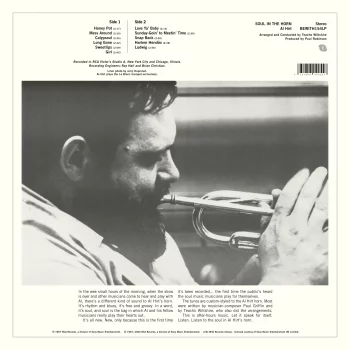
Yes, *that* Al Hirt record. Featuring the godlike "Harlem Hendoo", looped unforgettably by De La Soul for the legendary Buhloone Mind State cut, "Ego Trippin' (Part Two)"!
Al Hirt's infamous Soul In The Horn is inextricably tangled up in crate-digger lore. Originally released in 1967, the album has been in heavy, heavy demand for over 30 years, entirely down to the majestic soul-jazz fire of "Harlem Hendoo". And it's a song so good, so vital, so timeless, that it will always tower above everything else in its proximity. This one track alone is worth the price of admission - even if the cost of entry were $100 or even $1000.
However, it would be an error to dismiss this record as merely a one tracker, loaded as it is with dope samples for adventurous beat makers. Certainly the funkiest Al Hirt record, it definitely lives up to the "soul" in the title. Thanks to composer Paul Griffin and arranger Teacho Wiltshire, Hirt got uncharacteristically free and groovy throughout. It comes on more like an obscure KPM library funk record than the easy listening Al was notorious for.
A Louisiana trumpeter and band leader who made Allen Toussaint’s “Java” famous, Al Hirt was also known for TV themes, Dixieland, Swing and being a minority owner of the New Orleans Saints. Unlike every other Al Hirt record - and despite most "diggers" claiming otherwise - this here gem is genuinely hard to come across "in the wild". Normally, you can't give Al Hirt records away, except this particular one, which raises pulses in the crate digging community to life-threatening levels. For every owner claiming to have found their copy for a dollar, there's scores more claiming to have *never* unearthed one in the field. So, paradoxically, you can consider this the most tricky-to-pull "thrift store record", ever. This is why we're finally making it available for everyone, not just those with endless hours to spend scouring the global goodwills!
Soul In The Horn represented an expressive detour into authentic soul-jazz for Al Hirt. Throughout, we're struck by a fierce, fiery energy that's otherwise absent from his typically easy listening work. Without question, the slinky, magical "Harlem Hendoo" is the standout, here. It's also the reason why the record is so scarce and commands awe among crate diggers, sounding like something from an obscure and deeply revered spiritual jazz record. As is often the case, the true genius of the song is tricky to do justice to; it's like a minor miracle of songwriting and performance that simply swooned down from the heavens on the back of horns, bells and harpsichord. It's one of the sweetest musical compositions ever recorded inside a studio - it's only failing is that it's just too short. Sampled brilliantly by De La Soul, it has also been used by The Roots for "Stay Cool" and Nightmares On Wax for "Damn".
The rest of the record makes for a mighty fine listen. From the opening cover of Booker T. & The MG's "Honey Pot", to the propulsive, ultra-funky "Mess Around", it's nothing but a good time. Given its title, the elegant stepper "Calypsoul" sounds exactly as you'd hope whilst the melancholic, wistful "Long Gone" hurts so good. Truly, this is just dying to be looped up, Al's muted playing capturing a soulful longing only horns can often achieve. The bluesy, slo-mo swing of "Sweetlips" oscillates between cool disaffection and swelling pride whilst the graceful, low-key funky "Girl" closes out the A-Side in the fine style. Ushering in the B-Side, the brief but brilliant strut of "Love Ya' Baby" shines brightly before the skipping funky-jazz of true highlight "Sunday-Goin' To Meetin' Time" demands both your attention and your dancing shoes. The mellifluous piano-funk of bass and horn-drenched "Snap Back" serves as the sumptuous prelude to "Harlem Hendoo"'s main character energy before the irrepressible, upbeat R&B of "Ludwig" closes out this quite remarkable album. An album deserving of a place in every serious record collection.
The audio for Soul In The Horn has been carefully remastered by Be With regular Simon Francis, ensuring it sounds better than ever. Cicely Balston's expert skills have made sure nothing is lost in the cut whilst the records have been pressed to the highest possible standard at Record Industry in Holland. The original sleeve has been restored here at Be With HQ as the finishing touch to this long overdue re-issue. This is after-hours music. Let it speak for itself. Listen. Listen to the soul in Al Hirt's horn.
Sicherheits- und Herstellerinformationen / safety and manufacturer info (GPSR)
WAS - Word and Sound Medien GmbH
Liebigstrasse 2-20
DE - 22113 Hamburg
Germany
Contact: [email protected]More
Track List:
A1 Honey Pot
A2 Mess Around
A3 Calypsoul
A4 Long Gone
A5 Sweetlips
A6 Girl
B1 Love Ya' Baby
B2 Sunday-Goin' To Meetin' Time
B3 Snap Back
B4 Harlem Hendoo
B5 Ludwig
Release Notes:
Yes, *that* Al Hirt record. Featuring the godlike "Harlem Hendoo", looped unforgettably by De La Soul for the legendary Buhloone Mind State cut, "Ego Trippin' (Part Two)"!
Al Hirt's infamous Soul In The Horn is inextricably tangled up in crate-digger lore. Originally released in 1967, the album has been in heavy, heavy demand for over 30 years, entirely down to the majestic soul-jazz fire of "Harlem Hendoo". And it's a song so good, so vital, so timeless, that it will always tower above everything else in its proximity. This one track alone is worth the price of admission - even if the cost of entry were $100 or even $1000.
However, it would be an error to dismiss this record as merely a one tracker, loaded as it is with dope samples for adventurous beat makers. Certainly the funkiest Al Hirt record, it definitely lives up to the "soul" in the title. Thanks to composer Paul Griffin and arranger Teacho Wiltshire, Hirt got uncharacteristically free and groovy throughout. It comes on more like an obscure KPM library funk record than the easy listening Al was notorious for.
A Louisiana trumpeter and band leader who made Allen Toussaint’s “Java” famous, Al Hirt was also known for TV themes, Dixieland, Swing and being a minority owner of the New Orleans Saints. Unlike every other Al Hirt record - and despite most "diggers" claiming otherwise - this here gem is genuinely hard to come across "in the wild". Normally, you can't give Al Hirt records away, except this particular one, which raises pulses in the crate digging community to life-threatening levels. For every owner claiming to have found their copy for a dollar, there's scores more claiming to have *never* unearthed one in the field. So, paradoxically, you can consider this the most tricky-to-pull "thrift store record", ever. This is why we're finally making it available for everyone, not just those with endless hours to spend scouring the global goodwills!
Soul In The Horn represented an expressive detour into authentic soul-jazz for Al Hirt. Throughout, we're struck by a fierce, fiery energy that's otherwise absent from his typically easy listening work. Without question, the slinky, magical "Harlem Hendoo" is the standout, here. It's also the reason why the record is so scarce and commands awe among crate diggers, sounding like something from an obscure and deeply revered spiritual jazz record. As is often the case, the true genius of the song is tricky to do justice to; it's like a minor miracle of songwriting and performance that simply swooned down from the heavens on the back of horns, bells and harpsichord. It's one of the sweetest musical compositions ever recorded inside a studio - it's only failing is that it's just too short. Sampled brilliantly by De La Soul, it has also been used by The Roots for "Stay Cool" and Nightmares On Wax for "Damn".
The rest of the record makes for a mighty fine listen. From the opening cover of Booker T. & The MG's "Honey Pot", to the propulsive, ultra-funky "Mess Around", it's nothing but a good time. Given its title, the elegant stepper "Calypsoul" sounds exactly as you'd hope whilst the melancholic, wistful "Long Gone" hurts so good. Truly, this is just dying to be looped up, Al's muted playing capturing a soulful longing only horns can often achieve. The bluesy, slo-mo swing of "Sweetlips" oscillates between cool disaffection and swelling pride whilst the graceful, low-key funky "Girl" closes out the A-Side in the fine style. Ushering in the B-Side, the brief but brilliant strut of "Love Ya' Baby" shines brightly before the skipping funky-jazz of true highlight "Sunday-Goin' To Meetin' Time" demands both your attention and your dancing shoes. The mellifluous piano-funk of bass and horn-drenched "Snap Back" serves as the sumptuous prelude to "Harlem Hendoo"'s main character energy before the irrepressible, upbeat R&B of "Ludwig" closes out this quite remarkable album. An album deserving of a place in every serious record collection.
The audio for Soul In The Horn has been carefully remastered by Be With regular Simon Francis, ensuring it sounds better than ever. Cicely Balston's expert skills have made sure nothing is lost in the cut whilst the records have been pressed to the highest possible standard at Record Industry in Holland. The original sleeve has been restored here at Be With HQ as the finishing touch to this long overdue re-issue. This is after-hours music. Let it speak for itself. Listen. Listen to the soul in Al Hirt's horn.
Sicherheits- und Herstellerinformationen / safety and manufacturer info (GPSR)
WAS - Word and Sound Medien GmbH
Liebigstrasse 2-20
DE - 22113 Hamburg
Germany
Contact: [email protected]More