

1
Dawit Yifru - Lebe Leb Yelewem
2
Dawit Yifru - Etalem Seriw Betshen
3
Dawit Yifru - Yene Alem
4
Dawit Yifru - Jemeregn
5
Dawit Yifru - Lebo Neyi
6
Dawit Yifru - Meche Lagignesh
7
Dawit Yifru - Lela Menem Yelegn
8
Dawit Yifru - Wubit
Ethiopia’s music company Muzikawi reissue the self-titled solo instrumental album of Ethio-jazz composer Dawit Yifru, which offers an exceptional occasion to rediscover one of the most important eras in Ethiopia’s music history.
This 11-track album features a compilation of songs that were restored and remastered from cassettes released throughout the 1970s. With Ethiopian Chickchika music, Twist, Congolese Rumba, and Waltz music styles converging, the songs reflect the dynamic musical crossroads that were present at the time. However, it is the inclusion of the violin, which was uncommon at the time, that presents Dawit Yifru as a visionary composer amongst his contemporaries.
“These elements have come together to create Ethio-jazz music at its most bold, spiritual and syncretic,” Remarks Muzikawi founder Teshome Wondimu. “With this compilation, Dawit Yifru offers a bright window into the past of Ethiopia’s music scene which is so rich, deep and sophisticated, with a gentle, beautiful story to tell – and we see ourselves as the messengers who are bringing the world this story and sound.”
This compilation is the first release of the Muzikawi’s Archive & Research project, which seeks to re-record and re-issue some of Ethiopia’s most celebrated music that never made it outside the country, in the process bringing recognition to musicians whose music never made it to the international market.
“Every country has its stars, its loved singers, but there are of course titans of their era and Dawit Yifru is one of the few, ” Wondimu said. “The reason many will be experiencing his works for the first time is because in the 1970s, the Ethiopian music ‘industry’ thrived only at the capital Addis Ababa with little recording infrastructure in comparison to its neighbours like Kenya and Uganda, where cult record labels and producers captured the countries’ sound and made the recordings available internationally and for the masses.” “Therefore, our Archive & Research project is a guaranteed way to keep these great works of music alive and circulating. Overall, this compilation is an absolutely brilliant and must-own recording from one of the most original sounding Ethiopian composers you’ll ever hear. Hopefully this release will open the door for the world to discover more incredible music and culture from Ethiopia.”
Dawit Yifru remains a household name in Ethiopia due to his commitment to collaborating with a diverse range of musicians and sharing his musical skills not just with his peers, but with the new generation of musicians.
A1 - Lebe Leb Yelewem
A2 - Etalem Seriw Betshen
A3 - Yene Alem
A4 - Jemeregn
B1 - Lebo Neyi
B2 - Meche Lagignesh
B3 - Lela Menem Yelegn
B4 - Wubit
Sicherheits- und Herstellerinformationen / safety and manufacturer info (GPSR)
WAS - Word and Sound Medien GmbH
Liebigstrasse 2-20
DE - 22113 Hamburg
Germany
Contact: [email protected]More
This 11-track album features a compilation of songs that were restored and remastered from cassettes released throughout the 1970s. With Ethiopian Chickchika music, Twist, Congolese Rumba, and Waltz music styles converging, the songs reflect the dynamic musical crossroads that were present at the time. However, it is the inclusion of the violin, which was uncommon at the time, that presents Dawit Yifru as a visionary composer amongst his contemporaries.
“These elements have come together to create Ethio-jazz music at its most bold, spiritual and syncretic,” Remarks Muzikawi founder Teshome Wondimu. “With this compilation, Dawit Yifru offers a bright window into the past of Ethiopia’s music scene which is so rich, deep and sophisticated, with a gentle, beautiful story to tell – and we see ourselves as the messengers who are bringing the world this story and sound.”
This compilation is the first release of the Muzikawi’s Archive & Research project, which seeks to re-record and re-issue some of Ethiopia’s most celebrated music that never made it outside the country, in the process bringing recognition to musicians whose music never made it to the international market.
“Every country has its stars, its loved singers, but there are of course titans of their era and Dawit Yifru is one of the few, ” Wondimu said. “The reason many will be experiencing his works for the first time is because in the 1970s, the Ethiopian music ‘industry’ thrived only at the capital Addis Ababa with little recording infrastructure in comparison to its neighbours like Kenya and Uganda, where cult record labels and producers captured the countries’ sound and made the recordings available internationally and for the masses.” “Therefore, our Archive & Research project is a guaranteed way to keep these great works of music alive and circulating. Overall, this compilation is an absolutely brilliant and must-own recording from one of the most original sounding Ethiopian composers you’ll ever hear. Hopefully this release will open the door for the world to discover more incredible music and culture from Ethiopia.”
Dawit Yifru remains a household name in Ethiopia due to his commitment to collaborating with a diverse range of musicians and sharing his musical skills not just with his peers, but with the new generation of musicians.
A1 - Lebe Leb Yelewem
A2 - Etalem Seriw Betshen
A3 - Yene Alem
A4 - Jemeregn
B1 - Lebo Neyi
B2 - Meche Lagignesh
B3 - Lela Menem Yelegn
B4 - Wubit
Sicherheits- und Herstellerinformationen / safety and manufacturer info (GPSR)
WAS - Word and Sound Medien GmbH
Liebigstrasse 2-20
DE - 22113 Hamburg
Germany
Contact: [email protected]More
More records from Muzikawi

1
Tilaye Gebre - Alibek’agnimi
2
Tilaye Gebre - Anichi keto gidi yeleshimi
3
Tilaye Gebre - Tizita
4
Tilaye Gebre - Ts’igereda
5
Tilaye Gebre - Alichalikumi
6
Tilaye Gebre - Eyut sitinafik’egni
7
Tilaye Gebre - Feqresh yemench weha
8
Tilaye Gebre - Ye’ayine tesifa
9
Tilaye Gebre - Tizi alegni yet’initu
Tilaye Gebre is one of Ethiopia’s most soulful saxophone giants, with a musical legacy that’s hard to surpass. A founding member of the Equators, later renamed the Dahlak Band, he was a key figure in Ethiopia’s vibrant hotel music scene and a sought-after musician and arranger for artists like Aster Aweke, Mahmoud Ahmed, Tilahun Gessesse, and Muluken Melesse.
Tilaye — still going strong — was at the epicenter of the Ethiopian music scene during one of the most turbulent periods in the country’s history. Tilaye’s musical trajectory, regardless of the forms it has taken over the decades, is simply ceaseless. The road to a musical career spanning six decades started out winding, and the first steps came almost as a fluke.
With the Dahlak Band, Tilaye had managed to secure a musical residency at the legendary Ghion Hotel, where they honed their skills and developed their musical expression to unparalleled levels. From the late sixties onwards, Dahlak Band lit up Addis Ababa with a mixture of James Brown and Wilson Pickett tunes, rhythm and blues, soul, funk, and the sound of the disco era — mixed with modern Ethiopian styles — serving up majestic concoctions with full-range instrumentation, featuring trumpet, keyboard, saxophone, bass, drums, and guitar. Through their hotel sessions, Tilaye developed further as an arranger, arranging fellow band member Muluken Melesse’s first solo album, Muluken Melesse with the Dahlak Band (Kaifa Records – LPKF 39), recorded during the turbulent years of 1975–1976, following the fall of Haile Selassie. Everything was in flux in this transitional period, but a constant was how Tilaye stood in the spotlight. On that record, there’s a loose vibe to the soundscape that lets Tilaye’s skills shine, while all the other musical contributions coalesce into a slowly cooking atmosphere where the groove at times fluctuates into psychedelic territory, making the music stand out from most contemporaries.
Most of their recorded output came from one-take live cassette recordings at the Ghion, or from music shops at that time — one microphone at the front, hit record: no EQ, no reverb, just some delay. Some of the Dahlak Band’s releases featured Tilaye as frontman, such as Tilaye’s Saxophone with the Dahlak Band from the late 1970s — typical of a rare groove on the Ethiopian scene — with excursions into reggae territory, including the band’s characteristic sound featuring Tilaye Gebre (tenor and alto saxophone), Dawit Yifru (organ), David Kassa (electric guitar), Shimelis Beyene (trumpet), Moges Habte (tenor saxophone), Abera Feyissa (bass guitar), Tesfaye Tessema (drums), and Muluken Melesse (cowbell). The Dahlak Band’s output was so prodigious that they simply couldn’t be pigeonholed.
No saxophonist in Ethiopia influenced the sound of popular music more than Tilaye in the 1970s, yet his recordings have been hard to come by for ages, which has meant that newcomers to the scene have gems to uncover in retrospect. Arguably, Tilaye shifted gears when he relocated to the U.S. to such an extent that his musicianship became even more renowned, accompanying the greatest of his contemporaries internationally. Tilaye is one of Ethiopia’s all-time greats, with a musical legacy — both as musician and arranger — that’s hard to surpass. It’s a wonder to be able to enjoy a recording like this half a century later.
TRACKLIST:
A1. Alibek’agnimi
A2. Anichi keto gidi yeleshimi
A3. Tizita
B1. Ts’igereda
B2. Alichalikumi
C1. Eyut sitinafik’egni
C2. Feqresh yemench weha
D1. Ye’ayine tesifa
D2. Tizi alegni yet’initu
Sicherheits- und Herstellerinformationen / safety and manufacturer info (GPSR)
WAS - Word and Sound Medien GmbH
Liebigstrasse 2-20
DE - 22113 Hamburg
Germany
Contact: [email protected]More
Tilaye — still going strong — was at the epicenter of the Ethiopian music scene during one of the most turbulent periods in the country’s history. Tilaye’s musical trajectory, regardless of the forms it has taken over the decades, is simply ceaseless. The road to a musical career spanning six decades started out winding, and the first steps came almost as a fluke.
With the Dahlak Band, Tilaye had managed to secure a musical residency at the legendary Ghion Hotel, where they honed their skills and developed their musical expression to unparalleled levels. From the late sixties onwards, Dahlak Band lit up Addis Ababa with a mixture of James Brown and Wilson Pickett tunes, rhythm and blues, soul, funk, and the sound of the disco era — mixed with modern Ethiopian styles — serving up majestic concoctions with full-range instrumentation, featuring trumpet, keyboard, saxophone, bass, drums, and guitar. Through their hotel sessions, Tilaye developed further as an arranger, arranging fellow band member Muluken Melesse’s first solo album, Muluken Melesse with the Dahlak Band (Kaifa Records – LPKF 39), recorded during the turbulent years of 1975–1976, following the fall of Haile Selassie. Everything was in flux in this transitional period, but a constant was how Tilaye stood in the spotlight. On that record, there’s a loose vibe to the soundscape that lets Tilaye’s skills shine, while all the other musical contributions coalesce into a slowly cooking atmosphere where the groove at times fluctuates into psychedelic territory, making the music stand out from most contemporaries.
Most of their recorded output came from one-take live cassette recordings at the Ghion, or from music shops at that time — one microphone at the front, hit record: no EQ, no reverb, just some delay. Some of the Dahlak Band’s releases featured Tilaye as frontman, such as Tilaye’s Saxophone with the Dahlak Band from the late 1970s — typical of a rare groove on the Ethiopian scene — with excursions into reggae territory, including the band’s characteristic sound featuring Tilaye Gebre (tenor and alto saxophone), Dawit Yifru (organ), David Kassa (electric guitar), Shimelis Beyene (trumpet), Moges Habte (tenor saxophone), Abera Feyissa (bass guitar), Tesfaye Tessema (drums), and Muluken Melesse (cowbell). The Dahlak Band’s output was so prodigious that they simply couldn’t be pigeonholed.
No saxophonist in Ethiopia influenced the sound of popular music more than Tilaye in the 1970s, yet his recordings have been hard to come by for ages, which has meant that newcomers to the scene have gems to uncover in retrospect. Arguably, Tilaye shifted gears when he relocated to the U.S. to such an extent that his musicianship became even more renowned, accompanying the greatest of his contemporaries internationally. Tilaye is one of Ethiopia’s all-time greats, with a musical legacy — both as musician and arranger — that’s hard to surpass. It’s a wonder to be able to enjoy a recording like this half a century later.
TRACKLIST:
A1. Alibek’agnimi
A2. Anichi keto gidi yeleshimi
A3. Tizita
B1. Ts’igereda
B2. Alichalikumi
C1. Eyut sitinafik’egni
C2. Feqresh yemench weha
D1. Ye’ayine tesifa
D2. Tizi alegni yet’initu
Sicherheits- und Herstellerinformationen / safety and manufacturer info (GPSR)
WAS - Word and Sound Medien GmbH
Liebigstrasse 2-20
DE - 22113 Hamburg
Germany
Contact: [email protected]More

1
Ibex Band - Kemd’layey
2
Ibex Band - Meleyayet Mot Naw
3
Ibex Band - Zerafewa
4
Ibex Band - Shemonmuanaye
5
Ibex Band - Yezemed Yebada
6
Ibex Band - Hakim Zemose
7
Ibex Band - Yene F’qr
8
Ibex Band - Skaysi Y’ke’al’yu
9
Ibex Band - Turumbule
10
Ibex Band - Ay w’bet
11
Ibex Band - Asa’belashalehu
12
Ibex Band - Yenuro Meten’sh’n
The Ibex Band, with Giovanni Rico and Selam Woldemariam at the creative helm, provided the musical backbone for legends like Aster Aweke, Girma Beyene, Tilahun Gessesse, Mulatu Astatke, and Mahmoud Ahmed, including the iconic album Ere Mela Mela, shaping modern Ethiopian music as we know it today. This 1976 album (Ge’ez Year 1968) played a pivotal role in that legacy and has now resurfaced to set the record straight.
There’s a tendency to talk about the seventies as a golden age of Ethiopian music. There are good reasons for that, and just as good reasons against it. However, the notion of a golden past privileges the role of Western explorers and suggests that the pinnacle of Ethiopia’s musical culture is something only a foreigner can appreciate and unearth. It downplays the complexities of Ethiopia’s culture and history, creating an artificial divide between then and now. And it underestimates the constantly evolving sound that has followed.
The legendary musical outfit The Ibex Band, later metamorphosed into The Roha Band, has played a central role in defining the sound of many of the greatest stars on the music scene of Ethiopia from the mid-seventies onwards–but their golden output has never really waned. The story of the origins of the band that provided the musical backbone for greats such as Aster Aweke, Girma Beyene, Tilahun Gessesse, backing the solo career of group member Mahmoud Ahmed as well as backing Mulatu Astatke and many others has yet to be properly told.
Two misconceptions plague the image of Ethiopian music, one is that the music is pure because it is, by some notion, unexploited, the other is that it is all traditional. To begin with, a combination of political changes between the late sixties and the mid-nineties created an environment where only the most dedicated and skilled musicians struggled on and pursued a musical career against fierce odds. The whole Ibex Band, with Giovanni Rico and Selam “Selamino” Seyoum Woldermarian at the creative helm, are arguably the origo of the vibrant scene in the mid-seventies, and the said pair are foremost responsible for not only navigating the band through troubled times, but also modernizing the 6/8 chickchicka rhythm to a contemporary form. Giovanni laid the rhythmic foundation with heavy looped basslines that reinvented traditional melodies as dance music, and with Selamino’s innovative guitar work they influenced scores of musicians from Abegaz Kibrework Shiota to Henock Temesgen. Even Giovanni’s Fender bass and Selamino’s Gibson guitar inspired younger musicians in their choice of instruments. Not only in choice of instruments but also in sound–even as the digital revolution hit Ethiopian music, a lot of popular music still took its cue from the masters from Ibex and Roha.
Ibex emerged out of the ashes of the sixties group the Soul Echos band, adding Giovanni and Selamino to their ranks and taking their cues from a slew of influences, such as Motown and The Beatles, fused with traditional music. A tighter-knit unit than most bands at the time – Ibex has remained six to seven members throughout their whole career, compared to many bands that were as large as fifteen or sixteen men strong when Ibex set out. Their playing has been viciously focused, economical yet heavy. Just a year before the recording sessions of the album in your hands, Giovanni and Selamino made a contribution to the popular musical lexicon of Ethiopia that was simply defining the popular sound: their arrangement and recording of bandmate Mahmoud Ahmed’s solo effort and real commercial breakthrough tune and eponymous album, Ere Mela Mela, from 1975.
Selamino has never limited himself to being an adroit lead guitarist, but has always been a scholar of history, and as such he has probably contributed as much to modern Ethiopian music with his guitar playing and compositions as with a deepened understanding of modern or contemporary – Zemenawi – Ethiopian music. Selamino’s contributions serve as a metaphor for those of the whole band, at one and the same time creating and defining a new, danceable and updated sound anchored in Giovanni’s bass, whilst also elevating the broader scene through their support for others on the scene and on top of that, increasing the understanding of the music.
There is an understandable desire to romanticize the musical heyday Ibex and Roha were at the forefront of, because so much of the output is sorrowfully hard to come by. Ibex creativity was nothing short of ridiculously fierce compared to many of their Western contemporaries. Based on their sheer recorded output alone they could have usurped the title “hardest working in show business” from James Brown, recording more than 250 albums or 2500 songs in the seventies and eighties. Some only surface as cassettes today, others were never given full LP release, and some are simply impossible to find today. In the light of that, it’s nothing short of a miracle that the recording Stereo Instrumental Music from 1976 (Ge’ez Year 1968) has resurfaced. Unearthed in perfect condition on a chrome cassette, this is musical history comes alive–to set the future straight. Stereo Instrumental Music was recorded in collaboration with Karl-Gustav Lundgren, a Swedish national working for the Radio Voice of the Gospel. It took two sessions at the Ras Hotel ballroom in Addis Ababa. The Ibex Band was the first band in Ethiopia to employ a four-track recorder for their recording (the first available in the country, lent by Karl-Gustav). Later the same week, Giovanni and Selamino realized that, lengthwise, the recorded material fell short of what they wished for, so they recorded four more tracks in one more session on a single-track recorder. The Ras Hotel and Ghion Hotel, where the Ibex Band held musical residencies were to Ethiopia in general and Addis Ababa in particular what Motown was to the USA and Detroit a few years earlier – a hotbed of musical creativity and showmanship.
The most astonishing thing about Ethiopian music of the last half century is how tradition and modernity are intertwined. Because of this feature, it’s kind of hard to tell when there ever was or when we are in a “golden age”. So much of music from the past has been criminally neglected, but because of the hardships in the past, it would be an oversimplification to say that said past was a golden age. Probably, the golden age is what we are approaching, because for the first time both the past and future are accessible, and the monumental contributions from before can lay a firm foundation for a thriving music scene today. The Ibex Band stands firmly in the past, present and the future. That, if anything, is golden.
The detailed history of Stereo Instrumental Music is in many ways unique. To begin with, it couldn’t have been recorded earlier (there were no four-track recorders available) and it really couldn’t have been recorded afterwards either, at least not in the years directly following, because of the toll the musical scene took from the unfavorable political climate that followed when the nascent Derg regime and rival groups tried to assert themselves, the musical equipment lent from The Voice of Gospel Radio simply disappeared from Ethiopia when the radio station folded in 1977. Karl-Gustav Lundgren,
the Swedish foreign national who assisted during the recording, worked with the Ethiopian Evangelical Church Mekane Yesus at the time, recalls how they only had about fifteen minutes to get the microphones in place for the recording as to not alert neither the management at Ras Hotel nor the authorities and most importantly, to complete the recording before the curfew came into effect at midnight. In leaping to the opportunity to use previously unavailable equipment to push their sound forward and improvising to meet the logistical challenges, the Ibex Band displayed the very avant-gardism and adaptability that explains their longevity as a band through the years. The recording of Stereo Instrumental Music is from a given time in history, but it sounds as beyond time.
Much of the energy that burst out of the scene that Stereo Instrumental Music came out of dissipated or got sidetracked during the societal changes Ethiopia went through in the 1970s and 80s. Whilst leaders might have professed to be revolutionary, the work ethic of the Ibex Band can truly be described as that. They never called it quits, but adapted, toured extensively abroad in Africa, Europe, and the Middle East, and found ways to work even in the face of the curfew that curtailed a lot of musical life. They even played major arenas in the nineteen eighties, despite said curfew and restrictions. The whole extent of their legacy has never been told, but their music speaks louder than words, so therefore… tune in to the Ibex Band’s Stereo Instrumental Music.
A1 - Kemd’layey
A2 - Meleyayet Mot Naw
B1 - Zerafewa
B2 - Shemonmuanaye
B3 - Yezemed Yebada
C1 - Hakim Zemose
C2 - Yene F’qr
C3 - Skaysi Y’ke’al’yu
C4 - Turumbule
D1 - Ay w’bet
D2 - Asa’belashalehu
D3 - Yenuro Meten’sh’n
Sicherheits- und Herstellerinformationen / safety and manufacturer info (GPSR)
WAS - Word and Sound Medien GmbH
Liebigstrasse 2-20
DE - 22113 Hamburg
Germany
Contact: [email protected]More
There’s a tendency to talk about the seventies as a golden age of Ethiopian music. There are good reasons for that, and just as good reasons against it. However, the notion of a golden past privileges the role of Western explorers and suggests that the pinnacle of Ethiopia’s musical culture is something only a foreigner can appreciate and unearth. It downplays the complexities of Ethiopia’s culture and history, creating an artificial divide between then and now. And it underestimates the constantly evolving sound that has followed.
The legendary musical outfit The Ibex Band, later metamorphosed into The Roha Band, has played a central role in defining the sound of many of the greatest stars on the music scene of Ethiopia from the mid-seventies onwards–but their golden output has never really waned. The story of the origins of the band that provided the musical backbone for greats such as Aster Aweke, Girma Beyene, Tilahun Gessesse, backing the solo career of group member Mahmoud Ahmed as well as backing Mulatu Astatke and many others has yet to be properly told.
Two misconceptions plague the image of Ethiopian music, one is that the music is pure because it is, by some notion, unexploited, the other is that it is all traditional. To begin with, a combination of political changes between the late sixties and the mid-nineties created an environment where only the most dedicated and skilled musicians struggled on and pursued a musical career against fierce odds. The whole Ibex Band, with Giovanni Rico and Selam “Selamino” Seyoum Woldermarian at the creative helm, are arguably the origo of the vibrant scene in the mid-seventies, and the said pair are foremost responsible for not only navigating the band through troubled times, but also modernizing the 6/8 chickchicka rhythm to a contemporary form. Giovanni laid the rhythmic foundation with heavy looped basslines that reinvented traditional melodies as dance music, and with Selamino’s innovative guitar work they influenced scores of musicians from Abegaz Kibrework Shiota to Henock Temesgen. Even Giovanni’s Fender bass and Selamino’s Gibson guitar inspired younger musicians in their choice of instruments. Not only in choice of instruments but also in sound–even as the digital revolution hit Ethiopian music, a lot of popular music still took its cue from the masters from Ibex and Roha.
Ibex emerged out of the ashes of the sixties group the Soul Echos band, adding Giovanni and Selamino to their ranks and taking their cues from a slew of influences, such as Motown and The Beatles, fused with traditional music. A tighter-knit unit than most bands at the time – Ibex has remained six to seven members throughout their whole career, compared to many bands that were as large as fifteen or sixteen men strong when Ibex set out. Their playing has been viciously focused, economical yet heavy. Just a year before the recording sessions of the album in your hands, Giovanni and Selamino made a contribution to the popular musical lexicon of Ethiopia that was simply defining the popular sound: their arrangement and recording of bandmate Mahmoud Ahmed’s solo effort and real commercial breakthrough tune and eponymous album, Ere Mela Mela, from 1975.
Selamino has never limited himself to being an adroit lead guitarist, but has always been a scholar of history, and as such he has probably contributed as much to modern Ethiopian music with his guitar playing and compositions as with a deepened understanding of modern or contemporary – Zemenawi – Ethiopian music. Selamino’s contributions serve as a metaphor for those of the whole band, at one and the same time creating and defining a new, danceable and updated sound anchored in Giovanni’s bass, whilst also elevating the broader scene through their support for others on the scene and on top of that, increasing the understanding of the music.
There is an understandable desire to romanticize the musical heyday Ibex and Roha were at the forefront of, because so much of the output is sorrowfully hard to come by. Ibex creativity was nothing short of ridiculously fierce compared to many of their Western contemporaries. Based on their sheer recorded output alone they could have usurped the title “hardest working in show business” from James Brown, recording more than 250 albums or 2500 songs in the seventies and eighties. Some only surface as cassettes today, others were never given full LP release, and some are simply impossible to find today. In the light of that, it’s nothing short of a miracle that the recording Stereo Instrumental Music from 1976 (Ge’ez Year 1968) has resurfaced. Unearthed in perfect condition on a chrome cassette, this is musical history comes alive–to set the future straight. Stereo Instrumental Music was recorded in collaboration with Karl-Gustav Lundgren, a Swedish national working for the Radio Voice of the Gospel. It took two sessions at the Ras Hotel ballroom in Addis Ababa. The Ibex Band was the first band in Ethiopia to employ a four-track recorder for their recording (the first available in the country, lent by Karl-Gustav). Later the same week, Giovanni and Selamino realized that, lengthwise, the recorded material fell short of what they wished for, so they recorded four more tracks in one more session on a single-track recorder. The Ras Hotel and Ghion Hotel, where the Ibex Band held musical residencies were to Ethiopia in general and Addis Ababa in particular what Motown was to the USA and Detroit a few years earlier – a hotbed of musical creativity and showmanship.
The most astonishing thing about Ethiopian music of the last half century is how tradition and modernity are intertwined. Because of this feature, it’s kind of hard to tell when there ever was or when we are in a “golden age”. So much of music from the past has been criminally neglected, but because of the hardships in the past, it would be an oversimplification to say that said past was a golden age. Probably, the golden age is what we are approaching, because for the first time both the past and future are accessible, and the monumental contributions from before can lay a firm foundation for a thriving music scene today. The Ibex Band stands firmly in the past, present and the future. That, if anything, is golden.
The detailed history of Stereo Instrumental Music is in many ways unique. To begin with, it couldn’t have been recorded earlier (there were no four-track recorders available) and it really couldn’t have been recorded afterwards either, at least not in the years directly following, because of the toll the musical scene took from the unfavorable political climate that followed when the nascent Derg regime and rival groups tried to assert themselves, the musical equipment lent from The Voice of Gospel Radio simply disappeared from Ethiopia when the radio station folded in 1977. Karl-Gustav Lundgren,
the Swedish foreign national who assisted during the recording, worked with the Ethiopian Evangelical Church Mekane Yesus at the time, recalls how they only had about fifteen minutes to get the microphones in place for the recording as to not alert neither the management at Ras Hotel nor the authorities and most importantly, to complete the recording before the curfew came into effect at midnight. In leaping to the opportunity to use previously unavailable equipment to push their sound forward and improvising to meet the logistical challenges, the Ibex Band displayed the very avant-gardism and adaptability that explains their longevity as a band through the years. The recording of Stereo Instrumental Music is from a given time in history, but it sounds as beyond time.
Much of the energy that burst out of the scene that Stereo Instrumental Music came out of dissipated or got sidetracked during the societal changes Ethiopia went through in the 1970s and 80s. Whilst leaders might have professed to be revolutionary, the work ethic of the Ibex Band can truly be described as that. They never called it quits, but adapted, toured extensively abroad in Africa, Europe, and the Middle East, and found ways to work even in the face of the curfew that curtailed a lot of musical life. They even played major arenas in the nineteen eighties, despite said curfew and restrictions. The whole extent of their legacy has never been told, but their music speaks louder than words, so therefore… tune in to the Ibex Band’s Stereo Instrumental Music.
A1 - Kemd’layey
A2 - Meleyayet Mot Naw
B1 - Zerafewa
B2 - Shemonmuanaye
B3 - Yezemed Yebada
C1 - Hakim Zemose
C2 - Yene F’qr
C3 - Skaysi Y’ke’al’yu
C4 - Turumbule
D1 - Ay w’bet
D2 - Asa’belashalehu
D3 - Yenuro Meten’sh’n
Sicherheits- und Herstellerinformationen / safety and manufacturer info (GPSR)
WAS - Word and Sound Medien GmbH
Liebigstrasse 2-20
DE - 22113 Hamburg
Germany
Contact: [email protected]More
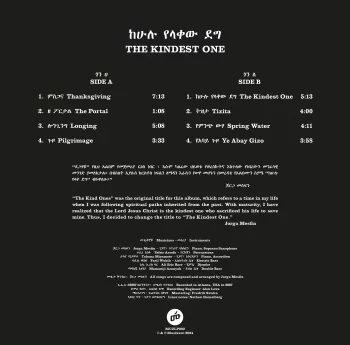
1
Jorga Mesfin - Thanksgiving
2
Jorga Mesfin - The Portal
3
Jorga Mesfin - Longing
4
Jorga Mesfin - Pilgrimage
5
Jorga Mesfin - The Kindest One
6
Jorga Mesfin - Tizita
7
Jorga Mesfin - Spring Water
8
Jorga Mesfin - Ye Abay Gizo
This is Mulatu Astatke’s protege and Ethiopian saxophonist and composer Jorga Mesfin’s debut album. It’s a long foray into Ethio-jazz that takes this courageous syncretism further by fusing spiritual experimentation with bits from all kinds of situations in Ethiopian music, jazz music, and specifically Ethiopian jazz music that precedes it.
Jorga Mesfin is widely regarded as one of the most talented contemporary musicians and composers in Ethiopia. He started his professional career at the young age of 17 and has since collaborated with numerous renowned artists, including Tsegaye Gebremedhin, Carolyn Beard Withlow, The Last Poets, Vijay Iyer, Wayna Wondossen, Kirk Whalum, Takana Miyamoto, Gizze Reggae band, Dionne Farris, Aster Aweke, Mahmoud Ahmed, and Mulatu Astatke. Additionally, Mesfin was a resident at Astatke's legendary African Jazz Village in Addis Ababa every Thursday.
Jorga Mesfin is the founder of the Ethio-jazz group called Wudasse. He composed the music for the epic Ethiopian film "Teza" directed by Haile Gerima. His work on the film earned him the Best Music Award at the 22nd Carthage Film Festival and Best Composition at the 5th Dubai International Film Festival.
Muzikawi is a record label, music publisher, studio, artist management, and event organizer based in Addis Ababa and Stockholm. With extensive experience in curating and representing artists from all regions, Muzikawi has a deep understanding and appreciation of Ethiopia's culture.
A1 - Thanksgiving
A2 - The Portal
A3 - Longing
A4 - Pilgrimage
B1 - The Kindest One
B2 - Tizita
B3 - Spring Water
B4 - Ye Abay Gizo
Sicherheits- und Herstellerinformationen / safety and manufacturer info (GPSR)
WAS - Word and Sound Medien GmbH
Liebigstrasse 2-20
DE - 22113 Hamburg
Germany
Contact: [email protected]More
Jorga Mesfin is widely regarded as one of the most talented contemporary musicians and composers in Ethiopia. He started his professional career at the young age of 17 and has since collaborated with numerous renowned artists, including Tsegaye Gebremedhin, Carolyn Beard Withlow, The Last Poets, Vijay Iyer, Wayna Wondossen, Kirk Whalum, Takana Miyamoto, Gizze Reggae band, Dionne Farris, Aster Aweke, Mahmoud Ahmed, and Mulatu Astatke. Additionally, Mesfin was a resident at Astatke's legendary African Jazz Village in Addis Ababa every Thursday.
Jorga Mesfin is the founder of the Ethio-jazz group called Wudasse. He composed the music for the epic Ethiopian film "Teza" directed by Haile Gerima. His work on the film earned him the Best Music Award at the 22nd Carthage Film Festival and Best Composition at the 5th Dubai International Film Festival.
Muzikawi is a record label, music publisher, studio, artist management, and event organizer based in Addis Ababa and Stockholm. With extensive experience in curating and representing artists from all regions, Muzikawi has a deep understanding and appreciation of Ethiopia's culture.
A1 - Thanksgiving
A2 - The Portal
A3 - Longing
A4 - Pilgrimage
B1 - The Kindest One
B2 - Tizita
B3 - Spring Water
B4 - Ye Abay Gizo
Sicherheits- und Herstellerinformationen / safety and manufacturer info (GPSR)
WAS - Word and Sound Medien GmbH
Liebigstrasse 2-20
DE - 22113 Hamburg
Germany
Contact: [email protected]More
Customers who bought this also bought this
1
Jorga Mesfin - Thanksgiving
2
Jorga Mesfin - The Portal
3
Jorga Mesfin - Longing
4
Jorga Mesfin - Pilgrimage
5
Jorga Mesfin - The Kindest One
6
Jorga Mesfin - Tizita
7
Jorga Mesfin - Spring Water
8
Jorga Mesfin - Ye Abay Gizo
This is Mulatu Astatke’s protege and Ethiopian saxophonist and composer Jorga Mesfin’s debut album. It’s a long foray into Ethio-jazz that takes this courageous syncretism further by fusing spiritual experimentation with bits from all kinds of situations in Ethiopian music, jazz music, and specifically Ethiopian jazz music that precedes it.
Jorga Mesfin is widely regarded as one of the most talented contemporary musicians and composers in Ethiopia. He started his professional career at the young age of 17 and has since collaborated with numerous renowned artists, including Tsegaye Gebremedhin, Carolyn Beard Withlow, The Last Poets, Vijay Iyer, Wayna Wondossen, Kirk Whalum, Takana Miyamoto, Gizze Reggae band, Dionne Farris, Aster Aweke, Mahmoud Ahmed, and Mulatu Astatke. Additionally, Mesfin was a resident at Astatke's legendary African Jazz Village in Addis Ababa every Thursday.
Jorga Mesfin is the founder of the Ethio-jazz group called Wudasse. He composed the music for the epic Ethiopian film "Teza" directed by Haile Gerima. His work on the film earned him the Best Music Award at the 22nd Carthage Film Festival and Best Composition at the 5th Dubai International Film Festival.
Muzikawi is a record label, music publisher, studio, artist management, and event organizer based in Addis Ababa and Stockholm. With extensive experience in curating and representing artists from all regions, Muzikawi has a deep understanding and appreciation of Ethiopia's culture.
A1 - Thanksgiving
A2 - The Portal
A3 - Longing
A4 - Pilgrimage
B1 - The Kindest One
B2 - Tizita
B3 - Spring Water
B4 - Ye Abay Gizo
Sicherheits- und Herstellerinformationen / safety and manufacturer info (GPSR)
WAS - Word and Sound Medien GmbH
Liebigstrasse 2-20
DE - 22113 Hamburg
Germany
Contact: [email protected]More
Jorga Mesfin is widely regarded as one of the most talented contemporary musicians and composers in Ethiopia. He started his professional career at the young age of 17 and has since collaborated with numerous renowned artists, including Tsegaye Gebremedhin, Carolyn Beard Withlow, The Last Poets, Vijay Iyer, Wayna Wondossen, Kirk Whalum, Takana Miyamoto, Gizze Reggae band, Dionne Farris, Aster Aweke, Mahmoud Ahmed, and Mulatu Astatke. Additionally, Mesfin was a resident at Astatke's legendary African Jazz Village in Addis Ababa every Thursday.
Jorga Mesfin is the founder of the Ethio-jazz group called Wudasse. He composed the music for the epic Ethiopian film "Teza" directed by Haile Gerima. His work on the film earned him the Best Music Award at the 22nd Carthage Film Festival and Best Composition at the 5th Dubai International Film Festival.
Muzikawi is a record label, music publisher, studio, artist management, and event organizer based in Addis Ababa and Stockholm. With extensive experience in curating and representing artists from all regions, Muzikawi has a deep understanding and appreciation of Ethiopia's culture.
A1 - Thanksgiving
A2 - The Portal
A3 - Longing
A4 - Pilgrimage
B1 - The Kindest One
B2 - Tizita
B3 - Spring Water
B4 - Ye Abay Gizo
Sicherheits- und Herstellerinformationen / safety and manufacturer info (GPSR)
WAS - Word and Sound Medien GmbH
Liebigstrasse 2-20
DE - 22113 Hamburg
Germany
Contact: [email protected]More
Label:We Release Jazz
Cat-No:WRJ001-REG
Release-Date:19.10.2018
Genre:Electronic, Electronica
Configuration:LP Excl
Label:We Release Jazz
Cat-No:WRJ001-REG
Release-Date:19.10.2018
Genre:Electronic, Electronica
Configuration:LP Excl
1
Ryo Fukui - It Could Happen To You
2
Ryo Fukui - I Want To Talk About You
3
Ryo Fukui - Early Summer
4
Ryo Fukui - Willow Weep For Me
5
Ryo Fukui - Autumn Leaves
6
Ryo Fukui - Scenery
The Standard Edition - Territory - NO Sales to Japan
Ryo Fukui's 1976 highly sought-after jazz masterpiece SCENERY-
LP Edition: Mastered at half speed, 140g vinyl, Sticker
We Release Jazz (WRWTFWW Records' new sister-label) is proud to present its first release, the official reissue of Ryo Fukui's highly sought-after masterpiece Scenery (1976), sourced from the original masters and available on limited edition 180g vinyl mastered at half speed for audiophile sound and on digipack CD.
Unquestionably one of the most important Japanese jazz albums ever recorded, Scenery reveals Ryo Fukui as a miraculously brilliant self-taught pianist fusing modal, bop, and cool jazz influences for a very personal, dexterous and game-changing take on classic standards made famous by Bing Crosby and John Coltrane among others. From "It Could Happen To You" and its serene and calm intro which magically flows into a jubilant and upbeat piece, to the out-of-this-world piano solo of "Early Summer", or the incredible teamwork of "Autumn Leaves" where Fukui leads Satoshi Denpo (bass) and Yoshinori Fukui (drums) into groove heaven, every single note on the album oozes precision, confidence and flair and every single section slides seamlessly into one another, creating a supreme and elegant blend of jazz. Often compared to McCoy Tyner or Bill Evans, Ryo Fukui was a genius in his own right, a true master of his craft whose perfectionism gave birth to some of the greatest music ever recorded. Scenery is his magnum opus and an absolute must-have.
The Hokkaido wizard-pianist followed Scenery with the soulful gem Mellow Dream (also available on We Release Jazz) in 1977. He then focused on improving his live skills, often performing at Sapporo's Slowboat Jazz Club (which he co-founded with his wife Yasuko Fukui) and releasing 2 live albums. Ryo Fukui sadly passed away in March 2016, leaving behind a legacy of works that is sure to captivate jazz lovers for generations to come.
Tracklisting Vinyl LP
A1 It Could Happen To You
A2 I Want To Talk About You
A3 Early Summer
B1 Willow Weep For Me
B2 Autumn Leaves
B3 Scenery
Sicherheits- und Herstellerinformationen / safety and manufacturer info (GPSR)
WAS - Word and Sound Medien GmbH
Liebigstrasse 2-20
DE - 22113 Hamburg
Germany
Contact: [email protected]More
Ryo Fukui's 1976 highly sought-after jazz masterpiece SCENERY-
LP Edition: Mastered at half speed, 140g vinyl, Sticker
We Release Jazz (WRWTFWW Records' new sister-label) is proud to present its first release, the official reissue of Ryo Fukui's highly sought-after masterpiece Scenery (1976), sourced from the original masters and available on limited edition 180g vinyl mastered at half speed for audiophile sound and on digipack CD.
Unquestionably one of the most important Japanese jazz albums ever recorded, Scenery reveals Ryo Fukui as a miraculously brilliant self-taught pianist fusing modal, bop, and cool jazz influences for a very personal, dexterous and game-changing take on classic standards made famous by Bing Crosby and John Coltrane among others. From "It Could Happen To You" and its serene and calm intro which magically flows into a jubilant and upbeat piece, to the out-of-this-world piano solo of "Early Summer", or the incredible teamwork of "Autumn Leaves" where Fukui leads Satoshi Denpo (bass) and Yoshinori Fukui (drums) into groove heaven, every single note on the album oozes precision, confidence and flair and every single section slides seamlessly into one another, creating a supreme and elegant blend of jazz. Often compared to McCoy Tyner or Bill Evans, Ryo Fukui was a genius in his own right, a true master of his craft whose perfectionism gave birth to some of the greatest music ever recorded. Scenery is his magnum opus and an absolute must-have.
The Hokkaido wizard-pianist followed Scenery with the soulful gem Mellow Dream (also available on We Release Jazz) in 1977. He then focused on improving his live skills, often performing at Sapporo's Slowboat Jazz Club (which he co-founded with his wife Yasuko Fukui) and releasing 2 live albums. Ryo Fukui sadly passed away in March 2016, leaving behind a legacy of works that is sure to captivate jazz lovers for generations to come.
Tracklisting Vinyl LP
A1 It Could Happen To You
A2 I Want To Talk About You
A3 Early Summer
B1 Willow Weep For Me
B2 Autumn Leaves
B3 Scenery
Sicherheits- und Herstellerinformationen / safety and manufacturer info (GPSR)
WAS - Word and Sound Medien GmbH
Liebigstrasse 2-20
DE - 22113 Hamburg
Germany
Contact: [email protected]More
Label:We Release Jazz
Cat-No:WRJ002-REG
Release-Date:26.10.2018
Genre:Electronic, Electronica
Configuration:LP Excl
Label:We Release Jazz
Cat-No:WRJ002-REG
Release-Date:26.10.2018
Genre:Electronic, Electronica
Configuration:LP Excl
1
Ryo Fukui - Mellow Dream
2
Ryo Fukui - My Foolish Heart
3
Ryo Fukui - Baron Potato Blues
4
Ryo Fukui - What's New
5
Ryo Fukui - Horizon
6
Ryo Fukui - My Funny Valentine
The Standard Edition - Territory - NO Sales to Japan
Ryo Fukui's 1976 highly sought-after follow up to SCENERY!
LP Edition: Mastered at half speed, 140g vinyl, Sticker
We Release Jazz (WRWTFWW Records' new sister-label) is thrilled to present the official reissue of criminally overlooked Japanese jazz gem Mellow Dream (1977) by Hokkaido pianist wunderkind Ryo Fukui, released in conjunction with the its legendary predecessor Scenery, sourced from the original masters and mastered at half speed.
Firmly standing on the foundation he laid down with Scenery, Ryo Fukui continues his exploration of modal, bop and cool jazz sounds with meticulous grace and absolute mastery. As its title suggests, Mellow Dream ventures into slightly mellower, more soulful, and sometimes more contemplative territories (the Bill Evans-reminiscent "Mellow Dream" and "My Foolish Heart") while still packing the commanding punch Fukui's work is loved for, as heard on the amazingly bombastic "Baron Potato Blues" or the gigantic McCoy Tyner/John Coltrane-influenced "Horizon" which sees each member of the trio (Satoshi Denpo is on bass and Yoshinori Fukui is on drums) demonstrating their virtuosity for 9 exhilarating minutes. With his sophomore album, Ryo Fukui swings from melancholy to vibrant joy with ease, reminding us that jazz is best served with a pinch of blues, and displays an immensely rare combination of pure talent, unique personal approach and focused discipline. The man undeniably deserves a spot in the pantheon of all-time great jazz pianists.
After releasing the outstanding Scenery and Mellow Dream back to back, Ryo Fukui worked on developing his live skills, often performing at Sapporo's Slowboat Jazz Club (which he co-founded with his wife Yasuko Fukui), and even releasing 2 live albums. He sadly passed away in March 2016, leaving behind a legacy of works that all jazz lovers should explore.
Tracklisting Vinyl LP
A1 Mellow Dream
A2 My Foolish Heart
A3 Baron Potato Blues
B1 What's New
B2 Horizon
B3 My Funny Valentine
Sicherheits- und Herstellerinformationen / safety and manufacturer info (GPSR)
WAS - Word and Sound Medien GmbH
Liebigstrasse 2-20
DE - 22113 Hamburg
Germany
Contact: [email protected]More
Ryo Fukui's 1976 highly sought-after follow up to SCENERY!
LP Edition: Mastered at half speed, 140g vinyl, Sticker
We Release Jazz (WRWTFWW Records' new sister-label) is thrilled to present the official reissue of criminally overlooked Japanese jazz gem Mellow Dream (1977) by Hokkaido pianist wunderkind Ryo Fukui, released in conjunction with the its legendary predecessor Scenery, sourced from the original masters and mastered at half speed.
Firmly standing on the foundation he laid down with Scenery, Ryo Fukui continues his exploration of modal, bop and cool jazz sounds with meticulous grace and absolute mastery. As its title suggests, Mellow Dream ventures into slightly mellower, more soulful, and sometimes more contemplative territories (the Bill Evans-reminiscent "Mellow Dream" and "My Foolish Heart") while still packing the commanding punch Fukui's work is loved for, as heard on the amazingly bombastic "Baron Potato Blues" or the gigantic McCoy Tyner/John Coltrane-influenced "Horizon" which sees each member of the trio (Satoshi Denpo is on bass and Yoshinori Fukui is on drums) demonstrating their virtuosity for 9 exhilarating minutes. With his sophomore album, Ryo Fukui swings from melancholy to vibrant joy with ease, reminding us that jazz is best served with a pinch of blues, and displays an immensely rare combination of pure talent, unique personal approach and focused discipline. The man undeniably deserves a spot in the pantheon of all-time great jazz pianists.
After releasing the outstanding Scenery and Mellow Dream back to back, Ryo Fukui worked on developing his live skills, often performing at Sapporo's Slowboat Jazz Club (which he co-founded with his wife Yasuko Fukui), and even releasing 2 live albums. He sadly passed away in March 2016, leaving behind a legacy of works that all jazz lovers should explore.
Tracklisting Vinyl LP
A1 Mellow Dream
A2 My Foolish Heart
A3 Baron Potato Blues
B1 What's New
B2 Horizon
B3 My Funny Valentine
Sicherheits- und Herstellerinformationen / safety and manufacturer info (GPSR)
WAS - Word and Sound Medien GmbH
Liebigstrasse 2-20
DE - 22113 Hamburg
Germany
Contact: [email protected]More
Label:Matasuna Records
Cat-No:MSR044
Release-Date:18.07.2025
Genre:Brazil, Bossa, Salsa
Configuration:7"
Label:Matasuna Records
Cat-No:MSR044
Release-Date:18.07.2025
Genre:Brazil, Bossa, Salsa
Configuration:7"
1
Porfi Jimenez - Miami (Original)
2
Porfi Jimenez - Miami (Retro Roland Riso Power Edit)
One of those rare, lesser-known Latin funk gems is undoubtedly "Miami" by Dominican-Venezuelan musician "Porfi Jiménez", originally released in 1971. Sought after by DJs and collectors for years, original copies are now almost impossible to find in decent condition. The track has been high on "Matasuna Records"' wish list for a long time - and after several years of work, it's finally getting an official reissue. The release also includes a great edit by Philadelphia-based DJ and producer "Retro Roland Riso", who has already left his mark on previous Matasuna releases. This heavy Latin funk joint from Venezuela is ready to bring the heat just in time for summer! ?? The original version of "Miami" impresses with its driving percussion, powerful horns and raw, unpolished sound, delivering pure energy. The fusion of funk grooves and Latin American rhythms creates an infectious vibe that is perfect for the dance floor. Retro Roland Riso's edit carefully enhances the track by adding extra beats and percussive elements, giving it more punch and making it even more club-friendly, while staying true to the original feel. It's a fresh favourite for any bag!
Sicherheits- und Herstellerinformationen / safety and manufacturer info (GPSR)
WAS - Word and Sound Medien GmbH
Liebigstrasse 2-20
DE - 22113 Hamburg
Germany
Contact: [email protected]More
Sicherheits- und Herstellerinformationen / safety and manufacturer info (GPSR)
WAS - Word and Sound Medien GmbH
Liebigstrasse 2-20
DE - 22113 Hamburg
Germany
Contact: [email protected]More
1
Gitkin - Don't You Want Me Baby (feat. Simon Moushabeck)
2
Gitkin - Mi Lamento (feat. Gabe Case)
In anticipation of Gitkin's upcoming album in October, Wonderwheel drops a cheeky little 7" with two Latin covers from the man himself. The A-Side finds an instrumental Cumbia cover of the eternal 80s classic by The Human League. Leading with the guitar for the verses, the song chugs along nicely with a faithful interpretation of the original with Simon Moushabeck's accordion leading the chorus. On the flip, Gitkin covers Peru's infamous Grupo Celeste's 1975 classic "Mi Lamento" with friend and collaborator Gabe Case on vocals. Keeping with the Tropical Andean sound of the original, Gitkin's funky, wah wah guitars drive the track set over uptempo, cumbia inspired drums while Case's melodic vocals float on top. Two fun, happy tunes to light up dancefloors this summer!
Sicherheits- und Herstellerinformationen / safety and manufacturer info (GPSR)
WAS - Word and Sound Medien GmbH
Liebigstrasse 2-20
DE - 22113 Hamburg
Germany
Contact: [email protected]More
Sicherheits- und Herstellerinformationen / safety and manufacturer info (GPSR)
WAS - Word and Sound Medien GmbH
Liebigstrasse 2-20
DE - 22113 Hamburg
Germany
Contact: [email protected]More

1
Leoparden - Intro
2
Leoparden - Disko Inferno
3
Leoparden - 113
4
Leoparden - Fashion Designa
5
Leoparden - Fineste Jenta I Oslo
6
Leoparden - Toppen
7
Leoparden - Hemmelighet
8
Leoparden - Rytmen Er En Danser
9
Leoparden - Hode Skulder
Oslo's own Leoparden returns with the new album Disko Inferno, which draws inspiration from everything from 80's disco and pop to Nigerian boogie and laid-back 90's West Coast beats...
Leoparden's lyrics - witty and relaxed - capture everyday moments from life in Oslo, while the music pulses with infectious energy and a playful spirit, crafted for a proper boogie on the dance floor.
Ltd Edition single LP in shrink-wrapped, Gatefold sleeve.
Sicherheits- und Herstellerinformationen / safety and manufacturer info (GPSR)
WAS - Word and Sound Medien GmbH
Liebigstrasse 2-20
DE - 22113 Hamburg
Germany
Contact: [email protected]More
Leoparden's lyrics - witty and relaxed - capture everyday moments from life in Oslo, while the music pulses with infectious energy and a playful spirit, crafted for a proper boogie on the dance floor.
Ltd Edition single LP in shrink-wrapped, Gatefold sleeve.
Sicherheits- und Herstellerinformationen / safety and manufacturer info (GPSR)
WAS - Word and Sound Medien GmbH
Liebigstrasse 2-20
DE - 22113 Hamburg
Germany
Contact: [email protected]More
On June 29th 20203, Jeremiah Chiu walked into the Vintage Synthesizer Museum (VSM) in Highland Park, Los Angeles, with no plan more specific than "let's fire this stuff up and see what happens." Exploring the VSM's vast collection of classic, rare and staple synthesizers, he would sequence, trigger, and layer the machines together with help from VSM founder/curator Lance Hill.
The resulting album - In Electric Time - was recorded in just two days, and edited to completion in the two days following. It was captured fully analog by engineer Ben Lumsdaine, who contributes performances on a few tracks himself. Cooper Crain (of Bitchin Bajas) makes an appearance as well; but ultimately the collection is an intuitive expression of organic electronic conceptualized and created in-context by Chiu alone, as he calls on a lifetime of work in sound synthesis to pain a fulgent, refreshingly undercut sequence of cinematic sketches and in-process themes. In some ways, In Electric Time reflects the directness of Raymond Scott's electronic studio recordings - with sharp cuts and room chatter - and, in others, it conjures the in-the moment- magic of Harmonia.
Tracklist
1.1ElectroComp 101
1.2Seawater Swell
1.3For Voices
1.4Rococco Rondo
1.5A Cloud Song
1.6Rhythm Bell
1.7Brush with Thin Air
1.8Rhythm Serge
1.9Static Stone Railway
1.10Transparent Spheres
1.11Echo Arp Hold
1.12In Electric Time
Sicherheits- und Herstellerinformationen / safety and manufacturer info (GPSR)
WAS - Word and Sound Medien GmbH
Liebigstrasse 2-20
DE - 22113 Hamburg
Germany
Contact: [email protected]More
The resulting album - In Electric Time - was recorded in just two days, and edited to completion in the two days following. It was captured fully analog by engineer Ben Lumsdaine, who contributes performances on a few tracks himself. Cooper Crain (of Bitchin Bajas) makes an appearance as well; but ultimately the collection is an intuitive expression of organic electronic conceptualized and created in-context by Chiu alone, as he calls on a lifetime of work in sound synthesis to pain a fulgent, refreshingly undercut sequence of cinematic sketches and in-process themes. In some ways, In Electric Time reflects the directness of Raymond Scott's electronic studio recordings - with sharp cuts and room chatter - and, in others, it conjures the in-the moment- magic of Harmonia.
Tracklist
1.1ElectroComp 101
1.2Seawater Swell
1.3For Voices
1.4Rococco Rondo
1.5A Cloud Song
1.6Rhythm Bell
1.7Brush with Thin Air
1.8Rhythm Serge
1.9Static Stone Railway
1.10Transparent Spheres
1.11Echo Arp Hold
1.12In Electric Time
Sicherheits- und Herstellerinformationen / safety and manufacturer info (GPSR)
WAS - Word and Sound Medien GmbH
Liebigstrasse 2-20
DE - 22113 Hamburg
Germany
Contact: [email protected]More
1
Okay Temiz - Eastern Breeze
2
Okay Temiz - Penguin
3
Okay Temiz - Galaxy Nine
4
Okay Temiz - Savsat Bari
5
Okay Temiz - Repercussions
6
Okay Temiz - Drummer Of The Two Worlds
7
Okay Temiz - Sipsi
8
Okay Temiz - Ocean Rolelr
9
Okay Temiz - Fantasia Drive
FIRST OFFICIAL REISSUE OF ONE OF THE MOST SAMPLED TURKISH RECORDS IN 45 YEARS! SAMPLED BY RAP LEGENDS LIKE SCARFACE OF THE GETO BOYS. TURKISH PSYCHEDELIC MASTERPIECE FROM 1980
Licensed from "Warner Records Sweden" and remastered from original material in Warner Record's vaults by Shawn Joseph at Optimum Mastering Bristol. 180 gr heavyweight vinyl Manufactured in Optimal Berlin.
Recorded between Istanbul and Stockholm, it captures the era between Okay Temiz's Don Cherry Trio touring and his own band Oriental Wind's sensational debut.
Mentioned distinctive elements have elevated the record to 'cult' status among record collectors, sample enthusiasts, and diggers around the world.
By 1980, Okay Temiz had already embarked on a series of dynamic collaborations and sound experiences with Don Cherry as a member of the Don Cherry Trio. This period included a noteworthy summer in the early '70s at Dartmouth College in New Hampshire, hosted by Jon Appleton, a notable American composer and visionary in electro-acoustic music.
"During that summer, Jon asked me, 'What kind of sound do you have in mind?' I had already given this considerable thought, using a tape recorder to capture sound frequencies influenced by the moon's position. Jon Appleton's question made me think about the extension of 'Organic Music Theory,' which we were exploring with Don Cherry at the time."
In 1982, Okay Temiz recorded the most comprehensive answer to 'What is Turkish Jazz?' at the Montreux Jazz Festival (CAZLP 004) with his band Oriental Wind, featuring Bobo Stenson (of the Jan Garbarek - Bobo Stenson Quartet), Palle Danielsson (of the Peter Erskine European Trio), and Lennart Åberg (of the Scandinavia New Jazz Group).
In 1980, without fully realizing he was navigating between these two worlds, Okay Temiz entered Stockholm's renowned Metronome studios to record the 'sound in his mind' as a solo artist.
`Drummer of Two Worlds` is a star map of Okay Temiz's musical worlds. Blending elements from the grand piano to his handmade drums, and from the amplified Berimbau to his cowbell array, weaving Turkish rhythms like 9/8 and 7/8 with the universality of 4/4, it presents a unique sound narrative that resonates with the dimensions of a well-traveled mind."
Haluk Damar
A1 - Eastern Breeze
A2 - Penguin
A3 - Galaxy Nine
A4 - Savsat Bari
A5 - Repercussions
B1 - Drummer Of The Two Worlds
B2 - Sipsi
B3 - Ocean Rolelr
B4 - Fantasia Drive
Sicherheits- und Herstellerinformationen / safety and manufacturer info (GPSR)
WAS - Word and Sound Medien GmbH
Liebigstrasse 2-20
DE - 22113 Hamburg
Germany
Contact: [email protected]More
Licensed from "Warner Records Sweden" and remastered from original material in Warner Record's vaults by Shawn Joseph at Optimum Mastering Bristol. 180 gr heavyweight vinyl Manufactured in Optimal Berlin.
Recorded between Istanbul and Stockholm, it captures the era between Okay Temiz's Don Cherry Trio touring and his own band Oriental Wind's sensational debut.
Mentioned distinctive elements have elevated the record to 'cult' status among record collectors, sample enthusiasts, and diggers around the world.
By 1980, Okay Temiz had already embarked on a series of dynamic collaborations and sound experiences with Don Cherry as a member of the Don Cherry Trio. This period included a noteworthy summer in the early '70s at Dartmouth College in New Hampshire, hosted by Jon Appleton, a notable American composer and visionary in electro-acoustic music.
"During that summer, Jon asked me, 'What kind of sound do you have in mind?' I had already given this considerable thought, using a tape recorder to capture sound frequencies influenced by the moon's position. Jon Appleton's question made me think about the extension of 'Organic Music Theory,' which we were exploring with Don Cherry at the time."
In 1982, Okay Temiz recorded the most comprehensive answer to 'What is Turkish Jazz?' at the Montreux Jazz Festival (CAZLP 004) with his band Oriental Wind, featuring Bobo Stenson (of the Jan Garbarek - Bobo Stenson Quartet), Palle Danielsson (of the Peter Erskine European Trio), and Lennart Åberg (of the Scandinavia New Jazz Group).
In 1980, without fully realizing he was navigating between these two worlds, Okay Temiz entered Stockholm's renowned Metronome studios to record the 'sound in his mind' as a solo artist.
`Drummer of Two Worlds` is a star map of Okay Temiz's musical worlds. Blending elements from the grand piano to his handmade drums, and from the amplified Berimbau to his cowbell array, weaving Turkish rhythms like 9/8 and 7/8 with the universality of 4/4, it presents a unique sound narrative that resonates with the dimensions of a well-traveled mind."
Haluk Damar
A1 - Eastern Breeze
A2 - Penguin
A3 - Galaxy Nine
A4 - Savsat Bari
A5 - Repercussions
B1 - Drummer Of The Two Worlds
B2 - Sipsi
B3 - Ocean Rolelr
B4 - Fantasia Drive
Sicherheits- und Herstellerinformationen / safety and manufacturer info (GPSR)
WAS - Word and Sound Medien GmbH
Liebigstrasse 2-20
DE - 22113 Hamburg
Germany
Contact: [email protected]More
The second self-titled album from Will Miller's Resavoir interweaves modern-day soul-jazz with bedroom beats, synth serenades and twilight sonatas – an endlessly listenable, subtly radiant symphony suitable for both the composition-minded musician’s musician and the hook-seeking playlist populist.
This album follows Resavoir’s 2019 self-titled debut album, a breakout success that landed in ‘Best of 2019’ lists by NPR Music and BBC’s Gilles Peterson, and has logged over 8 million streams across DSPs to date, and counting.
Through his movement further into an expanded palette of synths, pianos, live and programmed drums in addition to his MIDI-augmented trumpet, Miller has developed a signature cinematic soul-jazz sound rooted in hip-hop structures. No surprise, then, that his profile as a producer has raised significantly since the Resavoir debut, and that the years since have seen him operating the controls and guiding the ship on tracks for Eryn Allen Kane, Whitney, Knox Fortune, and SZA’s recently-released album SOS (which spent 10 weeks as the #1 spot on the Billboard 200 chart).
This is the backdrop for Resavoir’s second self-titled effort, a more polished and focused presentation of Miller’s evolving skills as a studio producer. His compositional touch is more articulate than ever. The short but sweet album features a massive list of contributors including Elton Aura, Whitney, Akenya, Matt Gold, Eddie Burns, Lane Beckstrom, Jeremy Cunningham, Irvin Pierce, Macie Stewart, Peter Manheim and many more.
https://listen.k7.com/22899da3-34dc-498e-8a4a-1862465fe900
Sicherheits- und Herstellerinformationen / safety and manufacturer info (GPSR)
WAS - Word and Sound Medien GmbH
Liebigstrasse 2-20
DE - 22113 Hamburg
Germany
Contact: [email protected]More
This album follows Resavoir’s 2019 self-titled debut album, a breakout success that landed in ‘Best of 2019’ lists by NPR Music and BBC’s Gilles Peterson, and has logged over 8 million streams across DSPs to date, and counting.
Through his movement further into an expanded palette of synths, pianos, live and programmed drums in addition to his MIDI-augmented trumpet, Miller has developed a signature cinematic soul-jazz sound rooted in hip-hop structures. No surprise, then, that his profile as a producer has raised significantly since the Resavoir debut, and that the years since have seen him operating the controls and guiding the ship on tracks for Eryn Allen Kane, Whitney, Knox Fortune, and SZA’s recently-released album SOS (which spent 10 weeks as the #1 spot on the Billboard 200 chart).
This is the backdrop for Resavoir’s second self-titled effort, a more polished and focused presentation of Miller’s evolving skills as a studio producer. His compositional touch is more articulate than ever. The short but sweet album features a massive list of contributors including Elton Aura, Whitney, Akenya, Matt Gold, Eddie Burns, Lane Beckstrom, Jeremy Cunningham, Irvin Pierce, Macie Stewart, Peter Manheim and many more.
https://listen.k7.com/22899da3-34dc-498e-8a4a-1862465fe900
Sicherheits- und Herstellerinformationen / safety and manufacturer info (GPSR)
WAS - Word and Sound Medien GmbH
Liebigstrasse 2-20
DE - 22113 Hamburg
Germany
Contact: [email protected]More
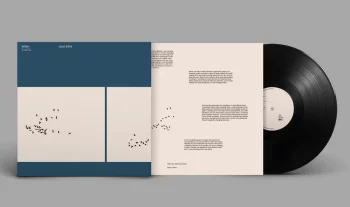
1
Felbm - Cycli Infini
2
Felbm - Cycli Infini
Tracklist:
A: Cycli Infini
B: Cycli Infini
Dutch multi-instrumentalist Felbm returns with the conceptual album ‘cycli infini’ : a 38-minute composition of metamorphosing tape loops, musical patterns and instrumental sketches. Further exploring the concept is the vinyl release which features the track spread over both sides and cut to the end of each locked groove - creating an essentially never-ending piece that challenges the idea of the traditional listening process.
The idea came to fruition by way of a lifelong interest and growing awareness of the cyclical nature of the world around him - be it through observing nature, or the mathematical and mind-bending works of Dutch artist MC Escher, or minimalist composers such as Erik Satie, Laraaji and Melaine Dalibert. “The openness of Laraaji’s and Satie’s music have also been an influence to create a certain softness and feeling of comfort, as I like this piece to be a place you want to revisit”, says Felbm, real name Eelco Topper.
While Topper’s previous releases on Soundway Records comprised series of short, individual sketches, on cycli infini the tapestry is sewn seamlessly together using a step-like progression through the circle of fifths, which as the name suggests, brings the listener back to the musical key and soundscape at which they started. Should the full track be on repeat, it begins anew without being noticed.
The piece began life with a layer of drone loops using tapes and delay pedals, over which acoustic instruments such as flute, saxophone and bass trumpet would playfully but gently interpret a melody - toying with jazz, ambient, fourth world and percussive sounds. As the music evolves through the key progression, organic elements such as birdsong and wind chimes ground the piece in nature. Says Topper: “the never-ending metamorphosis of matter has always fascinated me, the idea that nothing ever really disappears and everything has already been here… just in different shapes.”
For Fans of:
Laraaji, Basil Kirchin, Gaussian Curve, Young Marco, Greg Foat, Bibio, KPM library records
Sicherheits- und Herstellerinformationen / safety and manufacturer info (GPSR)
WAS - Word and Sound Medien GmbH
Liebigstrasse 2-20
DE - 22113 Hamburg
Germany
Contact: [email protected]More
A: Cycli Infini
B: Cycli Infini
Dutch multi-instrumentalist Felbm returns with the conceptual album ‘cycli infini’ : a 38-minute composition of metamorphosing tape loops, musical patterns and instrumental sketches. Further exploring the concept is the vinyl release which features the track spread over both sides and cut to the end of each locked groove - creating an essentially never-ending piece that challenges the idea of the traditional listening process.
The idea came to fruition by way of a lifelong interest and growing awareness of the cyclical nature of the world around him - be it through observing nature, or the mathematical and mind-bending works of Dutch artist MC Escher, or minimalist composers such as Erik Satie, Laraaji and Melaine Dalibert. “The openness of Laraaji’s and Satie’s music have also been an influence to create a certain softness and feeling of comfort, as I like this piece to be a place you want to revisit”, says Felbm, real name Eelco Topper.
While Topper’s previous releases on Soundway Records comprised series of short, individual sketches, on cycli infini the tapestry is sewn seamlessly together using a step-like progression through the circle of fifths, which as the name suggests, brings the listener back to the musical key and soundscape at which they started. Should the full track be on repeat, it begins anew without being noticed.
The piece began life with a layer of drone loops using tapes and delay pedals, over which acoustic instruments such as flute, saxophone and bass trumpet would playfully but gently interpret a melody - toying with jazz, ambient, fourth world and percussive sounds. As the music evolves through the key progression, organic elements such as birdsong and wind chimes ground the piece in nature. Says Topper: “the never-ending metamorphosis of matter has always fascinated me, the idea that nothing ever really disappears and everything has already been here… just in different shapes.”
For Fans of:
Laraaji, Basil Kirchin, Gaussian Curve, Young Marco, Greg Foat, Bibio, KPM library records
Sicherheits- und Herstellerinformationen / safety and manufacturer info (GPSR)
WAS - Word and Sound Medien GmbH
Liebigstrasse 2-20
DE - 22113 Hamburg
Germany
Contact: [email protected]More
"The Closest Thing to Silence" is the result of a collaboration between Australia-based, French born fourth-world music legend Ariel Kalma and the International Anthem recording artists Jeremiah Chiu & Marta Sofia Honer, whose critically-acclaimed duo debut "Recordings from the Åland Islands" had been released last year
In August 2022, Australia-based, French born fourth-world music legend Ariel Kalma was invited to participate in BBC Radio 3’s Late Junction series of special collaborations. The program pairs artists that have not previously collaborated to create new music together. Kalma was quick to suggest working together with two musicians whom he has never met – the International Anthem recording artists Jeremiah Chiu & Marta Sofia Honer, whose critically-acclaimed duo debut Recordings from the Åland Islands had been released just a few months earlier. Kalma sent an invitation to Chiu and Honer, which was received with great enthusiasm. Chiu had been a fan of Kalma’s work for a long time, even citing him as a major influence on his approach to electronic music composition. After meeting their goal of 20 minutes worth of music for the program (which was four pieces total), the three musicians were satisfied in what they would present, and sent along their work to the producers of Late Junction; but simultaneously they felt like there was much more to be said, more work to be done. There were several pieces that they had nearly completed that weren’t sent for inclusion in the radio program, and there were many ideas for refining those that had. The three musicians collectively agreed that they would continue work together and try to push the music further. The Closest Thing to Silence is the result of their efforts to take the collaboration further.
Tracklist
1.1Ten Hour Wave
1.2Breathing In Three Orbits (Intro)
1.3Breathing In Three Orbits
1.4The Closest Thing To Silence
1.5Dizzy Ditty
1.6Une Ombre Légère
1.7New Air
1.8Écoute Au Loin
1.9A Treasure Chest
1.10Stay Centered
1.11Stack Attack
Sicherheits- und Herstellerinformationen / safety and manufacturer info (GPSR)
WAS - Word and Sound Medien GmbH
Liebigstrasse 2-20
DE - 22113 Hamburg
Germany
Contact: [email protected]More
In August 2022, Australia-based, French born fourth-world music legend Ariel Kalma was invited to participate in BBC Radio 3’s Late Junction series of special collaborations. The program pairs artists that have not previously collaborated to create new music together. Kalma was quick to suggest working together with two musicians whom he has never met – the International Anthem recording artists Jeremiah Chiu & Marta Sofia Honer, whose critically-acclaimed duo debut Recordings from the Åland Islands had been released just a few months earlier. Kalma sent an invitation to Chiu and Honer, which was received with great enthusiasm. Chiu had been a fan of Kalma’s work for a long time, even citing him as a major influence on his approach to electronic music composition. After meeting their goal of 20 minutes worth of music for the program (which was four pieces total), the three musicians were satisfied in what they would present, and sent along their work to the producers of Late Junction; but simultaneously they felt like there was much more to be said, more work to be done. There were several pieces that they had nearly completed that weren’t sent for inclusion in the radio program, and there were many ideas for refining those that had. The three musicians collectively agreed that they would continue work together and try to push the music further. The Closest Thing to Silence is the result of their efforts to take the collaboration further.
Tracklist
1.1Ten Hour Wave
1.2Breathing In Three Orbits (Intro)
1.3Breathing In Three Orbits
1.4The Closest Thing To Silence
1.5Dizzy Ditty
1.6Une Ombre Légère
1.7New Air
1.8Écoute Au Loin
1.9A Treasure Chest
1.10Stay Centered
1.11Stack Attack
Sicherheits- und Herstellerinformationen / safety and manufacturer info (GPSR)
WAS - Word and Sound Medien GmbH
Liebigstrasse 2-20
DE - 22113 Hamburg
Germany
Contact: [email protected]More
The second self-titled album from Will Miller's Resavoir interweaves modern-day soul-jazz with bedroom beats, synth serenades and twilight sonatas – an endlessly listenable, subtly radiant symphony suitable for both the composition-minded musician’s musician and the hook-seeking playlist populist.
This album follows Resavoir’s 2019 self-titled debut album, a breakout success that landed in ‘Best of 2019’ lists by NPR Music and BBC’s Gilles Peterson, and has logged over 8 million streams across DSPs to date, and counting.
Through his movement further into an expanded palette of synths, pianos, live and programmed drums in addition to his MIDI-augmented trumpet, Miller has developed a signature cinematic soul-jazz sound rooted in hip-hop structures. No surprise, then, that his profile as a producer has raised significantly since the Resavoir debut, and that the years since have seen him operating the controls and guiding the ship on tracks for Eryn Allen Kane, Whitney, Knox Fortune, and SZA’s recently-released album SOS (which spent 10 weeks as the #1 spot on the Billboard 200 chart).
This is the backdrop for Resavoir’s second self-titled effort, a more polished and focused presentation of Miller’s evolving skills as a studio producer. His compositional touch is more articulate than ever. The short but sweet album features a massive list of contributors including Elton Aura, Whitney, Akenya, Matt Gold, Eddie Burns, Lane Beckstrom, Jeremy Cunningham, Irvin Pierce, Macie Stewart, Peter Manheim and many more.
https://listen.k7.com/22899da3-34dc-498e-8a4a-1862465fe900
Sicherheits- und Herstellerinformationen / safety and manufacturer info (GPSR)
WAS - Word and Sound Medien GmbH
Liebigstrasse 2-20
DE - 22113 Hamburg
Germany
Contact: [email protected]More
This album follows Resavoir’s 2019 self-titled debut album, a breakout success that landed in ‘Best of 2019’ lists by NPR Music and BBC’s Gilles Peterson, and has logged over 8 million streams across DSPs to date, and counting.
Through his movement further into an expanded palette of synths, pianos, live and programmed drums in addition to his MIDI-augmented trumpet, Miller has developed a signature cinematic soul-jazz sound rooted in hip-hop structures. No surprise, then, that his profile as a producer has raised significantly since the Resavoir debut, and that the years since have seen him operating the controls and guiding the ship on tracks for Eryn Allen Kane, Whitney, Knox Fortune, and SZA’s recently-released album SOS (which spent 10 weeks as the #1 spot on the Billboard 200 chart).
This is the backdrop for Resavoir’s second self-titled effort, a more polished and focused presentation of Miller’s evolving skills as a studio producer. His compositional touch is more articulate than ever. The short but sweet album features a massive list of contributors including Elton Aura, Whitney, Akenya, Matt Gold, Eddie Burns, Lane Beckstrom, Jeremy Cunningham, Irvin Pierce, Macie Stewart, Peter Manheim and many more.
https://listen.k7.com/22899da3-34dc-498e-8a4a-1862465fe900
Sicherheits- und Herstellerinformationen / safety and manufacturer info (GPSR)
WAS - Word and Sound Medien GmbH
Liebigstrasse 2-20
DE - 22113 Hamburg
Germany
Contact: [email protected]More