
1
Annea Lockwood - On Fractured Ground
2
Annea Lockwood - Skin Resonance
Legendary New Zealand-born experimental composer and sound art pioneer Annea Lockwood returns to Black Truffle with On Fractured Ground / Skin Resonance, her third release for the label. Having recently celebrated her 85th birthday, Lockwood shows no sign of slowing down in her exploration of new sound sources and collaborations with an ever-growing intergenerational pool of performers – here with Vanessa Tomlinson. Her creative vibrancy is alive as ever on the two recent works presented here, which demonstrate both her engagement with the social dimensions of sound and the deeply reflective, meditative aspect of her art.
On Fractured Ground derives from material recorded with Pedro Rebelo and Georgios Varoutsos for the soundtrack of Maria Fusco and Margaret Salmon’s opera-film, History of the Present (2023). Working together in Belfast, Lockwood, Rebelo and Varoutsos made extensive recordings of the city’s ‘peace lines’, the dozens of walls erected since the beginning of the Troubles in the late 1960s to separate Catholic and Protestant areas of the city. Struck by the immensity of these barriers, ‘the brutal way they sever neighbourhoods’, Lockwood and her collaborators focused not on the sound environment of the city, but on the walls themselves, playing them as gigantic resonant instruments, using their hands and objects such as stones and leaves. Continuing to work in her studio with the material collected for the soundtrack after its completion, Lockwood composed the work presented here, occupying a space somewhere between her own extended-technique percussion music and the Cagean tradition of hyper-amplified small sounds. From deep, gong-like metallic tolling to dry scrapes and uneasy groans, the piece’s sustained attention to single sounds derived from unorthodox sources draws a line all the way back to Lockwood’s classic Glass World (1967-1970). Its spaciousness and delicacy are at odds with the dark historical background of the Troubles, creating a moving listening experience somehow haunted by the shadow of violence and conflict. Skin Resonance is a collaboration with Australian composer and percussionist Vanessa Tomlinson. Developed through conversations in which the two discussed the idea of ‘sonic attraction’, the piece focuses on Tomlinson’s relationship to the bass drum, reflecting on the complex web of connections embodied in this seemingly simply instrument, which is at once ‘animal, wood, and metal’. Approaching the instrument in a suitably elemental fashion, Tomlinson’s performance strips away conventional technique to explore the resonance and timbral properties of skin, drum, and metal hardware, producing overlapping waves of texture that at times seem closer to wind swishing through leaves or the ocean than anything usually associated with a drum. Emphasising the symbiotic relationship between performer and instrument, Tomlinson’s voice is heard at times, exploring the field of associations and connections the bass drum suggests to her: ‘Maybe the bass drum skin is an ear as well?’ Accompanied by insightful liner notes on both pieces and photographs documenting the recording of On Fractured Ground and a performance of Skin Resonance, this LP is a moving testament to the engagement, generosity, and openness that sustain Annea Lockwood’s work, still finding new directions after more than fifty years of activity.
Sicherheits- und Herstellerinformationen / safety and manufacturer info (GPSR)
WAS - Word and Sound Medien GmbH
Liebigstrasse 2-20
DE - 22113 Hamburg
Germany
Contact: [email protected]More
On Fractured Ground derives from material recorded with Pedro Rebelo and Georgios Varoutsos for the soundtrack of Maria Fusco and Margaret Salmon’s opera-film, History of the Present (2023). Working together in Belfast, Lockwood, Rebelo and Varoutsos made extensive recordings of the city’s ‘peace lines’, the dozens of walls erected since the beginning of the Troubles in the late 1960s to separate Catholic and Protestant areas of the city. Struck by the immensity of these barriers, ‘the brutal way they sever neighbourhoods’, Lockwood and her collaborators focused not on the sound environment of the city, but on the walls themselves, playing them as gigantic resonant instruments, using their hands and objects such as stones and leaves. Continuing to work in her studio with the material collected for the soundtrack after its completion, Lockwood composed the work presented here, occupying a space somewhere between her own extended-technique percussion music and the Cagean tradition of hyper-amplified small sounds. From deep, gong-like metallic tolling to dry scrapes and uneasy groans, the piece’s sustained attention to single sounds derived from unorthodox sources draws a line all the way back to Lockwood’s classic Glass World (1967-1970). Its spaciousness and delicacy are at odds with the dark historical background of the Troubles, creating a moving listening experience somehow haunted by the shadow of violence and conflict. Skin Resonance is a collaboration with Australian composer and percussionist Vanessa Tomlinson. Developed through conversations in which the two discussed the idea of ‘sonic attraction’, the piece focuses on Tomlinson’s relationship to the bass drum, reflecting on the complex web of connections embodied in this seemingly simply instrument, which is at once ‘animal, wood, and metal’. Approaching the instrument in a suitably elemental fashion, Tomlinson’s performance strips away conventional technique to explore the resonance and timbral properties of skin, drum, and metal hardware, producing overlapping waves of texture that at times seem closer to wind swishing through leaves or the ocean than anything usually associated with a drum. Emphasising the symbiotic relationship between performer and instrument, Tomlinson’s voice is heard at times, exploring the field of associations and connections the bass drum suggests to her: ‘Maybe the bass drum skin is an ear as well?’ Accompanied by insightful liner notes on both pieces and photographs documenting the recording of On Fractured Ground and a performance of Skin Resonance, this LP is a moving testament to the engagement, generosity, and openness that sustain Annea Lockwood’s work, still finding new directions after more than fifty years of activity.
Sicherheits- und Herstellerinformationen / safety and manufacturer info (GPSR)
WAS - Word and Sound Medien GmbH
Liebigstrasse 2-20
DE - 22113 Hamburg
Germany
Contact: [email protected]More
More records from Annea Lockwood
1
annea lockwood - Tiger Balm
2
annea lockwood - Amazonia Dreaming
3
annea lockwood - Immersion
Black Truffle is honored to present a new issue of Annea Lockwood’s classic 1970 tape piece Tiger Balm, unavailable on vinyl for over thirty years, accompanied by two exquisite unreleased works for percussion and voice. Created while Lockwood was living in the UK, the side-long Tiger Balm is a singular work within the cannon of tape music. Inspired by research into the ritual function of music, the piece explores the possibility of evoking ancient communal memories through sound. Breaking entirely with the dynamic language of the musique concrète tradition, Lockwood uses a select palette of mainly unprocessed sonic elements chosen for their mysterious and erotic characteristics (a purring cat, a heartbeat, gongs, slowed down jaw harp, a tiger, a woman’s breath, a plane passing overhead), presenting at most two sounds at once. As one sound flows organically into the next, their shared characteristics are highlighted, opening a space of dream logic and mysterious associations between nature and culture, the ancient and the modern. The B-side presents two pieces for percussion recorded here for the first time.
Sicherheits- und Herstellerinformationen / safety and manufacturer info (GPSR)
WAS - Word and Sound Medien GmbH
Liebigstrasse 2-20
DE - 22113 Hamburg
Germany
Contact: [email protected]More
Sicherheits- und Herstellerinformationen / safety and manufacturer info (GPSR)
WAS - Word and Sound Medien GmbH
Liebigstrasse 2-20
DE - 22113 Hamburg
Germany
Contact: [email protected]More
More records from Black Truffle
1
Dewa Alit & Gamelan Salukat - Sukat Tacala
2
Dewa Alit & Gamelan Salukat - Baur Bentur
Dewa Alit, master of radical Balinese gamelan, returns to Black Truffle with Baur Bentur. Genetic (2020, BT063) introduced international listeners to the magical sound-world of Alit’s Gamelan Salukat, who perform on instruments tuned to a unique scale derived from modified versions of two traditional Balinese scales. The two pieces heard on Chasing the Phantom (2022, BT093) further demonstrated his radical fusion of tradition and experimentation, with passages where unorthodox techniques make the acoustic ensemble resemble glitching electronics. Baur Bentur now highlights another aspect of Alit’s work, presenting pieces composed in 2024 and 2025 where Gamelan Salukat performs alongside virtuoso pianist Sri Hanuraga. Alit’s music is grounded in deep reflection on the tradition of Balinese gamelan and its place in the contemporary world. His title, ‘Baur Bentur’, which translates as ‘mixing and smashing’, points to his embrace of the intercultural mixture of Eastern and Western elements in the search for innovation. Against the calcification of Balinese music into tourist entertainment, Alit poses his searching, experimental work, which celebrates the communal values and performance practices of traditional gamelan while pushing into startling new directions. ‘Sukat Tacara’ is a study in layered tempos, meters, and polyrhythms, a constantly shifting dialogue between piano and the instruments of Gamelan Salukat. It begins close to a traditional concerto, pairing a brisk sequence of melodic variations from the piano with a spare but propulsive accompaniment of drums and hanging metallophone tones, punctuated by low gong strikes. The piano builds in volume and density across a rapid succession of fragments, at points recalling George Antheil’s ticking wind-up machinery, though Hanuraga’s jazz background shines through in the fluidity with which he navigates the complexities of the score, where chromatic movement co-exists with bluesy phrases. An abrupt change in the piano to patterns of dense clusters introduces a new episode, during which the metallic instruments of the gamelan enter the foreground. The piece dazzles with its inventive rhythms and dynamics, building to a stunning passage featuring the signature heavy muting technique of the Gamelan Salukat metallophones in kinetic patterns that would be at home on a Príncipe release. The title piece begins at high intensity and rarely lets up, working through bracing unison ensemble melodies and punctuation points where piano and gamelan together seem to become a single, thudding drum. For much of the piece the piano is tightly integrated into the ensemble, the harmonic extensions of the melodic line subsumed into a moving cloud of complex overtones generated by the gamelan instruments. Wildly kinetic on the rhythmic level, the piece swarms with microscopic movements of beating patterns generated by the ‘blend and crush’ of three simultaneous tuning systems: the equal temperament of the piano and the saih cenik (small scale) and saih gede (big scale) used by the gamelan instruments. Accompanied by the composer’s thoughtful liner notes and images of the musicians, Baur Bentur is a stunning next step in Alit’s radical combination of tradition and innovation.
Sicherheits- und Herstellerinformationen / safety and manufacturer info (GPSR)
WAS - Word and Sound Medien GmbH
Liebigstrasse 2-20
DE - 22113 Hamburg
Germany
Contact: [email protected]More
Sicherheits- und Herstellerinformationen / safety and manufacturer info (GPSR)
WAS - Word and Sound Medien GmbH
Liebigstrasse 2-20
DE - 22113 Hamburg
Germany
Contact: [email protected]More
1
Judith Hamann & James Rushford - Midmeste A
2
Judith Hamann & James Rushford - Midmeste B
Australian composer-performers Judith Hamann and James Rushford have worked together in countless projects for two decades, perhaps most notably in Golden Fur, their trio with Sam Dunscombe. Black Truffle is pleased to announce Midmeste, their first work as a duo. Its title is Middle English for ‘the middlemost point’, alluding to how the piece builds on the points of overlap between the highly personalised musical languages Hamann and Rushford have developed in recent years. Performed on cello and a variety of pipe organs, Midmeste is a spacious, sometimes unsettling exploration of their shared interest in alternative tunings, psychoacoustic phenomena, the physical properties of their instruments, and the usually peripheral sounds generated by the performing body. Beginning with a sequence of austerely vibrato-less harmonics from Hamann's cello, trailed by Rushford's whistling portative organ tones, the music soon expands into a slow-moving melodic wander, pausing at times to linger over an uncomfortable harmony or particularly resonant cello tone. Hamann and Rushford have long histories of engagement with pre-Classical European musical traditions, having in past projects performed and radically extended the work of Solage, Louis Couperin, Johann Conrad Beissell and other composers. Here they use a 15th century song by John Dunstaple, ‘O rosa bella’, which returns throughout the piece, distorted, aerated and splayed into new forms. Developed while the two shared residencies at Akademie Schloss Solitude, Stuttgart in 2020 and La Becque on Lake Geneva in 2023, Midmeste integrates recordings made (at at the invitation of the Biennale Son) on the organ of the Basilica St Valere in Sion, Switzerland—the world’s oldest playable organ, built in the early 15th century. Played by both Rushford and Hamann, the instrument’s idiosyncratic features, including bellows pumped manually using massive wooden beams, are integrated into the music through amplification. Creaks and thumps locate the music physically both in the performers’ bodies and the specific site of its making. Moving through a series of distinct episodes across its forty-minute span, Midmeste makes space for near-silent duets of high harmonics and hissing air, moments where twittering high tones and rumbling sub-bass could be electronic, and static fields that unexpectedly blossom into almost Romantic harmonies. Listeners familiar with Hamann and Rushford’s work will find many familiar features here: the stunningly rich cello tones, their patient sustain allowing heightened awareness of the inner life of sound and its interactions with the environment; the care with which acoustic space is activated, becoming at times a third instrumental voice; the attention to fragile, unstable sonorities that sometimes have a comic edge. A major work from two key figures in contemporary experimental music, Midmeste synthesises rigorous exploration of fundamental questions of sound and performance with an unapologetic embrace of beauty.
Sicherheits- und Herstellerinformationen / safety and manufacturer info (GPSR)
WAS - Word and Sound Medien GmbH
Liebigstrasse 2-20
DE - 22113 Hamburg
Germany
Contact: [email protected]More
Sicherheits- und Herstellerinformationen / safety and manufacturer info (GPSR)
WAS - Word and Sound Medien GmbH
Liebigstrasse 2-20
DE - 22113 Hamburg
Germany
Contact: [email protected]More
1
Oren Ambarchi - Hubris Part 1 (10th Anniversary Remaster)
2
Oren Ambarchi - Hubris Part 2 (10th Anniversary Remaster)
3
Oren Ambarchi - Hubris Part 3 (10th Anniversary Remaster)
Newly remastered version of Oren Ambarchi’s long out-of-print classic Hubris originally released on Editions Mego in 2016. Expertly remastered by audio wizard Joe Talia who worked with the original mixes, highlighting the myriad details of the audio with forensic precision, previously unheard up until now.
From the 2016 press release: Hubris continues the exploration of relentless, driving rhythms heard on Ambarchi’s Sagittarian Domain (2012) and Quixotism (2014). Where those records looked to Krautrock and techno for their starting points, the sidelong opening track here begins from the perhaps unlikely inspirations of disco and new wave, drawing particularly from Ambarchi’s love of Wang Chung’s soundtrack to William Friedkin’s To Live and Die in L.A. Leaving behind the song-forms of these reference points, Ambarchi weaves a sustained and pulsating web of layered palm-muted guitars from which individual voices rise up and recede, eventually setting the stage for some lush guitar synth from Jim O’Rourke. Arnold Dreyblatt collaborator Konrad Sprenger contributes overtone-rich motorized guitar, pushing the piece into a satisfying intersection of shimmering minimalism and rhythmic drive that smoothly builds up until the entrance of Mark Fell’s electronic percussion in its final section. After a short second part, in which Ambarchi, O’Rourke and crys cole pay tribute to the skewed harmonic sense of Albert Marcoeur with a track built from layered guitar figures and abstracted speech, the long final piece pushes the concept of the first side into darker and denser areas. Joined by electronics from Ricardo Villalobos and the twin drums of Will Guthrie and Joe Talia, the layered guitars of the first piece are transformed into a raw and tumbling fusion-funk groove that calls to mind early Weather Report or even the first Golden Palominos LP. As this stellar rhythm section rides a single repeated chord change into oblivion, a series of spectacular events emerge in the foreground: first, aleatoric synthesizer burbles from Keith Fullerton Whitman, then slashing skronk guitar from Arto Lindsay, until finally Ambarchi’s own fuzzed-out harmonics take center stage as the piece builds to an ecstatic frenzy. Few artists could hope to include such an incredible variety of collaborators on one record and still hope for it to have a unique identity, but Ambarchi manages to do just that, crafting three pieces that emerge directly out of his previous work while also pushing ahead into new dimensions. Players: Oren Ambarchi, crys cole, Mark Fell, Will Guthrie, Arto Lindsay, Jim O’Rourke, Konrad Sprenger, Joe Talia, Ricardo Villalobos, Keith Fullerton Whitman.
Sicherheits- und Herstellerinformationen / safety and manufacturer info (GPSR)
WAS - Word and Sound Medien GmbH
Liebigstrasse 2-20
DE - 22113 Hamburg
Germany
Contact: [email protected]More
From the 2016 press release: Hubris continues the exploration of relentless, driving rhythms heard on Ambarchi’s Sagittarian Domain (2012) and Quixotism (2014). Where those records looked to Krautrock and techno for their starting points, the sidelong opening track here begins from the perhaps unlikely inspirations of disco and new wave, drawing particularly from Ambarchi’s love of Wang Chung’s soundtrack to William Friedkin’s To Live and Die in L.A. Leaving behind the song-forms of these reference points, Ambarchi weaves a sustained and pulsating web of layered palm-muted guitars from which individual voices rise up and recede, eventually setting the stage for some lush guitar synth from Jim O’Rourke. Arnold Dreyblatt collaborator Konrad Sprenger contributes overtone-rich motorized guitar, pushing the piece into a satisfying intersection of shimmering minimalism and rhythmic drive that smoothly builds up until the entrance of Mark Fell’s electronic percussion in its final section. After a short second part, in which Ambarchi, O’Rourke and crys cole pay tribute to the skewed harmonic sense of Albert Marcoeur with a track built from layered guitar figures and abstracted speech, the long final piece pushes the concept of the first side into darker and denser areas. Joined by electronics from Ricardo Villalobos and the twin drums of Will Guthrie and Joe Talia, the layered guitars of the first piece are transformed into a raw and tumbling fusion-funk groove that calls to mind early Weather Report or even the first Golden Palominos LP. As this stellar rhythm section rides a single repeated chord change into oblivion, a series of spectacular events emerge in the foreground: first, aleatoric synthesizer burbles from Keith Fullerton Whitman, then slashing skronk guitar from Arto Lindsay, until finally Ambarchi’s own fuzzed-out harmonics take center stage as the piece builds to an ecstatic frenzy. Few artists could hope to include such an incredible variety of collaborators on one record and still hope for it to have a unique identity, but Ambarchi manages to do just that, crafting three pieces that emerge directly out of his previous work while also pushing ahead into new dimensions. Players: Oren Ambarchi, crys cole, Mark Fell, Will Guthrie, Arto Lindsay, Jim O’Rourke, Konrad Sprenger, Joe Talia, Ricardo Villalobos, Keith Fullerton Whitman.
Sicherheits- und Herstellerinformationen / safety and manufacturer info (GPSR)
WAS - Word and Sound Medien GmbH
Liebigstrasse 2-20
DE - 22113 Hamburg
Germany
Contact: [email protected]More
1
Oren Ambarchi - Corkscrew
2
Oren Ambarchi - Girl With The Silver Eyes
3
Oren Ambarchi - Remedios The Beauty
4
Oren Ambarchi - Stars Aligned, Webs Spun
Black Truffle is pleased to make Oren Ambarchi’s Grapes from The Estate available once more on vinyl. Originally released on CD on Touch in 2004 and reissued on Southern Lord as a limited double LP in 2006 during Ambarchi’s tenure as a member of Sunn O))), Grapes from the Estate was a landmark release for Ambarchi, seeing him expand his sonic palette beyond the clipped, bass-heavy electric guitar tones he was known for at that point. Incorporating subtle layers of strings, keyboards, percussion over a bedrock of his signature guitar tones, in retrospect this album can be seen as the beginning of a broadening and evolution in Ambarchi’s work that would lead to his acclaimed, densely layered epics for Editions Mego, Quixotism (2014) and Hubris (2016). Beginning with the shuddering pure tones of opener ‘Corkscrew’, which looks back to previous guitar-only releases such as Suspension (2001), the album’s next two pieces show a progressive broadening of the instrumental palette and a corresponding move away from textural abstraction and sustained tones towards more traditional notions of musicality. This reached its high point on the album’s third piece, the fifteen-minute long ‘Remedios The Beauty’, where guitars, both acoustic and electric, strings, piano, and bells build from a murmur to an interlockinging web of repeating melodic patterns over gently swinging brushed snare and cymbals. The epic closer, ‘Stars Aligned, Webs Spun’, returns us to a space populated only by the electric guitar, but unlike everything Ambarchi had produced up until this point in his career, the piece has a liquid, psychedelic edge that looks forward to the shimmering harmonics of his more recent work. As Brendan Walls wrote at the time of the original release, this is ‘another outpouring of personal, intimate and enduring music from Oren Ambarchi’. Presented in a stunning gatefold sleeve featuring the original artwork and design by Jon Wozencroft. Redesigned by Stephen O’Malley Remastered and cut by Rashad Becker at D&M, Berlin.
Sicherheits- und Herstellerinformationen / safety and manufacturer info (GPSR)
WAS - Word and Sound Medien GmbH
Liebigstrasse 2-20
DE - 22113 Hamburg
Germany
Contact: [email protected]More
Sicherheits- und Herstellerinformationen / safety and manufacturer info (GPSR)
WAS - Word and Sound Medien GmbH
Liebigstrasse 2-20
DE - 22113 Hamburg
Germany
Contact: [email protected]More
1
Hans Reichel - Return of the Knödler show
2
Hans Reichel - The Frogs Of Miwa - Cho (1)
3
Hans Reichel - Waiting (I)
4
Hans Reichel - An old friend passes by
5
Hans Reichel - Coco bolo strip (1)
6
Hans Reichel - Peace and pipe utopia
7
Hans Reichel - Unidentified dancing object
8
Hans Reichel - The call (I)
9
Hans Reichel - Wenn das Rohr dommelt
10
Hans Reichel - Mariahilf (live version)
11
Hans Reichel - Watching the shades (I)
12
Hans Reichel - Playing the table music (II)
13
Hans Reichel - Could be nice too
14
Hans Reichel - Ox of inner depth
15
Hans Reichel - Ymir shows up
16
Hans Reichel - Could be nice
17
Hans Reichel - Playing the table music (I)
18
Hans Reichel - Coco bolo strip (II)
19
Hans Reichel - Locusts looking like men
20
Hans Reichel - Waiting (II) ?
21
Hans Reichel - No stove
22
Hans Reichel - An old friend passes by again
23
Hans Reichel - Heimkehr der Holzböcke
Repress!
Black Truffle is thrilled to announce Dalbergia Retusa, an extensive double LP selection of the solo guitar music of Hans Reichel, compiled by Oren Ambarchi. Last heard on Black Truffle as one quarter of the joyously anarchic Bergisch-Brandenburgisches Quartett, Hans Reichel (1949-2011) is one of the great figures of experimental guitar music. Though perhaps lesser known than peers like Derek Bailey, Fred Frith and Keith Rowe, Reichel’s rethinking of the instrument was in some ways the most radical of all. Early on, he dispensed with existing guitars to build a series of his own that explored the use of additional strings and fretboards, moveable pickups, extra bridges, special capos, and other innovations documented in the extensive booklet accompanying this release.
Reichel was a long-term resident of Wuppertal, the small Western Germany city that became an unlikely centre of European free jazz in the late 1960s, also home to Peter Brötzmann and Peter Kowald. His solo debut Wichlinghauser Blues was an early entry into the FMP discography and began a relationship with the label that stretched into the 1990s; all the solo performances heard here were first released on FMP. As Reichel says in the charming archival interview with Markus Müller included here, he was ‘always a cuckoo’s egg at FMP’, a label that began as an outlet for roaring European free jazz. What strikes the listener right from the opening selection on Dalbergia Retusa—‘Return of the Knödler show’, from 1987’s The Dawn of Dachsman—is the extraordinary beauty of Reichel’s music, at once alien in the shimmering sonorities and unconventional pitch relationships made possible by his invented instruments, and deeply lyrical, even romantic in its harmonic content. Growing up in West Germany in the 1960s, Reichel’s formative influences were mainly British and American rock bands, a background that shines through in many of the pieces included here: ‘An old friend passes by’ is haunted by the ghost of Hendrix’s rhythm guitar, and the wild closer ‘Heimkehr der Holzböcke’, taken from a rare 1975 7” and the only piece to use overdubbing, layers errant hammer-on and slide tones over a Canned Heat boogie chug.
Reichel was an important source for the development of Oren Ambarchi’s own extended approach to the electric guitar. Appropriately enough, his selection opens with the very first piece by Reichel he ever heard, on a flexidisc included with a 1989 issue of Guitar Player magazine. Though Reichel collaborated with others extensively in many settings and also performed on violin and his other major contribution to instrument invention, the daxophone, his music for solo guitar remains at the core of his oeuvre. Focusing exclusively on solo pieces recorded between 1973 and 1988, the 23 pieces on Dalbergia Retusa showcase the range and consistency of Reichel’s work, allowing the listener to see how his performances developed hand-in-hand with his instrumental inventions. On a piece from his very first LP, played on an 11-string instrument (partly strung with piano strings and using a schnapps glass a slide), we hear his intensive exploration of fret-hammering to create zither-like, chiming tone, which Reichel would hone further in later years with a double fretboard guitar specifically designed to be hammered rather than fretted and picked. On a piece from 1979’s Death of the Rare Bird Ymir, Reichel uses two steel-string acoustic guitars at once, with beautiful results: ‘some even say too beautiful’, he jokes in the interview included here. Many of the pieces from the 1980s make use of varieties of the ‘pick behind the bridge guitar’, instruments of uncanny harmonic richness primarily designed to be played on the ‘wrong’ side of the bridge. At times the unexpected behaviour of attacks, resonance, and decay can almost seem electronic, conjuring up the technology-assisted work of Henry Kaiser or even Fennesz, but realised solely through Reichel’s unorthodox techniques on his invented instruments. Extensively illustrated with photos and Reichel’s own plans and drawings of his instruments, Dalbergia Retusa is an essential introduction to the unique world of Hans Reichel. Rarely has music been at once so strange and so beautiful.
Sicherheits- und Herstellerinformationen / safety and manufacturer info (GPSR)
WAS - Word and Sound Medien GmbH
Liebigstrasse 2-20
DE - 22113 Hamburg
Germany
Contact: [email protected]More
Black Truffle is thrilled to announce Dalbergia Retusa, an extensive double LP selection of the solo guitar music of Hans Reichel, compiled by Oren Ambarchi. Last heard on Black Truffle as one quarter of the joyously anarchic Bergisch-Brandenburgisches Quartett, Hans Reichel (1949-2011) is one of the great figures of experimental guitar music. Though perhaps lesser known than peers like Derek Bailey, Fred Frith and Keith Rowe, Reichel’s rethinking of the instrument was in some ways the most radical of all. Early on, he dispensed with existing guitars to build a series of his own that explored the use of additional strings and fretboards, moveable pickups, extra bridges, special capos, and other innovations documented in the extensive booklet accompanying this release.
Reichel was a long-term resident of Wuppertal, the small Western Germany city that became an unlikely centre of European free jazz in the late 1960s, also home to Peter Brötzmann and Peter Kowald. His solo debut Wichlinghauser Blues was an early entry into the FMP discography and began a relationship with the label that stretched into the 1990s; all the solo performances heard here were first released on FMP. As Reichel says in the charming archival interview with Markus Müller included here, he was ‘always a cuckoo’s egg at FMP’, a label that began as an outlet for roaring European free jazz. What strikes the listener right from the opening selection on Dalbergia Retusa—‘Return of the Knödler show’, from 1987’s The Dawn of Dachsman—is the extraordinary beauty of Reichel’s music, at once alien in the shimmering sonorities and unconventional pitch relationships made possible by his invented instruments, and deeply lyrical, even romantic in its harmonic content. Growing up in West Germany in the 1960s, Reichel’s formative influences were mainly British and American rock bands, a background that shines through in many of the pieces included here: ‘An old friend passes by’ is haunted by the ghost of Hendrix’s rhythm guitar, and the wild closer ‘Heimkehr der Holzböcke’, taken from a rare 1975 7” and the only piece to use overdubbing, layers errant hammer-on and slide tones over a Canned Heat boogie chug.
Reichel was an important source for the development of Oren Ambarchi’s own extended approach to the electric guitar. Appropriately enough, his selection opens with the very first piece by Reichel he ever heard, on a flexidisc included with a 1989 issue of Guitar Player magazine. Though Reichel collaborated with others extensively in many settings and also performed on violin and his other major contribution to instrument invention, the daxophone, his music for solo guitar remains at the core of his oeuvre. Focusing exclusively on solo pieces recorded between 1973 and 1988, the 23 pieces on Dalbergia Retusa showcase the range and consistency of Reichel’s work, allowing the listener to see how his performances developed hand-in-hand with his instrumental inventions. On a piece from his very first LP, played on an 11-string instrument (partly strung with piano strings and using a schnapps glass a slide), we hear his intensive exploration of fret-hammering to create zither-like, chiming tone, which Reichel would hone further in later years with a double fretboard guitar specifically designed to be hammered rather than fretted and picked. On a piece from 1979’s Death of the Rare Bird Ymir, Reichel uses two steel-string acoustic guitars at once, with beautiful results: ‘some even say too beautiful’, he jokes in the interview included here. Many of the pieces from the 1980s make use of varieties of the ‘pick behind the bridge guitar’, instruments of uncanny harmonic richness primarily designed to be played on the ‘wrong’ side of the bridge. At times the unexpected behaviour of attacks, resonance, and decay can almost seem electronic, conjuring up the technology-assisted work of Henry Kaiser or even Fennesz, but realised solely through Reichel’s unorthodox techniques on his invented instruments. Extensively illustrated with photos and Reichel’s own plans and drawings of his instruments, Dalbergia Retusa is an essential introduction to the unique world of Hans Reichel. Rarely has music been at once so strange and so beautiful.
Sicherheits- und Herstellerinformationen / safety and manufacturer info (GPSR)
WAS - Word and Sound Medien GmbH
Liebigstrasse 2-20
DE - 22113 Hamburg
Germany
Contact: [email protected]More
1
Mark Fell & Pat Thomas - Set Two, Part One
2
Mark Fell & Pat Thomas - Set Two, Part Two
Recorded in concert at the University of Sheffield in March 2025, Reality Is Not A Theory is the first collaboration between Mark Fell and Pat Thomas. Major figures in British experimental music since the 1990s, Fell and Thomas have developed their rigorous practices from radically different backgrounds and perspectives: where Fell’s singular take on synthetic abstraction emerged from Sheffield’s electronic underground, Thomas is a virtuoso improvising pianist steeped in jazz and modernist art music who has simultaneously worked with sampler-based electronics for decades. As the record’s wonderfully academic subtitle explains, we are presented here with two sides of ‘algorithmic and improvised music for computer and piano’, exemplifying both players’ insatiable search for new (and sometimes uncomfortable) playing situations.
The performance begins with Fell’s electronics close to the timbres of acoustic percussion, attacks that suggest wood, metal or glass threaded along a rapid pulse while Thomas focuses on the lowest registers of the piano, deadening the strings. As Fell’s electronics start to ring out and occupy more harmonic space, Thomas turns to wide, repeated clusters, which slowly expand into patterns of chords. Like in his recent solo recordings and his trio work with Joel Grip and Anton Gerbal, Thomas’ playing combines extreme dissonance with a deep lyrical sense. Fell’s work gradually shifts its focus toward drum sounds, drawing on the microtemporal processes that have characterized his practice in recent decades. Heard together with Thomas’ probing piano, the computer sounds call up unexpected associations with the klangfarben antics of improv drummers like Paul Lovens or Tony Oxley. Throughout its second half, the music grows increasingly frenetic, as Thomas sounds out rapid, irregularly repeated figures and beautifully sour chords in the upper register, while Fell’s percussion develops into angular pan-pipe-like feedback and waves of glissandi.
With great confidence and patience, Fell and Thomas often let their individual contributions remain rhythmically distinct and unsynchronised, allowing unexpected correspondence and coincidence to guide the music’s development. Recorded in a hall named after Sheffield steel manufacturer and Master Cutler Mark Firth, the location might suggest a model for understanding how Fell and Thomas interact here: two workers in the same workshop, each immersed in their own part of the production process. Arriving in a striking sleeve designed by Mark Fell, with liner notes by Francis Plagne, Reality Is Not A Theory is an invigorating document of the meeting of two mavericks of contemporary music.
Sicherheits- und Herstellerinformationen / safety and manufacturer info (GPSR)
WAS - Word and Sound Medien GmbH
Liebigstrasse 2-20
DE - 22113 Hamburg
Germany
Contact: [email protected]More
The performance begins with Fell’s electronics close to the timbres of acoustic percussion, attacks that suggest wood, metal or glass threaded along a rapid pulse while Thomas focuses on the lowest registers of the piano, deadening the strings. As Fell’s electronics start to ring out and occupy more harmonic space, Thomas turns to wide, repeated clusters, which slowly expand into patterns of chords. Like in his recent solo recordings and his trio work with Joel Grip and Anton Gerbal, Thomas’ playing combines extreme dissonance with a deep lyrical sense. Fell’s work gradually shifts its focus toward drum sounds, drawing on the microtemporal processes that have characterized his practice in recent decades. Heard together with Thomas’ probing piano, the computer sounds call up unexpected associations with the klangfarben antics of improv drummers like Paul Lovens or Tony Oxley. Throughout its second half, the music grows increasingly frenetic, as Thomas sounds out rapid, irregularly repeated figures and beautifully sour chords in the upper register, while Fell’s percussion develops into angular pan-pipe-like feedback and waves of glissandi.
With great confidence and patience, Fell and Thomas often let their individual contributions remain rhythmically distinct and unsynchronised, allowing unexpected correspondence and coincidence to guide the music’s development. Recorded in a hall named after Sheffield steel manufacturer and Master Cutler Mark Firth, the location might suggest a model for understanding how Fell and Thomas interact here: two workers in the same workshop, each immersed in their own part of the production process. Arriving in a striking sleeve designed by Mark Fell, with liner notes by Francis Plagne, Reality Is Not A Theory is an invigorating document of the meeting of two mavericks of contemporary music.
Sicherheits- und Herstellerinformationen / safety and manufacturer info (GPSR)
WAS - Word and Sound Medien GmbH
Liebigstrasse 2-20
DE - 22113 Hamburg
Germany
Contact: [email protected]More
1
Richard Youngs - Hidden I
2
Richard Youngs - Hidden II
The inimitable Richard Youngs returns to Black Truffle with this third full-length for the label, Hidden. Like CXXI and Modern Sorrow, Hidden unfolds across two side-long pieces at once eminently listenable and possessed of the ‘bloody-minded’ dedication to ‘having an idea and sticking with it’ that Youngs himself has identified as one of the key qualities of his work. At the core of both pieces are rapid, randomised arpeggios generated with a Moog Grandmother, hypnotic patterns that wouldn’t be out of place on a Berlin School classic. Alongside these arpeggios, across the seventeen minutes of the first side-long piece Youngs builds an airy structure of shakers, synthetic handclaps and a brief, repeated sample, impossible to identify but sounding like a glitched foghorn. Over the top we hear his unmistakable voice, repeating single syllables—Ha, Ho—with a slow delay, something like a lonely one-man-band take on Anthony Moore’s Pieces from the Cloudland Ballroom or a more musical elaboration of the hypnotically overlapping delayed phonemes of Anton Bruhin’s Rotomotor. Like much of Youngs' work, the arrangement of sounds is sparse, each layer punctuated by spaces that allow others to shine through, in a way that seems to have more to do with dub or early hip-hop than high-brow models of musical reductionism. On the flipside, the arpeggios return, now accompanied by ringing, filtered guitar chords and long flute tones. The use of a similar ground layer across the two pieces with strikingly different overdubs calls up Youngs' first solo record, the classic Advent, reminding us of how consistent ‘theme and variations’ is as an approach in his enormous body of work. Joined by handclaps and a chiming sound, the piece almost feels like it is about to achieve dance-floor lift-off at times, only for the percussion to disappear and leave the listener once again floating among the guitar and flute, now joined by occasional cut-off vocal snippets, like a radio turned quickly on and off. The suspension of these disparate elements over the steady foundation of the Moog arpeggios might remind some listeners of the free-form studio explorations of Moebius & Plank and Holger Czukay or even give a nod to Youngs’ formative encounter with Cabaret Voltaire. Like some of Youngs’ much-loved work with Simon Wickham-Smith, Hidden approaches relatively familiar sounds and instruments from skewed angles, delighting in loose structures of interaction that border on gleeful incoherence while remaining outwardly beautiful. Coming up to almost four decades of persistent activity, like little else in contemporary music Youngs’ work beams with the simple joys of exploration and experiment.??
Sicherheits- und Herstellerinformationen / safety and manufacturer info (GPSR)
WAS - Word and Sound Medien GmbH
Liebigstrasse 2-20
DE - 22113 Hamburg
Germany
Contact: [email protected]More
Sicherheits- und Herstellerinformationen / safety and manufacturer info (GPSR)
WAS - Word and Sound Medien GmbH
Liebigstrasse 2-20
DE - 22113 Hamburg
Germany
Contact: [email protected]More
1
Léo Dupleix With Asterales - Poème d'Air
2
Léo Dupleix With Asterales - Ghosts
3
Léo Dupleix With Asterales - Round Sky
Léo Dupleix return to Black Truffle with Round Sky, following the enchanting Resonant Trees (BT119). The composer here performs on analogue synthesizer, harpsichord and spinet as one member of Asterales, a group that brings together four important figures in the international community of musicians working with just intonation: Dupleix, Jon Heilbron (double bass), Rebecca Lane (quarter-tone flute) and Frederik Rasten (guitars). The quartet perform three recent pieces by Dupleix, each of which is like a different view on the same landscape of unruffled calm, where the unique harmonic events made possible by just intonation flicker across melodies and harmonies like light on the surface of water. The first side is dedicated to ‘Poème d’air’, composed while Dupleix was immersed in the music of 14thcentury ars nova composer-poet Guillaume de Machaut. A sustained study of the ‘sonic possibilities of low-pitched sounds in just intonation’, it begins with a long, rumbling pitch from Heilbron’s bass, soon joined by the organ-like tones of the composer on synthesizer. The piece is made up of cycling sequences of chords, each of which is repeated for several minutes before the music either freezes on a single harmony or silently pauses before the next episode begins. These structures are initially dominated by the bass and synthesizer, with Lane’s pure vibrato-less flute tone and Rasten picked harmonics adding flashes of colour. As the piece develops, flute and guitar become more prominent and the bass climbs to higher registers. The development culminates in a stunning episode around fifteen minutes in where the texture thins out, casting a spotlight on a melodic figure exploiting the uncanny sound of Lane’s quarter-tone flute. On the second side we are treated to two briefer pieces, closer to the sound of Resonant Trees as they return harpsichord and spinet to the foreground. ‘Ghosts’ centres on a harpsichord melody that slowly expands as it repeats, growing from a haunting six-note cell to a flowing succession of notes whose shape become increasingly difficult to perceive. Alongside this melodic development, an increasingly lush accompaniment grows, with long tones from bass, flute, e-bowed guitar and synthesizer holding notes picked out the harpsichord melody in a swaying harmonic cloud. Dupleix notes that the concluding ‘Round Sky’ was written in the countryside in spring, a circumstance that seems far from irrelevant to the impression the piece makes when its euphonous spinet arpeggios emerge from a gentle synthesizer drone like a flower from a bud. Performed as a duo with Rasten, with both instrumentalists also singing, this title piece exemplifies what makes Dupleix’s music so unique: grounded in a rigorous application of just intonation principles yet as open as Harold Budd or Andrew Chalk to an uncomplicated, intuitive experience of beauty.
Sicherheits- und Herstellerinformationen / safety and manufacturer info (GPSR)
WAS - Word and Sound Medien GmbH
Liebigstrasse 2-20
DE - 22113 Hamburg
Germany
Contact: [email protected]More
Sicherheits- und Herstellerinformationen / safety and manufacturer info (GPSR)
WAS - Word and Sound Medien GmbH
Liebigstrasse 2-20
DE - 22113 Hamburg
Germany
Contact: [email protected]More
1
Nijiumu - Part I
2
Nijiumu - Part II
3
Nijiumu - Part II (continued)
4
Nijiumu - Part II (conclusion)
5
Nijiumu - Part III
6
Nijiumu - 4th Movement: The kotodama that attempts to take back all energy into itself
Among the true Keiji Haino devotees, Nijiumu’s Era of Sad Wings (released on P.S.F. in 1993) has always held a special place in the pantheon. Operating for only a few years in the early 90s and apparently only performing a handful of shows, Nijiumu operated at the opposite end of the dynamic spectrum to Haino’s famed power trio Fushitsusha, dwelling in a hushed, meditative realm of mysterious droning sonorities and free-floating melodies that occasionally erupts into violence. Black Truffle is pleased to announce a new double-LP edition of a lesser-known 1994 Nijiumu recording, When I sing, I slip into the microphone. Into that void, I bring comrade “prayers”, then, turning to face the outside, together we explode. Here, Nijiumu is the trio of Haino, Tetuzi Akiyama and the obscure Takashi Matsuoka, the three performing on a wide variety of string, wind and percussion instruments, as well as electric guitar and bass, and Haino’s unmistakeable voice.
Like on the early solo Haino album that shares the group’s name (released on P.S.F. in 1993), the instrumentation swims in reverb (the use of which Akiyama recalls as ‘a kind of point of the band’), often obscuring the instrumental sources. On the short opening piece, a distant reed instrument arcs long buzzing melodies over a bed of cymbals and gongs, like a psychedelic take on Tibetan music. The epic second part, occupying almost 50 minutes, begins as a splayed, near-formless cloud of electric guitar and bass, shadowed by bowed and plucked strings, the three elements working through twisting atonal shapes. At various points in the recording, we hear what seems to be the sounds of musicians moving between instruments, their shuffling and bumps fitting seamlessly into this radically open music. Eventually, what sounds like electric guitar moves closer to the foreground, fixing on a repeated melodic cell around which hover mysterious clouds of long tones and a sporadic shaker. At the half-hour mark, the music begins to build to a violently emotive climax, Haino’s impassioned vocal cries punctuating a lumbering, bass-heavy murk, contrasted at points by what sounds like a tin whistle. Suddenly, the volume drops to a near-whisper, opening the way for the stunning final moments, which touch on the slow-motion balladry of Haino’s classic Affection, here given an eccentric twist by an occasional woodblock hit. The third piece opens with a hazy trio of rumbling bass, bowed strings and abstracted slide guitar, the latter calling to mind some of Akiyama’s later solo work. Eventually joined by Haino’s voice, its fragile, haunted tone might remind the listener of the man in black’s documented love of the madrigals of the murderous Count Gesualdo, before the recording abruptly breaks off mid-note. In this new edition, the Nijiumu trio recording is supplemented by a piece recorded solo by Haino in 1973, a bracing electronic blowout stretching almost half an hour. Using a homemade electronics setup to unleash a barrage of crunching distortion and shuddering harmonic fuzz, it takes its place in the canon of extreme live electronics next to Robert Ashley’s Wolfman and Walter Marchetti’s Osmanthus fragrans, looking forward to extreme noise years before Merzbow. Taken as a whole, these four sides of music are a stunning document of some of the lesser-known waystations of Haino’s singular creative path.
Sicherheits- und Herstellerinformationen / safety and manufacturer info (GPSR)
WAS - Word and Sound Medien GmbH
Liebigstrasse 2-20
DE - 22113 Hamburg
Germany
Contact: [email protected]More
Like on the early solo Haino album that shares the group’s name (released on P.S.F. in 1993), the instrumentation swims in reverb (the use of which Akiyama recalls as ‘a kind of point of the band’), often obscuring the instrumental sources. On the short opening piece, a distant reed instrument arcs long buzzing melodies over a bed of cymbals and gongs, like a psychedelic take on Tibetan music. The epic second part, occupying almost 50 minutes, begins as a splayed, near-formless cloud of electric guitar and bass, shadowed by bowed and plucked strings, the three elements working through twisting atonal shapes. At various points in the recording, we hear what seems to be the sounds of musicians moving between instruments, their shuffling and bumps fitting seamlessly into this radically open music. Eventually, what sounds like electric guitar moves closer to the foreground, fixing on a repeated melodic cell around which hover mysterious clouds of long tones and a sporadic shaker. At the half-hour mark, the music begins to build to a violently emotive climax, Haino’s impassioned vocal cries punctuating a lumbering, bass-heavy murk, contrasted at points by what sounds like a tin whistle. Suddenly, the volume drops to a near-whisper, opening the way for the stunning final moments, which touch on the slow-motion balladry of Haino’s classic Affection, here given an eccentric twist by an occasional woodblock hit. The third piece opens with a hazy trio of rumbling bass, bowed strings and abstracted slide guitar, the latter calling to mind some of Akiyama’s later solo work. Eventually joined by Haino’s voice, its fragile, haunted tone might remind the listener of the man in black’s documented love of the madrigals of the murderous Count Gesualdo, before the recording abruptly breaks off mid-note. In this new edition, the Nijiumu trio recording is supplemented by a piece recorded solo by Haino in 1973, a bracing electronic blowout stretching almost half an hour. Using a homemade electronics setup to unleash a barrage of crunching distortion and shuddering harmonic fuzz, it takes its place in the canon of extreme live electronics next to Robert Ashley’s Wolfman and Walter Marchetti’s Osmanthus fragrans, looking forward to extreme noise years before Merzbow. Taken as a whole, these four sides of music are a stunning document of some of the lesser-known waystations of Haino’s singular creative path.
Sicherheits- und Herstellerinformationen / safety and manufacturer info (GPSR)
WAS - Word and Sound Medien GmbH
Liebigstrasse 2-20
DE - 22113 Hamburg
Germany
Contact: [email protected]More
1
Amelia Cuni - Melopea
2
Amelia Cuni - Bhoop - Murchana
Black Truffle is pleased to announce Melopea, presenting two new pieces highlighting the incredible voice of Amelia Cuni (1958-2024), the great Italian singer, based in Berlin in later life, whose mastery of the classical Indian dhrupad developed in parallel with a commitment to contemporary experimental approaches. After two stunning archival releases documenting traditional dhrupad performances in India in the 1990s (BT079 and BT092), the two side-long pieces here embody the freedom with which Cuni explored new contexts and settings for her singing. Both make use of a long recording of Cuni singing the pentatonic Raag Bhoop (or Bhopali) made in 2012 by her partner Werner Durand in Berlin. ‘Melopea’ began from Cuni and Durand’s superimposition of this recording with violinist Silvia Tarozzi and cellist Deborah Walker’s performance of Éliane Radigue’s ‘Occam River II’. Inspired by the beauty of this chance encounter (and other experiments with non-synchronous collaboration during the pandemic years), Tarozzi and Walker recorded independently, without hearing Cuni’s voice but ‘having her present in memory’. Tarozzi and Walker’s bowed strings places Cuni’s magisterial performance in a new context, emphasising, as Radigue commented upon hearing the initial layering of her piece with Cuni’s voice, a shared ‘searching toward the partials, overtones, these natural constituents of acoustical sounds in their richness’. Beginning with whispered bowed harmonics, the violin and cello swap the stability of dhrupad’s traditional tanpura drone for a slowly evolving, uneasy web of harmonic interactions recalling some of Harley Gaber’s work, sometimes sitting on dissonances for long periods or allowing changing interference patterns to come to the fore. Primarily focusing on her lower register, Cuni’s performance demonstrates her mastery of microtonal pitch subtleties, elegant sweeping glissandi and meditatively unhurried pacing. The continuation of the same recording by Cuni forms the foundation of ‘Bhoop-Murchana’, with Anthea Caddy on cello and Werner Durand on soprano saxophone. In contrast to the randomised layering of the first piece, here Durand and Caddy have carefully selected pitches based on the raag Cuni sings, using the ‘Murchana’ form, which uses the constituent notes of the raag as tonics of new raags, retaining the same interval structure. Both players who have developed tones of striking depth and harmonic purity on their instruments, Caddy and Durand’s patient long tones are simultaneously rigorously grounded in the physical properties of sound and possessed of an immaterial, floating quality. Combined with Cuni’s voice and, near the piece’s end, her contributions on hammered and plucked tanpura, the effect borders on miraculous. To surrender to this music is like slipping into an onsen pool, feeling the instantaneous release of every tension. Accompanied by liner notes from Durand, Tarozzi and Walker, Melopea is both a moving tribute to the profound art of Amelia Cuni and, for the uninitiated, a perfect introduction to it.
Sicherheits- und Herstellerinformationen / safety and manufacturer info (GPSR)
WAS - Word and Sound Medien GmbH
Liebigstrasse 2-20
DE - 22113 Hamburg
Germany
Contact: [email protected]More
Sicherheits- und Herstellerinformationen / safety and manufacturer info (GPSR)
WAS - Word and Sound Medien GmbH
Liebigstrasse 2-20
DE - 22113 Hamburg
Germany
Contact: [email protected]More
1
Christer Bothén - Zindi Windi
2
Christer Bothén - Kakani Kakani
3
Christer Bothén - Reh Chergi
4
Christer Bothén - Fantasma
5
Christer Bothén - Yalla
6
Christer Bothén - La Baraka
7
Christer Bothén - Waso Manjé
Black Truffle is thrilled to present the first ever solo Donso n’goni recording from octogenarian Swedish multi-instrumentalist Christer Bothén. Active in the Swedish jazz and improvisation scene since the 1970s, often heard on bass clarinet, Bothén travelled to Mali in 1971, eventually making his way to the Wassoulou region in the country’s south where he encountered the Donso n’goni, the sacred harp of the hunter caste of Wassoulou society. Though playing the instrument has traditionally been restricted to those who belong to the hunters’ brotherhood, Bothén found an enthusiastic teacher in Brouema Dobia, who, after many months of intensive one-on-one lessons, gave Bothén his blessing to play the instrument both traditionally and in his own style. Returning to Sweden, he would go on to pass on what he had learned to Don Cherry and play the Donso n’goni in a wide variety of inventive settings, including the driving Afro-jazz-fusion of his Trancedance (reissued as BT118).
The seven pieces of Christer Bothén Donso n’goni offer up a stunning showcase of Bothén’s work on this remarkable instrument, heard entirely unaccompanied, except for the final piece where he is joined on a second Donso n’goni by his student and collaborator, the virtuoso bassist Kansan/Torbjorn Zetterberg, and Marianne N’Lemvo Linden on the metal Karanjang scraper. Recorded in three sessions in Stockholm between 2019 and 2023 in richly detailed high fidelity, the instrument’s buzzing, sonorous bass strings make an immediate, overwhelming sonic impression. Hyper-focused on hypnotically repeating pentatonic patterns, the seven pieces are at once relentlessly single-minded and endlessly rich in subtle variations. The concentrated listening environment turns small details, such as the deployment of the instrument’s segesege rattle on two of the pieces, into major events. Six of the seven pieces are traditional, with Bothén contributing the remaining ‘La Baraka’, but the line between tradition and the individual talent is imaginary here: as Bothén explained in a recent interview with The Wire’s Clive Bell, ‘I play traditional and untraditional, and I play the music forward and backward’. While the traditional Wassoulou pieces provide the rhythmic and harmonic elements, Bothén’s individuality as a performer is alive in every moment, felt acutely in boundless variations of attack, improvisational flourishes, and unexpected accelerations and decelerations. Captured entirely live and bristling with spontaneity, this music is undeniably the product of almost half a decade of Bothén’s devotion to the Donso n’goni and its traditional music. Accompanied by detailed new liner notes by Bothén and stunning colour photos from his time in Mali, Christer Bothén Donso n’goni is a stunning document of a remarkable instrument, played with an almost spiritual intensity by one of contemporary music’s great explorers.
Sicherheits- und Herstellerinformationen / safety and manufacturer info (GPSR)
WAS - Word and Sound Medien GmbH
Liebigstrasse 2-20
DE - 22113 Hamburg
Germany
Contact: [email protected]More
The seven pieces of Christer Bothén Donso n’goni offer up a stunning showcase of Bothén’s work on this remarkable instrument, heard entirely unaccompanied, except for the final piece where he is joined on a second Donso n’goni by his student and collaborator, the virtuoso bassist Kansan/Torbjorn Zetterberg, and Marianne N’Lemvo Linden on the metal Karanjang scraper. Recorded in three sessions in Stockholm between 2019 and 2023 in richly detailed high fidelity, the instrument’s buzzing, sonorous bass strings make an immediate, overwhelming sonic impression. Hyper-focused on hypnotically repeating pentatonic patterns, the seven pieces are at once relentlessly single-minded and endlessly rich in subtle variations. The concentrated listening environment turns small details, such as the deployment of the instrument’s segesege rattle on two of the pieces, into major events. Six of the seven pieces are traditional, with Bothén contributing the remaining ‘La Baraka’, but the line between tradition and the individual talent is imaginary here: as Bothén explained in a recent interview with The Wire’s Clive Bell, ‘I play traditional and untraditional, and I play the music forward and backward’. While the traditional Wassoulou pieces provide the rhythmic and harmonic elements, Bothén’s individuality as a performer is alive in every moment, felt acutely in boundless variations of attack, improvisational flourishes, and unexpected accelerations and decelerations. Captured entirely live and bristling with spontaneity, this music is undeniably the product of almost half a decade of Bothén’s devotion to the Donso n’goni and its traditional music. Accompanied by detailed new liner notes by Bothén and stunning colour photos from his time in Mali, Christer Bothén Donso n’goni is a stunning document of a remarkable instrument, played with an almost spiritual intensity by one of contemporary music’s great explorers.
Sicherheits- und Herstellerinformationen / safety and manufacturer info (GPSR)
WAS - Word and Sound Medien GmbH
Liebigstrasse 2-20
DE - 22113 Hamburg
Germany
Contact: [email protected]More
1
Giuseppe Ielasi / Jack Sheen - V1
2
Giuseppe Ielasi / Jack Sheen - V2
3
Giuseppe Ielasi / Jack Sheen - V3
4
Giuseppe Ielasi / Jack Sheen - V4
5
Giuseppe Ielasi / Jack Sheen - V5
6
Giuseppe Ielasi / Jack Sheen - V6
7
Giuseppe Ielasi / Jack Sheen - V7
8
Giuseppe Ielasi / Jack Sheen - V8
9
Giuseppe Ielasi / Jack Sheen - V9
10
Giuseppe Ielasi / Jack Sheen - V10
11
Giuseppe Ielasi / Jack Sheen - V11
12
Giuseppe Ielasi / Jack Sheen - V12
13
Giuseppe Ielasi / Jack Sheen - V13
The Vestige is the first fruit of a new intergenerational collaboration between Giuseppe Ielasi, a quietly prolific key contributor to the European experimental music scene for over twenty years, and Jack Sheen, a young composer-conductor-sound artist from Manchester whose recent projects have seen him moving seamlessly from enigmatic chamber music composition and installations to conducting the London Symphony Orchestra. Their materials and working methods differ significantly, with Ielasi having focussed for many years on electro-acoustic techniques alongside his ongoing commitment to the guitar, and Sheen primarily composing for traditional instruments. More important, though, is what they share: a fascination with what Sheen calls “mysterious, liminal musical material,” using irregular repetition and cyclical forms to create structures at once alive with activity and almost static, as well as a rigorous exploration of spatial diffusion and the interaction of sound event and environment. Working individually with a library of acoustic instrument sounds from Sheen’s recent projects and Ielasi’s guitar, the pair eventually met for several days at Ielasi’s home studio in Monza, sculpting the fourteen pieces that make up The Vestige. Like Ielasi and Sheen’s solo works, the record shows an exquisite attention to details of sequencing and pacing, the sound palette and compositional approach consistent throughout while each piece asserts its own identity. The twenty-five seconds of the opening piece serve as an entrée into the record’s distinctive world of sound: repeated chirps fluctuate in volume as they move across the stereo spectrum, woven between strangled snatches of string glissando against a backdrop of percussive ticks, long tones, and white noise. Across the remaining thirteen pieces, Ielasi and Sheen sketch further dimensions of the ambiguous space, where distinctions between pitch and noise, repetition and irregularity, electronic and acoustic remain pointedly unclear. As the record’s title suggests, the origins of the sounds we hear have become remote: while at moments we get flashes of timbres and attacks that could come from wind instruments, bowed strings, or prepared guitar, these remain vestigial traces, glimpsed through a veil of shifting white noise textures. These textures are themselves difficult to trace, suggesting artefacts of the recording process, electronic synthesis, amplified room sound, rubbed instruments or objects. The Vestige shows an unusual degree of attention to frequency range as a compositional tool, something it shares with the hyper-subtle variations of Ielasi’s electroacoustic works and the deliberately ‘unbalanced’ midrange-heavy ensemble of Sheen’s Sub. Here, movement between episodes is as much about adding or removing a frequency band as it is about changes in density, harmonic content, or instrumental texture. Tracks are marked by the sudden appearance of subbass or exaggeration of high frequencies in otherwise similar material, contributing to our sense that these fourteen pieces are like different views on a scene that we can never quite see clearly. While calling up a range of past music, from the early works of Rolf Julius to Simha Arom’s recordings of layered polyrhythms embedded in the background sounds of central African villages to the temporal distortions and layered hiss of DJ Screw, the alluring and disconcerting world of The Vestige is entirely its own.
Sicherheits- und Herstellerinformationen / safety and manufacturer info (GPSR)
WAS - Word and Sound Medien GmbH
Liebigstrasse 2-20
DE - 22113 Hamburg
Germany
Contact: [email protected]More
Sicherheits- und Herstellerinformationen / safety and manufacturer info (GPSR)
WAS - Word and Sound Medien GmbH
Liebigstrasse 2-20
DE - 22113 Hamburg
Germany
Contact: [email protected]More
1
Kassel Jaeger - Fernweh I
2
Kassel Jaeger - Fernweh II
Black Truffle is pleased to announce a new edition of Kassel Jaeger’s Fernweh, returning François J. Bonnet’s electroacoustic project to the label five years after the acclaimed Meith (BT069). Originally released on Giuseppe Ielasi and Jennifer Veillerobe’s impeccably curated Senufo Editions in 2012, Fernweh stands near the beginning of the gradual expansion of Bonnet’s approach after the austere acoustic textures of Aerae and Algae (both released on Senufo), leading to the lush, layered environments of recent solo works on Shelter Press and the epic electronic expeditions undertaken in duo projects with Stephen O’Malley and Jim O’Rourke. A major work in the Kassel Jaeger oeuvre, stretching over two LP sides, Fernweh draws together synthesized and musique concrète materials into a drifting assemblage. Its title’s meaning is close to the concept of ‘Wanderlust’, fitting for this music that moves freely and unexpectedly between what Bonnet calls ‘climates’. Beginning with fizzing electronics whose rhythm of gradual approach suggests breaking waves, the clinical atmosphere is soon haunted by intangible traces of lived reality. Textures call up wind, water, insects, the crunch of feet on sand or the clinking of glasses, yet they can never be identified with any certainty. At times these concrete elements possess a vivid ‘closeness’; at others, the sounds shade into a formless distance. Though the listener forms no clear picture from the concrete sounds, these elements aerate the music, lending it their space. Drawing from the rigorous formal language and conceptual apparatus of the French musique concrète tradition—with which Bonnet, as director of the GRM and researcher into its deepest archival recesses, is intimately familiar—the music of Kassel Jaeger is equally informed by how underground experimental music has rethought electroacoustic techniques, with Fernweh at times calling up the grit and grime of para-industrial eccentrics like Maurizio Bianchi or the Toniutti brothers, and at other moments suggesting the slow-moving grandeur of early Olivia Block. Subtle features of dynamics and rhythm act as connective tissue between the numerous ‘scenes’, with wave-like envelopes, rapid pulsations, and short, tape-loop patterns all recurring throughout the piece, shared ambiguously between electronic and concrete sounds. Amid these shifting, often inharmonic textures, the electronic elements sometimes cohere into melodic shapes and chordal patterns, cutting through the fog in distorted arcs or underpinning the layered surface with slow-moving harmonies. Like his friend and collaborator Jim O’Rourke, Bonnet displays a radical openness at odds with academic tradition, allowing unabashed emotion to coexist with rigorous experimentation. As Fernweh dies away with mysterious shudders, listeners are left at once moved and unsure of exactly what they just heard.
Sicherheits- und Herstellerinformationen / safety and manufacturer info (GPSR)
WAS - Word and Sound Medien GmbH
Liebigstrasse 2-20
DE - 22113 Hamburg
Germany
Contact: [email protected]More
Sicherheits- und Herstellerinformationen / safety and manufacturer info (GPSR)
WAS - Word and Sound Medien GmbH
Liebigstrasse 2-20
DE - 22113 Hamburg
Germany
Contact: [email protected]More
1
ENSEMBLE NIST-NAH - Gerak Maju
2
ENSEMBLE NIST-NAH - Strollabout
3
ENSEMBLE NIST-NAH - Bleed
4
ENSEMBLE NIST-NAH - Pasang
5
ENSEMBLE NIST-NAH - Spilla
6
ENSEMBLE NIST-NAH - Snakelike
7
ENSEMBLE NIST-NAH - Ghosty Klang
8
ENSEMBLE NIST-NAH - Frogzit
9
ENSEMBLE NIST-NAH - Uncle
Black Truffle is thrilled to announce Spilla, the second album from Nantes-based Ensemble Nist-Nah, 48 minutes of music for Gamelan, drum kits, wood and metal percussion instruments, and plucked strings that will surely count as one of the most electrifying records you hear this year. Founded by the Australian drummer/percussionist Will Guthrie in 2019, continuing the explorations begun in solo form on Nist-Nah (Black Truffle, 2020), the ensemble (eight or nine core members with occasional guests) has been consistently active in the half-decade since: composing, rehearsing, recording and touring Europe (with a mass of equipment in tow) to great acclaim. Spilla tracks the continuing evolution of the project since the recording of their first album, Elders (Black Truffle, 2022). The two sides of this record document two different iterations of the group, and the members' compositional input has increased: each side contains one piece by a member other than Guthrie. It has become clearer than ever that Ensemble Nist-Nah is not an attempt at a European Gamelan ensemble but rather a hybrid percussion ensemble that uses instruments from a Javanese Gamelan alongside other percussion to perform original music informed by a variety of South East Asian music but also by everything from free jazz to contemporary hip-hop: while Nist-Nah and Elders both featured traditional Javanese pieces, on Spilla the only tune not generated by a member of the group is by Guthrie’s long-time musical hero and occasional collaborator Roscoe Mitchell.
The two short pieces that open the record could almost be the two sides of a wild 7” selected to show off what the Ensemble can do. On opener ‘Gerak Maju’, intricately skittering open-snare patterns bounce over clanging metal, chiming bell-like tones and deep gong hits, adapting the rhythm-register connections heard in traditional Gamelan musics—where the lowest pitched sounds are heard least frequently—to a cut-up breakbeat straight off Feed Me Weird Things. ‘Strollabout’ then moves into an entirely different realm of meditative repeating patterns, performed entirely on Chinese, Javanese and Vietnamese gongs. The remaining seven pieces, ranging from three to twelve minutes, offer up a wealth of different percussive, compositional and arrangement possibilities. On ‘Ghostly Klang’, two drumkits mirror each other’s moves, bouncing hats and snares across the stereo field in a way that recalls On the Corner and the jittering hi hat patterns of trap, while slow moving melodies on the tuned instruments add a sense of majesty contrasted by scurrying details in resonant wood. The epic closing track presents a take on Roscoe Mitchell’s ‘Uncle’, performed by the Art Ensemble of Chicago on their classic Urban Bushmen live album. Where the Art Ensemble used Mitchell’s dirge-like melody as a jumping off point for virtuosic improvisational flights, Ensemble Nist-Nah rethink the piece as a near-static dialogue between the monumental, slow-moving sequence of unison tuned percussion notes and a textural cloud that grows in richness and intensity from whispering cymbal rolls into a mass of gong overtones and bowed metal.
Beautifully recorded and mixed, Spilla arrives in a sleeve decorated with core member Charles Dubois’ drawings of cymbals and gongs. Against the backdrop of a wider musical landscape dominated by over-produced electronic slop and bland harmonic wallpaper, Ensemble Nist-Nah stands out as a reminder, vital and unpretentious, of the joys and possibilities of human beings playing instruments together.
Sicherheits- und Herstellerinformationen / safety and manufacturer info (GPSR)
WAS - Word and Sound Medien GmbH
Liebigstrasse 2-20
DE - 22113 Hamburg
Germany
Contact: [email protected]More
The two short pieces that open the record could almost be the two sides of a wild 7” selected to show off what the Ensemble can do. On opener ‘Gerak Maju’, intricately skittering open-snare patterns bounce over clanging metal, chiming bell-like tones and deep gong hits, adapting the rhythm-register connections heard in traditional Gamelan musics—where the lowest pitched sounds are heard least frequently—to a cut-up breakbeat straight off Feed Me Weird Things. ‘Strollabout’ then moves into an entirely different realm of meditative repeating patterns, performed entirely on Chinese, Javanese and Vietnamese gongs. The remaining seven pieces, ranging from three to twelve minutes, offer up a wealth of different percussive, compositional and arrangement possibilities. On ‘Ghostly Klang’, two drumkits mirror each other’s moves, bouncing hats and snares across the stereo field in a way that recalls On the Corner and the jittering hi hat patterns of trap, while slow moving melodies on the tuned instruments add a sense of majesty contrasted by scurrying details in resonant wood. The epic closing track presents a take on Roscoe Mitchell’s ‘Uncle’, performed by the Art Ensemble of Chicago on their classic Urban Bushmen live album. Where the Art Ensemble used Mitchell’s dirge-like melody as a jumping off point for virtuosic improvisational flights, Ensemble Nist-Nah rethink the piece as a near-static dialogue between the monumental, slow-moving sequence of unison tuned percussion notes and a textural cloud that grows in richness and intensity from whispering cymbal rolls into a mass of gong overtones and bowed metal.
Beautifully recorded and mixed, Spilla arrives in a sleeve decorated with core member Charles Dubois’ drawings of cymbals and gongs. Against the backdrop of a wider musical landscape dominated by over-produced electronic slop and bland harmonic wallpaper, Ensemble Nist-Nah stands out as a reminder, vital and unpretentious, of the joys and possibilities of human beings playing instruments together.
Sicherheits- und Herstellerinformationen / safety and manufacturer info (GPSR)
WAS - Word and Sound Medien GmbH
Liebigstrasse 2-20
DE - 22113 Hamburg
Germany
Contact: [email protected]More
1
Salamat Ali Khan - Announcement
2
Salamat Ali Khan - Vilambit Khayal In Ektal
3
Salamat Ali Khan - Madhya Khayal In Jhaptal
4
Salamat Ali Khan - Tarana In Teental
Carrying on from recent archival releases from masters of Indian classical tradition such as Kamalesh Maitra and the Dagar Brothers, Black Truffle is pleased to present a previously unheard recording of a concert by Pakistani vocalist Salamat Ali Khan. Born to a musician family in Hoshiarpur in the northwestern state of Punjab, Khan moved with his family to Lahore in Pakistan after the 1947 partition of India, becoming a child musical prodigy. Khan was a master of the kyhal form of Hindustani classical vocal music, a style integrating influences from Middle Eastern musical traditions that gives the singer a great deal of improvisational freedom. Travelling widely across the globe from the 1960s until his death in 2001, Khan approached ragas performed in the kyhal style as expressive forums for risk-taking improvisation, enlivened by ceaseless ornamental invention.
This remarkable recording was captured by Michael Hönig (of krautrock legends Agitation Free) in concert at Berlin’s Neue Nationalgalerie as part of the MetaMusik festival in 1974 (which also featured Nico, Tangerine Dream, and Roberto Laneri’s Prima Materia, among many others). Khan, who is also heard accompanying himself on a specially tuned alpine zither (in place of the traditional swarmandal, an Indian style of zither), is joined by Shaukat Hussein Khan on tabla and Hussein Bux Khan on harmonium. The lack of a familiar underlying tanpura drone gives this performance a weightless, floating quality, with all three of the musicians playing masterfully with the interaction between silence and the pulse propelling each section of the raag. As Khan explains in his opening remarks, this performance of the rainy season Raag Megh is divided into three parts, each with its own tempo and rhythmic scheme (tala). The opening vilambit, in a twelve-beat tala, stretches out for over twenty minutes, lingering for a long time in a space of meditative calm, Khan lightly strumming the zither while exploring the lower end of his range in languorously extended notes. Virtuoso tabla interjections at first barely state the tempo, and the interplay between musicians is so spacious that we hear scraps of audience noise and the squeak of the harmonium’s mechanism in between the notes. Gradually picking up rhythmic definition and melodic complexity, after around fifteen minutes the music builds dramatically, with Khan letting out emotive yelps and swooping scalar shapes ranging across his full vocal range. This flows seamlessly into the following jhaptal, at a faster tempo in ten beats, which then makes way for the concluding teental, very fast in sixteen beats, which becomes a frantic improvisational exchange of daring rhythmic disruptions from the tabla, flowing harmonium melodies, and a stunning variety of vocal approaches from Khan, ranging from rapid-fire staccato consonants to guttural growls. Accompanied by stunning black and white concert photographs, the LP also contains a moving and entertaining recollection from acclaimed German musicologist Peter Pannke, looking back on his experience assisting Khan and his musicians in Berlin at the Metamusik festival (including a mouth-watering description of a feast cooked by the maestro himself). As Pannke describes in his account of attending the concert, the beauty and spiritual intensity of this music leaves the listener speechless.
Sicherheits- und Herstellerinformationen / safety and manufacturer info (GPSR)
WAS - Word and Sound Medien GmbH
Liebigstrasse 2-20
DE - 22113 Hamburg
Germany
Contact: [email protected]More
This remarkable recording was captured by Michael Hönig (of krautrock legends Agitation Free) in concert at Berlin’s Neue Nationalgalerie as part of the MetaMusik festival in 1974 (which also featured Nico, Tangerine Dream, and Roberto Laneri’s Prima Materia, among many others). Khan, who is also heard accompanying himself on a specially tuned alpine zither (in place of the traditional swarmandal, an Indian style of zither), is joined by Shaukat Hussein Khan on tabla and Hussein Bux Khan on harmonium. The lack of a familiar underlying tanpura drone gives this performance a weightless, floating quality, with all three of the musicians playing masterfully with the interaction between silence and the pulse propelling each section of the raag. As Khan explains in his opening remarks, this performance of the rainy season Raag Megh is divided into three parts, each with its own tempo and rhythmic scheme (tala). The opening vilambit, in a twelve-beat tala, stretches out for over twenty minutes, lingering for a long time in a space of meditative calm, Khan lightly strumming the zither while exploring the lower end of his range in languorously extended notes. Virtuoso tabla interjections at first barely state the tempo, and the interplay between musicians is so spacious that we hear scraps of audience noise and the squeak of the harmonium’s mechanism in between the notes. Gradually picking up rhythmic definition and melodic complexity, after around fifteen minutes the music builds dramatically, with Khan letting out emotive yelps and swooping scalar shapes ranging across his full vocal range. This flows seamlessly into the following jhaptal, at a faster tempo in ten beats, which then makes way for the concluding teental, very fast in sixteen beats, which becomes a frantic improvisational exchange of daring rhythmic disruptions from the tabla, flowing harmonium melodies, and a stunning variety of vocal approaches from Khan, ranging from rapid-fire staccato consonants to guttural growls. Accompanied by stunning black and white concert photographs, the LP also contains a moving and entertaining recollection from acclaimed German musicologist Peter Pannke, looking back on his experience assisting Khan and his musicians in Berlin at the Metamusik festival (including a mouth-watering description of a feast cooked by the maestro himself). As Pannke describes in his account of attending the concert, the beauty and spiritual intensity of this music leaves the listener speechless.
Sicherheits- und Herstellerinformationen / safety and manufacturer info (GPSR)
WAS - Word and Sound Medien GmbH
Liebigstrasse 2-20
DE - 22113 Hamburg
Germany
Contact: [email protected]More
1
Konrad Sprenger - I
2
Konrad Sprenger - II
Black Truffle is thrilled to begin 2025 with a rare solo release from Konrad Sprenger, alias of elusive Berlin composer-producer-instrument builder Jörg Hiller. A prolific collaborator, Sprenger has worked extensively with icons of American minimalism such as Ellen Fullman (with whom her recorded the gloriously eccentric song album Ort) and Arnold Dreyblatt (as a core member of the Orchestra of Excited Strings since 2009), as well as releasing their music on his impeccably curated label, Choose. As an instrument builder and installation artist, he has overseen the creation of a computer-controlled multi-channel electric guitar and, with Phillip Sollmann, a modular pipe organ system designed to be reconfigured from space to space.
In much of Hiller’s work, a scientific approach to acoustic phenomena co-exists with a pop sensibility and a sly sense of humour. Nowhere is this unique combination more in evidence than in his slim body of solo work, beginning with the startling diversity of instrumentation and compositional approaches heard on the short pieces of Miniaturen (2006) and Versprochen (2009), followed by the more single-minded exploration of the computer-controlled electric guitar on Stack Music (2017). Set brings together these various strands of Sprenger’s work into a wildly infectious, playful epic, performed by the composer and the mysterious Ensemble Risonanze Moderne. On the LP’s second side, we are also treated to a guest appearance from longtime collaborator Oren Ambarchi, on whose recent solo releases Simian Angel and Shebang Sprenger has made key production contributions. Ambarchi’s signature stuttering, swirling harmonics weave through a sparkling assemblage of electric guitars, acoustic instruments, percussion and electronics—though, given the deft use that much of Sprenger’s recent production work makes of midi-controlled sampled instrumentation, it’s anyone’s guess where the acoustic ends and the digital begins here.
As soon as the needle drops on the first side, we are inside a musical world that Set will inhabit for its 33 minutes: sparkling guitar harmonics and palm-muted notes, tuned percussion, crisp electronic drum hits, flashes of horns, and untraceable bursts of synthetic sound are arranged into a skittering polyrhythmic framework calling up the detail-rich percussive constructions of contemporary techno filtered through the pointillism of the post-serialist European avant-garde. Behind this shifting mist of particulate sound, winds and strings sound out held chords, reminiscent of Arthur Russell’s Tower of Meaning in their epic yet seemingly aimless drift. The relationship between elements is mysterious, appearing both carefully considered and almost random. Though never straying too far from where it begins, as the piece moves along, it spotlights increasingly bizarre instrument choices (shakuhachi and steel drums, anyone?) as well as momentary liftoffs into motorik propulsion. Set is a fascinating, mercurial thing: at once propulsive and fragmented, essentially static in form yet ever-changing in detail, unabashedly egghead in its construction yet sure to get the feet tapping.
Sicherheits- und Herstellerinformationen / safety and manufacturer info (GPSR)
WAS - Word and Sound Medien GmbH
Liebigstrasse 2-20
DE - 22113 Hamburg
Germany
Contact: [email protected]More
In much of Hiller’s work, a scientific approach to acoustic phenomena co-exists with a pop sensibility and a sly sense of humour. Nowhere is this unique combination more in evidence than in his slim body of solo work, beginning with the startling diversity of instrumentation and compositional approaches heard on the short pieces of Miniaturen (2006) and Versprochen (2009), followed by the more single-minded exploration of the computer-controlled electric guitar on Stack Music (2017). Set brings together these various strands of Sprenger’s work into a wildly infectious, playful epic, performed by the composer and the mysterious Ensemble Risonanze Moderne. On the LP’s second side, we are also treated to a guest appearance from longtime collaborator Oren Ambarchi, on whose recent solo releases Simian Angel and Shebang Sprenger has made key production contributions. Ambarchi’s signature stuttering, swirling harmonics weave through a sparkling assemblage of electric guitars, acoustic instruments, percussion and electronics—though, given the deft use that much of Sprenger’s recent production work makes of midi-controlled sampled instrumentation, it’s anyone’s guess where the acoustic ends and the digital begins here.
As soon as the needle drops on the first side, we are inside a musical world that Set will inhabit for its 33 minutes: sparkling guitar harmonics and palm-muted notes, tuned percussion, crisp electronic drum hits, flashes of horns, and untraceable bursts of synthetic sound are arranged into a skittering polyrhythmic framework calling up the detail-rich percussive constructions of contemporary techno filtered through the pointillism of the post-serialist European avant-garde. Behind this shifting mist of particulate sound, winds and strings sound out held chords, reminiscent of Arthur Russell’s Tower of Meaning in their epic yet seemingly aimless drift. The relationship between elements is mysterious, appearing both carefully considered and almost random. Though never straying too far from where it begins, as the piece moves along, it spotlights increasingly bizarre instrument choices (shakuhachi and steel drums, anyone?) as well as momentary liftoffs into motorik propulsion. Set is a fascinating, mercurial thing: at once propulsive and fragmented, essentially static in form yet ever-changing in detail, unabashedly egghead in its construction yet sure to get the feet tapping.
Sicherheits- und Herstellerinformationen / safety and manufacturer info (GPSR)
WAS - Word and Sound Medien GmbH
Liebigstrasse 2-20
DE - 22113 Hamburg
Germany
Contact: [email protected]More
1
Limpe Fuchs / Mark Fell - Dessogia I
2
Limpe Fuchs / Mark Fell - Dessogia II
3
Limpe Fuchs / Mark Fell - Dessogia III
4
Limpe Fuchs / Mark Fell - Dessogia IV
5
Limpe Fuchs / Mark Fell - Dessogia V
6
Limpe Fuchs / Mark Fell - Queetch I
7
Limpe Fuchs / Mark Fell - Queetch II
8
Limpe Fuchs / Mark Fell - Queetch III
9
Limpe Fuchs / Mark Fell - Fauch I
10
Limpe Fuchs / Mark Fell - Fauch II
The 2015 edition of Winnipeg’s send + receive festival, focussed on rhythm, turned out to be a generative meeting of minds. There, Mark Fell encountered the music of Will Guthrie, a meeting that was eventually to result in the frenetic acoustic drumkit and digital synthesis pairing heard on Infoldings and Diffractions (2020). At the same festival, Limpe Fuchs first heard and appreciated the music of Mark Fell, planting the seed of a collaboration that came to fruition when Fell (along with his son Rian Treanor) visited Fuchs at her home in Peterskirchen, Germany in September 2022. Black Truffle is pleased to announce the release of the results of this extensive session in the audacious form of a triple LP, housing over two hours of music across its six sides. The collaboration might appear unlikely: what common ground could exist between Fuchs, classically trained pianist, legend of improvised music, instrument builder and sound sculptor active since the 1960s, whose group Anima Sound connected the dots between free jazz, krautrock and ritual, and Fell, proponent of radical computer music, known for his bracingly austere productions that twist remnants of club music into algorithmic stutters? For all their seeming disparity in technology, approach and background, the music on Dessogia/Queetch/Fauch makes it immediately evident the pair share a great deal in their essentially percussive approach and ability to, in Fuch’s phrase, ‘establish silence’. Recording at her home studio, Fuchs had the use of her entire array of instruments, found, invented, and traditional, and treats the listener to some that don’t often make their way to concerts, including extensive passages performed (with Gundis Stalleicher) on pieces of wooden parquetry. Alongside metallic, wooden and skin percussion of all kinds, sounded and struck in every conceivable way, we also hear bamboo flute, viola, and Fuchs’ distinctive free-form vocalisations. Fell also stretched himself, with his contributions ranging from characteristically fizzing pitched percussive pops to swarms of sliding tones and abstract digital noise. Showing both remarkable restraint and improvisational freedom, much of the music consists of duets between a single percussion instrument and a distinctive mode of digital sound, often lingering in one timbral-rhythmic space for minutes at a time. Improvisational forward momentum coexists with a free-floating, wandering quality. On opener ‘Dessogia I’, the shimmering almost-gilssandi tones of Fuchs’ enormous set of microtonally tuned metal tubes ripples across Fell’s rubbery pulse, which moves up the frequency spectrum as Fuchs becomes more animated and switches to horn. At some points, as on the metallic chiming tones that open ‘Fauch I’, only the unexpected dynamic behaviour of Fell’s sounds distinguish them from Fuchs’ acoustic instruments. At others, like on ‘Queetch III’, the waves of sliding tones and noise textures are bracingly synthetic, joined by piercing squeaks and scrapes from Fuchs’ metal objects. Epic in scope, immersing the listener in an entirely distinctive world of sounds, and thrillingly bold in its melding of the most ancient musical procedures with cutting edge technologies, Dessogia/Queetch/Fauch is an unexpected major statement from two of the great mavericks of contemporary music.
Sicherheits- und Herstellerinformationen / safety and manufacturer info (GPSR)
WAS - Word and Sound Medien GmbH
Liebigstrasse 2-20
DE - 22113 Hamburg
Germany
Contact: [email protected]More
Sicherheits- und Herstellerinformationen / safety and manufacturer info (GPSR)
WAS - Word and Sound Medien GmbH
Liebigstrasse 2-20
DE - 22113 Hamburg
Germany
Contact: [email protected]More
1
Oren Ambarchi - Quixotism Part 1 (10th Anniversary Remaster)
2
Oren Ambarchi - Quixotism Part 2 (10th Anniversary Remaster)
3
Oren Ambarchi - Quixotism Part 3 (10th Anniversary Remaster)
4
Oren Ambarchi - Quixotism Part 4 (10th Anniversary Remaster)
5
Oren Ambarchi - Quixotism Part 5 (10th Anniversary Remaster)
Black Truffle is pleased to announce a tenth anniversary reissue of Oren Ambarchi’s Quixotism, originally released on Editions Mego in 2014. Recorded with a multitude of collaborators in Europe, Japan, Australia and the USA, Quixotism presents the fruit of two years of work in the form of a single, LP-length piece in five parts. Quixotism takes the driving rhythmic aspect of works such as Sagittarian Domain to new levels, with the entirety of this long-form work built on a foundation of pulsing double-time electronic percussion provided by Thomas Brinkmann. Beginning as almost subliminal propulsion behind cavernous orchestral textures and John Tilbury’s delicate piano interjections, the percussive elements (elaborated on by Ambarchi and Matt Chamberlain) slowly inch into the foreground of the piece before suddenly breaking out into a polyrhythmic shuffle around the halfway mark, and joined by master Japanese tabla player U-zhaan for the piece’s final, beautiful passages.
The pulse acts as thread leading the listener through a heterogeneous variety of acoustic spaces, from the concert hall in which the Icelandic Symphony Orchestra were recorded to the intimacy of crys cole’s contact-mic textures. Ambarchi’s guitar itself ranges over this wide variety of acoustic spaces, from airless, clipped tones to swirling, reverberated fog. Within the complex web Ambarchi spins over the piece’s steadily pulsing foundation, elements approach and recede in a non-linear fashion, even as the piece plots an overall course from the grey, almost Nono-esque reverberated space of its opening section to the crisp foreground presence of Jim O’Rourke’s synth and Evyind Kang’s strings in its final moments. Formally indebted to the side-long workouts of classic Cologne techno, the long-form works of composers such as Éliane Radigue and the organic push and pull of improvised performance, Quixotism is constantly in motion, yet its transitions happen slowly and steadily, often nearly imperceptible, the diverse elements which make up the piece succeeding one another with the logic of a dream.
At the time of its first release, Quixotism was clearly a summation of Ambarchi’s work in the years leading up to it. Now, listening back a decade later, it also seems like an arrow pointing to the future, suggesting paths that would be explored further in works to come: the pulsating guitar layers of Hubris, the album-length collaboration with Jim O’Rourke and U-zhaan on Hence, Shebang’s joyous layering and percussive drive. Now sounding better than ever in a new remaster by Joe Talia, the time is ripe to rediscover its quixotic charms.
Sicherheits- und Herstellerinformationen / safety and manufacturer info (GPSR)
WAS - Word and Sound Medien GmbH
Liebigstrasse 2-20
DE - 22113 Hamburg
Germany
Contact: [email protected]More
The pulse acts as thread leading the listener through a heterogeneous variety of acoustic spaces, from the concert hall in which the Icelandic Symphony Orchestra were recorded to the intimacy of crys cole’s contact-mic textures. Ambarchi’s guitar itself ranges over this wide variety of acoustic spaces, from airless, clipped tones to swirling, reverberated fog. Within the complex web Ambarchi spins over the piece’s steadily pulsing foundation, elements approach and recede in a non-linear fashion, even as the piece plots an overall course from the grey, almost Nono-esque reverberated space of its opening section to the crisp foreground presence of Jim O’Rourke’s synth and Evyind Kang’s strings in its final moments. Formally indebted to the side-long workouts of classic Cologne techno, the long-form works of composers such as Éliane Radigue and the organic push and pull of improvised performance, Quixotism is constantly in motion, yet its transitions happen slowly and steadily, often nearly imperceptible, the diverse elements which make up the piece succeeding one another with the logic of a dream.
At the time of its first release, Quixotism was clearly a summation of Ambarchi’s work in the years leading up to it. Now, listening back a decade later, it also seems like an arrow pointing to the future, suggesting paths that would be explored further in works to come: the pulsating guitar layers of Hubris, the album-length collaboration with Jim O’Rourke and U-zhaan on Hence, Shebang’s joyous layering and percussive drive. Now sounding better than ever in a new remaster by Joe Talia, the time is ripe to rediscover its quixotic charms.
Sicherheits- und Herstellerinformationen / safety and manufacturer info (GPSR)
WAS - Word and Sound Medien GmbH
Liebigstrasse 2-20
DE - 22113 Hamburg
Germany
Contact: [email protected]More
Customers who bought this also bought this
1
Dennis Harte - Summer’s Over
2
Harte Attack - Running Thru My Mind
3
Pure Madness - Freedom Rides
4
Dennis Harte - Treat Me Like A Man
7” with silver pantone sleeve
Tracklist:
1. Dennis Harte - Summer’s Over
2. Harte Attack - Running Thru My Mind
3. Pure Madness - Freedom Rides
4. Dennis Harte - Treat Me Like A Man
Short info:
Efficient Space charts Ghost Riders’ North American roadmap, crashing into 1973 New York to ignite the unfiltered teen dreams of Dennis Harte.
In the late ’60s, 11-year-old prodigy Dennis Harte was handed a Sears-bought Silvertone 1448, its in-case amplifier primed for street-level incantations. Recruiting two neighbourhood friends, the trio hammered out raw rhythms, drawing in Brooklyn’s wandering bohemians, keen to glimpse a prepubescent Alex Chilton in the making.
Also jamming with his older brothers, Bart and John, a family friend introduced the siblings to budding music exec Carl Edelson, who had spent the better part of two decades hustling through a string of local labels. A father figure of sorts, Edelson backed them immediately, facilitating sessions at the famed A-1 Sound Studios and Sanders Recording Studio and pressing four 7”s on his newly minted Roundtable Records. To maximise his chances of courting major labels, he strategically assigned each release a different artist name - Dennis Harte, Pure Madness, Harte Brothers and the wryly titled Harte Attack.
Dennis’ emotional maturity and sheer talent bleed into the defining ‘Summer’s Over’, penned by Edelson and once recorded by mid-'60s New Jersey garage vocal group The Wouldsmen. Morphing into an unfathomably teenage, blue-eyed soul/psych lament, it aches for a season slipping away forever. Its Harte Attack edition counterpart - the candied ballad ‘Running Thru My Mind’ - delivers unison harmonies and kinetic guitar interplay with a streetwise punch, channeling the spirit of NYC-area icons The Rascals, The Lovin’ Spoonful, and The Youngbloods.
Roaring like the Spencer Davis Group, Pure Madness’ organ-driven bruiser ‘Freedom Rides’ screams of biker gangs, yet its true subject - ’60s civil rights activists the Freedom Riders - looms as another towering theme for an adolescent perspective. Meanwhile, the loose, bluesy ruckus ‘Treat Me Like a Man’ digs back into Edelson’s catalogue, covering the Beatles-inflected Levittown group The Shandels.
Though Dennis later found success touring with Wilson Pickett and now doubles as a piano tuner to the stars, these four snapshots frame ambition on its outer edge - a heartfelt homage to an unbreakable brotherhood.
Sicherheits- und Herstellerinformationen / safety and manufacturer info (GPSR)
WAS - Word and Sound Medien GmbH
Liebigstrasse 2-20
DE - 22113 Hamburg
Germany
Contact: [email protected]More
Tracklist:
1. Dennis Harte - Summer’s Over
2. Harte Attack - Running Thru My Mind
3. Pure Madness - Freedom Rides
4. Dennis Harte - Treat Me Like A Man
Short info:
Efficient Space charts Ghost Riders’ North American roadmap, crashing into 1973 New York to ignite the unfiltered teen dreams of Dennis Harte.
In the late ’60s, 11-year-old prodigy Dennis Harte was handed a Sears-bought Silvertone 1448, its in-case amplifier primed for street-level incantations. Recruiting two neighbourhood friends, the trio hammered out raw rhythms, drawing in Brooklyn’s wandering bohemians, keen to glimpse a prepubescent Alex Chilton in the making.
Also jamming with his older brothers, Bart and John, a family friend introduced the siblings to budding music exec Carl Edelson, who had spent the better part of two decades hustling through a string of local labels. A father figure of sorts, Edelson backed them immediately, facilitating sessions at the famed A-1 Sound Studios and Sanders Recording Studio and pressing four 7”s on his newly minted Roundtable Records. To maximise his chances of courting major labels, he strategically assigned each release a different artist name - Dennis Harte, Pure Madness, Harte Brothers and the wryly titled Harte Attack.
Dennis’ emotional maturity and sheer talent bleed into the defining ‘Summer’s Over’, penned by Edelson and once recorded by mid-'60s New Jersey garage vocal group The Wouldsmen. Morphing into an unfathomably teenage, blue-eyed soul/psych lament, it aches for a season slipping away forever. Its Harte Attack edition counterpart - the candied ballad ‘Running Thru My Mind’ - delivers unison harmonies and kinetic guitar interplay with a streetwise punch, channeling the spirit of NYC-area icons The Rascals, The Lovin’ Spoonful, and The Youngbloods.
Roaring like the Spencer Davis Group, Pure Madness’ organ-driven bruiser ‘Freedom Rides’ screams of biker gangs, yet its true subject - ’60s civil rights activists the Freedom Riders - looms as another towering theme for an adolescent perspective. Meanwhile, the loose, bluesy ruckus ‘Treat Me Like a Man’ digs back into Edelson’s catalogue, covering the Beatles-inflected Levittown group The Shandels.
Though Dennis later found success touring with Wilson Pickett and now doubles as a piano tuner to the stars, these four snapshots frame ambition on its outer edge - a heartfelt homage to an unbreakable brotherhood.
Sicherheits- und Herstellerinformationen / safety and manufacturer info (GPSR)
WAS - Word and Sound Medien GmbH
Liebigstrasse 2-20
DE - 22113 Hamburg
Germany
Contact: [email protected]More
1
Keith Hudson & Soul Syndicate - Even Those Dreadful Words
2
Keith Hudson & Soul Syndicate - Nuh Skin Up
3
Keith Hudson & Soul Syndicate - Mercy
4
Keith Hudson & Soul Syndicate - Bad Things
5
Keith Hudson & Soul Syndicate - Keeping Us Togther
6
Keith Hudson & Soul Syndicate - Ire Ire
7
Keith Hudson & Soul Syndicate - Desiree
8
Keith Hudson & Soul Syndicate - Troubles
9
Keith Hudson & Soul Syndicate - No Commitment
Keith Hudson’s Nuh Skin Up Dub is a deep, heavyweight dub album that stands as one of the most potent statements in the genre’s history. Released in 1979, this sonic masterpiece showcases Hudson’s signature dark, almost mystical production style, where heavy basslines, echo-drenched drums, and ghostly fragments of vocals swirl together in a hypnotic haze. Unlike the more polished, accessible dub records of the time, Nuh Skin Up Dub is raw, unfiltered, and experimental, pushing the boundaries of rhythm and space. Tracks like "Nuh Skin Up" and "Felt We Felt the Strain" pulse with an eerie, almost menacing energy, while Hudson’s masterful use of reverb and delay creates a soundscape that feels simultaneously expansive and claustrophobic. Often referred to as the “Dark Prince of Reggae,” Hudson had an uncanny ability to craft music that was both deeply meditative and unsettling, and Nuh Skin Up Dub is a prime example of his genius. It's a record that rewards deep listening—every spin reveals new layers of sonic detail, hidden textures, and dub wizardry. For fans of heavy, atmospheric dub, Nuh Skin Up Dub is an essential listen, a landmark recording that solidifies Keith Hudson’s status as one of the most visionary figures in reggae history.
Sicherheits- und Herstellerinformationen / safety and manufacturer info (GPSR)
WAS - Word and Sound Medien GmbH
Liebigstrasse 2-20
DE - 22113 Hamburg
Germany
Contact: [email protected]More
Sicherheits- und Herstellerinformationen / safety and manufacturer info (GPSR)
WAS - Word and Sound Medien GmbH
Liebigstrasse 2-20
DE - 22113 Hamburg
Germany
Contact: [email protected]More
1
The Chosen Brothers - Mash Down Babylon
2
The Chosen Brothers - Jah Don't Like That
3
The Chosen Brothers - Sing & Shout
4
The Chosen Brothers - Back To Africa
5
The Chosen Brothers - Dancing In The Rain (12" Mix)
6
The Chosen Brothers - Hey Lady
7
The Chosen Brothers - Joy, Joy
8
The Chosen Brothers - I Gave You Love
9
The Chosen Brothers - There You Are
10
The Chosen Brothers - All Things (12" Mix)
A fresh iteration of the mid-eighties LP (itself a compilation of recordings from the previous five years or so), replacing two tracks — Dancing In The Rain and All Things — with their full 12" versions. This is a deeply personable, expert, limber blend of roots and lovers, kicking off with an exclusive mix of the deadly Mash Down Babylon; dropping classic, lush, spaced-out Wackies dub science to close; and taking in reworkings of Lickshot, Billie Jean and The Righteous Flames’ I Was Born To Be Loved, along the route. The moniker ‘Chosen Brothers’ is Lloyd Barnes’ spiritual way of sharing the credit for his solo projects. “Anyone in the studio at the time could be a Chosen Brother,” he says. In this case a full crew includes Sugar Minott and Prince Douglas at the desk; Jah Batta, Milton Henry, Wayne Jarrett and Junior Delahaye all on backing vocals; and such dream-team Bullwackies instrumentalists as Clive Hunt, Jerry Johnson, Fabian Cooke and Ras Menelik.
Sicherheits- und Herstellerinformationen / safety and manufacturer info (GPSR)
WAS - Word and Sound Medien GmbH
Liebigstrasse 2-20
DE - 22113 Hamburg
Germany
Contact: [email protected]More
Sicherheits- und Herstellerinformationen / safety and manufacturer info (GPSR)
WAS - Word and Sound Medien GmbH
Liebigstrasse 2-20
DE - 22113 Hamburg
Germany
Contact: [email protected]More
1
Borghesia - Pier 46
2
Borghesia - Graffiti No. 1
3
Borghesia - Graffiti No. 2 (We Are Everywhere)
4
Borghesia - Lustmörder
5
Borghesia - Secret Affair No. 1
6
Borghesia - Z.M.R.
7
Borghesia - Cindy Sherman
8
Borghesia - Linije Sile
9
Borghesia - Secret Affair No. 2
10
Borghesia - No Title
11
Borghesia - Obnova
Borghesia is an electronic music group, founded in 1982 in Ljubljana, Slovenia. The band was formed by four members of alternative theatrical group Theatre FV-112/15: Dario Seraval, Aldo Ivancic, Neven Korda and Zemira Alajbegovic. They established FV Video to self-publish their video projects and FV Založba – the first independent record label in ex-Yugoslavia. Aldo and Dario took care of songwriting, production and recording while Zemira and Neven handled the visuals. In the late 80s the band signed to PIAS and went on to release a string of successful albums and played world-wide tours.
Clones was Borghesia's second album, self-released on cassette only in 1984. The band borrowed synthesizers (Roland SH-101, Casio VL-1, Korg Polysix) and a Roland 808 drum machine from friends. Every song was played live - no overdubs - and recorded to a cassette deck over a few nights at their club Disco FV during 1983-1984. The music on Clones is meant to accompany various video installations and performances. All of the songs are instrumental and feature various cutting edge techniques for 1983. Hypnotic proto-techno and acid rhythms and synth lines. Music on the A Side of the LP is faster and club oriented while the B Side offers a drugged out soundtrack to get lost in.
All songs have been remastered for vinyl by George Horn at Fantasy Studios in Berkeley directly from the original master tape. Each LP is housed in a silver jacket with original gelatin print by photographer Jane Štravs. A fold-out poster is included with unreleased photos, original artwork and liner notes by Željko Luketic. After three decades, Borghesia's "music for video" is finally appearing on vinyl for the first time.
Sicherheits- und Herstellerinformationen / safety and manufacturer info (GPSR)
WAS - Word and Sound Medien GmbH
Liebigstrasse 2-20
DE - 22113 Hamburg
Germany
Contact: [email protected]More
Clones was Borghesia's second album, self-released on cassette only in 1984. The band borrowed synthesizers (Roland SH-101, Casio VL-1, Korg Polysix) and a Roland 808 drum machine from friends. Every song was played live - no overdubs - and recorded to a cassette deck over a few nights at their club Disco FV during 1983-1984. The music on Clones is meant to accompany various video installations and performances. All of the songs are instrumental and feature various cutting edge techniques for 1983. Hypnotic proto-techno and acid rhythms and synth lines. Music on the A Side of the LP is faster and club oriented while the B Side offers a drugged out soundtrack to get lost in.
All songs have been remastered for vinyl by George Horn at Fantasy Studios in Berkeley directly from the original master tape. Each LP is housed in a silver jacket with original gelatin print by photographer Jane Štravs. A fold-out poster is included with unreleased photos, original artwork and liner notes by Željko Luketic. After three decades, Borghesia's "music for video" is finally appearing on vinyl for the first time.
Sicherheits- und Herstellerinformationen / safety and manufacturer info (GPSR)
WAS - Word and Sound Medien GmbH
Liebigstrasse 2-20
DE - 22113 Hamburg
Germany
Contact: [email protected]More

1
Various Artists - Séam ko mè 5'43
2
Various Artists - Soré ga mo 3'09
3
Various Artists - Bondè ko bé hoyo 1 3'52
4
Various Artists - Bondè ko bé hoyo 2 3'52
5
Various Artists - Naa-woro 4'00
6
Various Artists - Naa-koro 1- 6'43
7
Various Artists - Naa-koro 2- 6'43
8
Various Artists - Ndio 1 - 5'57
9
Various Artists - Ndio 2 - 4'02
LP - Including a six pages insert with extensive liner notes and pictures.
Released for the Musée d'ethnographie de Genève (MEG) exhibition Afrosonica - Soundscapes, open from May 16th 2025 to January 4th 2026.
TRACKLISTS:
Séam ko mè 5'43
Soré ga mo 3'09
Bondè ko bé hoyo 1 3'52
Bondè ko bé hoyo 2 4'08
Naa-woro 4'00
Naa-koro 1 6'43
Naa-koro 2 4'31
Ndio 1 5'57
Ndio 2 4'02
3. SHORT INFO:
A long-time best-seller of the MEG-AIMP collection and long out of print, this album of sanza music recorded among the Gbaya people of the Central African Republic by ethnomusicologist Vincent Dehoux was originally released on CD in 1993. It is now being reissued on vinyl and CD to coincide with the exhibition Afrosonica - Soundscapes. It features a selection of 'songs for thought': an intimate repertoire conducive to introspection, accompanied by the repetitive, meditative sound of lamellaphones.
Sicherheits- und Herstellerinformationen / safety and manufacturer info (GPSR)
WAS - Word and Sound Medien GmbH
Liebigstrasse 2-20
DE - 22113 Hamburg
Germany
Contact: [email protected]More
Released for the Musée d'ethnographie de Genève (MEG) exhibition Afrosonica - Soundscapes, open from May 16th 2025 to January 4th 2026.
TRACKLISTS:
Séam ko mè 5'43
Soré ga mo 3'09
Bondè ko bé hoyo 1 3'52
Bondè ko bé hoyo 2 4'08
Naa-woro 4'00
Naa-koro 1 6'43
Naa-koro 2 4'31
Ndio 1 5'57
Ndio 2 4'02
3. SHORT INFO:
A long-time best-seller of the MEG-AIMP collection and long out of print, this album of sanza music recorded among the Gbaya people of the Central African Republic by ethnomusicologist Vincent Dehoux was originally released on CD in 1993. It is now being reissued on vinyl and CD to coincide with the exhibition Afrosonica - Soundscapes. It features a selection of 'songs for thought': an intimate repertoire conducive to introspection, accompanied by the repetitive, meditative sound of lamellaphones.
Sicherheits- und Herstellerinformationen / safety and manufacturer info (GPSR)
WAS - Word and Sound Medien GmbH
Liebigstrasse 2-20
DE - 22113 Hamburg
Germany
Contact: [email protected]More

1
Love Joys - One Draw
2
Love Joys - Long Lost Lover
3
Love Joys - Stranger
4
Love Joys - Let Me Rock You Now
5
Love Joys - Chances Are
6
Love Joys - All I Can say
Rhythm & Sound inaugurates its Wackies reissue series with 'Lovers Rock', by the Love Joys. For this recording the duo were cousins Sonia Abel and Claudette Brown, originally from Brixton, England. This women's roots album is a milestone in reggae, a refreshing departure in a tradition dominated by men. With the classic Wackies sound magnificent behind them - lovers rock, showcase style, in extended versions - the duo beautifully and skilfully meshes social critique and affairs of the heart, from a woman’s point of view. 'Lovers Rock' is one of the best and rarest albums on the legendary Wackies label.
Sicherheits- und Herstellerinformationen / safety and manufacturer info (GPSR)
WAS - Word and Sound Medien GmbH
Liebigstrasse 2-20
DE - 22113 Hamburg
Germany
Contact: [email protected]More
Sicherheits- und Herstellerinformationen / safety and manufacturer info (GPSR)
WAS - Word and Sound Medien GmbH
Liebigstrasse 2-20
DE - 22113 Hamburg
Germany
Contact: [email protected]More
1
ENSEMBLE NIST-NAH - Gerak Maju
2
ENSEMBLE NIST-NAH - Strollabout
3
ENSEMBLE NIST-NAH - Bleed
4
ENSEMBLE NIST-NAH - Pasang
5
ENSEMBLE NIST-NAH - Spilla
6
ENSEMBLE NIST-NAH - Snakelike
7
ENSEMBLE NIST-NAH - Ghosty Klang
8
ENSEMBLE NIST-NAH - Frogzit
9
ENSEMBLE NIST-NAH - Uncle
Black Truffle is thrilled to announce Spilla, the second album from Nantes-based Ensemble Nist-Nah, 48 minutes of music for Gamelan, drum kits, wood and metal percussion instruments, and plucked strings that will surely count as one of the most electrifying records you hear this year. Founded by the Australian drummer/percussionist Will Guthrie in 2019, continuing the explorations begun in solo form on Nist-Nah (Black Truffle, 2020), the ensemble (eight or nine core members with occasional guests) has been consistently active in the half-decade since: composing, rehearsing, recording and touring Europe (with a mass of equipment in tow) to great acclaim. Spilla tracks the continuing evolution of the project since the recording of their first album, Elders (Black Truffle, 2022). The two sides of this record document two different iterations of the group, and the members' compositional input has increased: each side contains one piece by a member other than Guthrie. It has become clearer than ever that Ensemble Nist-Nah is not an attempt at a European Gamelan ensemble but rather a hybrid percussion ensemble that uses instruments from a Javanese Gamelan alongside other percussion to perform original music informed by a variety of South East Asian music but also by everything from free jazz to contemporary hip-hop: while Nist-Nah and Elders both featured traditional Javanese pieces, on Spilla the only tune not generated by a member of the group is by Guthrie’s long-time musical hero and occasional collaborator Roscoe Mitchell.
The two short pieces that open the record could almost be the two sides of a wild 7” selected to show off what the Ensemble can do. On opener ‘Gerak Maju’, intricately skittering open-snare patterns bounce over clanging metal, chiming bell-like tones and deep gong hits, adapting the rhythm-register connections heard in traditional Gamelan musics—where the lowest pitched sounds are heard least frequently—to a cut-up breakbeat straight off Feed Me Weird Things. ‘Strollabout’ then moves into an entirely different realm of meditative repeating patterns, performed entirely on Chinese, Javanese and Vietnamese gongs. The remaining seven pieces, ranging from three to twelve minutes, offer up a wealth of different percussive, compositional and arrangement possibilities. On ‘Ghostly Klang’, two drumkits mirror each other’s moves, bouncing hats and snares across the stereo field in a way that recalls On the Corner and the jittering hi hat patterns of trap, while slow moving melodies on the tuned instruments add a sense of majesty contrasted by scurrying details in resonant wood. The epic closing track presents a take on Roscoe Mitchell’s ‘Uncle’, performed by the Art Ensemble of Chicago on their classic Urban Bushmen live album. Where the Art Ensemble used Mitchell’s dirge-like melody as a jumping off point for virtuosic improvisational flights, Ensemble Nist-Nah rethink the piece as a near-static dialogue between the monumental, slow-moving sequence of unison tuned percussion notes and a textural cloud that grows in richness and intensity from whispering cymbal rolls into a mass of gong overtones and bowed metal.
Beautifully recorded and mixed, Spilla arrives in a sleeve decorated with core member Charles Dubois’ drawings of cymbals and gongs. Against the backdrop of a wider musical landscape dominated by over-produced electronic slop and bland harmonic wallpaper, Ensemble Nist-Nah stands out as a reminder, vital and unpretentious, of the joys and possibilities of human beings playing instruments together.
Sicherheits- und Herstellerinformationen / safety and manufacturer info (GPSR)
WAS - Word and Sound Medien GmbH
Liebigstrasse 2-20
DE - 22113 Hamburg
Germany
Contact: [email protected]More
The two short pieces that open the record could almost be the two sides of a wild 7” selected to show off what the Ensemble can do. On opener ‘Gerak Maju’, intricately skittering open-snare patterns bounce over clanging metal, chiming bell-like tones and deep gong hits, adapting the rhythm-register connections heard in traditional Gamelan musics—where the lowest pitched sounds are heard least frequently—to a cut-up breakbeat straight off Feed Me Weird Things. ‘Strollabout’ then moves into an entirely different realm of meditative repeating patterns, performed entirely on Chinese, Javanese and Vietnamese gongs. The remaining seven pieces, ranging from three to twelve minutes, offer up a wealth of different percussive, compositional and arrangement possibilities. On ‘Ghostly Klang’, two drumkits mirror each other’s moves, bouncing hats and snares across the stereo field in a way that recalls On the Corner and the jittering hi hat patterns of trap, while slow moving melodies on the tuned instruments add a sense of majesty contrasted by scurrying details in resonant wood. The epic closing track presents a take on Roscoe Mitchell’s ‘Uncle’, performed by the Art Ensemble of Chicago on their classic Urban Bushmen live album. Where the Art Ensemble used Mitchell’s dirge-like melody as a jumping off point for virtuosic improvisational flights, Ensemble Nist-Nah rethink the piece as a near-static dialogue between the monumental, slow-moving sequence of unison tuned percussion notes and a textural cloud that grows in richness and intensity from whispering cymbal rolls into a mass of gong overtones and bowed metal.
Beautifully recorded and mixed, Spilla arrives in a sleeve decorated with core member Charles Dubois’ drawings of cymbals and gongs. Against the backdrop of a wider musical landscape dominated by over-produced electronic slop and bland harmonic wallpaper, Ensemble Nist-Nah stands out as a reminder, vital and unpretentious, of the joys and possibilities of human beings playing instruments together.
Sicherheits- und Herstellerinformationen / safety and manufacturer info (GPSR)
WAS - Word and Sound Medien GmbH
Liebigstrasse 2-20
DE - 22113 Hamburg
Germany
Contact: [email protected]More
Label:Other People
Cat-No:OP078
Release-Date:17.01.2025
Genre:Alternative/Electronic
Configuration:2LP Excl

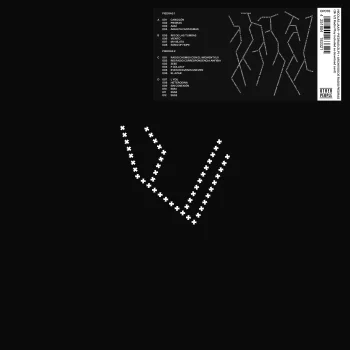
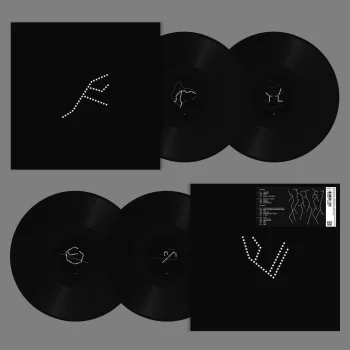
Label:Other People
Cat-No:OP078
Release-Date:17.01.2025
Genre:Alternative/Electronic
Configuration:2LP Excl
1
Nicolás Jaar - A1 Cangilón
2
Nicolás Jaar - A2 Piedras
3
Nicolás Jaar - A3 Aqui
4
Nicolás Jaar - A4 Agua pa fantasmas
5
Nicolás Jaar - B1 Rio de las tumbas
6
Nicolás Jaar - B2 Viento
7
Nicolás Jaar - B3 Mi viejita
8
Nicolás Jaar - B4 No Hope
9
Nicolás Jaar - C1 Radio Chomio (con Eli Wewentxu)
10
Nicolás Jaar - C2 Rio radio correspondencia anfibia
11
Nicolás Jaar - C3 3eee
12
Nicolás Jaar - C4 F Collect
13
Nicolás Jaar - C5 Even heaven is uneven
14
Nicolás Jaar - C6 El azar
15
Nicolás Jaar - D1 I, you
16
Nicolás Jaar - D2 Heterodina
17
Nicolás Jaar - D3 Sin Conexión
18
Nicolás Jaar - D4 SSS1
19
Nicolás Jaar - D5 SSS2
20
Nicolás Jaar - D6 SSS3
LP. 180G BioVinyl, 2 LP + Sticker , includes Download to 3/12 h Radio Play "Archivos De Radio Piedras"
2. GENRE/S: Electronic
3. TRACKLISTS:
> A1 / 1. Cangilón
> A2 / 2. Piedras
> A3 / 3. Aquí
> A4 / 4. Agua pa fantasmas
> B1 / 5. Rio de las tumbas
> B2 / 6. Viento
> B3 / 7. Mi viejita
> B4 / 8. No Hope> C1 / 1. Radio Chomio (con Eli Wewentxu)
> C2 / 2. Rio radio correspondencia anfibia
> C3 / 3. 3eee
> C4 / 4. F Collect
> C5 / 5. Even heaven is uneven
> C6 / 6. El azar
> D1 / 7. I, you
> D2 / 8. Heterodina
> D3 / 9. Sin Conexión
> D4 / 10. SSS1
> D5 / 11. SSS2
> D6 / 12. SSS3
4. SHORT INFO:
The initial seed for this project was planted in 2020 when Nicolás Jaar wrote the song “Piedras” for a
concert at the Museum of Memory & Human Rights in Santiago, Chile, which commemorates the
victims of human rights violations during the military dictatorship led by Augusto Pinochet between
1973 and 1990. Between 2022-2023 it took on a new form as a radio play entitled 'Archivos de Radio
Piedras', which was shared on a dedicated Telegram channel. In 2024, the play was converted into a
24 channel installation at the University Museum of Mexico City (MUAC), where it was exhibited for 5
months.
Piedras 1 and 2 is a collection of the tracks featured within the play, all new music by Jaar, but partly
presented within the play as the music of Salinas Hasbún (the name a composite homage to Jaar's
grandmothers, Graciela Salinas and Miriam Hasbún).
The play follows two friends mourning the disappearance of Salinas Hasbún, a musician and writer
who vanished in the early 2020s. Although they live in a future where technology is advanced, they
resort to DIY radio methods because the anonymous group “Las 0cho” has launched a worldwide
attack on undersea internet cables, causing a global internet blackout.
The play's central theme revolves around the idea that truths, memories and identities speak from the
cracks (“rasgaduras”), or the "in-between" spaces ("en el entre"). This concept is supported by the
way much of the narration unfolds - in the liminal spaces between radio frequencies. The instability
and transitory nature of a constantly shifting radio dial becomes not just a metaphor but the structure
of the play itself. It’s in these moments of noise, static and interference that the deeper revelations of
the story emerge. This disjointed, ever-changing medium mirrors the way memory and trauma
operate within the play - non-linear, slipping through the gaps, found in fragments or ordinary
moments, rather than direct transmissions of “official” historical accounts.
This notion reaches its climax at the end of the narrative, when a text is discovered in which Salinas
speaks of finding a new number in a small pond in a cave mentioned in the first episodes of the radio
play. This pond, inside the “cochlea of the world”, is seen as a way to introduce real-life randomness
to computation. Embodied in the salt lakes of northern Chile, home to the world’s oldest bacteria, this
randomness disrupts the rigid order of binary code, paving the way for a transformation of digital life.
5. VITAL SALES POINTS:
First solo release by Nicolás Jaar since 2020’s Telas and Cenizas.
Sicherheits- und Herstellerinformationen / safety and manufacturer info (GPSR)
WAS - Word and Sound Medien GmbH
Liebigstrasse 2-20
DE - 22113 Hamburg
Germany
Contact: [email protected]More
2. GENRE/S: Electronic
3. TRACKLISTS:
> A1 / 1. Cangilón
> A2 / 2. Piedras
> A3 / 3. Aquí
> A4 / 4. Agua pa fantasmas
> B1 / 5. Rio de las tumbas
> B2 / 6. Viento
> B3 / 7. Mi viejita
> B4 / 8. No Hope> C1 / 1. Radio Chomio (con Eli Wewentxu)
> C2 / 2. Rio radio correspondencia anfibia
> C3 / 3. 3eee
> C4 / 4. F Collect
> C5 / 5. Even heaven is uneven
> C6 / 6. El azar
> D1 / 7. I, you
> D2 / 8. Heterodina
> D3 / 9. Sin Conexión
> D4 / 10. SSS1
> D5 / 11. SSS2
> D6 / 12. SSS3
4. SHORT INFO:
The initial seed for this project was planted in 2020 when Nicolás Jaar wrote the song “Piedras” for a
concert at the Museum of Memory & Human Rights in Santiago, Chile, which commemorates the
victims of human rights violations during the military dictatorship led by Augusto Pinochet between
1973 and 1990. Between 2022-2023 it took on a new form as a radio play entitled 'Archivos de Radio
Piedras', which was shared on a dedicated Telegram channel. In 2024, the play was converted into a
24 channel installation at the University Museum of Mexico City (MUAC), where it was exhibited for 5
months.
Piedras 1 and 2 is a collection of the tracks featured within the play, all new music by Jaar, but partly
presented within the play as the music of Salinas Hasbún (the name a composite homage to Jaar's
grandmothers, Graciela Salinas and Miriam Hasbún).
The play follows two friends mourning the disappearance of Salinas Hasbún, a musician and writer
who vanished in the early 2020s. Although they live in a future where technology is advanced, they
resort to DIY radio methods because the anonymous group “Las 0cho” has launched a worldwide
attack on undersea internet cables, causing a global internet blackout.
The play's central theme revolves around the idea that truths, memories and identities speak from the
cracks (“rasgaduras”), or the "in-between" spaces ("en el entre"). This concept is supported by the
way much of the narration unfolds - in the liminal spaces between radio frequencies. The instability
and transitory nature of a constantly shifting radio dial becomes not just a metaphor but the structure
of the play itself. It’s in these moments of noise, static and interference that the deeper revelations of
the story emerge. This disjointed, ever-changing medium mirrors the way memory and trauma
operate within the play - non-linear, slipping through the gaps, found in fragments or ordinary
moments, rather than direct transmissions of “official” historical accounts.
This notion reaches its climax at the end of the narrative, when a text is discovered in which Salinas
speaks of finding a new number in a small pond in a cave mentioned in the first episodes of the radio
play. This pond, inside the “cochlea of the world”, is seen as a way to introduce real-life randomness
to computation. Embodied in the salt lakes of northern Chile, home to the world’s oldest bacteria, this
randomness disrupts the rigid order of binary code, paving the way for a transformation of digital life.
5. VITAL SALES POINTS:
First solo release by Nicolás Jaar since 2020’s Telas and Cenizas.
Sicherheits- und Herstellerinformationen / safety and manufacturer info (GPSR)
WAS - Word and Sound Medien GmbH
Liebigstrasse 2-20
DE - 22113 Hamburg
Germany
Contact: [email protected]More
1
Liquid Liquid - Optimo
2
Liquid Liquid - Cavern
3
Liquid Liquid - Scraper
3 of the biggest tunes by this groundbreaking artschool-guys band who mixed Nu Wave with Funk, Disco and Polyrhythmics. included are "Cavern" - which formed the basis for "White Lines" - "optimo", and "scraper'
Sicherheits- und Herstellerinformationen / safety and manufacturer info (GPSR)
WAS - Word and Sound Medien GmbH
Liebigstrasse 2-20
DE - 22113 Hamburg
Germany
Contact: [email protected]More
Sicherheits- und Herstellerinformationen / safety and manufacturer info (GPSR)
WAS - Word and Sound Medien GmbH
Liebigstrasse 2-20
DE - 22113 Hamburg
Germany
Contact: [email protected]More
1
V / A - 1. The Mod 4 - A Puppet
2
V / A - 2. The Yardleys - Just Remember
3
V / A - 3. Decompressed Impossibility - You Can't Ride Away
4
V / A - 4. The Living End - Brigitta
5
V / A - 5. The Newports - Feelin' Low
6
V / A - 6. The Landlords - I'm Through With You
7
V / A - 7. The Prisners Dream - Autumn Days
8
V / A - 8. The Fortels - She
9
V / A - 9. The Bohemians - Say It
10
V / A - 10. Tresa Leigh - Until Then
11
V / A - 11. WM. Penn & The Quakers - Ghost Of The Monks
12
V / A - 12. The Tempters - I Will Go
13
V / A - 13. Jerry McGee - Twilight Zone
14
V / A - 14. Carroll - The Boy Called Billy Joe
15
V / A - 15. The Common People - Here, There & Everywhere
16
V / A - 16. Dennis Harte - Summer's Over
17
V / A - 17. Toe Head - Goodnight Jackie
2023 repress
2LP with printed inner sleeves
Tracklist
1. The Mod 4 - A Puppet
2. The Yardleys - Just Remember
3. Decompressed Impossibility - You Can't Ride Away
4. The Living End - Brigitta
5. The Newports - Feelin' Low
6. The Landlords - I'm Through With You
7. The Prisners Dream - Autumn Days
8. The Fortels - She
9. The Bohemians - Say It
10. Tresa Leigh - Until Then
11. WM. Penn & The Quakers - Ghost Of The Monks
12. The Tempters - I Will Go
13. Jerry McGee - Twilight Zone
14. Carroll - The Boy Called Billy Joe
15. The Common People - Here, There & Everywhere
16. Dennis Harte - Summer's Over
17. Toe Head - Goodnight Jackie
Short info:
A North American road trip of coming of age garage soul mapped by Ivan Liechti, Ghost Riders is Efficient Space’s latest narrative compilation, hovering in a liminal emotional ravine between moonlight melancholy, teenage heartache and unchecked, unrealised ambition. Across 17 open hearted ballads recorded 1965-1974, the 2LP collects and connects dots between British Invasion fanatics, child prodigies, the loners and the luckless, in a kind of trans-continental survey of those swept up in rock’n’roll mania and buoyed by local newspaper ads promising fame and gold records.
From the tangerine dreams of 8th grade all-girl combo The Mod 4 to the tri-state jukebox aspiring echoes of The Tempters, The Yardleys' poetic Farfisa vamp and lilting folk pop, and The Landlords’ weepy break up b-side blues, these are mostly one shots by dreamers whose experience was brief before being checked back to the reality of suburban normality and realistic career options. Hailing from the regional backwaters of Illinois, Arkansas, Nevada, Massachusetts, Ohio, Idaho, Texas and beyond, the licensed artists were scouted by way of local fire departments, spiritualist fellowships and animal welfare centres, often barely a stones throw from where their contributions were originally laid.
A barely teenage Dennis Harte's ‘Summer’s Over’ perhaps best taps the collection’s essence. A gut-wrenching lament of the passing of the season as if it was the last on earth. Flanked by players from The Left Banke, Harte, a now-piano tuner to the stars, is from the minor segment that found longevity in showbiz. Likewise with Michigan icon Lyn Nowicki who cast her ghostly voice over Beatles cover song chameleons The Common People and Jerry McGee, The Ventures member and conduit of Dr. John’s ‘Twilight Zone’.
Ghost Riders simmers with the scent of youthful summers, the pang of schoolyard romance, and the excitement (and disenchantment) of teenage naïveté, delivered via a deceptively simple and frequently wonky garage band set up. The vision of record collector and graphic designer Ivan Liechti, these eternal psych-folk howlers are further crystallised by Colin Young’s fastidious audio restoration, the original artwork of Elise Gagnebin-de Bons and an aptly penned forward from Sonic Boom.
Sicherheits- und Herstellerinformationen / safety and manufacturer info (GPSR)
WAS - Word and Sound Medien GmbH
Liebigstrasse 2-20
DE - 22113 Hamburg
Germany
Contact: [email protected]More
2LP with printed inner sleeves
Tracklist
1. The Mod 4 - A Puppet
2. The Yardleys - Just Remember
3. Decompressed Impossibility - You Can't Ride Away
4. The Living End - Brigitta
5. The Newports - Feelin' Low
6. The Landlords - I'm Through With You
7. The Prisners Dream - Autumn Days
8. The Fortels - She
9. The Bohemians - Say It
10. Tresa Leigh - Until Then
11. WM. Penn & The Quakers - Ghost Of The Monks
12. The Tempters - I Will Go
13. Jerry McGee - Twilight Zone
14. Carroll - The Boy Called Billy Joe
15. The Common People - Here, There & Everywhere
16. Dennis Harte - Summer's Over
17. Toe Head - Goodnight Jackie
Short info:
A North American road trip of coming of age garage soul mapped by Ivan Liechti, Ghost Riders is Efficient Space’s latest narrative compilation, hovering in a liminal emotional ravine between moonlight melancholy, teenage heartache and unchecked, unrealised ambition. Across 17 open hearted ballads recorded 1965-1974, the 2LP collects and connects dots between British Invasion fanatics, child prodigies, the loners and the luckless, in a kind of trans-continental survey of those swept up in rock’n’roll mania and buoyed by local newspaper ads promising fame and gold records.
From the tangerine dreams of 8th grade all-girl combo The Mod 4 to the tri-state jukebox aspiring echoes of The Tempters, The Yardleys' poetic Farfisa vamp and lilting folk pop, and The Landlords’ weepy break up b-side blues, these are mostly one shots by dreamers whose experience was brief before being checked back to the reality of suburban normality and realistic career options. Hailing from the regional backwaters of Illinois, Arkansas, Nevada, Massachusetts, Ohio, Idaho, Texas and beyond, the licensed artists were scouted by way of local fire departments, spiritualist fellowships and animal welfare centres, often barely a stones throw from where their contributions were originally laid.
A barely teenage Dennis Harte's ‘Summer’s Over’ perhaps best taps the collection’s essence. A gut-wrenching lament of the passing of the season as if it was the last on earth. Flanked by players from The Left Banke, Harte, a now-piano tuner to the stars, is from the minor segment that found longevity in showbiz. Likewise with Michigan icon Lyn Nowicki who cast her ghostly voice over Beatles cover song chameleons The Common People and Jerry McGee, The Ventures member and conduit of Dr. John’s ‘Twilight Zone’.
Ghost Riders simmers with the scent of youthful summers, the pang of schoolyard romance, and the excitement (and disenchantment) of teenage naïveté, delivered via a deceptively simple and frequently wonky garage band set up. The vision of record collector and graphic designer Ivan Liechti, these eternal psych-folk howlers are further crystallised by Colin Young’s fastidious audio restoration, the original artwork of Elise Gagnebin-de Bons and an aptly penned forward from Sonic Boom.
Sicherheits- und Herstellerinformationen / safety and manufacturer info (GPSR)
WAS - Word and Sound Medien GmbH
Liebigstrasse 2-20
DE - 22113 Hamburg
Germany
Contact: [email protected]More

1
Jan Jelinek - Moiré (Piano & Organ)
2
Jan Jelinek - Rock In The Video Age
3
Jan Jelinek - They, Them
4
Jan Jelinek - Them, Their
5
Jan Jelinek - Tendency
6
Jan Jelinek - Moiré (Strings)
7
Jan Jelinek - Do Dekor
8
Jan Jelinek - Drift
9
Jan Jelinek - Moiré (Guitar & Horns)
10
Jan Jelinek - Poren
Repress coming 6.2.2026
In February 2021, Jan Jelinek's seminal album "Loop-Finding-Jazz-Records" turned 20. The anniversary repress, a double LP with two bonus tracks (B-sides from the Tendency EP, 2000), is a little late to the party.
What the press said about Loop-Finding-Jazz-Records:
“Don’t be misled by the title, though for there isn’t a finger-snapping rhythm c bebop lead anywhere on the album. Instead, Jelinek chooses to explore the visual effect moiré - two shifting patterns creating an implied third dimension - in the audio realm.” (Alternative Press)
“The title acts as explanation for the studio technique that provided the basis for this album, snippets of other people’s arrangements deconstructed through a sampler into loops and then splashed onto an audio canvas.” (ATM)
“Jelinek’s sound evolved out of his dislike for (and inability to play) keyboards.” (RPM)
“Jelinek has abstracted his sources beyond recognition, looping his millisecond samples into flickering patterns of sonic moiré laid atop a dub Techno framework. (...) Jelinek might as well have sampled a horn player’s hissing intake of breath – it would have been ‘jazz’ enough for his purposes.“ (The Wire)
“It’s a perfect inversion of conventional music, a sonic negative. Everything that would typically be foreground is moved back or pushed off the screen altogether, and the flecks of sonic debris that would normally be covered by other sounds are left to carry the melody and rhythm.” (Pitchfork)
“All you need to know is that these onomatopoeic non-specific songs (...) are warm, paradisical creations”. (NME)
“Listen carefully and you’ll hear textures slowly unfolding and mutating. Presuming you’ve not fallen asleep of course.” (iDJ)
“At times, it’s all a bit dripping tap Japanese water torture; so sedentary it drowns in its own motionlessness” (DJ)
“Loop Finding Jazz Records' is a genuine modern classic whose re-release is anything but a cynical mortgage repayment exercise. Consider this a second chance, then pretend you had it all along.” (Boomkat)
PS:
“I’ve been fortunate enough to see Jan Jelinek live once, at Tonic NYC (...). Wearing a black and white striped shirt, he looked like a nihilistic Charlie Brown.” (beachsloth)
Sicherheits- und Herstellerinformationen / safety and manufacturer info (GPSR)
WAS - Word and Sound Medien GmbH
Liebigstrasse 2-20
DE - 22113 Hamburg
Germany
Contact: [email protected]More
In February 2021, Jan Jelinek's seminal album "Loop-Finding-Jazz-Records" turned 20. The anniversary repress, a double LP with two bonus tracks (B-sides from the Tendency EP, 2000), is a little late to the party.
What the press said about Loop-Finding-Jazz-Records:
“Don’t be misled by the title, though for there isn’t a finger-snapping rhythm c bebop lead anywhere on the album. Instead, Jelinek chooses to explore the visual effect moiré - two shifting patterns creating an implied third dimension - in the audio realm.” (Alternative Press)
“The title acts as explanation for the studio technique that provided the basis for this album, snippets of other people’s arrangements deconstructed through a sampler into loops and then splashed onto an audio canvas.” (ATM)
“Jelinek’s sound evolved out of his dislike for (and inability to play) keyboards.” (RPM)
“Jelinek has abstracted his sources beyond recognition, looping his millisecond samples into flickering patterns of sonic moiré laid atop a dub Techno framework. (...) Jelinek might as well have sampled a horn player’s hissing intake of breath – it would have been ‘jazz’ enough for his purposes.“ (The Wire)
“It’s a perfect inversion of conventional music, a sonic negative. Everything that would typically be foreground is moved back or pushed off the screen altogether, and the flecks of sonic debris that would normally be covered by other sounds are left to carry the melody and rhythm.” (Pitchfork)
“All you need to know is that these onomatopoeic non-specific songs (...) are warm, paradisical creations”. (NME)
“Listen carefully and you’ll hear textures slowly unfolding and mutating. Presuming you’ve not fallen asleep of course.” (iDJ)
“At times, it’s all a bit dripping tap Japanese water torture; so sedentary it drowns in its own motionlessness” (DJ)
“Loop Finding Jazz Records' is a genuine modern classic whose re-release is anything but a cynical mortgage repayment exercise. Consider this a second chance, then pretend you had it all along.” (Boomkat)
PS:
“I’ve been fortunate enough to see Jan Jelinek live once, at Tonic NYC (...). Wearing a black and white striped shirt, he looked like a nihilistic Charlie Brown.” (beachsloth)
Sicherheits- und Herstellerinformationen / safety and manufacturer info (GPSR)
WAS - Word and Sound Medien GmbH
Liebigstrasse 2-20
DE - 22113 Hamburg
Germany
Contact: [email protected]More
You Never End is the third album from Valentina Magaletti, Tom Halstead and Joe Andrews (Moin) out via AD 93 on the 25th October. Its title alone expresses the teetering and shifting nature of both the album and band. This record marks the Moin’s shift into a new phase with vocal collaborations across the album from Olan Monk, james K, Coby Sey and Sophia Al-Maria.
Tracklist
1.1Guess It's Wrecked
1.2Cubby
1.3Family Way
1.4What If You Didn't Need A Reason
1.5Lift You
1.6It's Messy Coping
1.7We Know What Gives
1.8C'mon Dive
1.9Anything But Sopo
1.10Happy In The Wrong Way
1.11Just Married
https://listen.k7.com/122cae12-2075-44eb-8c56-21a043607f94
Sicherheits- und Herstellerinformationen / safety and manufacturer info (GPSR)
WAS - Word and Sound Medien GmbH
Liebigstrasse 2-20
DE - 22113 Hamburg
Germany
Contact: [email protected]More
Tracklist
1.1Guess It's Wrecked
1.2Cubby
1.3Family Way
1.4What If You Didn't Need A Reason
1.5Lift You
1.6It's Messy Coping
1.7We Know What Gives
1.8C'mon Dive
1.9Anything But Sopo
1.10Happy In The Wrong Way
1.11Just Married
https://listen.k7.com/122cae12-2075-44eb-8c56-21a043607f94
Sicherheits- und Herstellerinformationen / safety and manufacturer info (GPSR)
WAS - Word and Sound Medien GmbH
Liebigstrasse 2-20
DE - 22113 Hamburg
Germany
Contact: [email protected]More